
The global air cargo industry is entering a new era of efficiency, capability, and competition with the arrival of the next-generation large freighters: the Boeing 777-8F and the Airbus A350F. Both aircraft are designed to meet the evolving demands of international cargo operations, offering impressive payload capacities, advanced fuel efficiency, and extended range capabilities. While they share the common goal of modernizing freight fleets, each aircraft brings distinct design philosophies and operational strengths that appeal to different segments of the market. The 777-8F emphasizes maximum payload and volumetric capacity, making it ideal for operators transporting heavy, dense cargo on medium- to long-haul routes. In contrast, the A350F leverages Airbus’ advanced composite airframe and cutting-edge engines to deliver superior fuel efficiency, slightly longer range, and lower operating costs, making it particularly attractive for long-haul, volume-sensitive freight and environmentally conscious operators.
Choosing between these two freighters is not merely a question of specifications—it involves analyzing route structures, cargo types, operational costs, and strategic fleet considerations. Understanding the nuances of each aircraft’s design, payload flexibility, range capabilities, and operational economics is essential for cargo operators seeking to optimize efficiency and profitability in an increasingly competitive and sustainability-driven market. This comparison explores the key specifications, strengths, and trade-offs of the Boeing 777-8F and Airbus A350F, providing a comprehensive overview for operators, industry analysts, and aviation enthusiasts alike.
Here’s a comparison between the two upcoming large freighters Boeing 777-8F and Airbus A350F — useful for understanding which might suit different cargo‑airline needs better. Since you’re in aviation and writing about flight operations, I highlight both the “hard specs” and operational implications.
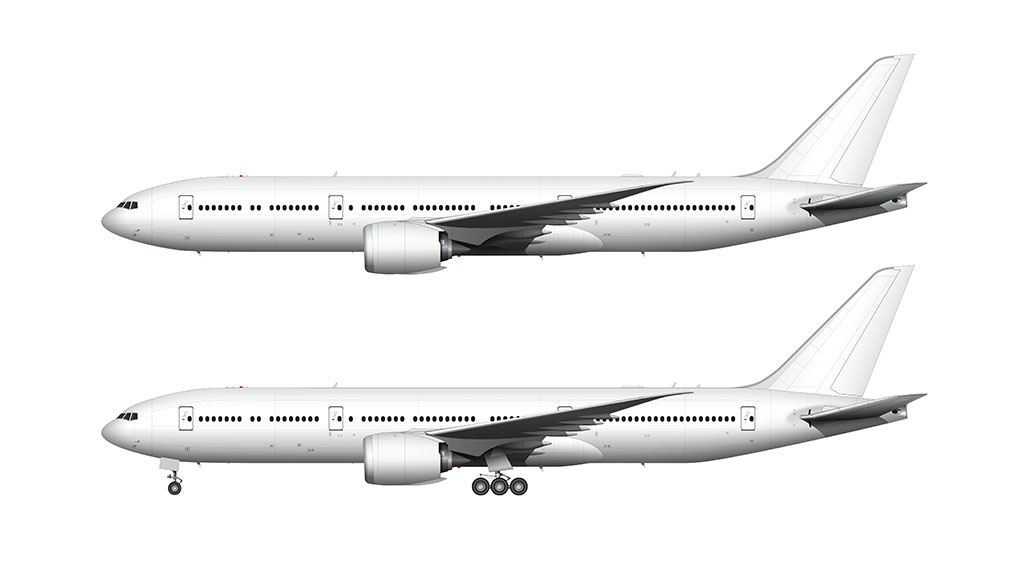
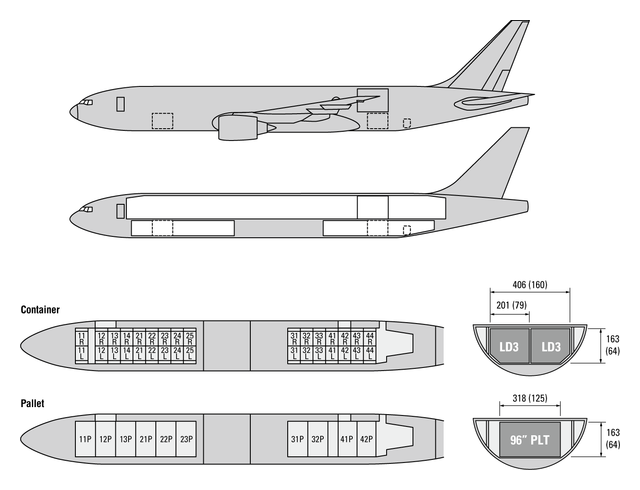
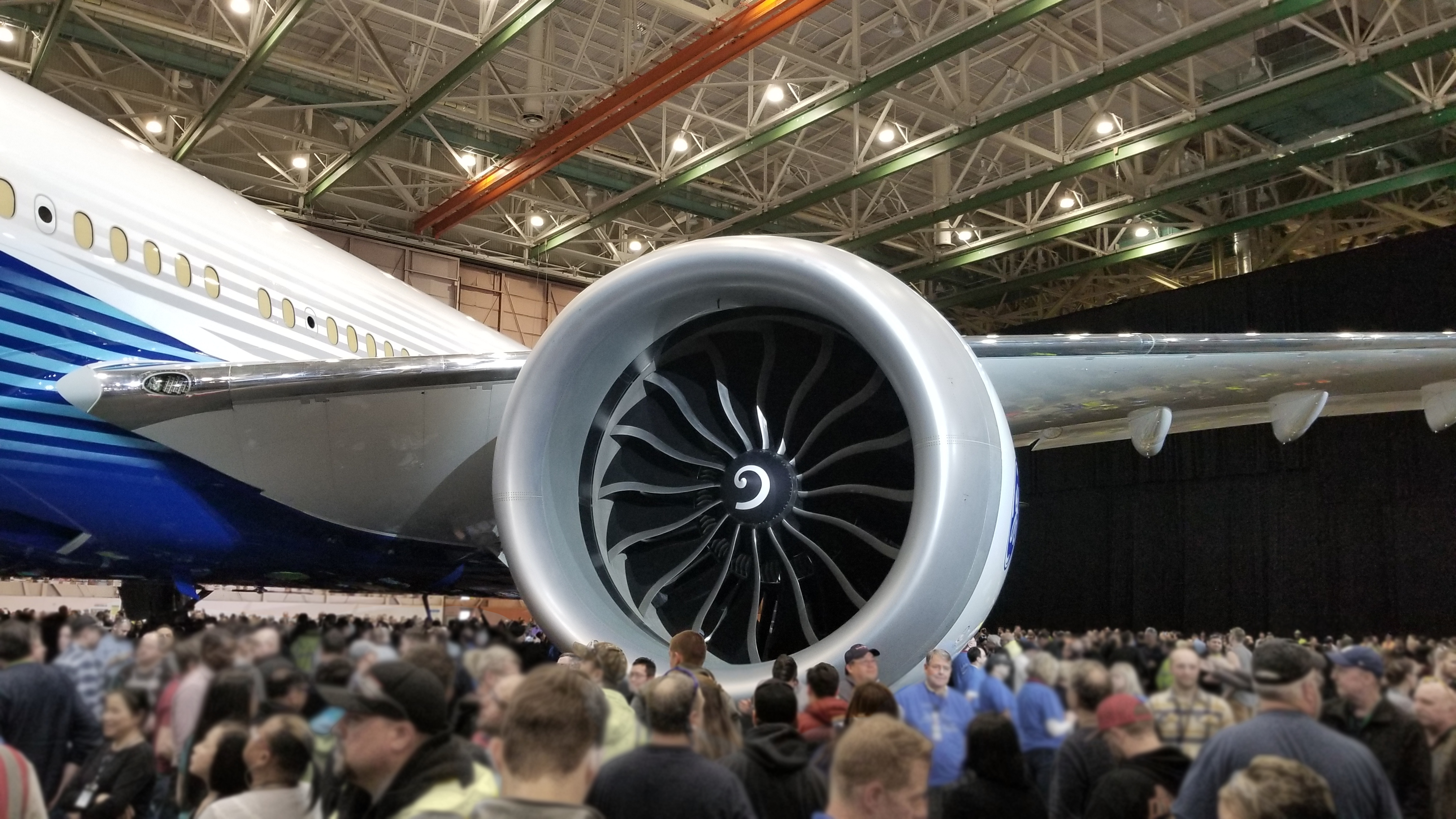
8
🔧 Key specifications: 777‑8F vs A350F
| Parameter | Boeing 777‑8F | Airbus A350F |
|---|---|---|
| Length | ~ 70.9 m Simple Flying+1 | ~ 70.8 m Air Data News+1 |
| Wingspan | ~ 71.8 m (full, wingtips extended) Air Data News+1 | ~ 64.75 m Simple Flying+1 |
| Height | ~ 19.5 m Air Data News | ~ 17.1 m Air Data News+1 |
| Max Payload (Revenue/Net) | ~ 112.3 tonnes (structural up to ~118 tonnes) Boeing+1 | ~ 109 tonnes (some sources ~111–111.5 t) AviationSource News+1 |
| Cargo volume / Pallet capacity | ~ 766 m³; 31 main‑deck + 13 lower‑hold standard pallets Air Data News+1 | ~ 695–700 m³; 30 main‑deck + 12 lower‑hold pallets AviationSource News+1 |
| Range (at max payload) | ~ 4,410 nmi (~8,170 km) Air Data News+1 | ~ 4,700 nmi (~8,700 km) Simple Flying+1 |
| Engines | 2 × GE GE9X Simple Flying+1 | 2 × Rolls‑Royce Trent XWB‑97 Airbus+1 |
| MTOW (typical landing/take‑off weight parameter) | Estimated heavier than A350F (some sources ~351 t) Simple Flying+1 | ~ 319 t Simple Flying+1 |
What this means: 777‑8F gives slightly higher payload and volume (so more heavy cargo, more pallets). A350F gives a bit more range and benefits from lighter weight and slightly smaller size (which may help in some airport operations or fuel efficiency).
eBook at Kobo “Aviation Safety Management System.”

⚙️ Operational Strengths & Trade‑offs
✅ Strengths of Airbus A350F
- Fuel efficiency & lower operating cost: Its largely composite airframe and newer‑generation engines allow significantly lower fuel burn and CO₂ emissions compared with older freighters — an advantage especially under stricter environmental regulations. Airbus+1
- Longer range at payload: With ~4,700 nmi range, it’s better suited for long‑haul routes (e.g. intercontinental Asia↔Americas, Asia↔Europe). Simple Flying+1
- Fleet commonality & maintenance benefits: Because A350F is derived from the A350 passenger line, airlines benefit from shared spares, commonality in maintenance — lowering costs and complexity. Airbus+1
- Suitable for lower-density cargo: For lighter, voluminous shipments (e.g. e‑commerce parcels, express cargo, general freight), the A350F’s efficiency and pallet‑floor loading flexibility may give better per‑tonne economics. AviationSource News+1
✅ Strengths of Boeing 777‑8F
- Higher payload / volume capacity: With ~112.3 t net payload and slightly larger cargo volume/pallet count, the 777‑8F is better suited for heavy or dense cargo: machinery, automotive parts, heavy freight. Air Data News+2Simple Flying+2
- More pallets (main + lower deck): One extra pallet on main deck + one on lower compared to A350F — can matter when cargo is palletized. Air Data News+1
- Better for high-density or bulk cargo missions: When maximizing payload per flight is critical, 777‑8F gives a margin over A350F. AviationSource News+1
- Potentially robust structural design and versatility: As a “freighter-first” design derived from 777X, it may offer structural robustness beneficial for heavy/irregular cargo and operations under heavy load.
⚠️ Trade‑offs / Considerations
- Fuel and operating costs: The 777‑8F’s heavier structure and higher MTOW likely translate to higher fuel burn per tonne than A350F — meaning lower efficiency especially on lighter cargo or volume‑sensitive operations. Airbus+2Simple Flying+2
- Range limitations at max payload: With ~4,410 nmi (vs 4,700 nmi for A350F), 777‑8F could be less optimal for ultra-long‑haul cargo routes if fully loaded. Air Data News+1
- Environmental / regulatory considerations: As emission standards tighten (e.g., around 2027 and beyond), airlines increasingly value fuel/CO₂ efficiency — an area where A350F has a clear advantage. Airbus+1
- Payload vs economics trade-off: If cargo is light or volume-limited rather than dense/heavy, paying for extra carrying capacity may not pay dividends compared to fuel‑efficient A350F operations.
🎯 What Type of Operator / Mission Each Is Best For
- Use‑case A — Heavy cargo / high‑density freight: Heavy machinery, bulk goods, dense cargo where payload matters most → 777‑8F is probably better.
- Use‑case B — Long‑haul, volume‑sensitive, lighter cargo / express / general freight: E‑commerce, mixed freight, long‑range routes → A350F yields lower operating costs and better economics.
- Use‑case C — Cost‑sensitive, environmentally regulated, fleet‑efficiency focused operators: Airlines aiming for fuel savings, sustainability, easier fleet/maintenance commonality → A350F stands out.
- Use‑case D — Mixed cargo needs with flexibility: Operators needing both heavy‑lift and some long‑haul capacity may consider a mix of both types — or choose based on route/cargo profile.
“Dark Side of Aviation” is available in Apple Books

📈 For Cargo Market & Fleet Strategy (and for you, Captain & researcher)
Given global trends — e‑commerce growth, stricter environmental/CO₂ regulations, and demand for flexible cargo routing — the A350F likely becomes very attractive for many airlines as a cost‑effective “workhorse” freighter. Airbus+2AviationSource News+2
However, for premium heavy‑cargo routes (e.g., oversize machinery, automotive, heavy industrial), the 777‑8F’s payload and volume edge might keep it relevant for operators needing raw lift.
From a fleet‑planning perspective (relevant to your SWIM/airspace interest and cargo market observations), it’s plausible we’ll see mixed fleets — some operators using A350F for regular cargo flow & long thin routes, others using 777‑8F for dense/heavy-lift corridors.