
ทำไมนักบินต้องลดความเร็วเมื่อเจอ Turbulence?
รู้จัก Turbulence Speed หรือ Rough Airspeed
หลายคนอาจเคยสังเกตว่า
เมื่อเครื่องบินเริ่มสั่น หรือเข้าสู่บริเวณอากาศปั่นป่วน
นักบินมักประกาศให้รัดเข็มขัด และบางครั้งเราจะรู้สึกว่าเครื่องบิน “ช้าลง”
นั่นไม่ใช่ความรู้สึกไปเอง
เพราะในการบิน มีความเร็วสำคัญชนิดหนึ่งที่เรียกว่า
Turbulence Penetration Speed
หรือที่นักบินหลายคนเรียกง่าย ๆ ว่า
Rough Airspeed
ความเร็วนี้มีหน้าที่สำคัญมาก
มันคือ “ความเร็วที่เหมาะสมที่สุด” สำหรับการบินผ่านอากาศปั่นป่วน
เพื่อลดแรงกระแทก ลด stress ต่อโครงสร้างเครื่องบิน และช่วยให้เครื่องบินรับมือกับ turbulence ได้ปลอดภัยที่สุด
ทำไมต้องลดความเร็ว?
หลายคนอาจคิดว่า
“ถ้ารีบบินผ่านเร็ว ๆ น่าจะออกจาก turbulence ได้ไวกว่า”
แต่ในความเป็นจริง
ยิ่งเครื่องบินบินเร็ว แรง aerodynamic load ที่กระทำต่อเครื่องบินจะยิ่งสูง
เมื่อเครื่องบินเจอ gust หรือ vertical air movement รุนแรง
แรงที่เกิดกับปีกและโครงสร้างจะเพิ่มขึ้นอย่างมากตามความเร็ว
พูดง่าย ๆ คือ
“แรงกระแทกจาก turbulence จะรุนแรงขึ้น หากบินเร็วเกินไป”
ดังนั้น เมื่อนักบินเข้าสู่บริเวณ rough air
สิ่งแรก ๆ ที่ทำคือ “ลดความเร็ว”
Turbulence Speed คืออะไร?
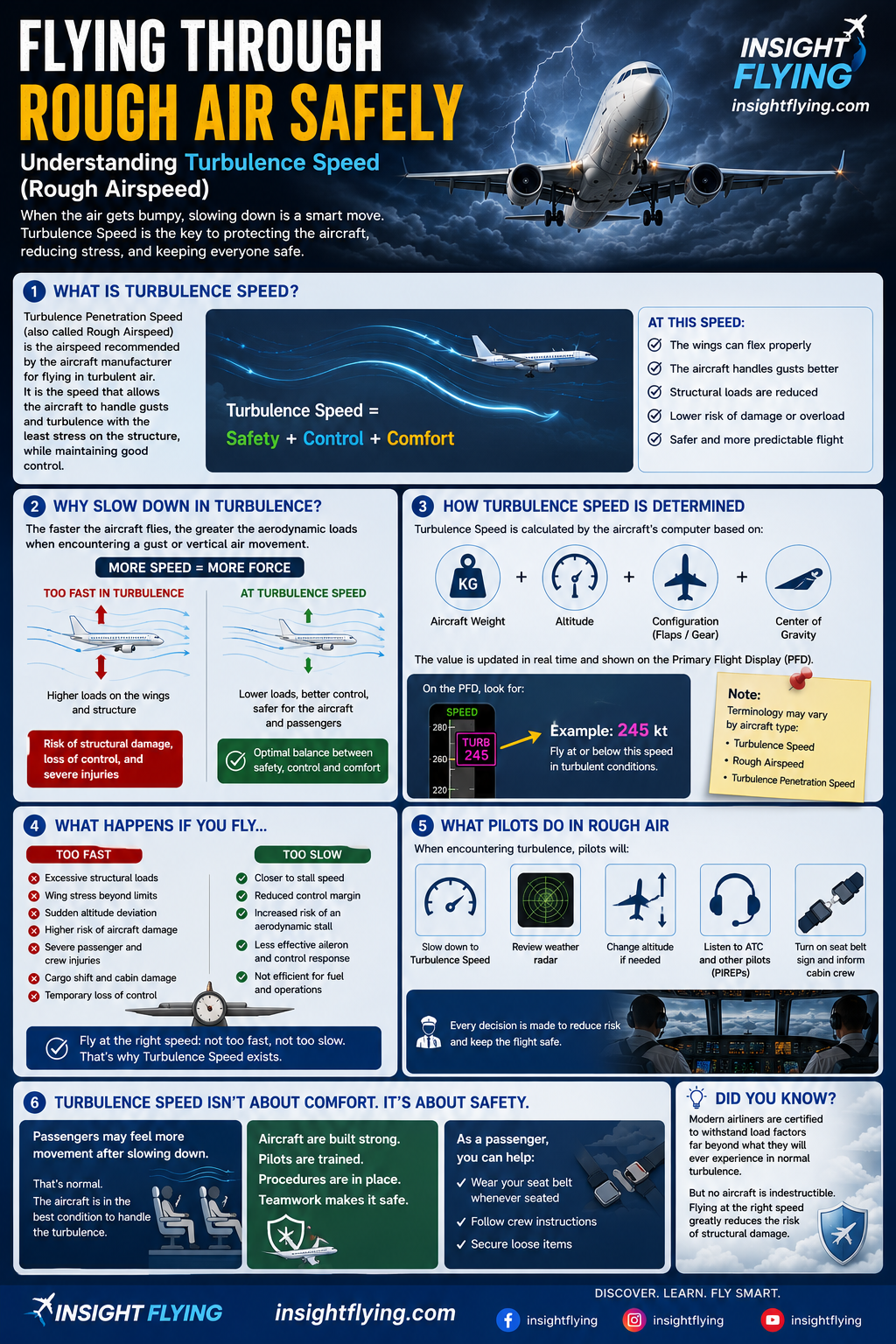
Turbulence Penetration Speed คือความเร็วที่ผู้ผลิตเครื่องบินกำหนดไว้
เพื่อให้เครื่องบินสามารถ “รับแรงกระแทกจาก turbulence ได้ดีที่สุด”
ที่ความเร็วนี้
- ปีกจะรับแรงได้เหมาะสม
- เครื่องบินมี flexibility มากขึ้น
- โหลดที่กระทำต่อโครงสร้างลดลง
- ลดโอกาส overstress airframe
- เครื่องบินตอบสนองต่อ gust ได้ดีขึ้น
พูดอีกแบบหนึ่งคือ
มันเป็น “safe compromise” ระหว่าง
การควบคุมเครื่องบิน และการปกป้องโครงสร้าง
แล้วมันคือ Va หรือเปล่า?
นักบินจำนวนมากคุ้นกับคำว่า
Va — Maneuvering Speed
ซึ่งเป็นความเร็วที่เครื่องบินจะ “stall ก่อน” ที่โครงสร้างจะเสียหาย
หากมีการบังคับ control เต็มที่อย่างฉับพลัน
แต่ในเครื่องบินพาณิชย์ขนาดใหญ่
นักบินมักใช้คำว่า
- Turbulence Penetration Speed
- Rough Airspeed
ซึ่งใกล้เคียงในแนวคิด แต่ถูกกำหนดสำหรับ operational use ใน turbulence
ในเครื่องบินโดยสารสมัยใหม่ ความเร็วนี้มักถูกคำนวณโดยระบบ onboard computer ตามน้ำหนักและสภาพการบิน
ถ้าบินเร็วเกินไปจะเกิดอะไรขึ้น?
หากเครื่องบินเจอ severe turbulence ขณะบินเร็วเกินไป
อาจเกิด:
- Excessive structural loads
- Wing stress สูงผิดปกติ
- Sudden altitude deviation
- Passenger injuries รุนแรงขึ้น
- Cabin damage
- Cargo shift
- Loss of control ชั่วคราว
ในกรณีรุนแรงมาก
อาจเกิด structural damage ได้จริง
แม้เครื่องบินสมัยใหม่จะแข็งแรงมากก็ตาม
แล้วถ้าช้าเกินไปล่ะ?
แน่นอนว่า
การลดความเร็วมากเกินไปก็ไม่ดีเช่นกัน
เพราะเครื่องบินยังต้องมี margin เหนือ stall speed เพียงพอ
โดยเฉพาะที่ระดับบินสูง ซึ่ง speed margin จะน้อยลง
นักบินจึงต้องเลือกความเร็วที่ “เหมาะที่สุด”
ไม่เร็วเกินไป
และไม่ช้าเกินไป
นี่คือเหตุผลที่ turbulence speed ถูกกำหนดไว้อย่างละเอียดโดยผู้ผลิตเครื่องบิน
เครื่องบินสั่นแรง แปลว่าอันตรายไหม?
ไม่เสมอไป
หลายครั้ง turbulence ที่ผู้โดยสารรู้สึกว่า “น่ากลัวมาก”
อาจยังอยู่ในระดับที่เครื่องบินรับได้สบาย
เครื่องบินพาณิชย์ถูกออกแบบให้ปีกยืดหยุ่นได้มหาศาล
และผ่านการทดสอบ load สูงมากก่อนรับรองใช้งาน
แต่สิ่งที่นักบินกังวลมากกว่า
คือ
- คนในห้องโดยสาร
- ลูกเรือ
- ผู้โดยสารที่ไม่คาดเข็มขัด
- อุปกรณ์และของหลุดลอย
นั่นคือเหตุผลที่นักบิน “เคารพ turbulence เสมอ”
สิ่งที่ผู้โดยสารมักไม่เห็น
เมื่อเครื่องบินเข้าสู่ rough air
ใน cockpit นักบินอาจกำลัง:
- ลดความเร็วเข้าสู่ turbulence penetration speed
- เปิด anti-ice
- ปิด auto-throttle บางกรณี
- เปลี่ยน altitude
- ขอ deviation จาก ATC
- วิเคราะห์ weather radar
- รับรายงาน turbulence จากเครื่องบินลำอื่น
ทั้งหมดนี้เกิดขึ้นเงียบ ๆ
เพื่อให้เที่ยวบินปลอดภัยที่สุด
Turbulence Speed ไม่ได้มีไว้เพื่อ “ความนุ่มนวล”
แต่มีไว้เพื่อ “ความปลอดภัย”
ผู้โดยสารบางคนอาจรู้สึกว่าเครื่องบินสั่นมากขึ้นหลังลดความเร็ว
เพราะเครื่องบินตอบสนองต่ออากาศมากขึ้น
แต่นั่นไม่ได้แปลว่าอันตรายมากขึ้น
ตรงกันข้าม
เครื่องบินกำลังอยู่ในสภาวะที่ “เหมาะสมที่สุด” สำหรับการรับมือ turbulence
บทสรุป
ในการบิน
“ความเร็ว” ไม่ได้หมายถึงความปลอดภัยเสมอไป
บางครั้ง
การช้าลง คือสิ่งที่ปลอดภัยที่สุด
และเมื่อคุณได้ยินเสียงนักบินประกาศให้รัดเข็มขัด
หรือรู้สึกว่าเครื่องบินกำลังลดความเร็วในอากาศปั่นป่วน
นั่นไม่ใช่สัญญาณของความอ่อนแอของเครื่องบิน
แต่มันคือ
“การบริหารความเสี่ยงอย่างมืออาชีพ”
ของนักบินและระบบการบินสมัยใหม่ต่างหาก
“Slow Down to Stay Safe”
Understanding Turbulence Speed — Why Pilots Reduce Speed in Rough Air
Many passengers notice that when an aircraft enters turbulence, the airplane seems to slow down.
That feeling is usually correct.
When pilots encounter turbulent conditions, one of the first actions they often take is reducing the aircraft’s speed to what is commonly called:
Turbulence Penetration Speed
or simply
Rough Airspeed
This speed is extremely important in aviation safety.
It is the speed at which the aircraft can best withstand turbulence while minimizing stress on the structure and maintaining safe controllability.
Why Do Pilots Slow Down in Turbulence?
Many people assume:
“Wouldn’t flying faster help the airplane get through turbulence more quickly?”
In reality, the opposite can become dangerous.
The faster an aircraft flies, the greater the aerodynamic loads generated when it encounters gusts or sudden vertical air movements.
In simple terms:
Higher speed = Higher stress on the aircraft.
If severe turbulence strikes while the aircraft is flying too fast, the forces acting on the wings and airframe increase dramatically.
That is why pilots intentionally reduce speed in rough air.
What Is Turbulence Speed?
Turbulence Penetration Speed is a manufacturer-recommended speed designed to allow the aircraft to handle turbulence as safely as possible.
At this speed:
- Wing flexibility works more effectively
- Structural loads are reduced
- The aircraft responds better to gusts
- Stress on the airframe is minimized
- Control remains stable and predictable
It is essentially a carefully engineered balance between:
- Safety
- Structural protection
- Aircraft controllability
Is It the Same as Maneuvering Speed (Va)?
Many pilots are familiar with:
Va — Maneuvering Speed
This is the speed below which the aircraft will typically stall before structural damage occurs if full and abrupt control inputs are made.
In large commercial aircraft, however, pilots more commonly use terms such as:
- Turbulence Penetration Speed
- Rough Airspeed
The concepts are related, but turbulence speed is specifically intended for operational use during turbulent conditions.
In modern airliners, this speed is often calculated automatically by onboard computers based on:
- Aircraft weight
- Altitude
- Configuration
- Flight conditions
What Happens If the Aircraft Is Too Fast?
If an aircraft encounters severe turbulence at excessive speed, several risks increase significantly:
- Excessive structural loads
- Wing stress beyond design limits
- Sudden altitude deviations
- Cabin interior damage
- Cargo shifts
- Passenger and crew injuries
- Temporary loss of control
Although modern aircraft are extremely strong, severe turbulence combined with excessive speed can still lead to structural damage in extreme cases.
What Happens If the Aircraft Is Too Slow?
Slowing down excessively is not safe either.
The aircraft must still maintain an adequate margin above stall speed, especially at high altitude where speed margins become smaller.
Pilots therefore aim for the optimal speed:
- Not too fast
- Not too slow
This is precisely why turbulence penetration speeds are carefully defined by aircraft manufacturers.
Does Strong Shaking Mean the Aircraft Is in Danger?
Not necessarily.
Sometimes turbulence feels dramatic to passengers while remaining well within the aircraft’s structural capabilities.
Commercial aircraft are designed with highly flexible wings and undergo extensive load testing before certification.
In many cases, the greatest concern is not the airplane itself — but the people inside it.
Pilots are often more concerned about:
- Unsecured passengers
- Cabin crew injuries
- Loose equipment
- Food carts
- Objects becoming projectiles
That is why professional pilots always treat turbulence with respect.
What Passengers Usually Don’t See
When an aircraft enters rough air, pilots may quietly be:
- Reducing speed to turbulence penetration speed
- Reviewing weather radar
- Requesting altitude changes
- Coordinating with ATC
- Receiving turbulence reports from other aircraft
- Adjusting aircraft systems and flight strategy
All of these actions happen behind the cockpit door to reduce risk and maintain safety.
Turbulence Speed Is Not About Comfort
It is about protection.
Passengers may sometimes feel more aircraft movement after the airplane slows down.
That does not necessarily mean conditions are becoming more dangerous.
In fact, the aircraft is often operating in its safest aerodynamic condition for handling turbulence.
Final Thoughts
In aviation, faster is not always safer.
Sometimes, slowing down is the safest decision a pilot can make.
So the next time you hear the captain ask everyone to fasten seat belts and feel the aircraft reducing speed in turbulent air, remember:
It is not a sign of weakness.
It is a sign of professional risk management, careful aircraft handling, and modern aviation safety at work.