
มากกว่าแค่ที่นั่ง…แต่มันคือระบบความปลอดภัย วิศวกรรม และมนุษยปัจจัย
เวลาผู้โดยสารขึ้นเครื่องบิน สิ่งแรกที่สัมผัสคือ “เก้าอี้”
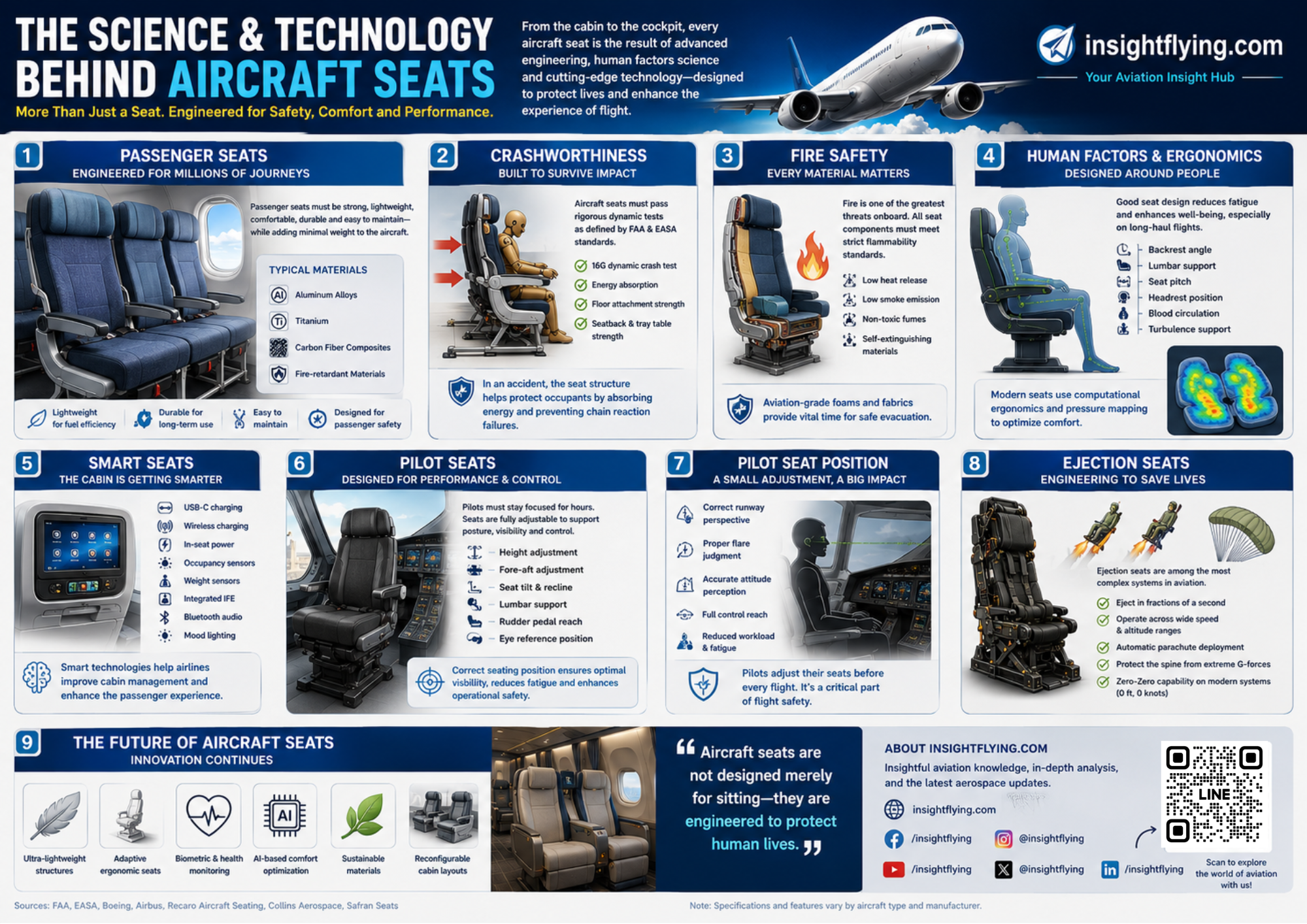
แต่คนส่วนใหญ่ไม่เคยรู้เลยว่า เบื้องหลังเก้าอี้แต่ละตัวนั้นเต็มไปด้วยศาสตร์ทางวิศวกรรม การออกแบบด้านความปลอดภัย มนุษยปัจจัย (Human Factors) และเทคโนโลยีระดับสูงที่ถูกพัฒนาอย่างต่อเนื่องมาหลายสิบปี
ตั้งแต่เก้าอี้ผู้โดยสารในห้องโดยสาร ไปจนถึงเก้าอี้นักบินใน cockpit
ทุกองค์ประกอบถูกออกแบบด้วยเหตุผล ไม่ใช่เพียงเพื่อความสบาย แต่เพื่อ “ความอยู่รอด” และ “ประสิทธิภาพในการปฏิบัติการบิน”
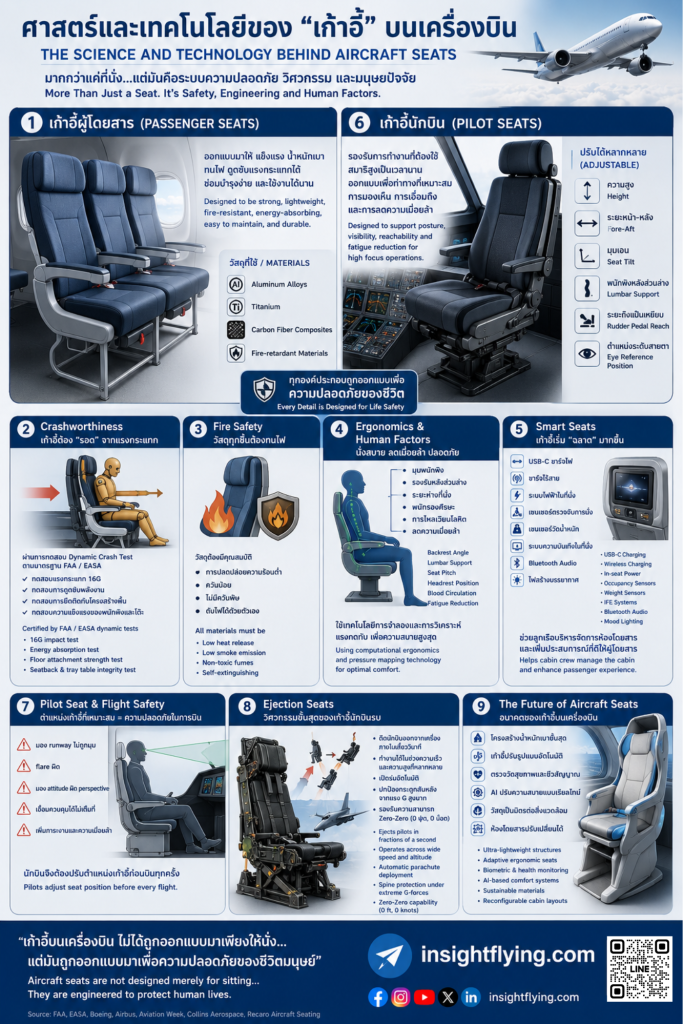
1. เก้าอี้ผู้โดยสาร (Passenger Seats)
เมื่อ “น้ำหนัก” คือเรื่องใหญ่ของอุตสาหกรรมการบิน
ในโลกของการบิน น้ำหนักเพียงไม่กี่กิโลกรัมมีผลโดยตรงต่อการใช้เชื้อเพลิง
ดังนั้นเก้าอี้ผู้โดยสารจึงถูกออกแบบให้
- แข็งแรงมาก
- น้ำหนักเบามาก
- ทนไฟ
- ดูดซับแรงกระแทกได้
- ซ่อมบำรุงง่าย
- ใช้งานได้นานหลายปี
วัสดุที่ใช้จึงมักเป็น
- Aluminum alloys
- Titanium
- Carbon fiber composites
- Fire-retardant materials
สายการบินทั่วโลกพยายามลดน้ำหนักเก้าอี้ลงแม้เพียงไม่กี่กิโลกรัม เพราะเมื่อคูณด้วยจำนวนที่นั่งทั้งลำ จะช่วยลดต้นทุนเชื้อเพลิงได้มหาศาลตลอดอายุการใช้งานของเครื่องบิน
2. Crashworthiness — เก้าอี้ต้อง “รอด” จากแรงกระแทก
หลายคนคิดว่าเข็มขัดนิรภัยคือระบบป้องกันหลัก
แต่จริง ๆ แล้ว “โครงสร้างของเก้าอี้” มีบทบาทสำคัญอย่างมากในอุบัติเหตุ
เก้าอี้บนเครื่องบินต้องผ่านการทดสอบ Dynamic Crash Test ตามมาตรฐาน FAA และ EASA
เช่น
- ทดสอบแรงกระแทก 16G
- ทดสอบการดูดซับพลังงาน
- ทดสอบการยึดติดกับ floor structure
- ทดสอบความแข็งแรงของ tray table และ seatback
เหตุผลเพราะในอุบัติเหตุจริง
เก้าอี้ที่พังหรือหลุดออกจากราง อาจทำให้เกิด chain reaction จนผู้โดยสารได้รับบาดเจ็บรุนแรง
จึงไม่ใช่แค่ “นั่งสบาย” แต่ต้อง “ปกป้องชีวิต” ได้ด้วย
3. Fire Safety — วัสดุทุกชิ้นต้องทนไฟ
หนึ่งในภัยร้ายแรงที่สุดของอากาศยานคือ “ไฟ”
วัสดุทุกชิ้นในเก้าอี้จึงต้องผ่านมาตรฐานการทนไฟอย่างเข้มงวด เช่น
- Low heat release
- Low smoke emission
- Non-toxic fumes
- Self-extinguishing materials
แม้แต่ฟองน้ำภายในเบาะ ก็เป็นวัสดุเฉพาะทางด้านการบิน (Aviation-grade foam)
เพราะในกรณีเกิดไฟไหม้ ห้องโดยสารต้องมีเวลาเพียงพอให้ผู้โดยสารอพยพออกจากเครื่องได้
4. Human Factors และ Ergonomics
นั่งอย่างไรให้ “ไม่ล้า” และ “ปลอดภัย”
การออกแบบเก้าอี้บนเครื่องบินไม่ใช่แค่เรื่อง aesthetics
แต่เกี่ยวข้องกับ
- มุมของพนักพิง
- Lumbar support
- ระยะ seat pitch
- ตำแหน่ง headrest
- การไหลเวียนเลือด
- การลดความเมื่อยล้า
- การรองรับ turbulence
โดยเฉพาะในเที่ยวบินระยะไกล
หากออกแบบไม่ดี อาจทำให้เกิด
- fatigue
- discomfort
- deep vein thrombosis (DVT)
ปัจจุบันจึงมีการใช้ computational ergonomics และ pressure mapping ในการออกแบบเบาะสมัยใหม่
5. Smart Seats — เก้าอี้เริ่ม “ฉลาด” มากขึ้น
เครื่องบินรุ่นใหม่เริ่มมี Smart Cabin Technologies มากขึ้น เช่น
- USB-C charging
- Wireless charging
- In-seat power
- Occupancy sensors
- Weight sensors
- Integrated IFE systems
- Bluetooth audio
- Mood lighting integration
บางระบบสามารถแจ้ง cabin crew ได้ว่าที่นั่งใดว่าง
หรือแม้แต่ตรวจจับ passenger movement เพื่อช่วยเรื่อง cabin management
อนาคตอาจไปถึงการใช้ AI วิเคราะห์ความสบายของผู้โดยสารแบบ realtime
6. เก้าอี้นักบิน (Pilot Seats)
ที่นั่งที่ต้องรองรับ “การตัดสินใจระดับชีวิต”
เก้าอี้นักบินต่างจากเก้าอี้ผู้โดยสารอย่างสิ้นเชิง
เพราะนักบินต้องนั่งทำงานต่อเนื่องหลายชั่วโมง พร้อมรักษาระดับ concentration สูงตลอดเวลา
เก้าอี้นักบินจึงต้องรองรับ
- posture
- visibility
- reachability
- fatigue reduction
- spinal support
- vibration reduction
นักบินต้องสามารถปรับตำแหน่งได้ละเอียดมาก เช่น
- ความสูง
- ระยะหน้า-หลัง
- มุมเอน
- Lumbar support
- Rudder pedal reach
- Eye reference position
เพื่อให้มองเห็น instrument panel ได้ถูกต้องตาม design eye position
7. Pilot Seat และความปลอดภัยในการบิน
หลายคนอาจไม่ทราบว่า
ตำแหน่งเก้าอี้นักบินที่ผิดเพียงเล็กน้อย อาจมีผลต่อความปลอดภัยได้
เช่น
- มอง runway ไม่ถูกมุม
- flare ผิด
- มอง attitude ผิด perspective
- reach controls ได้ไม่เต็มที่
- เพิ่ม workload และ fatigue
ดังนั้นก่อนบิน นักบินจึงใช้เวลาปรับ seating position ทุกครั้ง
“Seat adjustment” จึงไม่ใช่เรื่องเล็ก แต่เป็นส่วนหนึ่งของ Flight Safety
8. Ejection Seats — วิศวกรรมขั้นสุดของเก้าอี้นักบินรบ
สำหรับเครื่องบินทหาร
เก้าอี้อาจเป็นระบบช่วยชีวิตเต็มรูปแบบ
Ejection Seat คือหนึ่งในระบบวิศวกรรมที่ซับซ้อนที่สุดในอุตสาหกรรมการบิน
ต้องสามารถ
- ดีดนักบินออกจากเครื่องภายในเสี้ยววินาที
- ทำงานในความเร็วและความสูงต่างกัน
- เปิดร่มอัตโนมัติ
- ปกป้องกระดูกสันหลังจากแรง G สูงมาก
ระบบสมัยใหม่บางรุ่นรองรับ “Zero-Zero capability”
คือดีดตัวได้แม้เครื่องบินอยู่ที่ความสูง 0 ฟุต และความเร็ว 0 น็อต
9. อนาคตของเก้าอี้บนเครื่องบิน
อนาคตของที่นั่งอากาศยานอาจเปลี่ยนไปอีกมาก เช่น
- Ultra-lightweight structures
- Adaptive ergonomic seats
- Biometric monitoring
- Health monitoring integration
- AI-based comfort systems
- Sustainable materials
- Reconfigurable cabin layouts
แต่ไม่ว่าเทคโนโลยีจะก้าวหน้าเพียงใด
หัวใจสำคัญยังคงเหมือนเดิม
“เก้าอี้บนเครื่องบิน ไม่ได้ถูกออกแบบมาเพียงให้นั่ง…
แต่มันถูกออกแบบมาเพื่อความปลอดภัยของชีวิตมนุษย์”
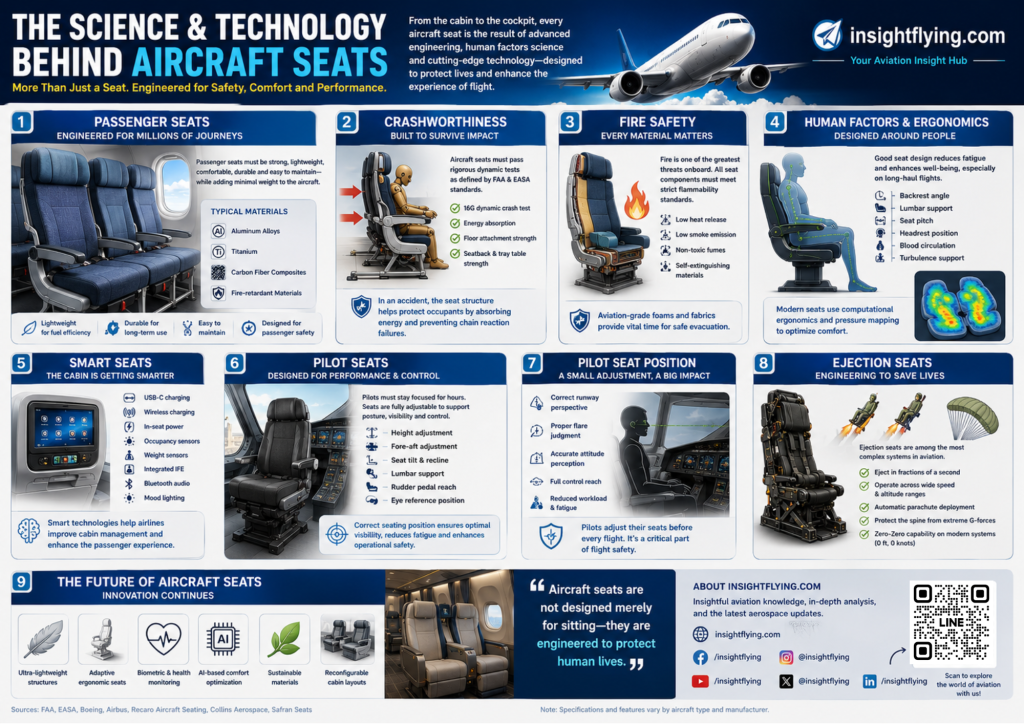
The Science and Technology Behind Aircraft Seats
More Than Just a Place to Sit
When passengers board an aircraft, the very first thing they interact with is the seat.
Yet few people realize that every aircraft seat represents a sophisticated combination of engineering, safety science, ergonomics, materials technology, and human factors design.
From passenger seats in the cabin to pilot seats in the cockpit, every detail is carefully engineered not merely for comfort — but for survivability, operational efficiency, and flight safety.
1. Passenger Seats — Where Every Kilogram Matters
In aviation, weight directly affects fuel consumption and operating cost.
Aircraft passenger seats must therefore be:
- Extremely strong
- Very lightweight
- Fire-resistant
- Energy-absorbing
- Durable
- Easy to maintain
Modern seats commonly use:
- Aluminum alloys
- Titanium
- Carbon fiber composites
- Fire-retardant materials
Even a small weight reduction per seat can save airlines enormous amounts of fuel over the aircraft’s operational lifetime.
2. Crashworthiness — Seats Must Survive Impact
Many people think seatbelts are the primary protection system during accidents.
In reality, the seat structure itself plays a major role in passenger survivability.
Aircraft seats must pass rigorous FAA and EASA dynamic testing standards, including:
- 16G impact testing
- Energy absorption tests
- Floor attachment strength tests
- Tray table and seatback integrity tests
In severe accidents, failed seats can break loose and trigger dangerous chain reactions inside the cabin.
Aircraft seats are therefore engineered not only for comfort, but also for occupant protection.
3. Fire Safety — Every Material Must Resist Fire
Fire is one of the most dangerous threats onboard an aircraft.
For this reason, all seat materials must comply with strict flammability standards, including:
- Low heat release
- Low smoke emission
- Non-toxic fumes
- Self-extinguishing properties
Even seat cushions use specialized aviation-grade foam materials.
The objective is simple: provide enough evacuation time for passengers and crew during emergencies.
4. Human Factors and Ergonomics
Aircraft seat design goes far beyond appearance.
Engineers carefully study:
- Backrest angle
- Lumbar support
- Seat pitch
- Headrest positioning
- Blood circulation
- Fatigue reduction
- Turbulence support
Poor seating design on long-haul flights may contribute to:
- Fatigue
- Discomfort
- Deep Vein Thrombosis (DVT)
Modern aircraft seating increasingly uses computational ergonomics and pressure-mapping technologies to improve passenger comfort and safety.
5. Smart Seats — Aircraft Seats Are Becoming Intelligent
Modern aircraft cabins are integrating advanced smart technologies, including:
- USB-C charging
- Wireless charging
- In-seat power systems
- Occupancy sensors
- Weight sensors
- Integrated inflight entertainment systems
- Bluetooth audio
- Mood-lighting integration
Some systems can even help cabin crew identify empty seats or monitor cabin occupancy patterns in real time.
Future systems may use AI to optimize passenger comfort dynamically during flight.
6. Pilot Seats — Designed for Critical Decision-Making
Pilot seats are fundamentally different from passenger seats.
Pilots must remain highly focused for extended periods while continuously managing aircraft systems and flight operations.
Pilot seats are therefore designed to support:
- Proper posture
- Visibility
- Reachability
- Fatigue reduction
- Spinal support
- Vibration reduction
Pilots can finely adjust:
- Seat height
- Fore-aft position
- Recline angle
- Lumbar support
- Rudder pedal reach
- Eye reference position
This ensures proper alignment with the aircraft’s certified cockpit design eye position.
7. Pilot Seat Position and Flight Safety
An improperly adjusted pilot seat can directly affect flight safety.
Examples include:
- Incorrect runway perspective
- Improper flare judgment
- Misinterpretation of attitude references
- Reduced control reach capability
- Increased workload and fatigue
That is why pilots carefully adjust seating position before every flight.
Seat adjustment is not a minor routine — it is part of professional flight safety practice.
8. Ejection Seats — Extreme Aerospace Engineering
In military aviation, seats can become full-scale life-saving systems.
Ejection seats are among the most sophisticated technologies in aerospace engineering.
They must:
- Eject pilots within fractions of a second
- Operate across wide speed and altitude ranges
- Deploy parachutes automatically
- Protect the spine from extreme G-forces
Modern systems may even provide “Zero-Zero capability,” allowing safe ejection at zero altitude and zero airspeed.
9. The Future of Aircraft Seating
Future aircraft seats may incorporate:
- Ultra-lightweight structures
- Adaptive ergonomic systems
- Biometric monitoring
- Integrated health monitoring
- AI-based comfort optimization
- Sustainable materials
- Reconfigurable cabin layouts
Yet regardless of technological advancement, the core philosophy remains unchanged:
“Aircraft seats are not designed merely for sitting —
they are engineered to protect human lives.”