
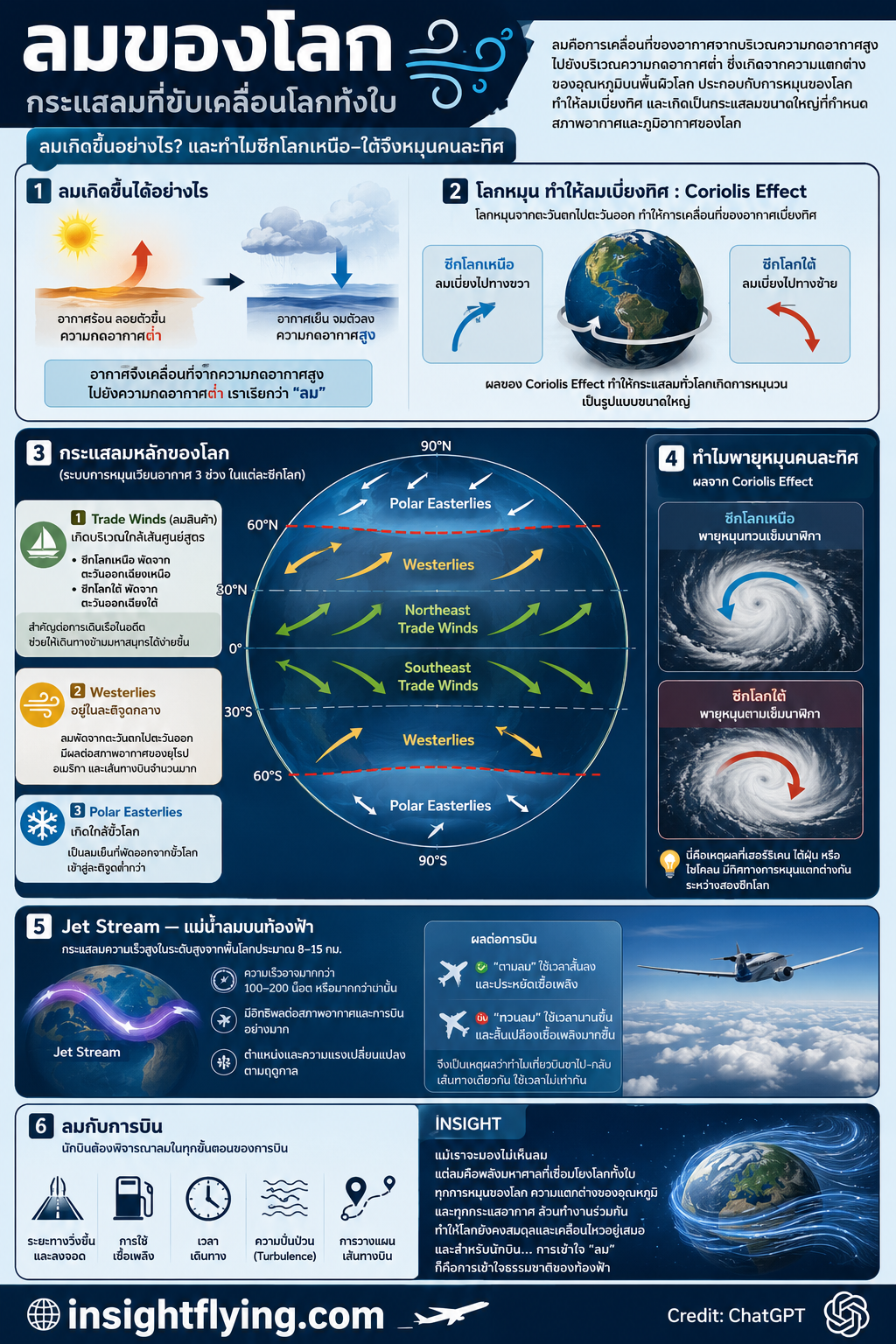
ทำไมกระแสลมของซีกโลกเหนือและใต้จึงหมุนคนละทิศ
โลกของเราไม่ได้หยุดนิ่ง แต่กำลังหมุนอยู่ตลอดเวลา พร้อมกับได้รับพลังงานจากดวงอาทิตย์อย่างไม่เท่ากันในแต่ละพื้นที่ สิ่งเหล่านี้เองคือจุดเริ่มต้นของ “ลม” และระบบกระแสอากาศขนาดมหึมาที่ปกคลุมโลกทั้งใบ
ลมไม่ใช่เพียงอากาศที่เคลื่อนที่ผ่านตัวเราเท่านั้น แต่เป็นกลไกสำคัญที่ควบคุมสภาพอากาศ การเกิดพายุ การบิน การเดินเรือ และสมดุลของภูมิอากาศโลก
ลมเกิดขึ้นได้อย่างไร
ต้นกำเนิดของลมมาจาก “ความแตกต่างของอุณหภูมิ” บนพื้นผิวโลก
บริเวณที่ได้รับความร้อนจากดวงอาทิตย์มาก อากาศจะร้อนและเบา จึงลอยตัวขึ้น เกิดเป็นบริเวณความกดอากาศต่ำ (Low Pressure)
ในขณะที่บริเวณอากาศเย็นกว่า อากาศจะหนาแน่นและหนักกว่า จึงจมตัวลง กลายเป็นบริเวณความกดอากาศสูง (High Pressure)
อากาศจึงเคลื่อนที่จากความกดอากาศสูง ไปยังความกดอากาศต่ำ
การเคลื่อนที่นี้เองที่เราเรียกว่า “ลม”
โลกหมุน ทำให้ลมเบี่ยงทิศ
ถ้าโลกไม่หมุน ลมจะพัดตรงจากขั้วโลกสู่เส้นศูนย์สูตร และย้อนกลับอย่างง่าย ๆ
แต่ในความเป็นจริง โลกหมุนรอบตัวเองตลอดเวลา ทำให้เกิดแรงที่เรียกว่า
Coriolis Effect
แรงนี้ทำให้ทิศทางลม “เบี่ยง”
- ซีกโลกเหนือ ลมจะเบี่ยงไปทางขวา
- ซีกโลกใต้ ลมจะเบี่ยงไปทางซ้าย
ผลของแรงนี้ทำให้กระแสลมทั่วโลกเกิดการหมุนวนเป็นรูปแบบขนาดใหญ่
กระแสลมหลักของโลก
โลกมีระบบหมุนเวียนอากาศหลัก 3 ช่วงในแต่ละซีกโลก
1. Trade Winds (ลมสินค้า)
เกิดบริเวณใกล้เส้นศูนย์สูตร
- ซีกโลกเหนือ พัดจากตะวันออกเฉียงเหนือ
- ซีกโลกใต้ พัดจากตะวันออกเฉียงใต้
ลมชนิดนี้เคยมีความสำคัญมากต่อเรือเดินสมุทรในอดีต เพราะช่วยให้เดินทางข้ามมหาสมุทรได้รวดเร็ว
2. Westerlies
อยู่ในละติจูดกลาง
ลมจะพัดจากตะวันตกไปตะวันออก เป็นกระแสลมสำคัญที่มีผลต่อสภาพอากาศของยุโรป อเมริกา และเส้นทางบินจำนวนมาก
เครื่องบินโดยสารที่บินข้ามมหาสมุทรมักใช้ประโยชน์จากกระแสลมนี้ร่วมกับ Jet Stream เพื่อลดเวลาและประหยัดเชื้อเพลิง
3. Polar Easterlies
เกิดใกล้ขั้วโลก
เป็นลมเย็นที่พัดออกจากขั้วโลกเข้าสู่ละติจูดต่ำกว่า
Jet Stream — แม่น้ำลมบนท้องฟ้า
เหนือพื้นโลกขึ้นไปหลายกิโลเมตร มีกระแสลมความเร็วสูงมากเรียกว่า
Jet Stream
ความเร็วอาจมากกว่า 100–200 น็อต หรือบางครั้งสูงกว่านั้น
Jet Stream มีบทบาทสำคัญต่อการบิน
- เที่ยวบินที่บิน “ตามลม” จะใช้เวลาสั้นลง
- เที่ยวบินที่บิน “ทวนลม” จะใช้เวลานานขึ้น
จึงเป็นเหตุผลว่าทำไมบางครั้งเที่ยวบินเส้นทางเดียวกัน แต่ขาไปและขากลับใช้เวลาไม่เท่ากัน
ทำไมพายุหมุนคนละทิศ
ผลจาก Coriolis Effect ยังทำให้พายุหมุนแตกต่างกันด้วย
ซีกโลกเหนือ
พายุหมุนทวนเข็มนาฬิกา
ซีกโลกใต้
พายุหมุนตามเข็มนาฬิกา
นี่คือเหตุผลว่าทำไมรูปแบบการหมุนของเฮอร์ริเคน ไต้ฝุ่น หรือไซโคลน จึงต่างกันระหว่างสองซีกโลก
ลมกับการบิน
สำหรับนักบิน ลมเป็นปัจจัยสำคัญมาก
ลมมีผลต่อ
- ระยะทางวิ่งขึ้นและลงจอด
- การใช้เชื้อเพลิง
- เวลาเดินทาง
- ความปั่นป่วน (Turbulence)
- การวางแผนเส้นทางบิน
นักบินจึงต้องศึกษาเรื่องกระแสลม สภาพอากาศ และระบบบรรยากาศอย่างละเอียดก่อนทำการบินทุกครั้ง
โลกทั้งใบเชื่อมโยงกันด้วยอากาศที่เคลื่อนที่
แม้เราจะมองไม่เห็นลม แต่ลมคือพลังมหาศาลที่กำหนดสภาพอากาศ การเดินทาง การบิน และชีวิตบนโลก
ทุกการหมุนของโลก ทุกความแตกต่างของอุณหภูมิ และทุกกระแสอากาศ ล้วนเชื่อมโยงกันเป็นระบบเดียวที่ทำให้โลกของเรายังคงสมดุลและเคลื่อนไหวอยู่ตลอดเวลา
และสำหรับนักบิน…
การเข้าใจ “ลม” ก็คือการเข้าใจธรรมชาติของท้องฟ้านั่นเอง।
The Winds of Our Planet
How Global Winds Move the World
Our planet is constantly in motion. The Earth rotates on its axis while receiving uneven heating from the Sun. These two powerful factors create one of the most important natural systems on Earth:
Wind
Wind is far more than moving air. It influences weather, climate, ocean travel, aviation, storms, and even the balance of life on our planet.
Invisible to the eye, global wind systems continuously shape the environment around us.
How Is Wind Created?
Wind is created by differences in temperature and air pressure across the Earth’s surface.
Areas that receive more solar heating become warmer. Warm air expands, becomes lighter, and rises into the atmosphere, creating a region of:
Low Pressure
Meanwhile, colder air is denser and heavier, so it sinks, creating:
High Pressure
Air naturally moves from high-pressure areas toward low-pressure areas.
This movement of air is what we call:
Wind
Earth’s Rotation Changes Wind Direction
If the Earth did not rotate, winds would move in relatively straight paths between the poles and the equator.
However, the Earth spins continuously, creating an effect known as:
The Coriolis Effect
This effect causes moving air to bend rather than travel straight.
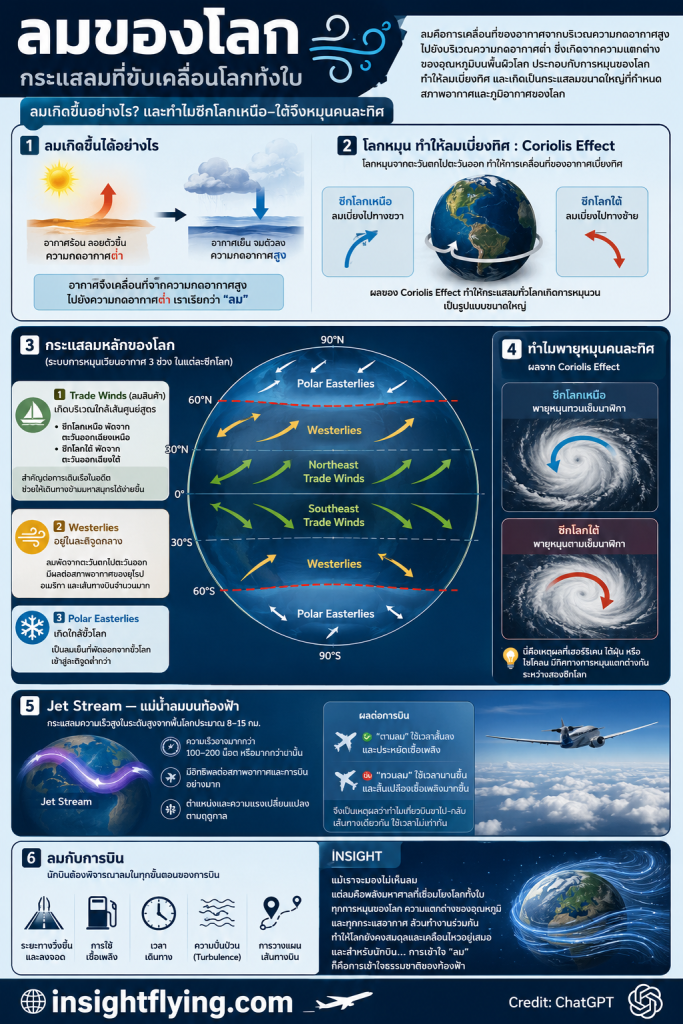
- In the Northern Hemisphere, winds deflect to the right.
- In the Southern Hemisphere, winds deflect to the left.
Because of this, global wind systems form large rotating circulation patterns around the planet.
The Major Global Wind Belts
Earth’s atmosphere is organized into several major wind systems.
1. Trade Winds
These occur near the equator.
- In the Northern Hemisphere, they blow from the northeast.
- In the Southern Hemisphere, they blow from the southeast.
Historically, trade winds were extremely important for sailing ships crossing the oceans.
2. Westerlies
These winds dominate the mid-latitudes.
They generally blow from west to east and strongly influence weather patterns across North America, Europe, and many international flight routes.
Modern aircraft often take advantage of these winds to reduce flight time and fuel consumption.
3. Polar Easterlies
These cold winds originate near the polar regions and flow toward lower latitudes.
They are much colder and drier than winds closer to the equator.
Jet Stream — Rivers of Wind in the Sky
High above the Earth, at cruising altitudes used by commercial aircraft, there are extremely fast-moving air currents called:
Jet Streams
Jet streams can exceed:
- 100–200 knots
- Sometimes even faster
These powerful winds are critically important in aviation.
Aircraft flying with the jet stream may:
- Arrive earlier
- Use less fuel
Aircraft flying against it may:
- Take longer
- Consume more fuel
This is one reason why outbound and return flights on the same route often have different flight times.
Why Do Storms Rotate Differently?
The Coriolis Effect also influences the rotation of storms.
Northern Hemisphere
Storms rotate counterclockwise.
Southern Hemisphere
Storms rotate clockwise.
This is why hurricanes, typhoons, and cyclones spin differently depending on which hemisphere they form in.
Wind and Aviation
For pilots, wind is one of the most important elements in flight operations.
Wind affects:
- Takeoff and landing performance
- Fuel planning
- Flight duration
- Turbulence
- Route selection
- Aircraft handling
Understanding winds and atmospheric circulation is therefore essential for safe and efficient flying.
The Atmosphere Connects the Entire Planet
Although we cannot see the wind itself, global air movement connects every region of the Earth into one enormous atmospheric system.
Every rotation of the Earth, every temperature difference, and every moving air current contributes to the balance of our planet.
And for pilots, understanding the wind means understanding the true nature of the sky itself.