
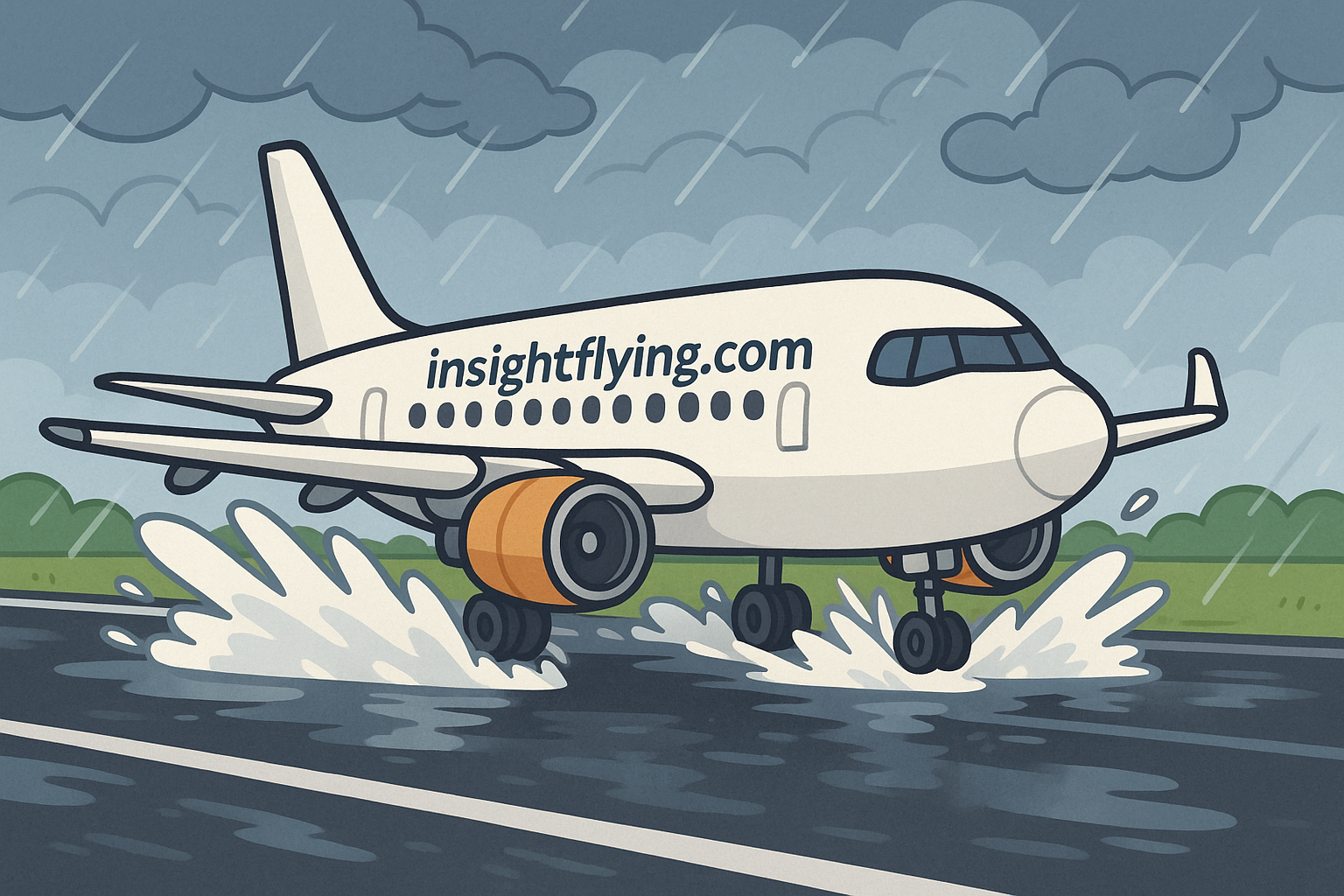
Hydroplaning Explained
Hydroplaning occurs when a layer of water builds up between an aircraft’s tires and the runway surface, causing the tires to lose direct contact with the ground. This results in a loss of traction, making steering, braking, and acceleration less effective, and can be particularly dangerous during takeoff or landing.
การเกิด Hydroplaning
Hydroplaning เกิดขึ้นเมื่อมีน้ำสะสมอยู่ระหว่างยางล้อของเครื่องบินกับพื้นรันเวย์ ทำให้ยางล้อสูญเสียการสัมผัสโดยตรงกับพื้น ซึ่งส่งผลให้แรงเสียดทานลดลง การบังคับเลี้ยว การเบรก และการเร่งความเร็วมีประสิทธิภาพลดลง ทำให้มีความเสี่ยงสูง โดยเฉพาะช่วงการบินขึ้นหรือลงจอด
Types of Hydroplaning
- Dynamic Hydroplaning – Happens when a layer of water on the runway prevents the tire from touching the surface. Usually occurs at higher speeds.
- Viscous Hydroplaning – Occurs when a thin film of water, even on a smooth surface, causes the tire to slide. It can happen at lower speeds compared to dynamic hydroplaning.
- Reverted Rubber Hydroplaning – Happens when brakes lock during heavy braking, generating heat that vaporizes water and lifts the tire off the runway.
ประเภทของ Hydroplaning
- Dynamic Hydroplaning – เกิดเมื่อมีชั้นน้ำบนรันเวย์ป้องกันไม่ให้ยางล้อสัมผัสพื้น มักเกิดที่ความเร็วสูง
- Viscous Hydroplaning – เกิดเมื่อมีฟิล์มน้ำบาง ๆ บนพื้นเรียบ ทำให้ยางล้อเลื่อนได้ แม้ความเร็วต่ำกว่าการเกิด dynamic hydroplaning
- Reverted Rubber Hydroplaning – เกิดเมื่อเบรกล็อกขณะเบรกแรง ทำให้เกิดความร้อนและน้ำระเหยยกยางขึ้นจากพื้น
How to Avoid Hydroplaning
- Reduce speed when landing or taxiing on wet runways.
- Avoid heavy braking until necessary.
- Use proper tire pressure and check tire condition regularly.
- Be cautious in areas with standing water or poor drainage.
วิธีป้องกัน Hydroplaning
- ลดความเร็วขณะลงจอดหรือวิ่งบนรันเวย์เปียก
- หลีกเลี่ยงการเบรกแรงโดยไม่จำเป็น
- ตรวจสอบความดันลมยางและสภาพยางอย่างสม่ำเสมอ
- ระวังบริเวณที่มีน้ำขังหรือระบบระบายน้ำไม่ดี
Precautions and Awareness
- Recognize that hydroplaning risk increases with speed, water depth, and tire wear.
- Use smooth control inputs; avoid abrupt steering or braking.
- Consider runway conditions (grooved vs. smooth) and weather reports before landing or takeoff.
- Always brief crew and passengers about potential wet runway operations.
ข้อควรระวังและการรับรู้
- รับรู้ว่า hydroplaning มีความเสี่ยงมากขึ้นเมื่อความเร็ว น้ำบนรันเวย์ลึก หรือยางสึกหรอ
- ใช้การควบคุมเครื่องบินอย่างนุ่มนวล หลีกเลี่ยงการเลี้ยวหรือเบรกกะทันหัน
- พิจารณาสภาพรันเวย์ (มีร่องน้ำ vs. เรียบ) และรายงานสภาพอากาศก่อนลงจอดหรือบินขึ้น
- แจ้งลูกเรือและผู้โดยสารเกี่ยวกับการปฏิบัติบนรันเวย์เปียก
A350 accident Airbus aircraft airline airmanship attitude aviation Aviation SMS become a captain become a pilot Boeing Crisis Crisis Management diversion emergency engine fatigue flight safety flood go-around Indigo interview judgement management motivation pilot pilot interview qualified pilot safety safety management Safety Management System safety report SMS student pilot technology turbulence weather การจัดการความปลอดภัย การจัดการภาวะวิกฤติ การบิน การสอบสัมภาษณ์ นักบิน ระบบบริหารความปลอดภัย สอบนักบิน