
เมื่อผู้โดยสารขึ้นเครื่องบิน หลายคนอาจคิดว่านักบินเพียงแค่สตาร์ตเครื่องยนต์แล้วบินไปยังจุดหมายปลายทาง แต่ในความเป็นจริง ทุกเที่ยวบินต้องผ่าน “การวางแผนการบิน” หรือ Flight Planning อย่างละเอียดก่อนเครื่องจะเคลื่อนตัวออกจากหลุมจอด
Flight Plan ไม่ใช่เพียงเอกสารที่ส่งให้หอบังคับการบิน แต่คือกระบวนการวิเคราะห์ข้อมูลจำนวนมาก เพื่อให้เที่ยวบินนั้น “ปลอดภัย ประหยัด และเป็นไปตามข้อกำหนด”
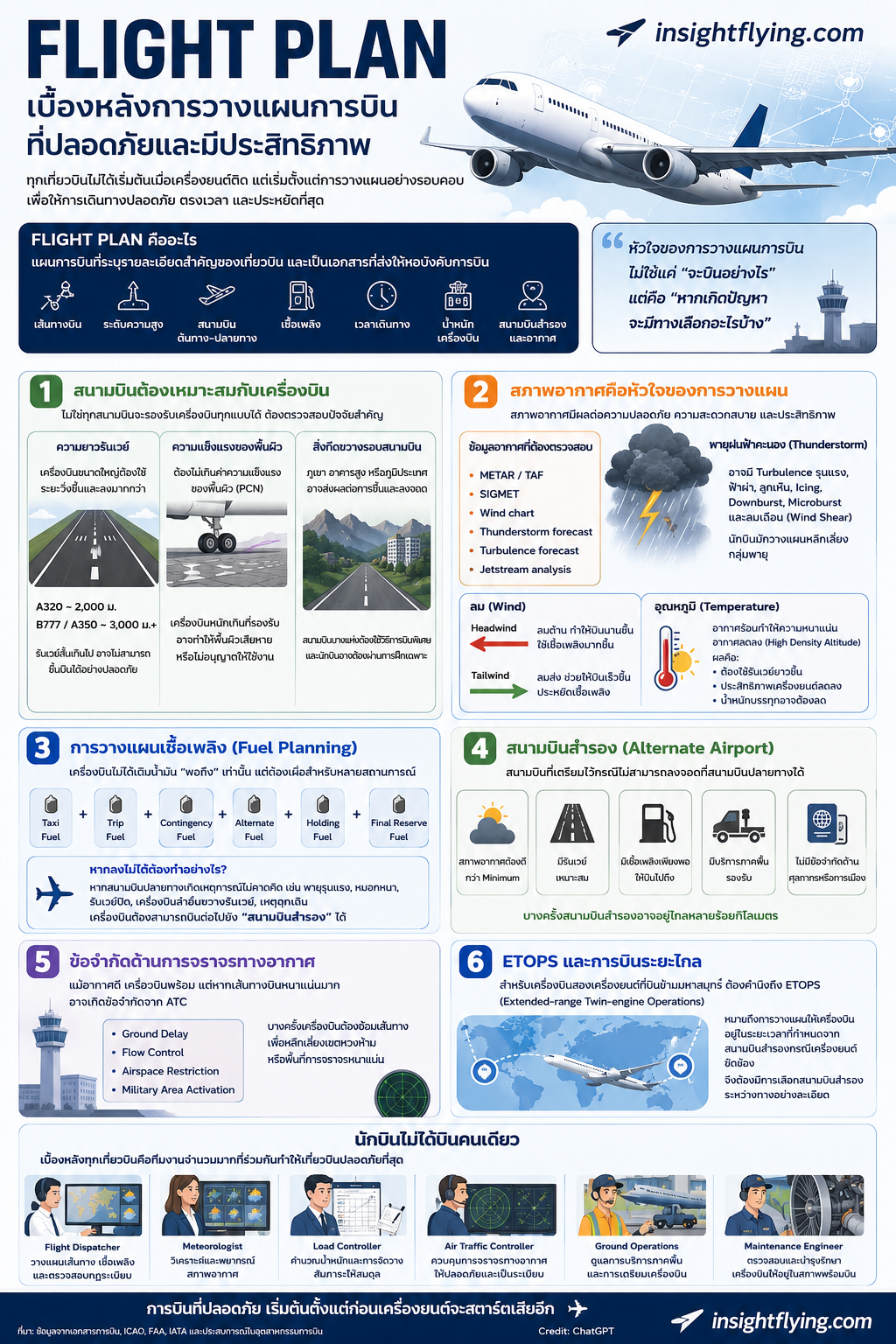
Flight Plan คืออะไร
Flight Plan คือแผนการบินที่ระบุรายละเอียดสำคัญของเที่ยวบิน เช่น
- เส้นทางบิน
- ระดับความสูงบิน
- สนามบินต้นทางและปลายทาง
- ปริมาณเชื้อเพลิง
- เวลาเดินทาง
- น้ำหนักเครื่องบิน
- สนามบินสำรอง
- ข้อมูลสภาพอากาศ
- ข้อจำกัดของเครื่องบินและสนามบิน
สายการบินส่วนใหญ่จะมีทีม Flight Operations หรือ Flight Dispatch ร่วมวางแผนกับนักบินก่อนทุกเที่ยวบิน
1. สนามบินต้องเหมาะสมกับเครื่องบิน
ไม่ใช่ทุกสนามบินจะรองรับเครื่องบินทุกแบบได้
ก่อนวางแผนเที่ยวบิน ต้องตรวจสอบว่าสนามบินปลายทางและสนามบินสำรองเหมาะสมกับเครื่องบินหรือไม่ เช่น
ความยาวรันเวย์
เครื่องบินขนาดใหญ่ต้องใช้ระยะวิ่งขึ้นและลงมากกว่าเครื่องบินขนาดเล็ก
ตัวอย่างเช่น
- Airbus A320 อาจต้องใช้รันเวย์ประมาณ 2,000 เมตรขึ้นไป
- Boeing 777 หรือ Airbus A350 อาจต้องการมากกว่า 3,000 เมตร โดยเฉพาะในสภาพอากาศร้อนหรือบรรทุกหนัก
หากรันเวย์สั้นเกินไป เครื่องบินอาจไม่สามารถขึ้นบินได้อย่างปลอดภัย
ความแข็งแรงของพื้นผิวรันเวย์
สนามบินแต่ละแห่งมีค่าความแข็งแรงของพื้นผิว (PCN – Pavement Classification Number)
หากเครื่องบินหนักเกินกว่าที่สนามบินรองรับ อาจทำให้พื้นผิวเสียหาย หรือไม่อนุญาตให้ใช้งาน
สิ่งกีดขวางรอบสนามบิน
ภูเขา อาคารสูง หรือภูมิประเทศ อาจส่งผลต่อการขึ้นและลงจอด
สนามบินบางแห่ง เช่น
- สนามบินในหุบเขา
- สนามบินบนเกาะ
- สนามบินที่มีภูเขาล้อมรอบ
จำเป็นต้องใช้วิธีการบินพิเศษ และนักบินอาจต้องผ่านการฝึกเฉพาะสนามบินนั้น
2. สภาพอากาศคือหัวใจของการวางแผน
Weather is everything in aviation.
สภาพอากาศมีผลต่อทั้งความปลอดภัย ความสะดวกสบาย และประสิทธิภาพของเที่ยวบิน
นักบินและ Dispatcher ต้องตรวจสอบข้อมูลอากาศหลายประเภท เช่น
- METAR
- TAF
- SIGMET
- Wind chart
- Thunderstorm forecast
- Turbulence forecast
- Jetstream analysis
พายุฝนฟ้าคะนอง (Thunderstorm)
Thunderstorm ถือเป็นหนึ่งในสภาพอากาศที่อันตรายที่สุดสำหรับการบิน
ภายในกลุ่มเมฆ CB (Cumulonimbus) อาจมี
- Turbulence รุนแรง
- ฟ้าผ่า
- ลูกเห็บ
- Icing
- Downburst
- Microburst
- ลมเฉือน (Wind Shear)
นักบินมักวางแผนหลีกเลี่ยงกลุ่มพายุ ไม่บินทะลุโดยตรง
ลมและอุณหภูมิ
ลมมีผลต่อเวลาและเชื้อเพลิง
Headwind
ลมต้านทำให้เครื่องบินใช้เวลาบินนานขึ้น และใช้เชื้อเพลิงมากขึ้น
Tailwind
ลมส่งช่วยให้บินเร็วขึ้น ประหยัดเชื้อเพลิง
อุณหภูมิสูง
อากาศร้อนทำให้ความหนาแน่นอากาศลดลง (High Density Altitude)
ผลคือ
- เครื่องบินต้องใช้รันเวย์ยาวขึ้น
- ประสิทธิภาพเครื่องยนต์ลดลง
- น้ำหนักบรรทุกอาจต้องลด
นี่คือเหตุผลที่บางสนามบินในประเทศร้อนจัด อาจต้องจำกัดน้ำหนักเครื่องบินในช่วงกลางวัน

3. การวางแผนเชื้อเพลิง (Fuel Planning)
หนึ่งในส่วนสำคัญที่สุดของ Flight Planning คือเชื้อเพลิง
เครื่องบินไม่ได้เติมน้ำมัน “พอถึง” เท่านั้น แต่ต้องเผื่อสำหรับหลายสถานการณ์
เช่น
- Taxi fuel
- Trip fuel
- Contingency fuel
- Alternate fuel
- Holding fuel
- Final reserve fuel
หากลงไม่ได้ต้องทำอย่างไร
นักบินต้องเตรียมแผนสำรองเสมอ
หากสนามบินปลายทางเกิด
- พายุรุนแรง
- หมอกหนา
- รันเวย์ปิด
- เครื่องบินลำอื่นขวางรันเวย์
- เหตุฉุกเฉิน
เครื่องบินต้องสามารถบินต่อไปยัง “สนามบินสำรอง” ได้
4. สนามบินสำรอง (Alternate Airport)
Alternate Airport คือสนามบินที่เตรียมไว้กรณีไม่สามารถลงจอดที่สนามบินปลายทางได้
การเลือกสนามบินสำรองต้องพิจารณาหลายเรื่อง เช่น
- สภาพอากาศต้องดีกว่า Minimum
- มีรันเวย์เหมาะสม
- มีเชื้อเพลิงเพียงพอให้บินไปถึง
- มีบริการภาคพื้นรองรับ
- ไม่มีข้อจำกัดด้านศุลกากรหรือการเมือง
บางครั้งสนามบินสำรองอาจอยู่ไกลหลายร้อยกิโลเมตร
5. ข้อจำกัดด้านการจราจรทางอากาศ
แม้อากาศดี เครื่องบินพร้อม แต่หากเส้นทางบินหนาแน่นมาก อาจเกิดข้อจำกัดจาก ATC
เช่น
- Ground Delay
- Flow Control
- Airspace Restriction
- Military Area Activation
บางครั้งเครื่องบินต้องอ้อมเส้นทางเพื่อหลีกเลี่ยงเขตหวงห้าม หรือพื้นที่การจราจรหนาแน่น
6. ETOPS และการบินระยะไกล
สำหรับเครื่องบินสองเครื่องยนต์ที่บินข้ามมหาสมุทร ต้องคำนึงถึง ETOPS (Extended-range Twin-engine Operations)
หมายถึงการวางแผนให้เครื่องบินอยู่ในระยะเวลาที่กำหนดจากสนามบินสำรองกรณีเครื่องยนต์ขัดข้อง
จึงต้องมีการเลือกสนามบินสำรองระหว่างทางอย่างละเอียด
นักบินไม่ได้บินคนเดียว
แม้นักบินจะเป็นผู้ควบคุมเครื่องบิน แต่เบื้องหลังทุกเที่ยวบินคือทีมงานจำนวนมาก
- Flight Dispatcher
- Meteorologist
- Load Controller
- Air Traffic Controller
- Ground Operations
- Maintenance Engineer
ทุกฝ่ายร่วมกันทำให้เที่ยวบินปลอดภัยที่สุด
Flight Plan คือการบริหารความเสี่ยง
หัวใจของ Flight Planning ไม่ใช่แค่ “จะบินอย่างไร”
แต่คือ
“หากเกิดปัญหา จะมีทางเลือกอะไรบ้าง”
การบินที่ปลอดภัย จึงเริ่มต้นตั้งแต่ก่อนเครื่องยนต์จะสตาร์ตเสียอีก
และนี่คือเหตุผลที่อุตสาหกรรมการบินกลายเป็นหนึ่งในระบบขนส่งที่ปลอดภัยที่สุดในโลก
Flight Plan: The Hidden Science Behind Safe and Efficient Air Travel
When passengers board an aircraft, many assume the pilots simply start the engines and fly to the destination. In reality, every flight goes through a detailed process called Flight Planning long before the aircraft begins to move.
A Flight Plan is not just a document submitted to Air Traffic Control. It is a comprehensive operational analysis designed to ensure that the flight is safe, efficient, and compliant with regulations.
What Is a Flight Plan?
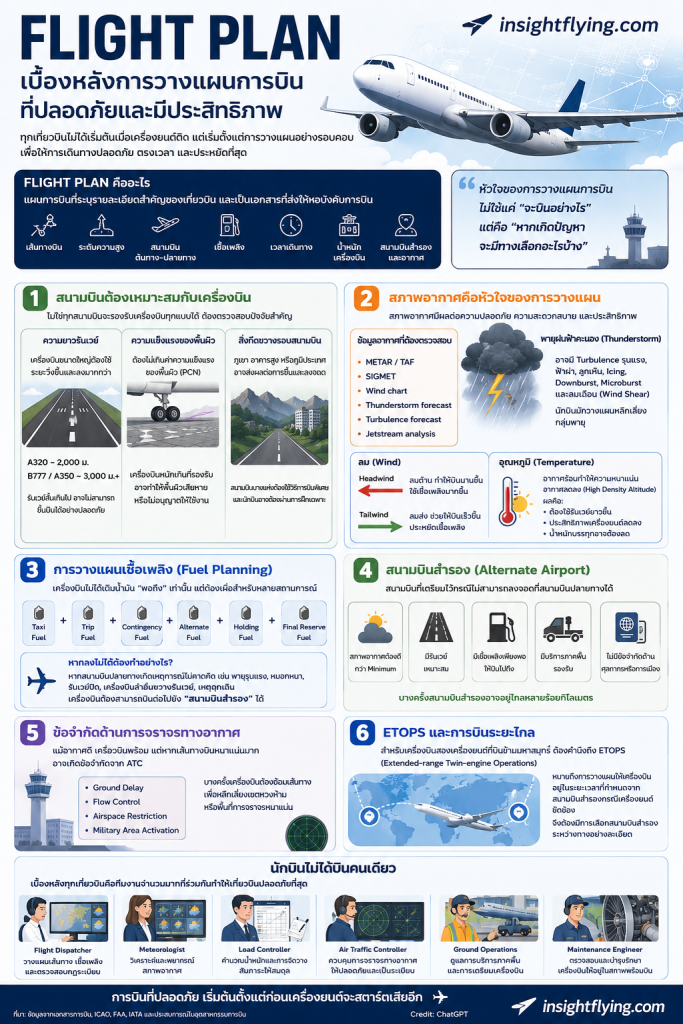
A Flight Plan contains critical information about a flight, including:
- Flight route
- Cruising altitude
- Departure and destination airports
- Fuel requirements
- Estimated flight time
- Aircraft weight
- Alternate airports
- Weather information
- Aircraft and airport limitations
In most airlines, flight planning is conducted jointly by pilots and the Flight Operations or Flight Dispatch team.
1. The Airport Must Be Suitable for the Aircraft
Not every airport can accommodate every type of aircraft.
Before planning a flight, operators must verify whether the destination and alternate airports are suitable for the aircraft involved.

|
|
หนังสือ “ด้านมืดของสายการบิน” เรื่องลับ ๆ ในมุมอับที่คนภายนอกไม่ค่อยรู้
Runway Length
Large aircraft require longer distances for takeoff and landing.
For example:
- An Airbus A320 may require approximately 2,000 meters of runway
- A Boeing 777 or Airbus A350 may require more than 3,000 meters, especially in hot weather or at heavy operating weights
If the runway is too short, the aircraft may not be able to operate safely.
Runway Strength
Each airport has a pavement strength rating known as PCN (Pavement Classification Number).
If the aircraft weight exceeds the airport’s structural limit, the runway could be damaged or operations may not be permitted.
Obstacles and Terrain
Mountains, tall buildings, and surrounding terrain can significantly affect takeoff and landing operations.
Airports located:
- In valleys
- On islands
- In mountainous terrain
may require special procedures, and pilots may need specific training or qualifications for those airports.
2. Weather Is the Heart of Flight Planning
Weather plays a major role in aviation safety, passenger comfort, and operational efficiency.
Pilots and dispatchers analyze multiple weather products, including:
- METAR
- TAF
- SIGMET
- Wind charts
- Thunderstorm forecasts
- Turbulence forecasts
- Jetstream analysis
Thunderstorms
Thunderstorms are among the most dangerous weather phenomena in aviation.
Inside a Cumulonimbus (CB) cloud, aircraft may encounter:
- Severe turbulence
- Lightning
- Hail
- Icing
- Downbursts
- Microbursts
- Wind shear
Pilots normally avoid flying directly through thunderstorms and instead plan routes around them whenever possible.
Wind and Temperature
Wind directly affects flight time and fuel consumption.
Headwind
A headwind slows the aircraft, increasing flight time and fuel burn.
Tailwind
A tailwind helps the aircraft move faster and improves fuel efficiency.
High Temperature
Hot air reduces air density, creating what pilots call High Density Altitude conditions.
This can result in:
- Longer takeoff distance
- Reduced engine performance
- Payload restrictions
This is why some airports in very hot climates may impose aircraft weight limitations during daytime operations.
3. Fuel Planning
Fuel planning is one of the most critical elements of flight operations.
Aircraft do not carry fuel “just enough” to reach the destination. Additional fuel is required for multiple scenarios.
These may include:
- Taxi fuel
- Trip fuel
- Contingency fuel
- Alternate fuel
- Holding fuel
- Final reserve fuel
What Happens If the Aircraft Cannot Land?
Pilots must always prepare backup plans.
If the destination airport experiences:
- Severe weather
- Dense fog
- Runway closure
- A disabled aircraft blocking the runway
- Any emergency situation
the aircraft must have enough fuel to continue safely to an alternate airport.
4. Alternate Airports
An Alternate Airport is a backup airport selected in case landing at the destination becomes impossible.
Selecting an alternate airport involves many considerations, such as:
- Weather conditions above operational minimums
- Suitable runway length and facilities
- Sufficient fuel to reach the airport
- Ground handling capability
- Customs or political restrictions
In some cases, alternate airports may be located hundreds of kilometers away.
5. Air Traffic Restrictions
Even when the weather is good and the aircraft is ready, flights may still face Air Traffic Control restrictions due to congestion.
Examples include:
- Ground delays
- Flow control
- Airspace restrictions
- Military area activation
Aircraft may need to reroute to avoid restricted or heavily congested airspace.
6. ETOPS and Long-Range Operations
For twin-engine aircraft operating over oceans or remote areas, ETOPS (Extended-range Twin-engine Operations) becomes an important consideration.
ETOPS regulations require the aircraft to remain within a specified flying time from a suitable diversion airport in case of an engine failure or other emergency.
This requires careful selection of en-route alternate airports.
Pilots Never Work Alone
Although pilots operate the aircraft, every flight depends on a large team behind the scenes, including:
- Flight Dispatchers
- Meteorologists
- Load Controllers
- Air Traffic Controllers
- Ground Operations Personnel
- Maintenance Engineers
Together, they ensure each flight operates as safely as possible.
Flight Planning Is Risk Management
The true purpose of Flight Planning is not simply deciding how to fly from one point to another.
Its real purpose is asking:
“What if something goes wrong — and what are our options?”
Safe aviation begins long before the engines start.
And that is one of the reasons aviation has become one of the safest forms of transportation in the world.