
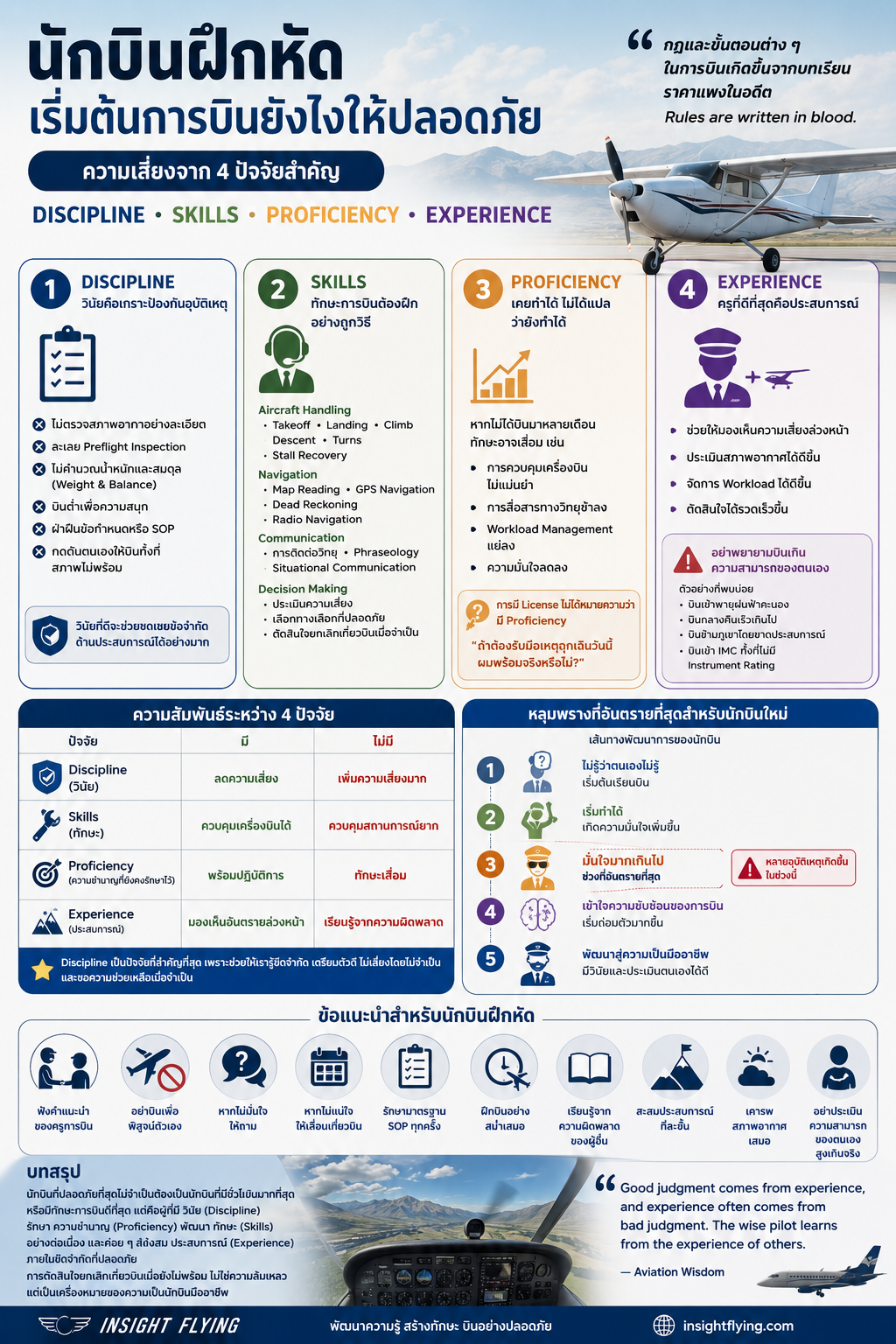
ความเสี่ยงจาก Discipline, Skills, Proficiency และ Experience
การเป็นนักบินไม่ใช่เพียงการเรียนรู้วิธีบังคับเครื่องบินให้ขึ้นและลงจอดได้เท่านั้น แต่เป็นกระบวนการพัฒนาความรู้ ทักษะ วินัย และประสบการณ์อย่างต่อเนื่อง
ในความเป็นจริง อุบัติเหตุทางการบินจำนวนมากไม่ได้เกิดจากเครื่องบินขัดข้อง แต่เกิดจาก “มนุษย์” โดยเฉพาะนักบินที่ยังมีประสบการณ์น้อย หรือประเมินความสามารถของตนเองสูงเกินไป
สำหรับนักบินฝึกหัด (Student Pilot) และนักบินใหม่ (Low Time Pilot) ความเสี่ยงหลักมักเกี่ยวข้องกับ 4 ปัจจัยสำคัญ ได้แก่
- Discipline (วินัย)
- Skills (ทักษะ)
- Proficiency (ความชำนาญที่ยังคงรักษาไว้)
- Experience (ประสบการณ์)
1. Discipline – วินัยคือเกราะป้องกันอุบัติเหตุ
นักบินที่มีทักษะดีแต่ขาดวินัย อาจเป็นอันตรายมากกว่านักบินที่มีประสบการณ์น้อยแต่ปฏิบัติตามกฎอย่างเคร่งครัด
ตัวอย่างพฤติกรรมที่มักนำไปสู่ความเสี่ยง
✘ ไม่ตรวจสภาพอากาศอย่างละเอียด
✘ ละเลย Preflight Inspection
✘ ไม่คำนวณน้ำหนักและสมดุล (Weight & Balance)
✘ บินต่ำเพื่อความสนุก
✘ ฝ่าฝืนข้อกำหนดหรือ SOP
✘ กดดันตนเองให้บินทั้งที่สภาพไม่พร้อม
นักบินมือใหม่ควรจำไว้เสมอว่า
“Rules are written in blood.”
กฎระเบียบและขั้นตอนต่าง ๆ ในการบินเกิดขึ้นจากบทเรียนราคาแพงในอดีต
วินัยที่ดีจะช่วยชดเชยข้อจำกัดด้านประสบการณ์ได้อย่างมาก
2. Skills – ทักษะการบินต้องฝึกอย่างถูกวิธี
การควบคุมเครื่องบินเป็นเพียงส่วนหนึ่งของทักษะนักบิน
ทักษะที่สำคัญประกอบด้วย
Aircraft Handling
- Takeoff
- Landing
- Climb
- Descent
- Turns
- Stall Recovery
Navigation
- Map Reading
- GPS Navigation
- Dead Reckoning
- Radio Navigation
Communication
- การติดต่อวิทยุ
- Phraseology
- Situational Communication
Decision Making
- ประเมินความเสี่ยง
- เลือกทางเลือกที่ปลอดภัย
- ตัดสินใจยกเลิกเที่ยวบินเมื่อจำเป็น
นักบินหลายคนให้ความสำคัญกับการ Landing สวย แต่ละเลยทักษะการตัดสินใจ ซึ่งเป็นสาเหตุของอุบัติเหตุจำนวนมาก
3. Proficiency – เคยทำได้ ไม่ได้แปลว่ายังทำได้
Proficiency หมายถึง
“ความสามารถที่ยังคงรักษาระดับไว้ได้ในปัจจุบัน”
นักบินหลายคนมีใบอนุญาตถูกต้อง แต่ไม่ได้บินมาหลายเดือน
เมื่อกลับมาบินอีกครั้งอาจพบว่า
- การควบคุมเครื่องบินไม่แม่นยำ
- การสื่อสารทางวิทยุช้าลง
- Workload Management แย่ลง
- ความมั่นใจลดลง
การมี License ไม่ได้หมายความว่ามี Proficiency
นักบินควรถามตนเองเสมอว่า
“ถ้าต้องรับมือเหตุฉุกเฉินวันนี้ ผมพร้อมจริงหรือไม่?”
ติดตามยูทูป Insightflying.com ได้ที่นี่ครับ
4. Experience – ครูที่ดีที่สุดคือประสบการณ์
ประสบการณ์ช่วยให้นักบิน
- มองเห็นความเสี่ยงล่วงหน้า
- ประเมินสภาพอากาศได้ดีขึ้น
- จัดการ Workload ได้ดีขึ้น
- ตัดสินใจได้รวดเร็วขึ้น
อย่างไรก็ตาม
ประสบการณ์ไม่สามารถเร่งให้เกิดขึ้นได้
นักบินทุกคนต้องสะสมชั่วโมงบินทีละน้อย
สิ่งสำคัญคือ
อย่าพยายามบินเกินความสามารถของตนเอง
ตัวอย่างที่พบบ่อย
- นักบินใหม่บินเข้าพายุฝนฟ้าคะนอง
- บินกลางคืนเร็วเกินไป
- บินข้ามภูเขาโดยขาดประสบการณ์
- บินเข้า IMC ทั้งที่ไม่มี Instrument Rating
อุบัติเหตุจำนวนมากเกิดจากนักบินพยายามทำภารกิจที่เกินระดับประสบการณ์ของตน
ความสัมพันธ์ระหว่าง Discipline, Skills, Proficiency และ Experience
ลองจินตนาการเป็นตารางดังนี้
| ปัจจัย | มี | ไม่มี |
|---|---|---|
| Discipline | ลดความเสี่ยง | เพิ่มความเสี่ยงมาก |
| Skills | ควบคุมเครื่องบินได้ | ควบคุมสถานการณ์ยาก |
| Proficiency | พร้อมปฏิบัติการ | ทักษะเสื่อม |
| Experience | มองเห็นอันตรายล่วงหน้า | เรียนรู้จากความผิดพลาด |
สิ่งที่น่าสนใจคือ
Discipline เป็นปัจจัยที่สำคัญที่สุด
เพราะนักบินที่มีวินัยจะ
- รู้ขีดจำกัดของตน
- เตรียมตัวดีกว่า
- ไม่เสี่ยงโดยไม่จำเป็น
- ขอความช่วยเหลือเมื่อจำเป็น
หลุมพรางที่อันตรายที่สุดสำหรับนักบินใหม่
นักบินฝึกหัดมักผ่านช่วงพัฒนาการดังนี้
1. ไม่รู้ว่าตนเองไม่รู้
เริ่มต้นเรียนบิน
2. เริ่มทำได้
เกิดความมั่นใจเพิ่มขึ้น
3. มั่นใจมากเกินไป
ช่วงที่อันตรายที่สุด
4. เข้าใจความซับซ้อนของการบิน
เริ่มถ่อมตัวมากขึ้น
5. พัฒนาสู่ความเป็นมืออาชีพ
มีวินัยและประเมินตนเองได้ดี
หลายอุบัติเหตุเกิดขึ้นในช่วงที่ 3 เพราะนักบินเริ่มรู้สึกว่า “ตัวเองเก่งแล้ว”
ข้อแนะนำสำหรับนักบินฝึกหัด
✓ ฟังคำแนะนำของครูการบิน
✓ อย่าบินเพื่อพิสูจน์ตัวเอง
✓ หากไม่มั่นใจ ให้ถาม
✓ หากไม่แน่ใจ ให้เลื่อนเที่ยวบิน
✓ รักษามาตรฐาน SOP ทุกครั้ง
✓ ฝึกบินอย่างสม่ำเสมอ
✓ เรียนรู้จากความผิดพลาดของผู้อื่น
✓ สะสมประสบการณ์ทีละขั้น
✓ เคารพสภาพอากาศเสมอ
✓ อย่าประเมินความสามารถของตนเองสูงเกินจริง
บทสรุป
นักบินที่ปลอดภัยที่สุดไม่จำเป็นต้องเป็นนักบินที่มีชั่วโมงบินมากที่สุด หรือมีทักษะการบินดีที่สุด
แต่คือผู้ที่มี วินัย (Discipline) รักษา ความชำนาญ (Proficiency) พัฒนา ทักษะ (Skills) อย่างต่อเนื่อง และค่อย ๆ สั่งสม ประสบการณ์ (Experience) ภายในขีดจำกัดที่ปลอดภัย
ในโลกการบิน การตัดสินใจยกเลิกเที่ยวบินเมื่อยังไม่พร้อม ไม่ใช่ความล้มเหลว
แต่เป็นเครื่องหมายของความเป็นนักบินมืออาชีพ
“Good judgment comes from experience, and experience often comes from bad judgment. The wise pilot learns from the experience of others.” — Aviation Wisdom
สำหรับนักบินฝึกหัด สิ่งที่สำคัญที่สุดไม่ใช่การบินให้เก่งเร็วที่สุด แต่คือการสร้างนิสัยและทัศนคติที่จะทำให้คุณบินได้อย่างปลอดภัยตลอดอาชีพการบินของคุณ.
Student Pilots: How to Start Flying Safely
Understanding the Risks of Discipline, Skills, Proficiency, and Experience
Learning to fly is one of the most rewarding journeys in aviation. The ability to take control of an aircraft and navigate through the sky is both exciting and challenging. However, becoming a safe pilot requires far more than simply learning how to take off and land.
Many aviation accidents are not caused by mechanical failures but by human factors. For student pilots and newly licensed pilots, the greatest risks often arise from four critical areas:
- Discipline
- Skills
- Proficiency
- Experience
Understanding these factors can help pilots build a strong foundation for a safe and successful flying career.
1. Discipline: The Foundation of Aviation Safety
Discipline is often the most important characteristic of a safe pilot.
A highly skilled pilot who lacks discipline can be far more dangerous than a less experienced pilot who consistently follows procedures and regulations.
Common examples of poor discipline include:
- Failing to conduct a thorough weather briefing
- Skipping or rushing the preflight inspection
- Neglecting weight and balance calculations
- Flying at unnecessarily low altitudes for enjoyment
- Ignoring standard operating procedures (SOPs)
- Continuing a flight despite feeling unprepared
Pilots should always remember:
“Rules are written in blood.”
Aviation regulations and procedures exist because lessons have been learned through previous accidents and incidents.
Strong discipline helps compensate for limited experience and significantly reduces operational risk.
2. Skills: Flying Requires More Than Aircraft Control
When people think about pilot skills, they often imagine controlling the aircraft. While aircraft handling is important, professional piloting requires much more.
Key skill areas include:
Aircraft Handling
- Takeoff and landing
- Climbing and descending
- Turns and maneuvering
- Stall recognition and recovery
Navigation
- Reading aeronautical charts
- GPS navigation
- Dead reckoning
- Radio navigation
Communication
- Air traffic control communications
- Standard phraseology
- Situational communication
Aeronautical Decision Making
- Risk assessment
- Evaluating alternatives
- Knowing when to delay, divert, or cancel a flight
Many pilots spend considerable effort improving their landing technique while neglecting decision-making skills. Yet poor decisions are involved in a large percentage of aviation accidents.
3. Proficiency: Being Licensed Does Not Mean Being Current
Proficiency refers to maintaining the ability to perform at a safe and effective level.
A pilot may hold a valid license and medical certificate but still experience a decline in proficiency if they have not flown regularly.
After a prolonged period away from flying, pilots may notice:
- Reduced aircraft control accuracy
- Slower radio communications
- Increased workload
- Lower confidence levels
- Slower responses during abnormal situations
Holding a pilot certificate does not automatically mean a pilot is ready to handle every situation safely.
Pilots should regularly ask themselves:
“If an emergency occurred today, would I be fully prepared to handle it?”
Maintaining proficiency requires continuous practice, recurrent training, and honest self-assessment.
4. Experience: Aviation’s Greatest Teacher
Experience allows pilots to recognize hazards before they become threats.
As experience grows, pilots become better at:
- Assessing weather conditions
- Managing cockpit workload
- Identifying developing risks
- Making timely decisions
- Handling unexpected situations
However, experience cannot be rushed.
Every pilot must build experience gradually through training and operational exposure.
One of the most common causes of accidents among low-time pilots is attempting flights beyond their experience level.
Examples include:
- Flying near thunderstorms without sufficient experience
- Conducting night flights too early in a pilot’s development
- Crossing mountainous terrain without proper preparation
- Entering instrument meteorological conditions (IMC) without an instrument rating
Safe pilots understand their limitations and operate within them.
The Relationship Between the Four Factors
These four factors work together to influence flight safety.
| Factor | When Present | When Absent |
|---|---|---|
| Discipline | Reduces risk | Greatly increases risk |
| Skills | Enables effective aircraft control | Limits pilot capability |
| Proficiency | Maintains operational readiness | Skills deteriorate |
| Experience | Improves judgment and hazard recognition | Increases learning through mistakes |
Interestingly, discipline often has the greatest impact.
A disciplined pilot is more likely to:
- Recognize personal limitations
- Prepare thoroughly
- Avoid unnecessary risks
- Seek advice when needed
- Cancel a flight when conditions are unsuitable
The Most Dangerous Trap for New Pilots
Many pilots progress through the following stages:
Stage 1: Unconscious Incompetence
The pilot does not yet realize how much there is to learn.
Stage 2: Growing Competence
Basic skills improve and confidence increases.
Stage 3: Overconfidence
The most dangerous stage.
Pilots may begin to believe they are more capable than they truly are.
Stage 4: Realization of Complexity
The pilot gains a deeper appreciation of aviation’s challenges and risks.
Stage 5: Professional Maturity
The pilot develops sound judgment, discipline, and self-awareness.
Many accidents occur during the overconfidence stage, when pilots underestimate risk and overestimate their abilities.
Practical Advice for Student Pilots
- Listen carefully to your flight instructor.
- Never fly to prove something to others.
- Ask questions whenever you are uncertain.
- Delay or cancel a flight if you are not comfortable.
- Follow SOPs consistently.
- Fly regularly to maintain proficiency.
- Learn from the mistakes of others.
- Build experience gradually.
- Respect weather at all times.
- Be honest about your limitations.
Remember that aviation rewards humility and punishes complacency.
Conclusion
The safest pilots are not necessarily those with the most flight hours or the best aircraft handling skills.
They are the pilots who consistently demonstrate discipline, continuously improve their skills, maintain proficiency, and gradually build experience within safe limits.
In aviation, choosing not to fly when conditions are unfavorable is not a sign of weakness.
It is a sign of professionalism.
As the aviation community often says:
“Good judgment comes from experience, and experience often comes from bad judgment. The wise pilot learns from the experience of others.”
For student pilots, the goal should not be to become an expert as quickly as possible.
The goal should be to develop the habits, attitudes, and judgment that will support a lifetime of safe flying.