
ตลอดหลายสิบปีที่ผ่านมา เครื่องบินพาณิชย์ทั่วโลกใช้น้ำมันเชื้อเพลิงประเภท Jet Fuel หรือ Jet A-1 เป็นแหล่งพลังงานหลัก แม้เครื่องยนต์ไอพ่นสมัยใหม่จะมีประสิทธิภาพสูงขึ้นเรื่อย ๆ แต่ปริมาณการเดินทางทางอากาศที่เพิ่มขึ้นอย่างต่อเนื่อง ทำให้อุตสาหกรรมการบินยังคงเป็นหนึ่งในภาคส่วนที่ปล่อยก๊าซเรือนกระจกในระดับสูง
ด้วยเหตุนี้ อุตสาหกรรมการบินทั่วโลกจึงกำลังมองหาแนวทางลดผลกระทบต่อสิ่งแวดล้อม และหนึ่งในเทคโนโลยีที่ได้รับความสนใจมากที่สุดในปัจจุบันคือ SAF (Sustainable Aviation Fuel) หรือ เชื้อเพลิงการบินแบบยั่งยืน
หลายฝ่ายมองว่า SAF คือ “สะพานเชื่อม” ระหว่างการบินในปัจจุบันกับการบินไร้มลพิษในอนาคต
SAF คืออะไร?
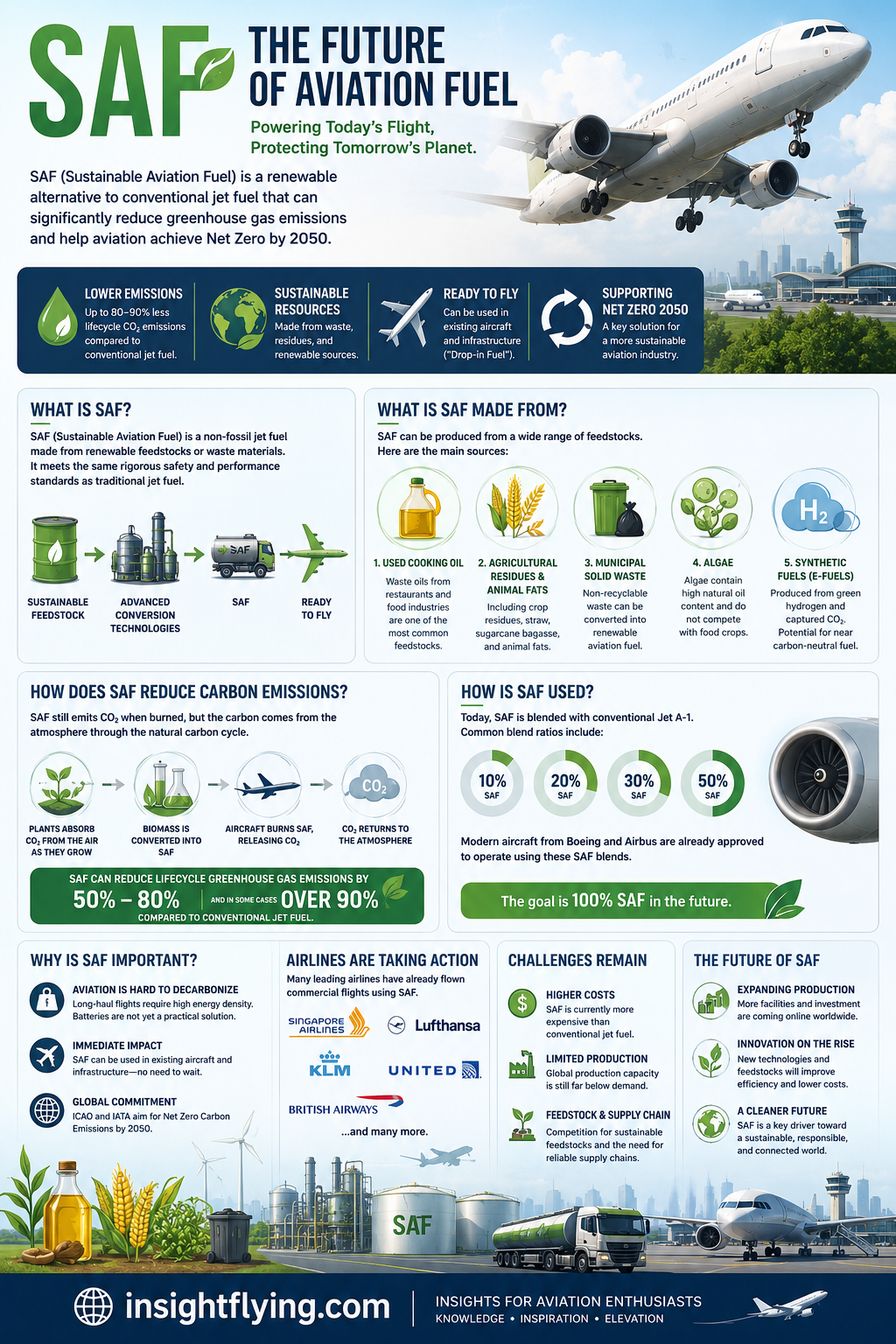
SAF หรือ Sustainable Aviation Fuel คือเชื้อเพลิงสำหรับอากาศยานที่ผลิตจากวัตถุดิบหมุนเวียนหรือของเสียต่าง ๆ แทนการใช้น้ำมันดิบจากฟอสซิล
แม้จะมีแหล่งกำเนิดต่างจากน้ำมันเครื่องบินแบบดั้งเดิม แต่ SAF ถูกออกแบบให้มีคุณสมบัติทางเคมีใกล้เคียงกับ Jet A-1 มากที่สุด
ข้อสำคัญคือ
SAF สามารถนำมาใช้กับเครื่องบินและเครื่องยนต์ปัจจุบันได้โดยแทบไม่ต้องดัดแปลงระบบใด ๆ
จึงถูกเรียกว่า
“Drop-in Fuel”
หมายถึงสามารถเติมลงในระบบเชื้อเพลิงเดิมได้ทันที
SAF ผลิตจากอะไร?
หลายคนอาจคิดว่า SAF ทำจากพืชเพียงอย่างเดียว แต่ในความเป็นจริงสามารถผลิตได้จากวัตถุดิบหลากหลายประเภท
1. น้ำมันปรุงอาหารใช้แล้ว (Used Cooking Oil)
น้ำมันทอดอาหารจากร้านอาหารและโรงงานอุตสาหกรรม
- น้ำมันปาล์มใช้แล้ว
- น้ำมันถั่วเหลืองใช้แล้ว
- น้ำมันพืชใช้แล้ว
ปัจจุบันเป็นหนึ่งในแหล่งวัตถุดิบหลักของ SAF
2. ไขมันสัตว์และของเสียทางการเกษตร
เช่น
- ไขมันสัตว์จากโรงฆ่าสัตว์
- เศษพืชเหลือทิ้ง
- ฟางข้าว
- ซังข้าวโพด
- กากอ้อย
ช่วยเพิ่มมูลค่าให้กับของเสียทางการเกษตร
3. ขยะชุมชน (Municipal Waste)
ขยะที่ไม่สามารถนำกลับมาใช้ใหม่ได้
สามารถแปรรูปเป็นเชื้อเพลิงผ่านกระบวนการทางเคมีและชีวภาพ
ช่วยลดปริมาณขยะฝังกลบได้อีกทางหนึ่ง
4. สาหร่าย (Algae)
สาหร่ายบางชนิดมีปริมาณน้ำมันสูงมาก
นักวิจัยหลายประเทศกำลังพัฒนาให้เป็นแหล่งผลิต SAF ในอนาคต
เนื่องจากไม่แย่งพื้นที่เพาะปลูกอาหาร
5. e-Fuel หรือ Synthetic Fuel
เป็นเทคโนโลยีใหม่ที่น่าสนใจมาก
ผลิตจาก
- ไฮโดรเจนสีเขียว (Green Hydrogen)
- คาร์บอนไดออกไซด์ที่ดักจับจากอากาศ
เมื่อรวมกันผ่านกระบวนการทางเคมี จะกลายเป็นเชื้อเพลิงเหลวที่สามารถใช้กับเครื่องบินได้
หากพลังงานไฟฟ้าที่ใช้มาจากพลังงานหมุนเวียนทั้งหมด SAF ชนิดนี้อาจมีการปล่อยคาร์บอนสุทธิใกล้ศูนย์
SAF ช่วยลดคาร์บอนได้อย่างไร?
เมื่อเผาไหม้ในเครื่องยนต์ไอพ่น SAF ก็ยังปล่อยคาร์บอนไดออกไซด์ออกมาเช่นเดียวกับเชื้อเพลิงทั่วไป
แต่ความแตกต่างอยู่ที่
วัฏจักรคาร์บอน (Carbon Cycle)
ตัวอย่างเช่น
พืชดูดซับ CO₂ จากบรรยากาศขณะเติบโต
↓
นำพืชมาผลิตเป็น SAF
↓
เครื่องบินเผาไหม้ SAF และปล่อย CO₂ กลับคืนสู่บรรยากาศ
ดังนั้นคาร์บอนที่ปล่อยออกมาจึงเป็นคาร์บอนที่เคยอยู่ในระบบธรรมชาติอยู่แล้ว ไม่ใช่คาร์บอนใหม่ที่ถูกขุดขึ้นมาจากใต้ดินเหมือนน้ำมันฟอสซิล
โดยทั่วไป SAF สามารถลดการปล่อยก๊าซเรือนกระจกตลอดวงจรชีวิตได้ประมาณ
50-80%
และบางเทคโนโลยีอาจลดได้มากกว่า 90%
เมื่อเทียบกับเชื้อเพลิงการบินแบบเดิม
SAF ใช้อย่างไร?
ปัจจุบัน SAF ยังถูกนำมาผสมกับ Jet A-1 ตามสัดส่วนที่ได้รับการรับรอง
เช่น
- 10%
- 20%
- 30%
- 50%
ขึ้นอยู่กับมาตรฐานและกระบวนการผลิต
เครื่องบินพาณิชย์สมัยใหม่จาก
- Airbus
- Boeing
สามารถใช้งานเชื้อเพลิงผสม SAF ได้แล้วในปัจจุบัน
และผู้ผลิตกำลังผลักดันให้เครื่องบินรุ่นใหม่สามารถใช้ SAF ได้ถึง 100% ในอนาคต
ทำไมอุตสาหกรรมการบินต้องพัฒนา SAF?
เพราะการบินเป็นภาคส่วนที่ลดคาร์บอนได้ยาก
รถยนต์สามารถเปลี่ยนไปใช้แบตเตอรี่ได้
แต่เครื่องบินมีข้อจำกัดด้านน้ำหนักอย่างมาก
หากใช้แบตเตอรี่กับเครื่องบินโดยสารขนาดใหญ่ น้ำหนักจะสูงเกินกว่าจะใช้งานได้อย่างมีประสิทธิภาพ
ดังนั้นในระยะ 20-30 ปีข้างหน้า
เชื้อเพลิงเหลวยังคงเป็นแหล่งพลังงานหลักของการบิน
SAF จึงกลายเป็นทางเลือกที่สามารถนำมาใช้ได้ทันที
โดยไม่ต้องรอการพัฒนาเทคโนโลยีใหม่ทั้งหมด
สายการบินทั่วโลกเริ่มใช้ SAF แล้ว
หลายสายการบินได้เริ่มใช้ SAF ในเที่ยวบินพาณิชย์แล้ว เช่น
- Singapore Airlines
- Lufthansa
- KLM
- United Airlines
- British Airways
รวมถึงสนามบินและผู้ให้บริการน้ำมันอากาศยานหลายแห่งทั่วโลกกำลังลงทุนในโครงสร้างพื้นฐานเพื่อรองรับการใช้งาน SAF อย่างจริงจัง
อุปสรรคสำคัญของ SAF
แม้จะมีข้อดีมากมาย แต่ SAF ยังเผชิญความท้าทายหลายด้าน
1. ราคาสูง
ปัจจุบัน SAF มีราคาสูงกว่าน้ำมันเครื่องบินทั่วไปหลายเท่า
2. กำลังการผลิตยังไม่เพียงพอ
ความต้องการของโลกเพิ่มขึ้นเร็วมาก
แต่โรงงานผลิต SAF ยังมีจำนวนจำกัด
3. การแข่งขันด้านวัตถุดิบ
บางวัตถุดิบอาจถูกใช้ในอุตสาหกรรมอื่นเช่น
- พลังงาน
- เคมีภัณฑ์
- อาหารสัตว์
ทำให้เกิดการแข่งขันด้านทรัพยากร
อนาคตของ SAF จะเป็นอย่างไร?
องค์กรการบินทั่วโลก รวมถึง
- International Civil Aviation Organization
- International Air Transport Association
ต่างตั้งเป้าหมายให้การบินมุ่งสู่การปล่อยคาร์บอนสุทธิเป็นศูนย์ (Net Zero) ภายในปี 2050
ผู้เชี่ยวชาญส่วนใหญ่เชื่อว่า
SAF จะเป็นเครื่องมือสำคัญที่สุดในการลดการปล่อยคาร์บอนของอุตสาหกรรมการบินในช่วงหลายทศวรรษข้างหน้า
แม้อนาคตอาจมีเครื่องบินไฟฟ้า เครื่องบินไฮโดรเจน หรือเทคโนโลยีใหม่อื่น ๆ เกิดขึ้น
แต่สำหรับเครื่องบินโดยสารขนาดกลางและขนาดใหญ่ที่บินระยะไกล
SAF ยังคงเป็นทางเลือกที่มีความเป็นไปได้สูงที่สุดในปัจจุบัน
บทสรุป
SAF หรือ Sustainable Aviation Fuel คือเชื้อเพลิงการบินยุคใหม่ที่ผลิตจากวัตถุดิบหมุนเวียนและของเสียหลายประเภท เช่น น้ำมันใช้แล้ว เศษวัสดุทางการเกษตร ขยะ หรือแม้แต่คาร์บอนที่ดักจับจากอากาศ
ข้อได้เปรียบสำคัญคือสามารถใช้งานกับเครื่องบินและโครงสร้างพื้นฐานที่มีอยู่ได้ทันที พร้อมช่วยลดการปล่อยก๊าซเรือนกระจกได้อย่างมีนัยสำคัญ
แม้ต้นทุนการผลิตยังสูงและกำลังการผลิตยังไม่เพียงพอ แต่ SAF กำลังกลายเป็นหัวใจสำคัญของการเปลี่ยนผ่านสู่อุตสาหกรรมการบินที่สะอาดขึ้น และอาจเป็นเชื้อเพลิงหลักที่พาโลกการบินก้าวไปสู่เป้าหมาย Net Zero ในอีกไม่กี่ทศวรรษข้างหน้า
Capt. Sopon Insights | InsightFlying.com ✈️🌱
SAF: The Future of Aviation Fuel and a Key to Sustainable Flight
For more than half a century, commercial aviation has relied on conventional jet fuel derived from crude oil. While modern aircraft have become significantly more fuel-efficient, the rapid growth of global air travel has continued to increase the aviation industry’s overall carbon footprint.
As governments, airlines, manufacturers, and international organizations work toward a more sustainable future, one solution has emerged as the most practical near-term option for reducing aviation emissions: Sustainable Aviation Fuel (SAF).
Many experts consider SAF to be the bridge between today’s aviation industry and the net-zero future the world is striving to achieve.
What is Sustainable Aviation Fuel (SAF)?
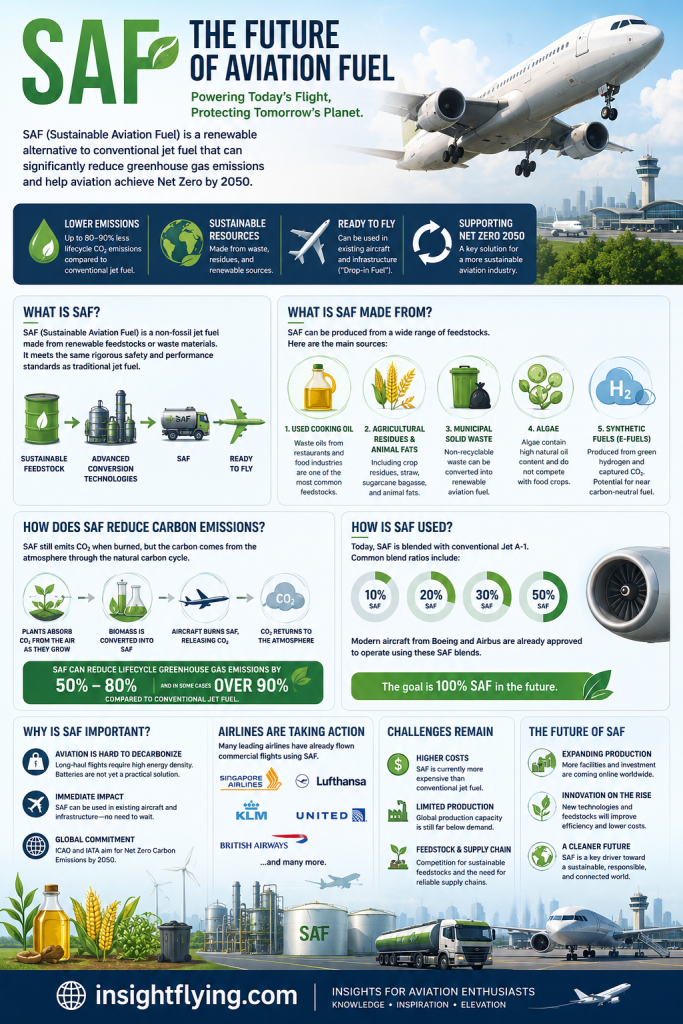
Sustainable Aviation Fuel, commonly known as SAF, is a renewable or non-fossil-based aviation fuel designed to reduce greenhouse gas emissions compared to conventional jet fuel.
Unlike traditional Jet A or Jet A-1 fuel, SAF is produced from sustainable feedstocks such as waste materials, renewable biological resources, or even captured carbon dioxide.
One of SAF’s greatest advantages is that it can be used in existing aircraft and airport infrastructure with little or no modification. For this reason, it is often referred to as a “drop-in fuel.”
This means airlines can begin reducing their carbon footprint without waiting for entirely new aircraft technologies to be developed.
What is SAF Made From?
Many people assume SAF is made only from plants, but the reality is much more diverse. Several approved production pathways exist today.
1. Used Cooking Oil
One of the most common SAF feedstocks is waste cooking oil collected from restaurants, food processing facilities, and households.
Examples include:
- Used vegetable oil
- Used soybean oil
- Used palm oil
- Waste cooking grease
Instead of becoming waste, these materials can be converted into valuable aviation fuel.
2. Agricultural Residues and Animal Fats
Various agricultural by-products can be transformed into SAF, including:
- Corn stalks
- Wheat straw
- Rice straw
- Sugarcane residues
- Animal fats
This approach helps create additional value from materials that would otherwise be discarded.
3. Municipal Solid Waste
Certain types of household and industrial waste can be processed and converted into aviation fuel through advanced technologies.
This not only produces renewable energy but also helps reduce landfill waste.
4. Algae
Algae are considered one of the most promising future feedstocks because some species contain high concentrations of natural oils.
Unlike traditional crops, algae do not require large areas of fertile farmland, reducing competition with food production.
5. Synthetic Fuels (e-Fuels)
One of the most exciting developments in sustainable aviation is the production of synthetic aviation fuels.
These fuels are created using:
- Green hydrogen produced from renewable electricity
- Carbon dioxide captured from the atmosphere or industrial sources
When combined through advanced chemical processes, they create a liquid fuel suitable for aviation applications.
If powered entirely by renewable energy, e-fuels could achieve near carbon-neutral operation.
How Does SAF Reduce Carbon Emissions?
A common misconception is that SAF produces no carbon emissions.
In reality, SAF still releases carbon dioxide when burned in an aircraft engine.
The difference lies in the carbon lifecycle.
For example:
Plants absorb carbon dioxide from the atmosphere during growth.
↓
The biomass is converted into SAF.
↓
The aircraft burns the fuel and releases carbon dioxide.
↓
The carbon returns to the atmosphere from which it was originally absorbed.
This creates a much smaller net increase in atmospheric carbon compared with fossil fuels, which release carbon that has been locked underground for millions of years.
Depending on the feedstock and production method, SAF can reduce lifecycle greenhouse gas emissions by approximately 50% to 80%, and in some cases even more than 90%, compared to conventional jet fuel.
How is SAF Used?
Today, SAF is commonly blended with conventional Jet A-1 fuel before being supplied to aircraft.
Typical blend ratios may include:
- 10% SAF
- 20% SAF
- 30% SAF
- Up to 50% SAF under current certification standards
Modern aircraft manufactured by companies such as Boeing and Airbus are already certified to operate using approved SAF blends.
The aviation industry is actively working toward certifying aircraft and engines for 100% SAF operations in the future.
Why Does Aviation Need SAF?
Reducing emissions in aviation is more challenging than in many other industries.
For example, cars can be powered by batteries, but large commercial aircraft require enormous amounts of energy while maintaining strict weight limitations.
Current battery technology simply cannot provide the energy density required for long-haul commercial flights.
As a result, liquid fuels are expected to remain essential for aviation for decades to come.
SAF offers a practical solution because it can be introduced immediately using existing aircraft, engines, fuel systems, and airport infrastructure.
Airlines Around the World Are Already Using SAF
Many major airlines have begun incorporating SAF into their operations, including:
- Singapore Airlines
- Lufthansa
- KLM
- United Airlines
- British Airways
Airports, fuel suppliers, and governments are also investing heavily in SAF production facilities and distribution networks.
Challenges Facing SAF
Despite its enormous potential, several challenges remain.
High Production Costs
SAF is currently more expensive than conventional jet fuel, making large-scale adoption financially challenging.
Limited Production Capacity
Global SAF production remains far below projected future demand.
Significant investment is needed to expand production facilities worldwide.
Feedstock Availability
As SAF production grows, competition for sustainable feedstocks may increase among energy, transportation, and industrial sectors.
Ensuring a reliable and sustainable supply chain will be critical.
The Future of SAF
The global aviation industry has committed to ambitious climate goals, including achieving net-zero carbon emissions by 2050.
Most industry experts agree that SAF will play the most important role in achieving these objectives over the coming decades.
Although future technologies such as hydrogen-powered aircraft and electric aircraft may eventually become viable for certain applications, SAF remains the most practical and scalable solution available today for medium- and long-haul commercial aviation.
Conclusion
Sustainable Aviation Fuel represents one of the most significant developments in modern aviation. Produced from renewable resources, waste materials, and emerging synthetic fuel technologies, SAF offers a realistic pathway toward reducing the environmental impact of air travel.
While challenges related to cost, production capacity, and supply chains remain, SAF is already transforming the aviation industry and is expected to become a cornerstone of global aviation’s journey toward a more sustainable future.
As the world seeks cleaner and more responsible ways to travel, SAF may prove to be the fuel that helps aviation continue connecting people, economies, and cultures while significantly reducing its environmental footprint.
Capt. Sopon Insights | InsightFlying.com