
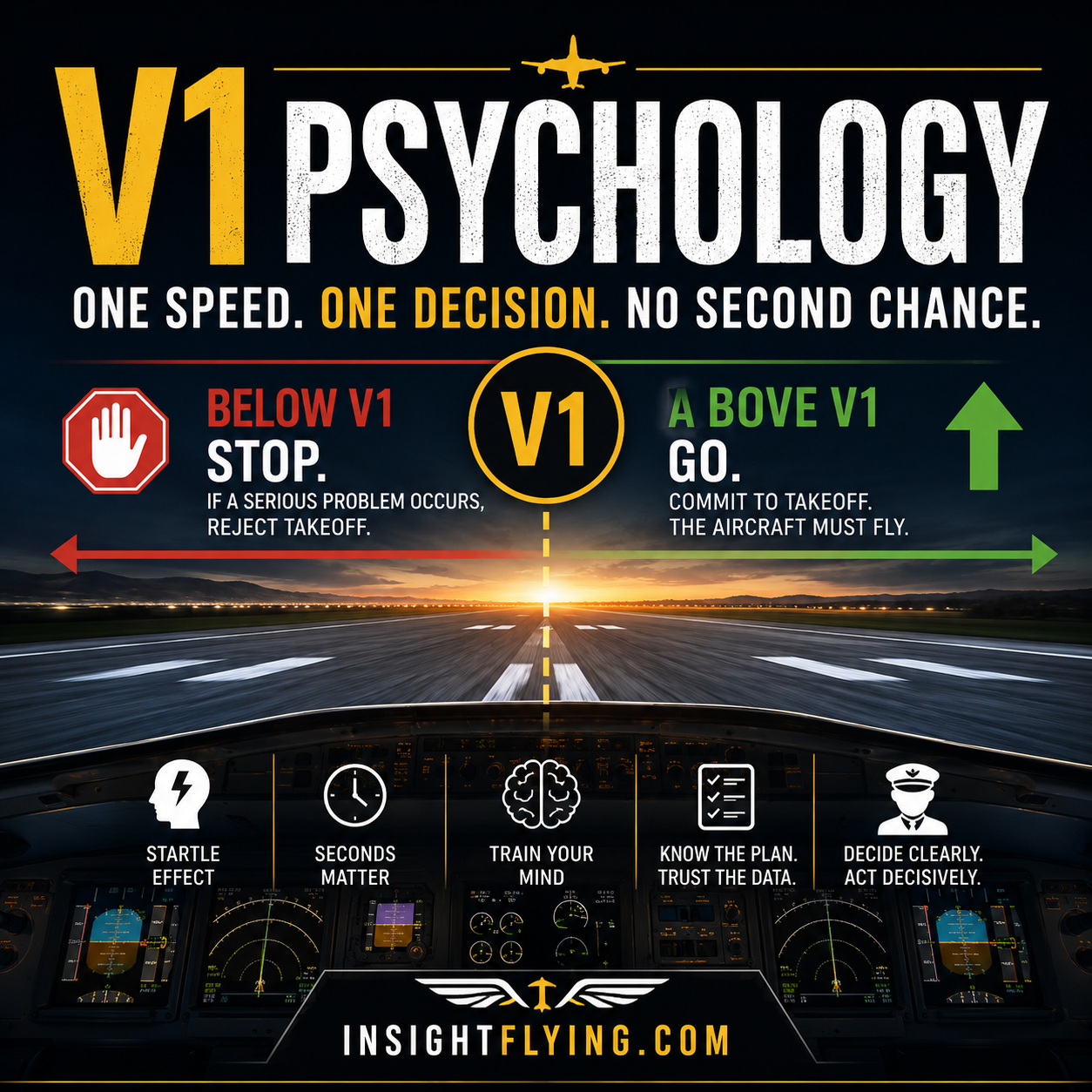
เมื่อ “หยุด” ก็อันตราย… แต่ “บินต่อ” ก็เสี่ยง
หนึ่งในช่วงเวลาที่กดดันที่สุดของนักบินสายการบิน คือช่วงไม่กี่วินาทีก่อนถึง V1
เพราะนี่คือช่วงเวลาที่นักบินต้องตัดสินใจว่า
- จะ “หยุด”
หรือ - จะ “บินต่อ”
และเมื่อความเร็วสูงขึ้นเรื่อย ๆ
ทางเลือกทั้งสอง… ล้วนมีความเสี่ยง
V1 ไม่ใช่แค่ตัวเลข
หลายคนเข้าใจว่า V1 คือ “ความเร็วตัดสินใจ”
แต่ในความเป็นจริง
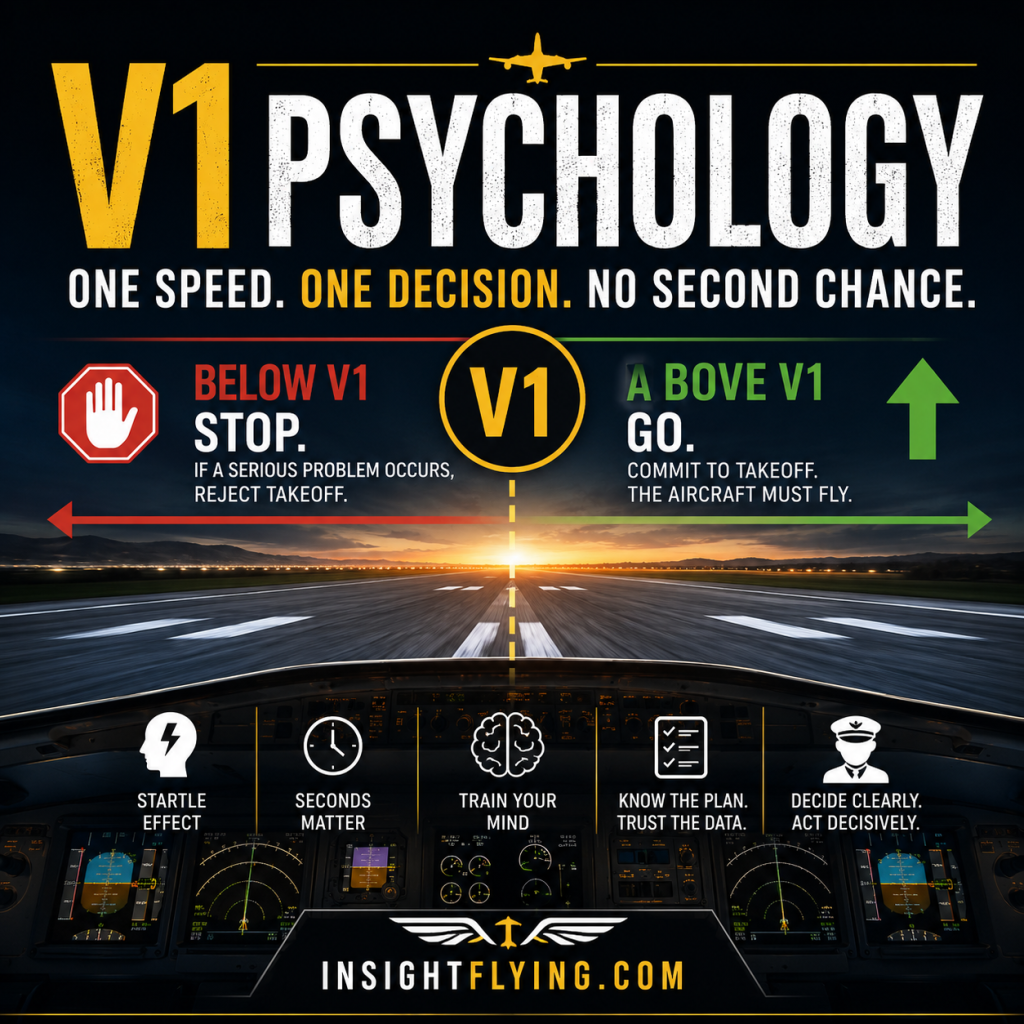
V1 คือ “เส้นแบ่งทางจิตวิทยา” ของการบิน
ก่อนถึง V1
นักบินยังสามารถ Reject Takeoff ได้ หากพบความผิดปกติร้ายแรง
แต่หลัง V1
แนวคิดจะเปลี่ยนทันทีเป็น
“The aircraft must fly.”
เพราะ runway ที่เหลืออาจไม่เพียงพอสำหรับการหยุดเครื่องบินอย่างปลอดภัยอีกต่อไป
ปัญหาคือ…มนุษย์ไม่ใช่คอมพิวเตอร์
ใน simulator ทุกอย่างดูง่าย
Engine fire?
Reject before V1.
Engine failure after V1?
Continue takeoff.
แต่ในโลกจริง สถานการณ์ไม่ได้ชัดเจนเสมอไป
เสียงดัง
แรงสั่นสะเทือน
warning หลายอย่างดังพร้อมกัน
เครื่องบินกำลังเร่งด้วยความเร็วสูง
adrenaline พุ่งสูงสุด
สมองมนุษย์ต้องประมวลผลทุกอย่างภายในไม่กี่วินาที
และนี่คือจุดที่ “psychology” เข้ามามีบทบาท
ความลังเลเพียงเสี้ยววินาที อาจเปลี่ยนทุกอย่าง
อุบัติเหตุหลายครั้งในประวัติศาสตร์การบิน เกิดจาก
- reject takeoff ช้าเกินไป
- continue takeoff ทั้งที่ควรหยุด
- captain กับ first officer ตัดสินใจไม่ตรงกัน
- hesitation near V1
- startle effect
- plan continuation bias
เพราะเมื่อเครื่องบินใกล้ V1 มาก ๆ
สมองมนุษย์มักเกิดความขัดแย้งภายในว่า
“เรายังหยุดทันไหม?”
“หรือควรบินต่อ?”
และทุกวินาทีที่เสียไป
ความเร็วจะเพิ่มขึ้นต่อเนื่อง
The Startle Effect
หนึ่งในสิ่งที่อันตรายที่สุด คือ “ความตกใจ”
มนุษย์เมื่อเจอเหตุการณ์ไม่คาดคิด
มักใช้เวลาสั้น ๆ ก่อนสมองจะกลับมาทำงานอย่างเป็นระบบ
แต่ในช่วง takeoff
เวลาเพียง 2-3 วินาที อาจหมายถึง runway หลายร้อยเมตรที่หายไป
นี่คือเหตุผลที่นักบินสายการบินต้องฝึก scenario เดิมซ้ำแล้วซ้ำอีกใน simulator
เพื่อให้สมองตอบสนองแบบ trained response แทน instinct
Rejecting Takeoff ก็อันตรายมากเช่นกัน
หลายคนคิดว่า
“ถ้ามีปัญหา ก็แค่หยุด”
แต่จริง ๆ แล้ว Rejected Takeoff (RTO) ที่ความเร็วสูง เป็นหนึ่งใน maneuver ที่รุนแรงที่สุดต่อเครื่องบิน
เพราะต้องรับมือกับ
- พลังงานมหาศาล
- brake temperature สูงมาก
- ยางระเบิด
- runway overrun
- directional control
- spoiler deployment
- reverse thrust management
เครื่องบินขนาดใหญ่ที่หนักมาก อาจใช้ runway เกือบทั้งหมดในการหยุด แม้ระบบทุกอย่างทำงานปกติ
หลัง V1 — ไม่มีเวลาสงสัย
เมื่อผ่าน V1 ไปแล้ว
แม้เครื่องยนต์จะดับ
แม้มีเสียงระเบิด
แม้เครื่องบินสั่นรุนแรง
นักบินส่วนใหญ่จะถูกฝึกให้ “บินต่อ”
เพราะ stopping distance อาจไม่เหลือเพียงพออีกแล้ว
นี่คือเหตุผลที่ phrase หนึ่งถูกใช้เสมอในการฝึกนักบิน:
“Below V1, stop.
Above V1, go.”
เรียบง่าย
แต่เบื้องหลังคือศาสตร์ด้าน performance, human factors และ psychology ที่ซับซ้อนมาก
V1 Psychology คือการต่อสู้กับมนุษย์ในตัวเอง
สุดท้ายแล้ว
ความยากของช่วง V1 ไม่ได้อยู่ที่เครื่องบินเท่านั้น
แต่อยู่ที่การควบคุม
- ความกลัว
- ความลังเล
- ความตกใจ
- แรงกดดัน
- และการตัดสินใจภายใต้เวลาเพียงไม่กี่วินาที
นี่คือเหตุผลว่าทำไม
นักบินที่ดี ไม่ได้มีแค่ flying skill
แต่ต้องมี
discipline,
mental preparedness,
situational awareness
และความสามารถในการ “ตัดสินใจภายใต้ความกดดันสูง”
เพราะในบางครั้ง
ความแตกต่างระหว่างอุบัติเหตุ กับเที่ยวบินที่ปลอดภัย
อาจอยู่ที่ “การตัดสินใจเพียงครั้งเดียว” ก่อนถึง V1 เพียงไม่กี่วินาที
English Version
V1 Psychology
When Stopping Is Dangerous… But Continuing Is Also Risky
One of the most psychologically demanding moments in airline operations occurs just seconds before V1.
This is the point where pilots must decide whether to:
- Stop the aircraft
or - Continue the takeoff
And at high speed, both options carry significant risk.
V1 Is More Than Just a Number
Many people understand V1 simply as “decision speed.”
In reality, V1 is also a psychological boundary.
Before V1, pilots may reject the takeoff if a serious abnormality occurs.
After V1, the mindset immediately changes to:
“The aircraft must fly.”
Because there may no longer be enough runway remaining to stop safely.
The Problem Is — Humans Are Not Computers
Inside a simulator, the logic appears simple.
Engine fire before V1?
Reject.
Engine failure after V1?
Continue.
But real life is rarely that clean.
Alarms sound simultaneously.
The aircraft shakes violently.
Acceleration continues rapidly.
Adrenaline surges.
The human brain must process all of this within seconds.
This is where psychology becomes critical.
A Fraction of a Second Can Change Everything
Many aviation accidents have involved:
- Delayed rejected takeoffs
- Continuing when stopping was appropriate
- Crew disagreement near V1
- Hesitation during critical moments
- Startle effect
- Plan continuation bias
As the aircraft approaches V1, pilots may experience internal conflict:
“Can we still stop safely?”
“Or should we continue?”
And while that hesitation occurs, speed continues increasing.
The Startle Effect
One of the greatest threats during takeoff is the human startle response.
When confronted with a sudden unexpected event, the brain may briefly freeze before transitioning into structured decision-making.
But during takeoff, even two or three seconds can mean hundreds of meters of runway lost.
This is why airline pilots repeatedly train the same scenarios in simulators — so trained responses can override instinctive reactions.
Rejecting a Takeoff Is Also Dangerous
Many people assume:
“If there’s a problem, just stop.”
In reality, a high-speed Rejected Takeoff (RTO) is one of the most demanding maneuvers an aircraft can perform.
Pilots must manage:
- Massive kinetic energy
- Extreme brake temperatures
- Tire failure risk
- Directional control
- Reverse thrust
- Runway overrun risk
A heavy aircraft may require nearly the full runway length to stop safely even under normal braking performance.
After V1 — There Is No Time for Doubt
Once the aircraft passes V1, pilots are generally trained to continue the takeoff even if:
- An engine fails
- A loud bang occurs
- Severe vibration develops
Because the remaining runway may no longer be sufficient for a safe stop.
This is why pilots are taught a simple but powerful rule:
“Below V1, stop.
Above V1, go.”
A short phrase — but behind it lies a complex combination of aircraft performance, human factors, and decision psychology.
V1 Psychology Is Ultimately About Human Control
In the end, the difficulty of V1 is not only about aircraft systems.
It is about controlling:
- Fear
- Hesitation
- Startle response
- Pressure
- Decision-making under extreme time constraints
This is why great pilots are not defined only by flying skill.
They are defined by discipline, mental preparedness, situational awareness, and the ability to make sound decisions under intense pressure.
Because sometimes, the difference between an accident and a safe flight may come down to a single decision made only seconds before V1.