
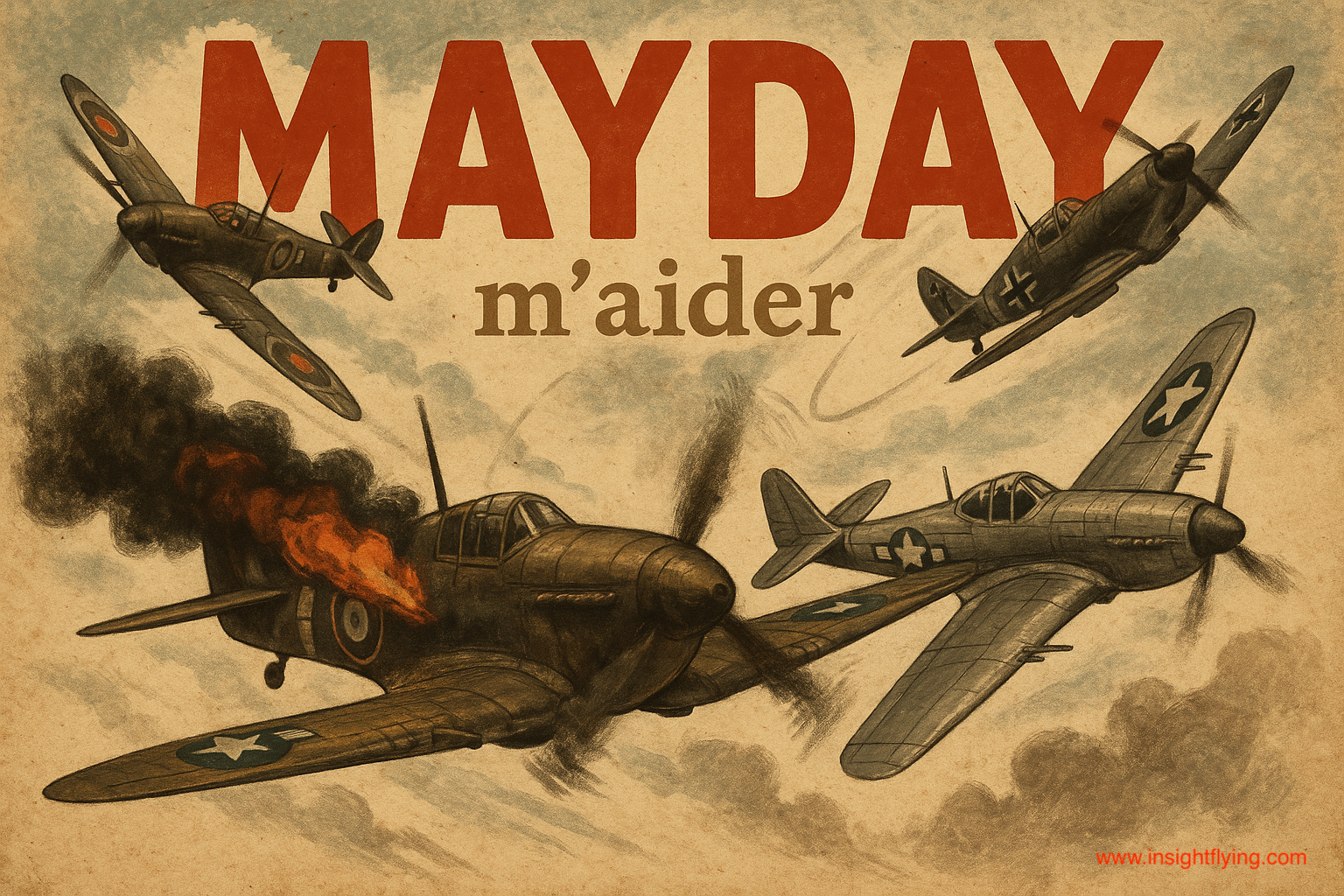
(บทความความรู้ทั่วไป – เข้าใจง่าย)
Click here for ENG version
by Captain Sopon Phikanesuan
Business email: admin@insightflying.com
Support this website

เวลาได้ยินคำว่า “Mayday” หลายคนอาจนึกถึงฉากในหนังที่นักบินตะโกนใส่วิทยุ เครื่องบินสั่นไหว และมีเสียงไซเรนดังขึ้น
แต่ในโลกความจริง คำนี้มีความหมายลึกซึ้งกว่านั้นมาก
“Mayday” คือคำแจ้งเหตุฉุกเฉินระดับสูงสุดที่ใช้กันทั่วโลก
ทั้งในอากาศและทางทะเล เพื่อให้หน่วยควบคุมหรือหน่วยกู้ภัยรู้ทันทีว่ามีชีวิตกำลังตกอยู่ในอันตราย และต้องได้รับความช่วยเหลือด่วนที่สุด
บทความนี้อธิบายแบบง่าย ๆ แต่ครบถ้วน ว่า Mayday คืออะไร ใช้เมื่อไหร่ ใช้อย่างไร และทำไมมันจึงถูกสร้างขึ้นมาเพื่อช่วยชีวิตนับล้าน
1. Mayday คืออะไร?
Mayday คือ คำเรียกขอความช่วยเหลือในสถานการณ์ฉุกเฉินร้ายแรงที่สุด
หมายถึงมีอันตรายถึงชีวิต ทั้งผู้โดยสาร ลูกเรือ หรือความปลอดภัยของอากาศยาน
คำนี้มาจากภาษาฝรั่งเศส “m’aidez” (เม-เด) แปลว่า “ช่วยฉันด้วย”
และถูกกำหนดให้ใช้เป็นสัญญาณสากลตั้งแต่ปี 1920s เพื่อให้ทุกประเทศ เข้าใจตรงกันบนคลื่นวิทยุ
2. นักบินใช้ Mayday เมื่อไหร่?
จะประกาศ Mayday เมื่อเหตุการณ์นั้นเป็นภัยคุกคาม ทันทีและรุนแรง เช่น:
เหตุฉุกเฉินที่คุกคามชีวิต
- ไฟไหม้หรือมีควันภายในเครื่อง
- เครื่องยนต์ดับ หรือเสียหายรุนแรง
- โครงสร้างเครื่องบินเสียหาย
- ความดันอากาศในห้องโดยสารตก (Rapid Decompression)
- นักบินหรือผู้โดยสารป่วยหนัก / หมดสติ
- เชื้อเพลิงใกล้หมดจนไม่สามารถบินต่อได้อย่างปลอดภัย
- สูญเสียการควบคุมเครื่องบิน
สาเหตุภายนอก
- ชนหรือเฉี่ยวชนกลางอากาศ
- เจอฝูงนกชนจนเกิดความเสียหาย
- สภาพอากาศรุนแรงจนไม่สามารถรักษาความปลอดภัยได้
- เครื่องบินได้รับผลกระทบจากเถ้าภูเขาไฟ
สรุปง่าย ๆ:
ถ้าอันตรายเกิดขึ้น “ตอนนี้” และต้องช่วยด่วน → ใช้ Mayday
3. Mayday ต่างจาก Pan-Pan อย่างไร?
| คำเรียก | ความหมาย | ระดับ | ใช้เมื่อ |
|---|---|---|---|
| Mayday | ภัยถึงชีวิต | สูงสุด | ต้องการความช่วยเหลือทันที |
| Pan-Pan | เหตุเร่งด่วนแต่ยังไม่ถึงชีวิต | ปานกลาง | มีความเสี่ยง แต่ยังควบคุมสถานการณ์ได้ |
ตัวอย่าง Pan-Pan:
ระบบบางอย่างขัดข้อง, ผู้โดยสารป่วยแต่มิใช่วิกฤต, ความผิดปกติที่ยังไม่เป็นอันตรายโดยตรง
ตัวอย่าง Mayday:
ไฟไหม้ในห้องโดยสาร, นักบินหมดสติ, เครื่องยนต์ดับกลางอากาศ
|
|
4. วิธีประกาศ Mayday (มาตรฐาน ICAO)
นักบินต้องประกาศตามรูปแบบเพื่อให้เข้าใจตรงกันทั่วโลก
รูปแบบมาตรฐาน
- พูดว่า “Mayday, Mayday, Mayday”
- บอก Call Sign ของเครื่องบิน
- แจ้ง สาเหตุฉุกเฉิน
- บอก ความตั้งใจ (เช่น จะลงจอด จะกลับสนามบิน ฯลฯ)
- ให้ข้อมูลสำคัญ:
- ตำแหน่ง
- ระดับความสูง
- ทิศทางหรือเส้นทางบิน
- จำนวนคนบนเครื่องและปริมาณเชื้อเพลิง (ถ้ามีเวลา)
- ขอความช่วยเหลือที่ต้องการ
ตัวอย่างจริงแบบสั้น
“Mayday, Mayday, Mayday
Thai 323, เครื่องยนต์ซ้ายขัดข้อง
ไม่สามารถรักษาระดับความสูงได้
ขอเปลี่ยนเส้นทางลงจอดที่สนามบินที่ใกล้ที่สุด
ตำแหน่งปัจจุบัน 40 ไมล์ตะวันออกของสุวรรณภูมิ ระดับ 9,000 ฟุต
มี 157 คนบนเครื่อง เชื้อเพลิง 2 ชั่วโมง”
5. หลังจากประกาศ Mayday จะเกิดอะไรขึ้น?
1. ATC ให้สิทธิพิเศษทันที
- เคลียร์เครื่องบินอื่นออกจากทาง
- ให้เส้นทางที่เร็วที่สุด
- ประสานงานสนามบินและหน่วยกู้ภัย
2. เครื่องบินอื่นต้องเงียบวิทยุ
เพื่อให้การสื่อสารฉุกเฉินชัดเจน
3. หน่วยกู้ภัยเตรียมพร้อมเต็มรูปแบบ
- รถดับเพลิง
- ทีมแพทย์
- หน่วยกู้ภัยภาคพื้น
4. นักบินดำเนินการ Emergency Checklist
ทำตามขั้นตอนฉุกเฉินอย่างเป็นระบบ
6. ทำไมนักบินถูกสอนให้ประกาศ Mayday แต่เนิ่น ๆ
เพราะในเหตุฉุกเฉิน ทุกวินาทีมีค่า
และความรุนแรงของเหตุการณ์มักเพิ่มขึ้นรวดเร็ว
ประกาศเร็ว = มีโอกาสรอดสูงกว่า
ไม่มีบทลงโทษสำหรับการประกาศ Mayday หากทำด้วยความสุจริตและเพื่อความปลอดภัย
หลายอุบัติเหตุทั่วโลกชี้ชัดว่า การประกาศช้า ทำให้สถานการณ์เลวร้ายกว่าเดิม
7. ตัวอย่างเหตุการณ์ Mayday ที่มีชื่อเสียง
US Airways Flight 1549 – Miracle on the Hudson
แจ้ง Mayday หลังโดนฝูงนกชน จนเครื่องยนต์ดับทั้งสองข้าง กัปตันซัลเลนเบอร์เกอร์นำเครื่องลงจอดในแม่น้ำฮัดสันอย่างปลอดภัย
British Airways Flight 38
สูญเสียแรงดันเครื่องยนต์ทั้งสองก่อนลงจอด ลูกเรือนำเครื่องลงอย่างแม่นยำและรอดชีวิตทั้งหมด
Qantas Flight 32 (A380)
เครื่องยนต์ระเบิดกลางอากาศ แจ้ง Mayday แล้วจัดการเหตุฉุกเฉินซับซ้อนได้อย่างยอดเยี่ยม

|
|
8. Mayday ไม่ได้ใช้เฉพาะการบิน
คำนี้ใช้ใน:
- เรือเดินทะเล
- เรือประมง
- เฮลิคอปเตอร์
- เจ้าหน้าที่กู้ภัย
- วิทยุสมัครเล่น
ถือเป็นสัญญาณฉุกเฉินสากลที่ทุกคนต้องเข้าใจเหมือนกัน
9. ความเข้าใจผิดที่พบบ่อย
❌ “Mayday แปลว่าเครื่องกำลังจะตก”
ไม่ใช่เสมอไป หมายถึงเพียงว่า ต้องการความช่วยเหลือทันที
❌ “นักบินอายที่จะประกาศ Mayday”
ผิดครับ นักบินถูกสอนให้ประกาศเร็วที่สุดเพื่อความปลอดภัย
❌ “Mayday ใช้เฉพาะเครื่องบิน”
จริง ๆ เป็นมาตรฐานสากลทั้งอากาศและทะเล
10. สรุป: ทำไม Mayday จึงสำคัญมาก
Mayday ไม่ใช่คำในภาพยนตร์ แต่เป็น เครื่องมือช่วยชีวิต
ที่ทำให้การสื่อสารฉุกเฉินมีความชัดเจน รวดเร็ว และเป็นระบบที่สุด
มันช่วยให้:
- การประสานงานรวดเร็ว
- ลดความสับสน
- เปิดทางให้การกู้ภัย
- เพิ่มโอกาสรอดสูงสุด
ในโลกการบินที่ทุกเสี้ยววินาทีมีค่า Mayday คือคำสั้น ๆ ที่มีความหมายยิ่งใหญ่ที่สุด

|
|
ท้อปเปอร์รองนอน นุ่มสบาย ถูกชัวร์ โดย Shopee

ENGLISH
Mayday: What It Really Means, How It Works, and Why It Saves Lives
(General Knowledge Article – Aviation Insight)
When people hear the word “Mayday,” they often imagine dramatic scenes in movies — a pilot shouting into the radio, alarms flashing, aircraft spiraling out of control.
But in real aviation, Mayday is a precise, structured, and standardized emergency call designed to save lives, reduce confusion, and help rescue teams respond as quickly and accurately as possible.
This article explains what “Mayday” really means, when it is used, how the call is made, and why it is one of the most important words in global aviation and maritime safety.
|
|
|
ท้อปเปอร์รองนอน นุ่มสบาย ถูกชัวร์ โดย Shopee
1. What Does “Mayday” Mean?
Mayday is the international radio distress call used when a situation is life-threatening or extremely dangerous, requiring immediate assistance.
It comes from the French phrase “m’aidez” which means “help me.”
The word was standardized in the 1920s for pilots and mariners so that every nation could understand it clearly over noisy radio channels.
2. When Do Pilots Declare Mayday?
Pilots use “Mayday” only for serious emergencies, such as:
Life-threatening emergencies
- Engine failure
- Fire or smoke on board
- Severe structural damage
- Rapid decompression
- Critical medical emergencies (passenger or crew)
- Fuel exhaustion
- Loss of control
- Pilot incapacitation
Environmental or external threats
- Midair collision or near-midair
- Volcanic ash ingestion
- Bird strike with significant damage
- Hazardous weather resulting in unsafe conditions
In short:
If safety of the aircraft, passengers, or crew is in immediate danger, a Mayday call is appropriate.
3. The Difference Between “Mayday” and “Pan-Pan”
| Call | Meaning | Level | When Used |
|---|---|---|---|
| Mayday | Distress | Highest | Life-threatening emergencies |
| Pan-Pan | Urgency | Medium | Safety affected but not immediately life-threatening |
Example of Pan-Pan:
A warning light, minor medical issue, or equipment malfunction that does not yet endanger the aircraft.
Example of Mayday:
Fire in the cabin. Engine on fire. Loss of pressurization. Pilot incapacitation.
4. How a Mayday Call Is Made (The Standard Format)
Pilots follow a structured format to avoid misunderstanding.
The Standard ICAO Mayday Format
- Say “Mayday, Mayday, Mayday.”
- State the aircraft call sign.
- State the nature of the emergency.
- State intentions.
- Provide position, altitude, heading, and other essential information.
- Provide number of people on board and fuel remaining (optional but useful).
- Any assistance required.
Example (Realistic)
“Mayday, Mayday, Mayday,
Thai 323, engine failure on the left engine.
Unable to maintain altitude.
Request immediate vectors to the nearest suitable airport.
Present position 40 miles east of VTBS, 9,000 feet, heading 270.
157 people on board, fuel 2 hours remaining.”
5. What Happens After a Mayday Call?
Once a Mayday is declared:
1. Air Traffic Control (ATC) gives priority
- Clears all other traffic out of the way
- Assigns direct routing
- Coordinates emergency services
2. Other aircraft must remain silent
Known as radio silence, to keep frequency clear.
3. Emergency response begins
- Fire and rescue readiness
- Medical support on standby
- Coordination with airport authorities
4. The crew performs emergency procedures
Checklists, troubleshooting, securing the aircraft.
6. Why Pilots Should Never Hesitate to Declare Mayday
Aviation safety culture strongly encourages pilots to declare Mayday early rather than waiting too long.
Reasons:
- Emergencies escalate quickly
- ATC cannot help if they don’t know
- Early action saves lives
- No penalty for declaring Mayday unnecessarily (as long as it is sincere)
In fact, many accident investigations show that delayed Mayday calls resulted in poorer outcomes.
7. Famous Real-World Mayday Cases
US Airways Flight 1549 — “Miracle on the Hudson”
Captain Sullenberger declared Mayday after a dual engine failure from bird strikes, leading to the famous Hudson River ditching.
British Airways Flight 38
Mayday declared due to dual engine thrust loss on approach; crew landed safely short of the runway.
Qantas Flight 32
Engine explosion on an A380; crew declared Mayday and handled a highly complex emergency professionally.
These cases show the effectiveness of a structured distress call and well-trained crew response.
8. Why Mayday Matters (Beyond Aviation)
The word “Mayday” is used not only by pilots, but also:
- Ships and boats
- Emergency services
- Civil defense organizations
- Amateur radio operators
It is recognized globally as a universal distress signal.
9. Common Misconceptions
❌ “Mayday means the aircraft is crashing.”
Not necessarily. It means the situation is dangerous and requires priority handling.
❌ “Declaring Mayday is embarrassing for pilots.”
Pilots are trained to declare early. Safety > pride.
❌ “Mayday is only for aircraft.”
It is used across all international radio communication.
10. Summary: The Importance of Mayday
Mayday is not a dramatic word — it is a life-saving tool.
It provides a clear, standard language for emergencies that anyone, anywhere in the world, can understand.
It ensures:
- Quick coordination
- Minimal confusion
- Maximum safety
- Efficient rescue response
In aviation, where seconds matter and lives depend on clarity, “Mayday” remains one of the most important words ever invented.

|
|
หนังสือการบิน ทางลัดสู่ความเข้าใจที่นำไปใช้งานจริง
|
|
|
|
|
|

|
|
|
|
|
|
|
accident Airbus aircraft airline airmanship aviation Aviation SMS become a captain become a pilot Boeing children cloud Crisis Crisis Management Dark Aviation Dark Side emergency engine fatigue flight safety flood flying school go-around ground operation hydroplane Indigo interview management motivation pilot qualified pilot safety Safety Management System SMS student pilot technology turbulence weather weather radar การจัดการภาวะวิกฤติ การบิน การสอบสัมภาษณ์ นักบิน สอบนักบิน เมฆ
ขายดีที่สุด
|
|
|