
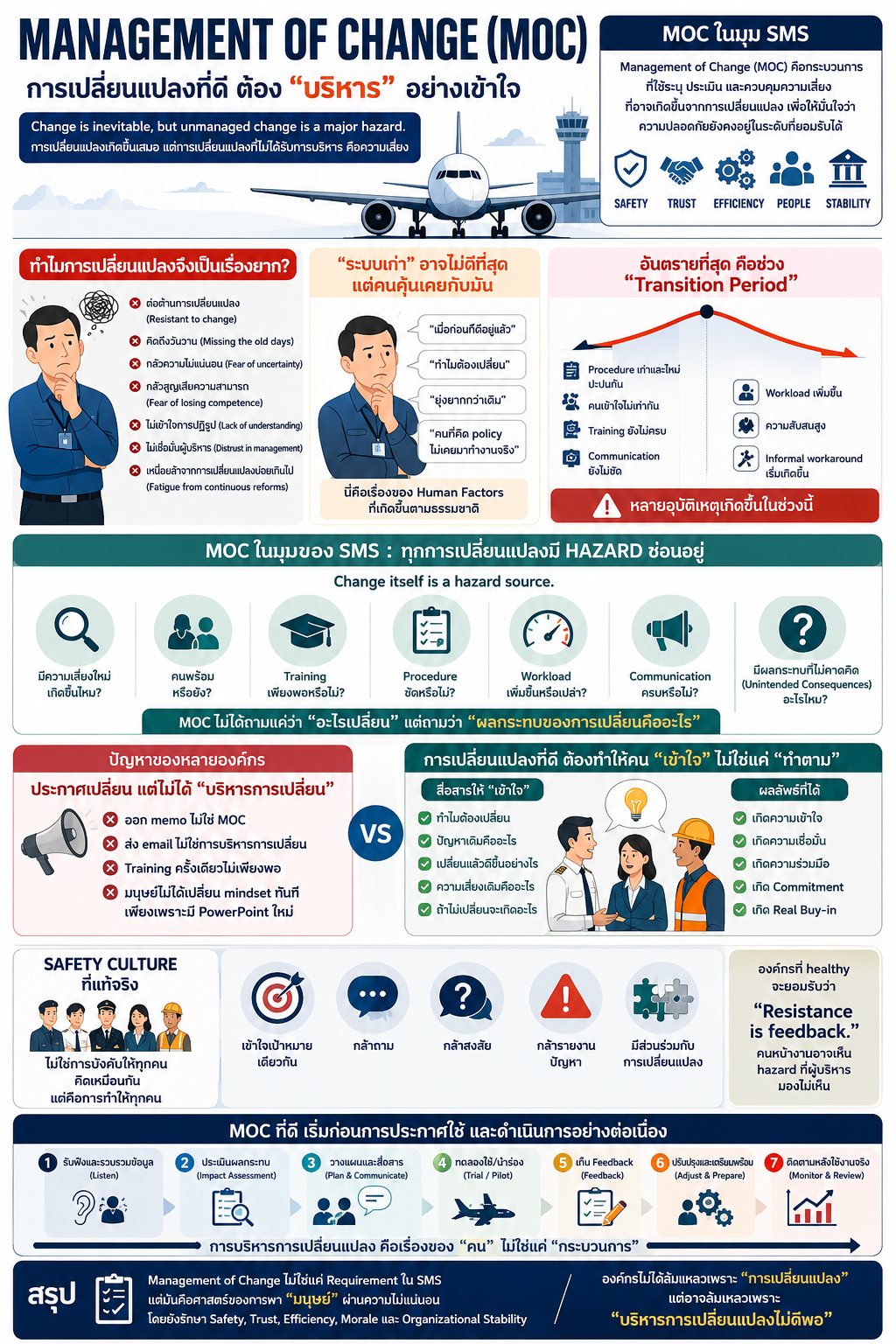
ทำไม “การเปลี่ยนแปลง” จึงเป็นเรื่องยาก — และทำไมองค์กรด้านความปลอดภัยถึงมองข้ามมันไม่ได้
ในโลกการบิน เรามักพูดถึงอุบัติเหตุจาก “ความผิดพลาด” แต่ในหลายกรณี จุดเริ่มต้นของปัญหาไม่ได้มาจากความผิดพลาดเฉพาะหน้า
แต่มาจาก “การเปลี่ยนแปลง” ที่ถูกบริหารไม่ดี
เปลี่ยนเครื่องบินรุ่นใหม่
เปลี่ยน software
เปลี่ยน procedure
เปลี่ยนโครงสร้างองค์กร
เปลี่ยนวิธีทำงาน
เปลี่ยนคน
หรือแม้แต่ “เปลี่ยนวัฒนธรรม”
ทั้งหมดนี้คือสิ่งที่เรียกว่า Management of Change (MOC)
ซึ่งเป็นหนึ่งในหัวใจสำคัญของ International Civil Aviation Organization Safety Management System หรือ SMS
แต่ความน่าสนใจคือ
MOC ไม่ได้สำคัญเฉพาะเรื่อง Safety
มันคือศาสตร์ของการ “พาองค์กรผ่านการเปลี่ยนแปลง”
โดยไม่สูญเสียประสิทธิภาพ ความปลอดภัย หรือความเชื่อมั่นของคนในองค์กร
ปัญหาใหญ่ของการเปลี่ยนแปลง
ไม่ใช่ Technology แต่คือ “มนุษย์”
หลายองค์กรคิดว่า
“ถ้า system ใหม่ดีกว่า คนก็น่าจะยอมรับเอง”
แต่ในความเป็นจริง
มนุษย์ไม่ได้ตัดสินทุกอย่างด้วยเหตุผลเพียงอย่างเดียว
คนจำนวนมากต่อต้านการเปลี่ยนแปลงเพราะ:
- Resistant to change
- Missing the old days
- Fear of uncertainty
- Fear of losing competence
- Lack of understanding
- Distrust in management
- Fatigue from continuous reforms
หลายคนไม่ได้เกลียด “การเปลี่ยนแปลง”
แต่เกลียด “ความรู้สึกไม่มั่นคง” ที่มากับมัน
“ระบบเก่า” อาจไม่ดีที่สุด
แต่คนคุ้นเคยกับมัน
นี่คือสิ่งที่เกิดขึ้นบ่อยในองค์กรการบิน
Procedure เดิมอาจมีช่องโหว่
ระบบเดิมอาจล้าสมัย
วิธีเดิมอาจ inefficient
แต่คนทำงานอยู่กับมันมานาน
จนเกิด comfort zone
และเมื่อมีการเปลี่ยนแปลง คนมักรู้สึกว่า:
- “เมื่อก่อนก็ดีอยู่แล้ว”
- “ทำไมต้องเปลี่ยน”
- “ยุ่งยากกว่าเดิม”
- “คนที่คิด policy ไม่เคยมาทำงานจริง”
สิ่งเหล่านี้ไม่ใช่เรื่องแปลก
แต่เป็น “Human Factors” ตามธรรมชาติ
อันตรายที่สุด
คือช่วง “Transition Period”
ในมุม SMS ช่วงอันตรายที่สุดไม่ใช่ก่อนหรือหลังเปลี่ยน
แต่คือ “ช่วงกำลังเปลี่ยน”
เพราะเป็นช่วงที่:
- Procedure เก่าและใหม่ปะปนกัน
- คนเข้าใจไม่เท่ากัน
- Training ยังไม่ครบ
- Communication ยังไม่ชัด
- Workload เพิ่ม
- ความสับสนสูง
- Informal workaround เริ่มเกิดขึ้น
หลายอุบัติเหตุในโลกการบินเกิดในช่วง transition แบบนี้
เพราะองค์กร focus ที่ “ระบบใหม่”
แต่ลืม focus ที่ “คนที่ต้องใช้ระบบใหม่”
MOC ในมุมของ SMS
คือการมองว่า “ทุกการเปลี่ยนแปลงมี hazard ซ่อนอยู่”
แนวคิดสำคัญของ MOC คือ:
Change itself is a hazard source.
แม้การเปลี่ยนแปลงนั้นจะมีเจตนาดี
หรือทำเพื่อเพิ่ม safety ก็ตาม
แต่ทุก change ต้องถามเสมอว่า:
- มี risk ใหม่เกิดขึ้นไหม
- คนพร้อมหรือยัง
- Training เพียงพอหรือไม่
- Procedure ชัดหรือไม่
- Workload เพิ่มขึ้นหรือเปล่า
- Communication ครบหรือไม่
- มี unintended consequences อะไรไหม
องค์กรที่ mature ด้าน Safety จะไม่ถามแค่ว่า
“อะไรเปลี่ยน”
แต่จะถามว่า
“ผลกระทบของการเปลี่ยนคืออะไร”
ปัญหาของหลายองค์กร
คือ “ประกาศเปลี่ยน” แต่ไม่ได้ “บริหารการเปลี่ยน”
นี่คือสิ่งที่ต่างกันมาก
การออก memo ไม่ใช่ MOC
การส่ง email ไม่ใช่ change management
การ training ครั้งเดียวก็ไม่พอ
เพราะมนุษย์ไม่ได้เปลี่ยน mindset ทันที
เพียงเพราะมี PowerPoint ใหม่
การเปลี่ยนแปลงที่ดี
ต้องทำให้คน “เข้าใจ” ไม่ใช่แค่ “ทำตาม”
หลายองค์กรสื่อสารว่า:
“นี่คือ policy ใหม่ ต้องปฏิบัติตาม”
แต่ไม่ได้อธิบายว่า:
- ทำไมต้องเปลี่ยน
- ปัญหาเดิมคืออะไร
- เปลี่ยนแล้วดีขึ้นอย่างไร
- ความเสี่ยงเดิมคืออะไร
- ถ้าไม่เปลี่ยนจะเกิดอะไร
เมื่อคนไม่เข้าใจ “เหตุผล”
ก็ยากที่จะได้ “commitment”
สุดท้ายจะเกิด compliance แบบผิวเผิน
แต่ไม่ได้เกิด real buy-in
Safety Culture ที่แท้จริง
ไม่ใช่การบังคับให้ทุกคนคิดเหมือนกัน
แต่คือการทำให้ทุกคน:
- เข้าใจเป้าหมายเดียวกัน
- กล้าถาม
- กล้าสงสัย
- กล้ารายงานปัญหา
- มีส่วนร่วมกับการเปลี่ยนแปลง
องค์กรที่ healthy จะยอมรับว่า:
Resistance is feedback.
บางครั้งคน frontline อาจเห็น hazard ที่ management มองไม่เห็น
MOC ที่ดี
ไม่ได้เริ่มตอน “ประกาศใช้”
แต่เริ่มตั้งแต่:
- การรับฟัง
- การประเมินผลกระทบ
- การสื่อสาร
- การทดลองใช้
- การเก็บ feedback
- การ monitor หลัง implementation
และที่สำคัญที่สุดคือ:
ต้องยอมรับว่า “change management คือเรื่องของคน”
ไม่ใช่แค่เรื่อง process
บทเรียนสำคัญ
องค์กรจำนวนมากลงทุนกับ technology
แต่ลงทุนกับ “human transition” น้อยเกินไป
ทั้งที่ในความจริงแล้ว
ระบบใหม่จะดีแค่ไหนก็ตาม
ถ้าคนไม่เข้าใจ
ไม่เชื่อมั่น
หรือไม่พร้อม
risk ก็ยังคงอยู่
สรุป
Management of Change ไม่ใช่แค่ requirement ใน SMS
แต่มันคือศาสตร์ของการพา “มนุษย์” ผ่านความไม่แน่นอน
โดยยังรักษา:
- Safety
- Trust
- Efficiency
- Morale
- Organizational stability
เพราะในท้ายที่สุดแล้ว
องค์กรไม่ได้ล้มเหลวเพราะ “การเปลี่ยนแปลง”
แต่อาจล้มเหลวเพราะ
“บริหารการเปลี่ยนแปลงไม่ดีพอ”
Management of Change (MOC)
Why Change Is Difficult — And Why Organizations Cannot Ignore It
In aviation, we often talk about accidents caused by “human error.”
But in many cases, the root cause does not begin with a single mistake.
It begins with “change” that was poorly managed.
A new aircraft type.
A new software platform.
A revised procedure.
A restructuring of the organization.
A new operational philosophy.
Or even a shift in organizational culture.
All of these fall under what is known as Management of Change (MOC) — one of the key pillars of the International Civil Aviation Organization Safety Management System (SMS).
What makes MOC particularly important is that its principles extend far beyond safety alone.
MOC is fundamentally about guiding organizations through transition
without losing safety, efficiency, trust, or operational stability.
The Biggest Challenge of Change
Is Not Technology — It Is People
Many organizations assume:
“If the new system is better, people will naturally accept it.”
In reality, human beings do not make decisions based on logic alone.
People resist change for many reasons:
- Resistance to change
- Missing the old days
- Fear of uncertainty
- Fear of losing competence
- Lack of understanding
- Distrust in management
- Fatigue from continuous reforms
Most people do not actually hate change itself.
They fear the instability and uncertainty that often come with it.
The Old System May Not Have Been the Best
But People Were Comfortable With It
This is extremely common in aviation organizations.
The old procedure may have had weaknesses.
The previous system may have been outdated.
The traditional workflow may have been inefficient.
But people had become familiar with it.
Over time, that familiarity becomes a comfort zone.
So when change is introduced, reactions often include:
- “The old way worked fine.”
- “Why do we need to change?”
- “This is more complicated than before.”
- “The people making these policies have never done the real job.”
These reactions are not unusual.
They are natural Human Factors responses.
The Most Dangerous Phase
Is the Transition Period
From an SMS perspective, the most hazardous period is not before or after change.
It is during the transition itself.
Because this is when:
- Old and new procedures coexist
- Personnel understanding is inconsistent
- Training may still be incomplete
- Communication gaps emerge
- Workload increases
- Confusion grows
- Informal workarounds begin appearing
Many aviation accidents and operational disruptions occur during transitional phases like these.
Organizations often focus heavily on the “new system”
while forgetting to focus on “the people expected to use it.”
MOC in SMS
Assumes Every Change Contains Hidden Hazards
One of the most important principles of MOC is:
Change itself is a hazard source.
Even when the intention behind the change is positive — including improvements to safety.
Every proposed change should trigger important questions:
- Will new risks emerge?
- Are people adequately prepared?
- Is the training sufficient?
- Are procedures clear and practical?
- Will workload increase?
- Is communication effective?
- Are there unintended consequences?
Mature safety organizations do not simply ask:
“What is changing?”
They ask:
“What are the consequences of this change?”
A Common Organizational Mistake
Is Announcing Change Without Managing Change
There is a major difference between the two.
Issuing a memo is not MOC.
Sending an email is not change management.
A single training session is rarely enough.
Human beings do not instantly change their mindset
just because a new PowerPoint presentation exists.
Effective Change Requires Understanding
Not Just Compliance
Many organizations communicate change by saying:
“This is the new policy. Please comply.”
But they fail to explain:
- Why the change is necessary
- What problems existed previously
- How the change improves operations or safety
- What risks the old system created
- What may happen if no change occurs
When people do not understand the reasoning behind change,
genuine commitment becomes difficult.
The result is often superficial compliance rather than true buy-in.
Real Safety Culture
Is Not About Forcing Everyone to Think the Same Way
A healthy safety culture enables people to:
- Understand shared goals
- Ask questions
- Raise concerns
- Report problems openly
- Participate in the change process
Healthy organizations recognize an important truth:
Resistance is feedback.
Frontline personnel may identify hazards or operational realities
that management cannot easily see.
Good MOC
Begins Long Before Implementation
Effective Management of Change starts with:
- Listening
- Impact assessment
- Communication
- Trial implementation
- Feedback collection
- Post-implementation monitoring
Most importantly:
Change management is fundamentally about people.
Not merely about procedures or systems.
A Critical Lesson
Many organizations invest heavily in technology
while underinvesting in human transition.
Yet even the best systems will struggle if people:
- Do not understand them
- Do not trust them
- Or are not ready for them
In those situations, risk remains.
Conclusion
Management of Change is not simply an SMS requirement.
It is the discipline of guiding human beings through uncertainty
while preserving:
- Safety
- Trust
- Efficiency
- Morale
- Organizational stability
Because in the end:
Organizations rarely fail because change occurs.
They fail because
the change was not managed properly.