
คำที่คนการบินใช้กันทุกวัน…แต่หลายคนยังสับสน
ในโลกการบิน มีคำสำคัญอยู่หลายคำที่ฟังดูคล้ายกันมาก โดยเฉพาะคำว่า:
- Airworthiness
- Continuing Airworthiness
- CAMO
- Maintenance
- Release to Service
- ARC
หลายคน—including นักบิน ช่างอากาศยาน หรือแม้แต่คนในสายปฏิบัติการ—อาจเคยได้ยินคำเหล่านี้บ่อย แต่ยังไม่เห็น “ภาพรวมทั้งระบบ” ว่าทุกอย่างเชื่อมโยงกันอย่างไร
จริง ๆ แล้ว คำเหล่านี้คือ “โครงสร้างความปลอดภัย” ที่ทำให้เครื่องบินสามารถบินได้อย่างถูกกฎหมายและปลอดภัยในทุกวัน
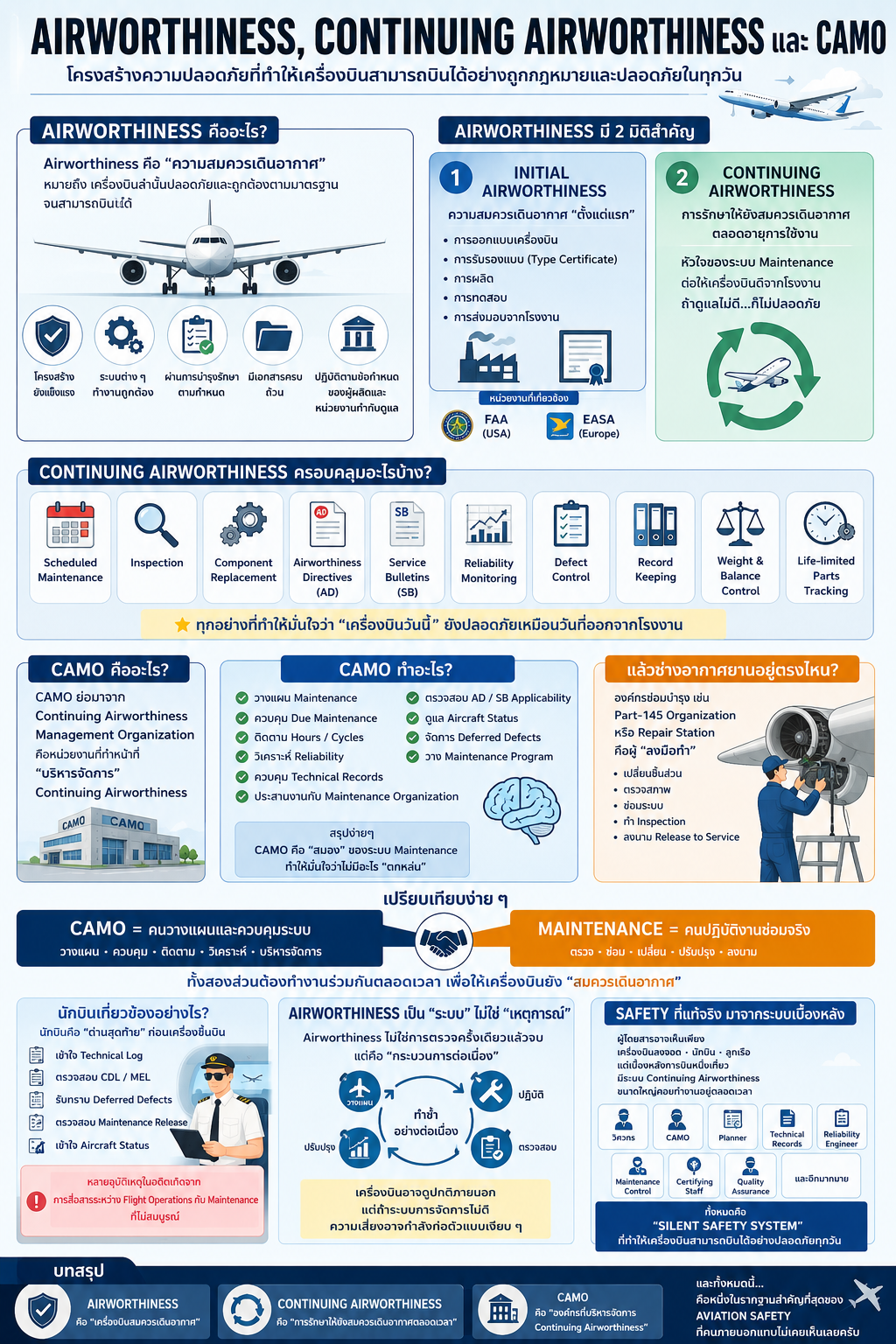
Airworthiness คืออะไร?
คำว่า Airworthiness แปลตรงตัวว่า
“ความสมควรเดินอากาศ”
หรือพูดง่าย ๆ คือ
เครื่องบินลำนั้น “ปลอดภัยและถูกต้องตามมาตรฐาน” จนสามารถบินได้
Airworthiness ไม่ได้หมายถึงแค่ “เครื่องบินยังบินได้”
แต่หมายถึงว่า:
- โครงสร้างยังแข็งแรง
- ระบบต่าง ๆ ทำงานถูกต้อง
- ผ่านการบำรุงรักษาตามกำหนด
- มีเอกสารครบ
- ปฏิบัติตามข้อกำหนดของผู้ผลิตและหน่วยงานกำกับดูแล
Airworthiness มี 2 มิติสำคัญ
1. Initial Airworthiness
คือความสมควรเดินอากาศ “ตั้งแต่แรก”
เช่น:
- การออกแบบเครื่องบิน
- การรับรองแบบ (Type Certificate)
- การผลิต
- การทดสอบ
- การส่งมอบจากโรงงาน
พูดง่าย ๆ คือ
เครื่องบินถูกสร้างมาอย่างถูกต้องตามมาตรฐานตั้งแต่วันแรก
หน่วยงานที่เกี่ยวข้อง เช่น:
- Federal Aviation Administration (FAA)
- European Union Aviation Safety Agency (EASA)
2. Continuing Airworthiness
นี่คือส่วนที่สำคัญมากในชีวิตจริงของสายการบิน
เพราะต่อให้เครื่องบิน “ดีจากโรงงาน”
ถ้าดูแลไม่ดี…ก็ไม่ปลอดภัย
Continuing Airworthiness คือ:
การรักษาให้เครื่องบินยังคงมีความสมควรเดินอากาศตลอดอายุการใช้งาน
นี่คือหัวใจของระบบ maintenance ทั้งหมด
Continuing Airworthiness ครอบคลุมอะไรบ้าง?
ประกอบด้วยหลายส่วน เช่น:
- Scheduled Maintenance
- Inspection
- Component replacement
- Airworthiness Directives (AD)
- Service Bulletins (SB)
- Reliability Monitoring
- Defect Control
- Record Keeping
- Weight & Balance control
- Life-limited parts tracking
พูดง่าย ๆ คือ:
ทุกอย่างที่ทำให้มั่นใจว่า “เครื่องบินวันนี้” ยังปลอดภัยเหมือนวันที่ออกจากโรงงาน
แล้ว CAMO คืออะไร?
CAMO ย่อมาจาก:
Continuing Airworthiness Management Organization
คือหน่วยงานที่ทำหน้าที่ “บริหารจัดการ” Continuing Airworthiness
หลายคนเข้าใจผิดว่า CAMO คือช่างซ่อมเครื่องบิน
จริง ๆ แล้วไม่ใช่
CAMO อาจไม่ได้จับประแจเลยด้วยซ้ำ
แต่ CAMO คือ “สมอง” ของระบบ maintenance
CAMO ทำอะไร?
CAMO มีหน้าที่ เช่น:
- วางแผน maintenance
- ควบคุม due maintenance
- ติดตาม hours/cycles
- วิเคราะห์ reliability
- ควบคุม technical records
- ประสานงานกับ maintenance organization
- ตรวจสอบ AD/SB applicability
- ดูแล aircraft status
- จัดการ deferred defects
- วาง maintenance program
พูดง่าย ๆ:
CAMO ทำให้มั่นใจว่าไม่มีอะไร “ตกหล่น”
แล้วช่างอากาศยานอยู่ตรงไหน?
องค์กรซ่อมบำรุง เช่น:
- Part-145 Organization
- Repair Station
คือผู้ “ลงมือทำ”
เช่น:
- เปลี่ยนชิ้นส่วน
- ตรวจสภาพ
- ซ่อมระบบ
- ทำ inspection
- signed release
ในขณะที่ CAMO คือผู้ “บริหารและควบคุมระบบ”
เปรียบเทียบง่าย ๆ
CAMO = คนวางแผนและควบคุมระบบ
Maintenance = คนปฏิบัติงานซ่อมจริง
ทั้งสองส่วนต้องทำงานร่วมกันตลอดเวลา
Airworthiness ไม่ใช่แค่เรื่องช่าง
นักบินเองก็เกี่ยวข้องโดยตรง
เพราะนักบินคือ “ด่านสุดท้าย” ก่อนเครื่องขึ้นบิน
นักบินต้องเข้าใจ:
- Technical Log
- CDL/MEL
- Deferred defects
- Maintenance release
- Aircraft status
หลายอุบัติเหตุในอดีตเกิดจาก:
การสื่อสารระหว่าง Flight Operations กับ Maintenance ที่ไม่สมบูรณ์
Airworthiness เป็น “ระบบ” ไม่ใช่ “เหตุการณ์”
สิ่งสำคัญที่สุดคือ:
Airworthiness ไม่ใช่การตรวจครั้งเดียวแล้วจบ
แต่คือ “กระบวนการต่อเนื่อง”
เครื่องบินอาจดูปกติภายนอก
แต่ถ้าระบบการจัดการไม่ดี
ความเสี่ยงอาจกำลังก่อตัวแบบเงียบ ๆ
Safety ที่แท้จริง มาจากระบบเบื้องหลัง
ผู้โดยสารอาจเห็นเพียง:
- เครื่องบินลงจอด
- นักบิน
- ลูกเรือ
แต่เบื้องหลังการบินหนึ่งเที่ยว
มีระบบ Continuing Airworthiness ขนาดใหญ่คอยทำงานอยู่ตลอดเวลา
ตั้งแต่:
- วิศวกร
- CAMO
- Planner
- Technical Records
- Reliability Engineer
- Maintenance Control
- Certifying Staff
- Quality Assurance
ทั้งหมดคือ “silent safety system”
ที่ทำให้เครื่องบินสามารถบินได้อย่างปลอดภัยทุกวัน
บทสรุป
Airworthiness
คือ “เครื่องบินสมควรเดินอากาศ”
Continuing Airworthiness
คือ “การรักษาให้ยังสมควรเดินอากาศตลอดเวลา”
CAMO
คือ “องค์กรที่บริหารจัดการ Continuing Airworthiness”
และทั้งหมดนี้…
คือหนึ่งในรากฐานสำคัญที่สุดของ Aviation Safety ที่คนภายนอกแทบไม่เคยเห็นเลยครับ ✈️
Understanding Airworthiness, Continuing Airworthiness, and CAMO
The aviation terms many people hear every day… but still find confusing
In aviation, there are several important terms that sound very similar, especially:
- Airworthiness
- Continuing Airworthiness
- CAMO
- Maintenance
- Release to Service
- ARC (Airworthiness Review Certificate)
Even pilots, engineers, and operational personnel may hear these terms regularly without fully seeing how the entire system connects together.
In reality, these concepts form the backbone of aviation safety — the invisible system that ensures an aircraft remains legal, safe, and fit to fly every single day.
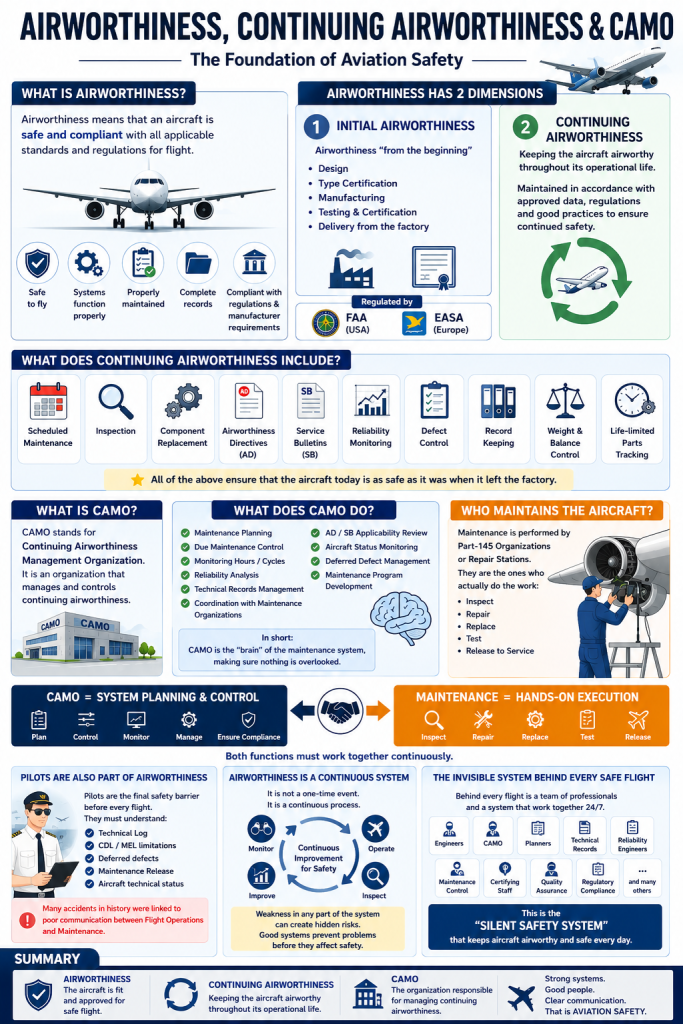
What is Airworthiness?
The term Airworthiness simply means:
An aircraft is safe and compliant with all applicable standards and regulations for flight.
Airworthiness does not merely mean that:
“The airplane can still fly.”
It means the aircraft:
- Has structurally sound systems
- Functions correctly
- Has been properly maintained
- Meets regulatory requirements
- Has complete technical documentation
- Complies with manufacturer instructions and aviation authority regulations
The Two Major Dimensions of Airworthiness
1. Initial Airworthiness
This refers to the aircraft’s airworthiness “from the beginning.”
It includes:
- Aircraft design
- Type certification
- Manufacturing
- Testing and certification
- Delivery from the factory
In simple terms:
The aircraft was designed and built correctly according to approved standards.
Authorities involved include:
- Federal Aviation Administration (FAA)
- European Union Aviation Safety Agency (EASA)
2. Continuing Airworthiness
This is where real-world airline operations become critical.
Even if an aircraft leaves the factory in perfect condition, poor maintenance and poor management can eventually make it unsafe.
Continuing Airworthiness means:
Maintaining an aircraft in an airworthy condition throughout its operational life.
This is the heart of the entire maintenance and technical management system.
What Does Continuing Airworthiness Include?
It covers many areas, including:
- Scheduled maintenance
- Aircraft inspections
- Component replacement
- Airworthiness Directives (ADs)
- Service Bulletins (SBs)
- Reliability monitoring
- Defect control
- Technical record keeping
- Weight & balance control
- Life-limited parts tracking
In other words:
Everything necessary to ensure the aircraft today is as safe as it was when it left the factory.
What is CAMO?
CAMO stands for:
Continuing Airworthiness Management Organization
CAMO is responsible for managing and controlling continuing airworthiness.
Many people mistakenly think CAMO is the same as aircraft maintenance technicians.
It is not.
CAMO personnel may never physically repair the aircraft themselves.
Instead:
CAMO is the “brain” behind the maintenance system.
What Does CAMO Do?
Typical CAMO responsibilities include:
- Maintenance planning
- Due maintenance control
- Flight hours and cycle tracking
- Reliability analysis
- Technical records management
- AD/SB applicability review
- Aircraft status monitoring
- Deferred defect management
- Maintenance program development
- Coordination with maintenance organizations
Simply put:
CAMO ensures that nothing is overlooked.
Where Do Aircraft Maintenance Engineers Fit In?
Maintenance organizations such as:
- Part-145 Organizations
- Repair Stations
are the entities that physically perform maintenance tasks, including:
- Component replacement
- Aircraft inspections
- Troubleshooting and repairs
- Functional checks
- Issuing Release to Service
Meanwhile:
CAMO manages and controls the overall airworthiness system.
A Simple Comparison
CAMO = System planning and control
Maintenance = Hands-on technical execution
Both functions must work together continuously.
Airworthiness Is Not Just a Maintenance Issue
Pilots are also directly involved.
Because pilots are:
The final safety barrier before flight.
Pilots must understand:
- Technical Log entries
- MEL/CDL limitations
- Deferred defects
- Maintenance Release
- Aircraft technical status
Many aviation accidents in history involved:
Incomplete communication between Flight Operations and Maintenance.
Airworthiness Is a Continuous System
One of the most important concepts is this:
Airworthiness is not a one-time inspection.
It is an ongoing process.
An aircraft may appear perfectly normal externally, but if the management system behind it is weak, hidden risks may already be developing.
Real Aviation Safety Comes From the Invisible System Behind the Aircraft
Passengers may only see:
- The aircraft
- The pilots
- The cabin crew
But behind every safe flight is a massive continuing airworthiness system involving:
- Engineers
- CAMO personnel
- Maintenance planners
- Technical records specialists
- Reliability engineers
- Maintenance control
- Certifying staff
- Quality assurance personnel
Together, they form:
The silent safety system that keeps aircraft flying safely every day.
Conclusion
Airworthiness
Means the aircraft is fit and approved for safe flight.
Continuing Airworthiness
Means keeping the aircraft airworthy throughout its operational life.
CAMO
Is the organization responsible for managing continuing airworthiness.
And together…
These systems form one of the most important foundations of modern aviation safety. ✈️