
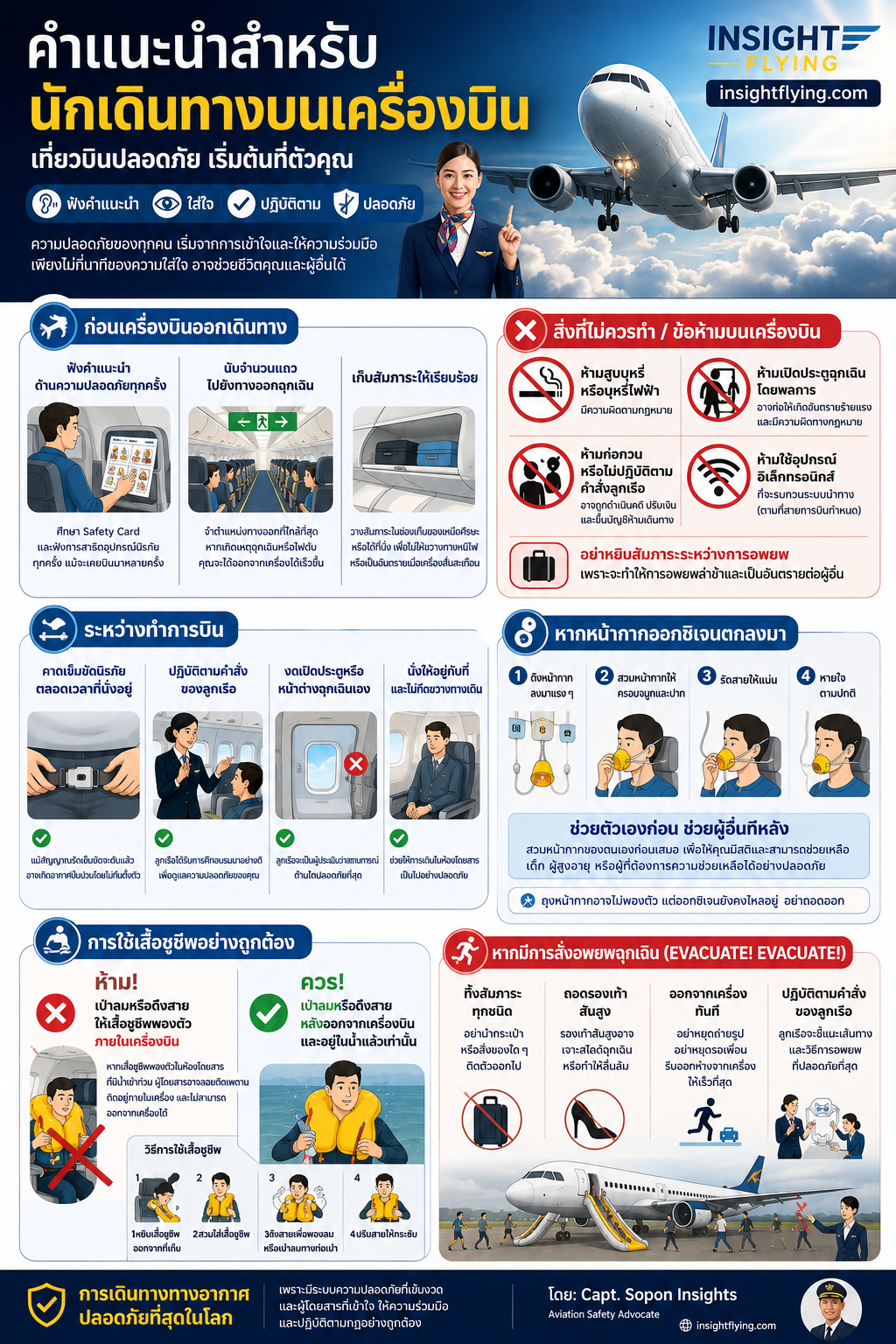
สิ่งที่ควรทำ สิ่งที่ไม่ควรทำ และวิธีเอาตัวรอดในกรณีฉุกเฉิน
หลายคนเดินทางโดยเครื่องบินเป็นประจำ แต่มีผู้โดยสารจำนวนไม่น้อยที่ไม่เคยให้ความสนใจกับการสาธิตอุปกรณ์นิรภัยก่อนเครื่องบินออกเดินทาง เพราะคิดว่า “บินมาหลายครั้งแล้ว”
อย่างไรก็ตาม อุบัติเหตุทางการบินแม้จะเกิดขึ้นน้อยมาก แต่เมื่อเกิดขึ้นจริง ผู้โดยสารที่รู้วิธีปฏิบัติตัวอย่างถูกต้องมักมีโอกาสรอดชีวิตสูงกว่าผู้ที่ไม่ทราบขั้นตอนต่าง ๆ
นักบินและลูกเรือจึงไม่ได้ให้คำแนะนำเหล่านี้เพียงเพื่อทำตามระเบียบ แต่เป็นข้อมูลที่อาจช่วยชีวิตคุณและคนที่คุณรักได้
ก่อนเครื่องบินออกเดินทาง
1. ฟังคำแนะนำด้านความปลอดภัยทุกครั้ง
แม้ว่าคุณจะเคยบินมาหลายสิบหรือหลายร้อยครั้ง
แต่เครื่องบินแต่ละแบบมีตำแหน่งอุปกรณ์ฉุกเฉินแตกต่างกัน เช่น
- ทางออกฉุกเฉิน
- เสื้อชูชีพ
- หน้ากากออกซิเจน
- สไลด์ฉุกเฉิน
- เครื่องหมายบอกทางออก
ควรดูบัตรคำแนะนำด้านความปลอดภัย (Safety Card) ที่อยู่ในช่องเก็บเอกสารหน้าที่นั่งทุกครั้ง
2. นับจำนวนแถวไปยังทางออกฉุกเฉินที่ใกล้ที่สุด
หากเกิดควันหนาแน่นหรือไฟดับ
คุณอาจมองไม่เห็นทางออก
การทราบว่า
“ทางออกอยู่ข้างหน้า 5 แถว”
หรือ
“อยู่ด้านหลัง 3 แถว”
อาจช่วยให้คุณคลำทางออกได้แม้ในสภาพที่มองไม่เห็น
3. เก็บสัมภาระให้เรียบร้อย
สัมภาระที่วางเกะกะอาจ
- ขัดขวางการอพยพ
- ทำให้ผู้โดยสารสะดุดล้ม
- กลายเป็นวัตถุกระแทกเมื่อเกิด Turbulence รุนแรง
ระหว่างทำการบิน
1. คาดเข็มขัดนิรภัยตลอดเวลาที่นั่งอยู่
แม้สัญญาณรัดเข็มขัดจะดับแล้ว
นักบินอาจไม่สามารถตรวจพบ Turbulence บางประเภทได้ล่วงหน้า โดยเฉพาะ
- Clear Air Turbulence (CAT)
ผู้โดยสารจำนวนมากได้รับบาดเจ็บจากการลอยกระแทกเพดานห้องโดยสารเพราะไม่ได้คาดเข็มขัด
คำแนะนำที่ดีที่สุดคือ
คาดเข็มขัดหลวม ๆ ไว้ตลอดเวลาที่นั่งอยู่
2. ปฏิบัติตามคำสั่งของลูกเรือ
ลูกเรือไม่ได้มีหน้าที่เพียงบริการอาหารและเครื่องดื่ม
แต่ได้รับการฝึกฝนด้าน
- การดับเพลิง
- การอพยพฉุกเฉิน
- การปฐมพยาบาล
- การจัดการเหตุคุกคามด้านความปลอดภัย
เมื่อมีคำสั่งใด ๆ จากลูกเรือ ควรปฏิบัติตามทันที
3. งดเปิดประตูหรือหน้าต่างฉุกเฉินเอง
ผู้โดยสารบางคนเข้าใจผิดว่าหากเกิดเหตุฉุกเฉินควรรีบเปิดประตูทันที
ในความเป็นจริง
ลูกเรือจะเป็นผู้ประเมินว่าด้านใดปลอดภัยที่สุด
หากเปิดประตูด้านที่มี
- ไฟไหม้
- เครื่องยนต์ยังทำงานอยู่
- เชื้อเพลิงรั่ว
อาจทำให้เกิดการสูญเสียชีวิตได้
หากหน้ากากออกซิเจนตกลงมา
หนึ่งในเหตุการณ์ที่ผู้โดยสารกังวลมากที่สุดคือการเห็นหน้ากากออกซิเจนหล่นลงมาจากเพดาน
หากเกิดเหตุการณ์นี้
ให้ปฏิบัติดังนี้
- ดึงหน้ากากลงมาแรง ๆ
- สวมหน้ากากให้ครอบจมูกและปาก
- รัดสายให้แน่น
- หายใจตามปกติ
ช่วยตัวเองก่อน ช่วยผู้อื่นทีหลัง
นี่เป็นหลักการสำคัญมาก
ผู้ปกครองจำนวนมากมีสัญชาตญาณที่จะช่วยลูกก่อน
แต่หากคุณหมดสติจากการขาดออกซิเจน
คุณจะไม่สามารถช่วยใครได้เลย
ดังนั้น
สวมหน้ากากของตนเองก่อน แล้วจึงช่วยเด็กหรือผู้ที่ต้องการความช่วยเหลือ
ถุงหน้ากากอาจไม่พองตัว
หลายคนเข้าใจผิดว่า
ถุงต้องพองจึงจะมีออกซิเจน
ความจริงคือ
ออกซิเจนยังคงไหลอยู่แม้ถุงจะไม่พอง
ดังนั้นอย่าถอดหน้ากากออกเพียงเพราะถุงไม่พอง
การใช้เสื้อชูชีพอย่างถูกต้อง
เสื้อชูชีพถูกเก็บไว้ใต้ที่นั่งหรือบริเวณที่กำหนด
ผู้โดยสารควรทราบตำแหน่งไว้ล่วงหน้า
สิ่งสำคัญที่สุด
ห้ามเป่าลมหรือดึงสายให้เสื้อชูชีพพองตัวภายในเครื่องบิน
นี่คือข้อผิดพลาดที่อันตรายมาก
หากเสื้อชูชีพพองตัวในห้องโดยสารที่มีน้ำเข้าท่วม
ผู้โดยสารอาจ
- ลอยติดเพดาน
- ติดอยู่ภายในเครื่อง
- ไม่สามารถเคลื่อนที่ไปยังทางออกได้
ซึ่งอาจทำให้เสียชีวิตได้
เวลาที่ถูกต้องในการเป่าลมหรือดึงสาย
คือ
หลังออกจากเครื่องบินแล้วเท่านั้น
เมื่ออยู่นอกตัวเครื่อง
จึงค่อย
- ดึงสายพองลม
- หรือเป่าลมสำรองผ่านท่อเป่า
ระหว่างการอพยพฉุกเฉิน
หากลูกเรือสั่ง
“EVACUATE! EVACUATE!”
ให้ดำเนินการทันที
ทิ้งสัมภาระทุกชนิด
อย่านำ
- กระเป๋าถือ
- เป้สะพายหลัง
- คอมพิวเตอร์
- ของมีค่า
ติดตัวไป
เหตุผลคือ
- ทำให้การอพยพช้าลง
- อาจขีดข่วนหรือทำให้สไลด์ฉุกเฉินเสียหาย
- ขวางทางผู้โดยสารคนอื่น
จากเหตุการณ์จริงหลายครั้ง พบว่าผู้โดยสารบางคนเสียเวลาเก็บสัมภาระจนทำให้การอพยพล่าช้าอย่างมาก
ถอดรองเท้าส้นสูง
รองเท้าส้นสูงอาจ
- เจาะสไลด์ฉุกเฉิน
- ทำให้ลื่นล้ม
กระโดดและวิ่งออกจากเครื่อง
เมื่อถึงสไลด์
อย่าหยุดถ่ายรูป
อย่าหยุดดูเหตุการณ์
อย่าหยุดรอเพื่อนหรือญาติ
ให้ออกห่างจากเครื่องบินทันที
สิ่งที่ไม่ควรทำบนเครื่องบิน
ห้ามสูบบุหรี่หรือบุหรี่ไฟฟ้า
เป็นความผิดร้ายแรงตามกฎหมายการบินของหลายประเทศ
ห้ามเปิดประตูฉุกเฉินโดยพลการ
อาจถูกดำเนินคดีและมีโทษทั้งทางแพ่งและอาญา
ห้ามก่อกวนหรือไม่ปฏิบัติตามคำสั่งลูกเรือ
พฤติกรรมที่เรียกว่า
Unruly Passenger
เป็นปัญหาที่อุตสาหกรรมการบินทั่วโลกให้ความสำคัญอย่างมาก
ผู้กระทำอาจถูก
- จับกุม
- ปรับเงินจำนวนมาก
- ขึ้นบัญชีห้ามเดินทางกับสายการบิน
สรุป
เครื่องบินเป็นพาหนะที่ปลอดภัยที่สุดรูปแบบหนึ่งของโลก แต่ความปลอดภัยไม่ได้เกิดจากเทคโนโลยีเพียงอย่างเดียว
ผู้โดยสารเองก็เป็นส่วนหนึ่งของระบบความปลอดภัย
การฟังคำแนะนำเพียงไม่กี่นาทีก่อนเครื่องออก การคาดเข็มขัดนิรภัยตลอดเวลา การรู้ตำแหน่งทางออกฉุกเฉิน และการใช้อุปกรณ์ช่วยชีวิตอย่างถูกต้อง อาจเป็นความแตกต่างระหว่าง “ความปลอดภัย” กับ “โศกนาฏกรรม” ในสถานการณ์ที่ไม่คาดคิด
จงหวังว่าจะไม่ต้องใช้ความรู้นี้ แต่หากวันหนึ่งต้องใช้ คุณจะดีใจที่เคยเรียนรู้มันมาก่อน
Capt. Sopon Insights / InsightFlying.com ✈️
Air Travel Safety Guide
What Every Airline Passenger Should Know Before Boarding
Millions of people travel by air every day. While commercial aviation is one of the safest forms of transportation, passenger awareness and cooperation play an important role in maintaining that safety.
Many travelers ignore the safety briefing before departure because they have flown many times before. However, in an emergency, knowing what to do—and what not to do—can make a significant difference.
This guide explains the essential safety practices every airline passenger should understand before and during a flight.
Before the Flight
1. Pay Attention to the Safety Briefing
Even frequent flyers should listen carefully to the safety demonstration before every flight.
Different aircraft types may have different:
- Emergency exit locations
- Life vest storage locations
- Oxygen mask systems
- Evacuation procedures
- Safety equipment
Take a few moments to review the Safety Information Card located in the seat pocket.
2. Identify the Nearest Emergency Exits
After taking your seat, locate the nearest emergency exits.
Count the number of rows between your seat and the closest exit in front of you and behind you.
In the event of smoke or darkness, visibility may be severely limited. Knowing the location of the nearest exit can help you evacuate quickly.
3. Store Carry-On Baggage Properly
All carry-on baggage should be placed:
- In the overhead compartment
- Under the seat in front of you
Loose items can become dangerous projectiles during turbulence and may obstruct evacuation routes during an emergency.
During the Flight
1. Keep Your Seat Belt Fastened
Even when the seat belt sign is turned off, unexpected turbulence can occur without warning.
One of the most common causes of passenger injuries during flight is turbulence.
For maximum safety:
Keep your seat belt fastened whenever you are seated.
2. Follow Cabin Crew Instructions
Cabin crew members are highly trained safety professionals.
Their responsibilities include:
- Emergency evacuation
- Firefighting
- First aid
- Security management
- Passenger safety
Always comply promptly with crew instructions.
3. Do Not Tamper with Aircraft Equipment
Passengers should never attempt to:
- Open emergency exits
- Operate safety equipment unnecessarily
- Interfere with aircraft systems
Such actions can create serious safety risks and may result in legal consequences.
If the Oxygen Masks Drop
The deployment of oxygen masks usually indicates a loss of cabin pressure.
If an oxygen mask drops from the panel above your seat:
Follow these steps immediately:
- Pull the mask toward you firmly.
- Place it over your nose and mouth.
- Secure the elastic band.
- Breathe normally.
Put on Your Own Mask First
This is one of the most important safety rules in aviation.
If you are traveling with a child or someone requiring assistance:
Put on your own oxygen mask first before helping others.
If you become incapacitated due to lack of oxygen, you may be unable to help anyone else.
The Bag May Not Inflate
Passengers are often surprised when the oxygen bag does not inflate.
This is normal.
Oxygen may still be flowing even if the reservoir bag appears flat.
Do not remove the mask simply because the bag does not inflate.
Proper Use of Life Vests
Life vests are designed to help passengers remain afloat following a water landing.
Passengers should know where their life vest is located before departure.
Important Warning
Never Inflate Your Life Vest Inside the Aircraft
This is one of the most critical safety instructions.
If a life vest is inflated inside a flooded cabin:
- The passenger may become trapped against the ceiling.
- Movement toward an exit may become difficult or impossible.
- Escape from the aircraft may be prevented.
This can significantly reduce survival chances.
When Should You Inflate the Life Vest?
Inflate it only after leaving the aircraft.
Once outside:
- Pull the inflation tabs.
- Or use the oral inflation tube if necessary.
Following this simple rule could save your life.
During an Emergency Evacuation
If the cabin crew commands:
“EVACUATE! EVACUATE!”
Act immediately.
Every second matters.
Leave All Belongings Behind
Do not stop to retrieve:
- Carry-on bags
- Backpacks
- Laptops
- Personal belongings
Taking baggage during an evacuation can:
- Delay evacuation
- Injure other passengers
- Damage evacuation slides
- Cost lives
Your belongings can be replaced.
Lives cannot.
Remove High-Heeled Shoes
High heels can puncture evacuation slides and increase the risk of slips and falls.
If instructed by the crew, remove them before using the slide.
Move Away from the Aircraft
After reaching the ground:
- Continue moving away from the aircraft.
- Follow crew instructions.
- Proceed to the designated assembly area.
Do not stop to take photographs or videos.
Things You Should Never Do on an Airplane
Do Not Smoke or Vape
Smoking and vaping are prohibited on commercial flights and may result in substantial penalties.
Do Not Open Emergency Exits Without Authorization
Unauthorized operation of emergency exits can endanger lives and may lead to criminal prosecution.
Do Not Become an Unruly Passenger
Aggressive, disruptive, or non-compliant behavior threatens the safety of everyone onboard.
Airlines and aviation authorities take such behavior very seriously.
Possible consequences include:
- Arrest
- Fines
- Travel restrictions
- Permanent airline bans
Final Thoughts
Commercial aviation is remarkably safe, but safety is a shared responsibility.
Listening to the safety briefing, keeping your seat belt fastened, understanding emergency procedures, and knowing how to use safety equipment correctly can make a crucial difference during an emergency.
Most passengers will never need to use this knowledge.
However, if the unexpected happens, you will be grateful that you took the time to learn it.
Fly smart. Fly prepared. Fly safe.
Captain Sopon Phikanesuan
Capt. Sopon Insights
InsightFlying.com