


|
|
Read in ENGLISH click here
Aircraft Avionics Systems: More Than Just Electronics
บทนำ
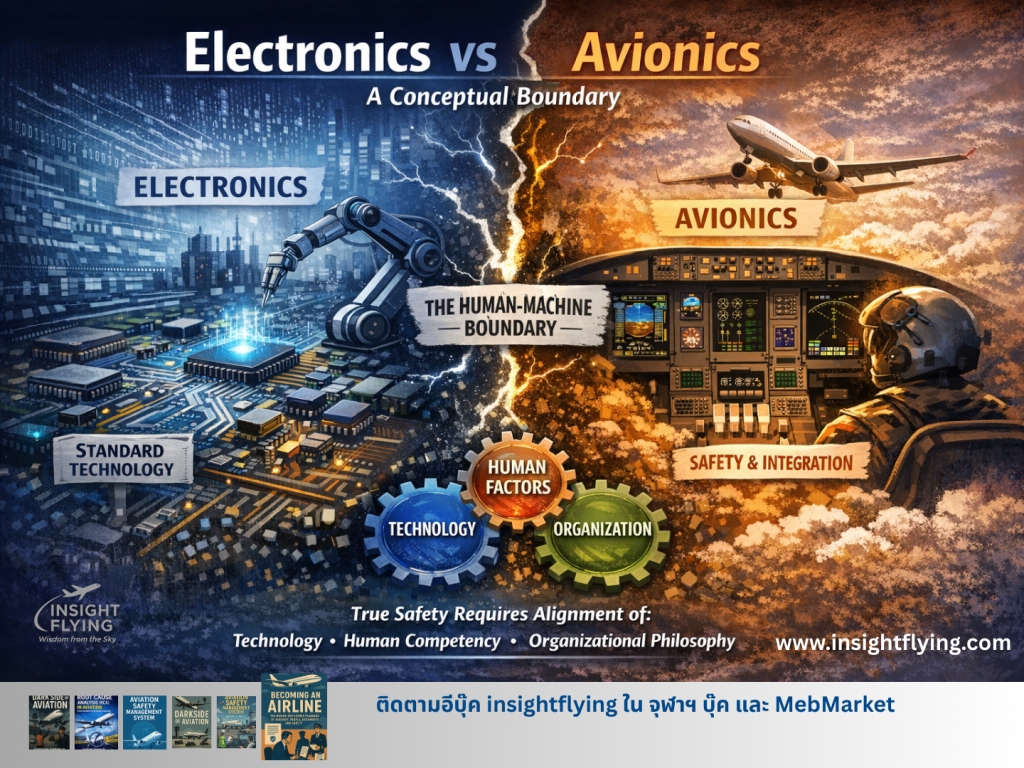
อากาศยานสมัยใหม่มักถูกอธิบายว่าเป็น “flying computers” ซึ่งแม้จะเข้าใจง่าย แต่คำอธิบายนี้ยังไม่ครบถ้วนและอาจทำให้เกิดความเข้าใจคลาดเคลื่อน อากาศยานไม่ได้พึ่งพา electronics ในลักษณะเดียวกับอุปกรณ์ consumer electronics ทั่วไป หากแต่พึ่งพา avionics ซึ่งเป็น electronics แขนงเฉพาะที่ถูกออกแบบ รับรอง และควบคุมอย่างเข้มงวด เพื่อรองรับ ความปลอดภัย ความเชื่อถือได้ และความสามารถในการคาดการณ์พฤติกรรมของระบบการบิน
บทนี้มีวัตถุประสงค์เพื่ออธิบายความแตกต่างพื้นฐานระหว่าง electronics และ avionics ว่าทำไมความแตกต่างนี้จึงมีความสำคัญ และเหตุใดความเข้าใจหรือการจัดการ avionics ที่ไม่ถูกต้องจึงมีส่วนเกี่ยวข้องกับอุบัติเหตุและ serious incidents หลายเหตุการณ์ในโลกการบิน ผ่านกรณีศึกษาที่คัดเลือกมา จะเห็นได้ว่า “avionics failures” แทบไม่เคยเป็นปัญหาของเทคโนโลยีเพียงอย่างเดียว แต่เกือบทั้งหมดเกี่ยวข้องกับ system integration, human interaction และการตัดสินใจภายใต้แรงกดดัน
1. Electronics vs Avionics: เส้นแบ่งเชิงแนวคิด
1.1 Electronics: เทคโนโลยีพื้นฐานที่ทำให้ระบบทำงานได้
Electronics คือสาขาวิศวกรรมที่เกี่ยวข้องกับ
- การสร้างและประมวลผลสัญญาณไฟฟ้า
- การคำนวณและการจัดการข้อมูล
- การควบคุมและ automation
Electronics พบได้ในทุกอุตสาหกรรม ไม่ว่าจะเป็น consumer devices, industrial automation, automotive systems และ information technology ในบริบทส่วนใหญ่ ความขัดข้องของ electronics มักก่อให้เกิดความไม่สะดวก ค่าใช้จ่าย หรือการหยุดชะงัก แต่ แทบไม่ใช่เรื่องคุกคามชีวิตโดยตรง
ลำดับความสำคัญในการออกแบบ electronics ทั่วไปมักเน้นที่
- Performance
- Cost efficiency
- ความเร็วในการพัฒนาและนวัตกรรม
- Product life cycle ที่สั้น
1.2 Avionics: Electronics ภายใต้กติกาการบิน
Avionics ซึ่งมาจากคำว่า aviation electronics คือ electronics ที่ถูกออกแบบให้ทำงานภายในระบบการบิน วัตถุประสงค์หลักไม่ใช่ความสะดวกสบายหรือความเร็วของนวัตกรรม แต่คือ safe flight
Avionics systems ต้องสามารถ
- ทำงานได้อย่างเชื่อถือได้ในสภาพ vibration, อุณหภูมิสุดขั้ว, radiation และความดันต่ำ
- มีพฤติกรรมที่ predictable ไม่ใช่แค่ “ใช้งานได้”
- ล้มเหลวในลักษณะที่รู้ล่วงหน้าและควบคุมได้
- ผ่านข้อกำหนดการรับรองที่เข้มงวด (เช่น FAA, EASA, ICAO standards)
ในโลกการบิน ลักษณะของการล้มเหลวของระบบ มีความสำคัญไม่แพ้ — หรือบางครั้งสำคัญกว่า — คำถามว่า “ระบบล้มเหลวหรือไม่”
2. คุณลักษณะหลักของ Avionics Systems
Avionics แตกต่างจาก electronics ทั่วไปอย่างมีนัยสำคัญในหลายประเด็น
2.1 Certification และ Design Assurance
Avionics ทุกระบบต้องเป็นไปตาม Design Assurance Levels (DALs) เพื่อให้มั่นใจว่า
- Catastrophic failures มีโอกาสเกิดน้อยมากจนแทบเป็นไปไม่ได้
- Hazardous failures ถูกควบคุมและลดผลกระทบ
- Minor failures ไม่พัฒนาไปสู่เหตุการณ์ร้ายแรง
สิ่งเหล่านี้ถูกบังคับใช้ผ่านมาตรฐาน เช่น DO-178 (software) และ DO-254 (hardware)
2.2 Redundancy และ Independence
Avionics systems ที่มีความสำคัญมักถูกออกแบบให้มีการทำซ้ำ (duplicated หรือ triplicated) โดยมี
- Independent power sources
- Independent sensors
- Independent processing paths
Redundancy ไม่ใช่ทางเลือก แต่เป็น รากฐานของความปลอดภัย
2.3 Human Factors Integration
Avionics ถูกออกแบบเพื่อ มนุษย์ ไม่ใช่เพื่อเครื่องจักรเพียงอย่างเดียว Logic ของ display, alerts และ automation modes ถูกพัฒนาเพื่อ
- สนับสนุน situational awareness ของนักบิน
- ลด cognitive overload
- ป้องกัน mode confusion
ความล้มเหลวในมิติ Human Factors นี้ เป็นสาเหตุสำคัญของอุบัติเหตุจำนวนมาก
3. Avionics Systems หลักบนอากาศยาน
อากาศยานพาณิชย์สมัยใหม่พึ่งพา integrated avionics architectures ซึ่งประกอบด้วย
- Flight Management System (FMS)
- Air Data และ Inertial Reference Systems
- Autopilot และ Flight Control Computers
- Navigation systems (GNSS, IRS)
- Communication systems (VHF, HF, SATCOM)
- Surveillance และ Safety systems (TCAS, TAWS)
- Crew Alerting Systems (EICAS, ECAM)
แม้ทุกระบบจะเป็น electronics ในเชิงเทคนิค แต่ทั้งหมดคือ avionics ในเชิงการออกแบบ การรับรอง และบทบาทเชิงปฏิบัติการ
4. กรณีศึกษา: เมื่อ Avionics กลายเป็นปัจจัยชี้ขาด
4.1 Air France Flight 447 (A330, 2009)
บทเรียน: Electronics อาจล้มเหลวได้ แต่ avionics ต้องถูกเข้าใจ
การสูญเสียข้อมูล airspeed ชั่วคราวจาก sensor icing ทำให้ avionics หลายระบบ degrade หรือ disconnect และอากาศยานกลับสู่ alternate control law ซึ่งตัด flight envelope protections บางส่วนออก
ประเด็นสำคัญ:
- Avionics ทำงานถูกต้องตามการออกแบบ
- การ degrade ของระบบเป็นไปตามการรับรอง
- ความล้มเหลวที่แท้จริงเกิดจาก ความเข้าใจพฤติกรรมของระบบโดยมนุษย์
กรณีนี้ชี้ให้เห็นว่า ความปลอดภัยของ avionics ไม่ได้ขึ้นกับ design เพียงอย่างเดียว แต่ขึ้นกับ mental model ของนักบินต่อ automation
4.2 Asiana Airlines Flight 214 (B777, 2013)
บทเรียน: Automation logic และ mode awareness มีความสำคัญอย่างยิ่ง
ในระหว่างการเข้าทำการร่อนลง ความเข้าใจผิดเกี่ยวกับ autopilot และ autothrottle modes นำไปสู่ energy state ที่ไม่เหมาะสม
ประเด็นสำคัญ:
- Avionics systems ทำงานตาม “mode” ไม่ใช่ตาม “ความตั้งใจ”
- Automation ทำในสิ่งที่ถูกสั่ง ไม่ใช่ในสิ่งที่นักบินคาดหวัง
- Mode awareness คือ core competency ของการใช้งาน avionics
4.3 Überlingen Mid-Air Collision (2002)
บทเรียน: เมื่อ avionics ขัดแย้งกับ procedure
TCAS ออก resolution advisory ที่ขัดแย้งกับคำสั่ง ATC
ประเด็นสำคัญ:
- TCAS ทำงานถูกต้องสมบูรณ์
- ความลังเลของมนุษย์ในการจัดลำดับอำนาจการตัดสินใจเป็นปัจจัยชี้ขาด
- ปัจจุบัน procedures กำหนดชัดเจนให้ ปฏิบัติตาม TCAS RA เหนือ ATC
เหตุการณ์นี้เปลี่ยน philosophy การใช้งาน avionics ของโลกการบินอย่างถาวร
4.4 Boeing 737 MAX Incidents (2018–2019)
บทเรียน: Avionics integration คือความรับผิดชอบเชิงระบบ
MCAS พึ่งพา sensor input ที่จำกัด และทำงานโดยที่นักบินรับรู้ข้อมูลไม่เพียงพอ
ประเด็นสำคัญ:
- ปัญหาไม่ได้อยู่ที่ electronics แต่เป็น avionics system architecture
- Redundancy และ transparency ไม่เพียงพอ
- Avionics design ต้องสอดคล้องกับ training, documentation และ operational reality
5. ทำไมความแตกต่างนี้จึงสำคัญ
การสับสนระหว่าง avionics กับ electronics ทั่วไปนำไปสู่สมมติฐานที่อันตราย เช่น
- “ระบบจะทำงานเหมือน consumer device”
- “automation มากขึ้น เท่ากับความปลอดภัยมากขึ้น”
- “เทคโนโลยีสามารถชดเชยความเข้าใจระบบที่ไม่เพียงพอได้”
ในความเป็นจริง ความปลอดภัยการบินเกิดจาก
- Certified system design
- Operational philosophy ที่ชัดเจน
- Training และ competency ที่เหมาะสม
- การเคารพข้อจำกัดของระบบ
6. บทสรุป
Electronics ให้เครื่องมือ
Avionics ให้ระเบียบวินัย
Avionics ทุกระบบคือ electronics ในเชิงเทคนิค แต่มีเพียง avionics เท่านั้นที่ถูกออกแบบมาเพื่อ
- คาดการณ์ความล้มเหลว
- ป้องกันการลุกลามของปัญหา
- สนับสนุนการตัดสินใจของมนุษย์ภายใต้ความไม่แน่นอน
การเข้าใจความแตกต่างนี้ไม่ใช่เรื่องเชิงวิชาการ แต่เป็นเรื่องจำเป็นสำหรับ นักบิน วิศวกร ผู้กำกับดูแล และผู้บริหารด้านความปลอดภัย
ประวัติศาสตร์การบินแสดงให้เห็นชัดเจนว่า อุบัติเหตุแทบไม่เคยเกิดจาก “electronics ที่ไม่ดี” แต่เกิดจาก ระบบที่ไม่สอดคล้องกัน automation ที่ถูกเข้าใจผิด และปฏิสัมพันธ์ระหว่างมนุษย์กับ avionics ที่ซับซ้อน
ในห้องนักบินยุคใหม่ ความปลอดภัยไม่ได้มาจากเทคโนโลยีเพียงอย่างเดียว
แต่มาจาก เทคโนโลยี การฝึก และความไว้วางใจ — ที่ต้องอยู่ในสมดุลที่ถูกต้อง
|
|
Aircraft Avionics Systems: More Than Just Electronics
Introduction
Modern aircraft are often described as “flying computers,” yet this description, while convenient, is incomplete and potentially misleading. Aircraft do not rely on electronics in the same way that consumer devices do. Instead, they depend on avionics—a highly specialized, rigorously certified subset of electronics engineered specifically for aviation safety, reliability, and operational predictability.
This chapter explains the fundamental difference between electronics and avionics, why that distinction matters, and how misunderstanding or mismanaging avionics systems has contributed to real-world accidents and serious incidents. Through selected case studies, we will see that avionics failures are rarely about technology alone; they are almost always about system integration, human interaction, and decision-making under pressure.
1. Electronics vs Avionics: A Conceptual Boundary
1.1 Electronics: The Enabling Technology
Electronics is the broad engineering discipline concerned with:
- Electrical signal generation and processing
- Computation and data handling
- Control and automation
Electronics exists everywhere: consumer devices, industrial automation, automotive systems, and information technology. In most domains, electronic failure is inconvenient, costly, or disruptive—but rarely life-critical.
Design priorities typically include:
- Performance
- Cost efficiency
- Rapid innovation
- Short product life cycles
1.2 Avionics: Electronics Under Aviation Rules
Avionics—derived from aviation electronics—is electronics designed to operate within the aviation system. Its purpose is not innovation speed or user convenience, but safe flight.
Avionics systems must:
- Function reliably in vibration, temperature extremes, radiation, and low pressure
- Be predictable, not merely functional
- Fail in a known and controlled manner
- Meet stringent certification requirements (e.g., FAA, EASA, ICAO standards)
In aviation, how a system fails is often more important than whether it fails.
|
|
2. Core Characteristics of Avionics Systems
Avionics systems differ from general electronics in several critical ways:
2.1 Certification and Design Assurance
Every avionics system must comply with design assurance levels (DALs), ensuring that:
- Catastrophic failures are extremely improbable
- Hazardous failures are mitigated
- Minor failures do not escalate
This is enforced through standards such as DO-178 (software) and DO-254 (hardware).
2.2 Redundancy and Independence
Key avionics systems are duplicated or triplicated, often with:
- Independent power sources
- Independent sensors
- Independent processing paths
Redundancy is not optional—it is foundational.
2.3 Human Factors Integration
Avionics are designed for human operators, not just machines. Display logic, alerts, and automation modes are engineered to:
- Support pilot situational awareness
- Reduce cognitive overload
- Prevent mode confusion
Failures in this area are frequently at the heart of accidents.
3. Typical Aircraft Avionics Systems
Modern transport aircraft rely on integrated avionics architectures, including:
- Flight Management System (FMS)
- Air Data and Inertial Reference Systems
- Autopilot and Flight Control Computers
- Navigation (GNSS, IRS)
- Communication (VHF, HF, SATCOM)
- Surveillance and Safety Systems (TCAS, TAWS)
- Crew Alerting Systems (EICAS, ECAM)
Each system is electronic by nature, but avionics by design, certification, and operational role.
4. Case Studies: When Avionics Becomes the Deciding Factor
4.1 Air France Flight 447 (A330, 2009)
Lesson: Electronics can fail; avionics must be understood
In this accident, temporary loss of airspeed data due to sensor icing caused multiple avionics systems to degrade or disconnect. The aircraft reverted to alternate control laws, removing certain flight envelope protections.
Key points:
- The avionics behaved as designed
- System degradation was correct and certified
- The critical breakdown occurred in human understanding of avionics behavior
This case illustrates that avionics safety depends not only on system design, but on pilot mental models of automation.
4.2 Asiana Airlines Flight 214 (B777, 2013)
Lesson: Automation logic and mode awareness matter
During approach, a misunderstanding of the autopilot and autothrottle modes led to an unintended energy state. The avionics did not “malfunction” electronically; rather, they operated in a mode different from what the crew believed.
Key points:
- Avionics systems are mode-based, not intention-based
- Automation does exactly what it is commanded to do—not what pilots expect
- Clear mode awareness is a core avionics competency
4.3 Überlingen Mid-Air Collision (2002)
Lesson: When avionics and procedures conflict
In this collision between two aircraft, the airborne collision avoidance system (TCAS) issued a resolution advisory that conflicted with air traffic control instructions.
Key points:
- TCAS avionics functioned correctly
- Human hesitation in prioritizing system guidance was decisive
- Modern procedures now explicitly require pilots to follow TCAS advisories over ATC instructions
This event reshaped global avionics operating philosophy.
4.4 Boeing 737 MAX Incidents (2018–2019)
Lesson: Avionics integration is a system responsibility
The Maneuvering Characteristics Augmentation System (MCAS) relied on limited sensor input and acted without sufficient pilot awareness.
Key points:
- The issue was not raw electronics, but avionics system architecture
- Insufficient redundancy and transparency undermined safety
- Avionics design must align with training, documentation, and operational reality
5. Why the Distinction Matters
Confusing avionics with general electronics leads to dangerous assumptions, such as:
- “The system will behave like a consumer device”
- “More automation automatically means more safety”
- “Technology can compensate for poor system understanding”
In aviation, safety emerges from:
- Certified system design
- Clear operational philosophy
- Proper training and competency
- Respect for system limitations
6. Conclusion
Electronics provide the tools; avionics provide the discipline.
Every avionics system is electronic in nature, but only avionics are designed to:
- Anticipate failure
- Protect against escalation
- Support human decision-making under uncertainty
Understanding this distinction is not academic—it is essential for pilots, engineers, regulators, and safety managers alike. History shows that accidents are rarely caused by “bad electronics,” but by misaligned systems, misunderstood automation, and human interaction with complex avionics environments.
In the modern cockpit, safety does not come from technology alone.
It comes from technology, training, and trust—properly balanced.
ซื้ออีบุ๊ค “Becoming an Airline” “กว่าจะเป็นสายการบิน” คลิ๊กที่นี่


|
|
|
หนังสือการบิน ทางลัดสู่ความเข้าใจที่นำไปใช้งานจริง
|
|
|
|
|
|


|
|
|
|
|
|
accident Airbus aircraft airline airmanship aviation Aviation SMS become a captain become a pilot Boeing captain Crisis Crisis Management diversion emergency engine fatigue flight safety flood go-around hydroplane Indigo interview judgement management motivation pilot pilot interview qualified pilot safety Safety Management System safety report self-knowledge SMS student pilot technology turbulence weather weather radar การจัดการภาวะวิกฤติ การบิน การสอบสัมภาษณ์ นักบิน ระบบบริหารความปลอดภัย สอบนักบิน
ขายดีที่สุด
|
|
|