
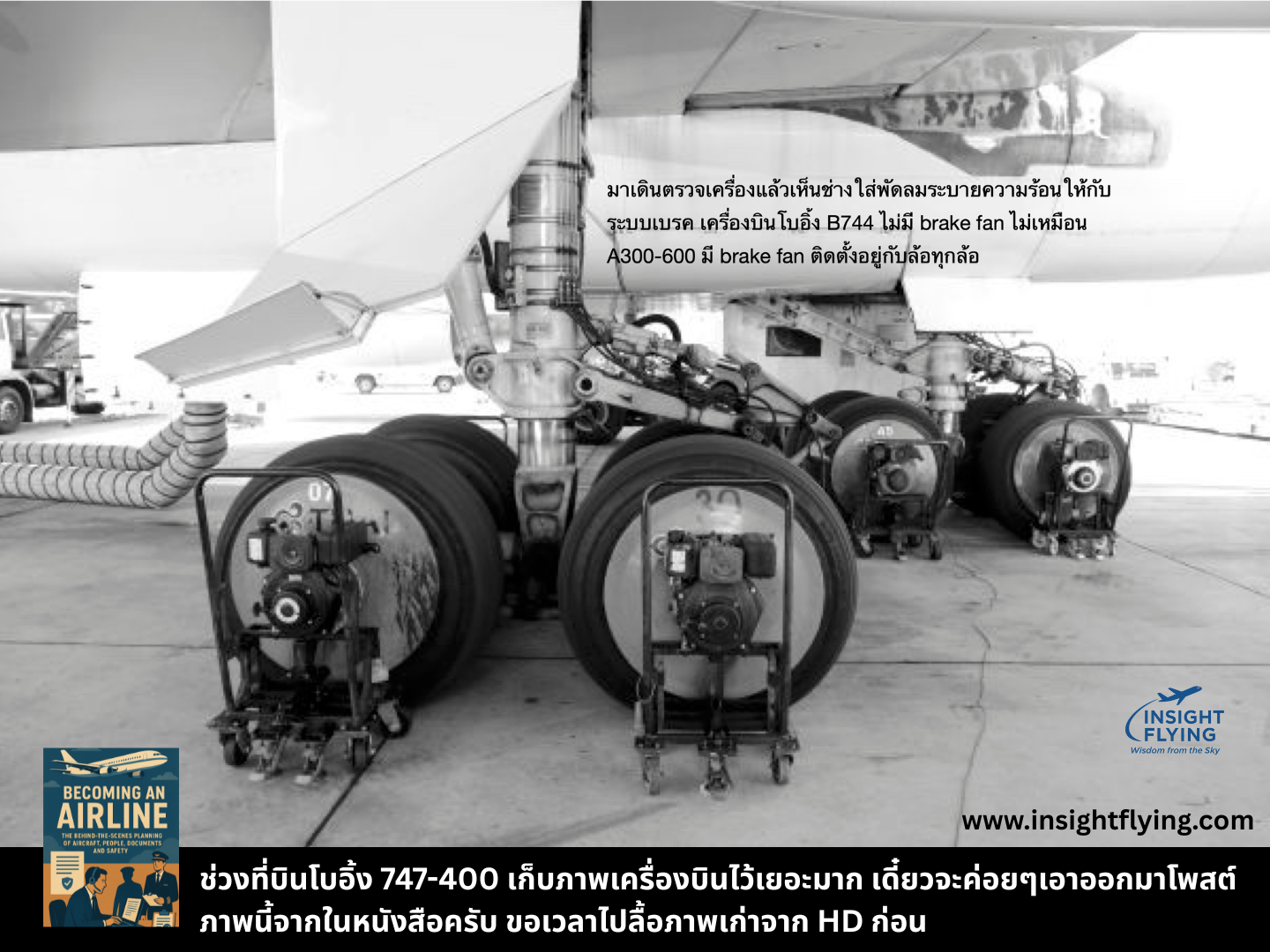
โบอิ้ง 747 ไม่มี Brake Fans สำหรับลดอุณหภูมิของเบรค
เครื่องบิน โบอิ้ง 747 มีล้อที่ติดตั้งเบรคอยู่ 16 ล้อ มีแค่สองล้อหน้าที่ไม่มีเบรคติดตั้งอยู่ที่ล้อ (เครื่องบินส่วนใหญ่) ไม่ติดตั้งระบบเบรคที่ล้อหน้า เพราะล้อหน้าเล็ก (ถูกทำให้เล็ก เพราะไม่จำเป็นต้องใหญ่ มันไม่ได้รับน้ำหนักส่วนใหญ่ของเครื่องบิน) การติดตั้งเบรคที่ล้อหน้าจะทำให้ล้อมีความเครียดสูงมากหรือรับน้ำหนักตัวของเครื่องบินแทบทั้งหมดเมื่อมีการเบรค มันจึงไม่ค่อยจำเป็น ผมเข้าใจว่างั้นนะ
ล้อหน้าภาษาอังกฤษเรียกว่า Nose Landing Gear เรียกเหมือน ๆ กันในทุกแบบของเครื่องบิน ส่วนล้อบริเวณปีกหรือลำตัว ก็เรียกแตกต่างกันไปบ้าง เช่น Main Landing Gears, Body Gears หรือ Wing Gears
จำนวนล้อ สัมพันธ์กับ น้ำหนักของเครื่องบิน
เครื่องบินที่มีน้ำหนักตัวมาก ๆ เมื่อวิ่งขึ้น Takeoff Weight หรือ น้ำหนักสูงสุดในการลงสนาม Maximum Landing Weight สูง ๆ เครื่องบินก็จะมีจำนวนล้อบริเวณลำตัวหรือที่ปีกจำนวนมากขึ้น ทั้่งนี้เพื่อรองรับน้ำหนักในขณะกระแทกพื้น หรือการ abort takeoff ที่น้ำหนักวิ่งขึ้นสูงสุดและความเร็วสูงมาก ล้อและเบรคจะต้องรับภาระสูงมากในการหยุดเครื่องบิน
การเบรคเครื่องบิน ก็เป็นศิลปะ ไว้ค่อยเขียนกันใหม่
เมื่อเครื่องบินลงสนาม หรือ ระงับการวิ่งขึ้น (abort takeoff) เมื่องเครื่องแตะพื้นและเริ่มทำการลดความเร็วด้วยเบรค จานเบรคจะมีความร้อนจากที่ถูกเสียดสีของผ้าเบรค ความร้อนจะสูงเกินร้อยองศาเซลเซียส แต่หากการลงสนามในสถานการณ์ที่ต้องทำการเบรคอย่างฉับพลัน รุนแรง หรือความผิดปกติของระบบเบรคเอง ความร้อนก็จะสูงไปทะลุ 200 องศาเซลเซียส หากเกิดกว่าค่า ๆ หนึ่ง ระบบป้องกันการระเบิดของยางจะทำการปล่อยลมของยางออกเพื่อกำจัดความเสี่ยงจากยางระเบิด (เห็นไหมว่ามันคือ Safety Management System ในการสร้างเครื่องบิน)
ยางจะปล่อยลมออกเพื่อลดความเสี่ยงจากการระเบิด เพราะยางระเบิดจะไปทำอันตรายกับส่วนอื่น ๆ ของเครื่องบิน เช่น ทำให้ท่อไฮดรอลิกแตก ปีกทะลุ หรือทำให้น้ำมันรั่ว หรือแม้กระทั่งทำให้ลำตัวของเครื่องบินได้รับความเสียหาย
แล้วทำไมยังมียางระเบิด
ก็เกิดได้หลายสาเหตุ เช่น tyre fuse ไม่ทำงาน หรือ มันเกิดการเฉือนของยางอย่างรุนแรง ยางไม่ร้อนแต่เนื้อยางหายไป ผมมีรูปไว้หาก่อน
หรือ เบรคแรงงงงงง มากกกกกกกก จนทำให้ยางไม่อยากจะทนอยู่ต่อไปแล้ว เครียดเกินไประเบิดตัวเองดีกว่า
เขียนเท่านี้ก่อนครับ สมองไม่ค่อยแล่น
ล้าจากการบินมาหลายไป ค่อยเป็นค่อยไปครับ
มีประโยชน์ก็แชร์ไปได้เลยไม่ต้องขออนุญาตครับ ยินดี
ฝากติดตามผลงานอีบุ๊คละกันนะครับ
#การบิน #นักบิน #apilotclub #aPilotBook #insightflying
“Dark Side of Aviation” is available in Apple Books

Boeing 747: No Brake Fans for Brake Cooling
The Boeing 747 does not use brake fans to reduce brake temperature.
A Boeing 747 has 16 wheels equipped with brakes. Only the two nose wheels do not have brakes installed. Most aircraft do not install brakes on the nose wheels because they are relatively small. They are designed to be small because they do not carry the majority of the aircraft’s weight. Installing brakes on the nose wheels would subject them to extremely high stress, or even cause them to bear almost the entire aircraft load during braking. For that reason, it is generally unnecessary. That is my understanding, at least.
The front landing gear is called the Nose Landing Gear, which is a standard term across aircraft types. The landing gears located under the wings or fuselage are referred to by different terms depending on the design, such as Main Landing Gears, Body Gears, or Wing Gears.
Number of Wheels and Aircraft Weight
The number of wheels is directly related to the aircraft’s weight.
Aircraft with very high weights—whether Takeoff Weight or Maximum Landing Weight—require a larger number of wheels under the fuselage or wings. This is to support the loads during touchdown or during a rejected takeoff (abort takeoff) at maximum takeoff weight and very high speed. In such scenarios, the wheels and brakes must absorb enormous energy in order to stop the aircraft.
Braking an aircraft is, in itself, an art. I will write about that another time.

Brake Heat and Tire Protection
When an aircraft lands or performs a rejected takeoff, once the aircraft touches down and deceleration begins using the brakes, the brake discs generate heat due to friction with the brake pads. Temperatures can easily exceed 100°C. In situations requiring aggressive or abrupt braking, or in the event of a brake system malfunction, temperatures can rise beyond 200°C.
If the temperature exceeds a certain threshold, the tire overheat protection system activates. This system releases air from the tire to eliminate the risk of a tire explosion. This is a clear example of Safety Management System (SMS) principles embedded directly into aircraft design.
The tire deflates intentionally to reduce the risk of an explosion, because a tire burst can cause serious secondary damage—such as rupturing hydraulic lines, penetrating the wing, causing fuel leaks, or even damaging the aircraft structure itself.
Then Why Do Tires Still Explode?
There are several possible reasons:
- The tire fuse (thermal fuse plug) may fail to operate.
- Severe tire shearing, where the tire material is destroyed without a significant temperature rise. The tire is not hot, but the rubber is physically torn away. I have photos of this somewhere—I will look for them.
- Extremely aggressive braking—really, really hard braking—to the point where the tire simply cannot tolerate the stress anymore and fails.
|
|
หนังสือการบิน ทางลัดสู่ความเข้าใจที่นำไปใช้งานจริง

|
|

|
|


|
|
|
|

|
|
accident Airbus aircraft airline airmanship aviation Aviation SMS become a captain become a pilot Boeing captain Crisis Crisis Management diversion emergency engine fatigue flight safety flood go-around hydroplane Indigo interview judgement management motivation pilot pilot interview qualified pilot safety Safety Management System safety report self-knowledge SMS student pilot technology turbulence weather weather radar การจัดการภาวะวิกฤติ การบิน การสอบสัมภาษณ์ นักบิน ระบบบริหารความปลอดภัย สอบนักบิน
ขายดีที่สุด
|
|
|