
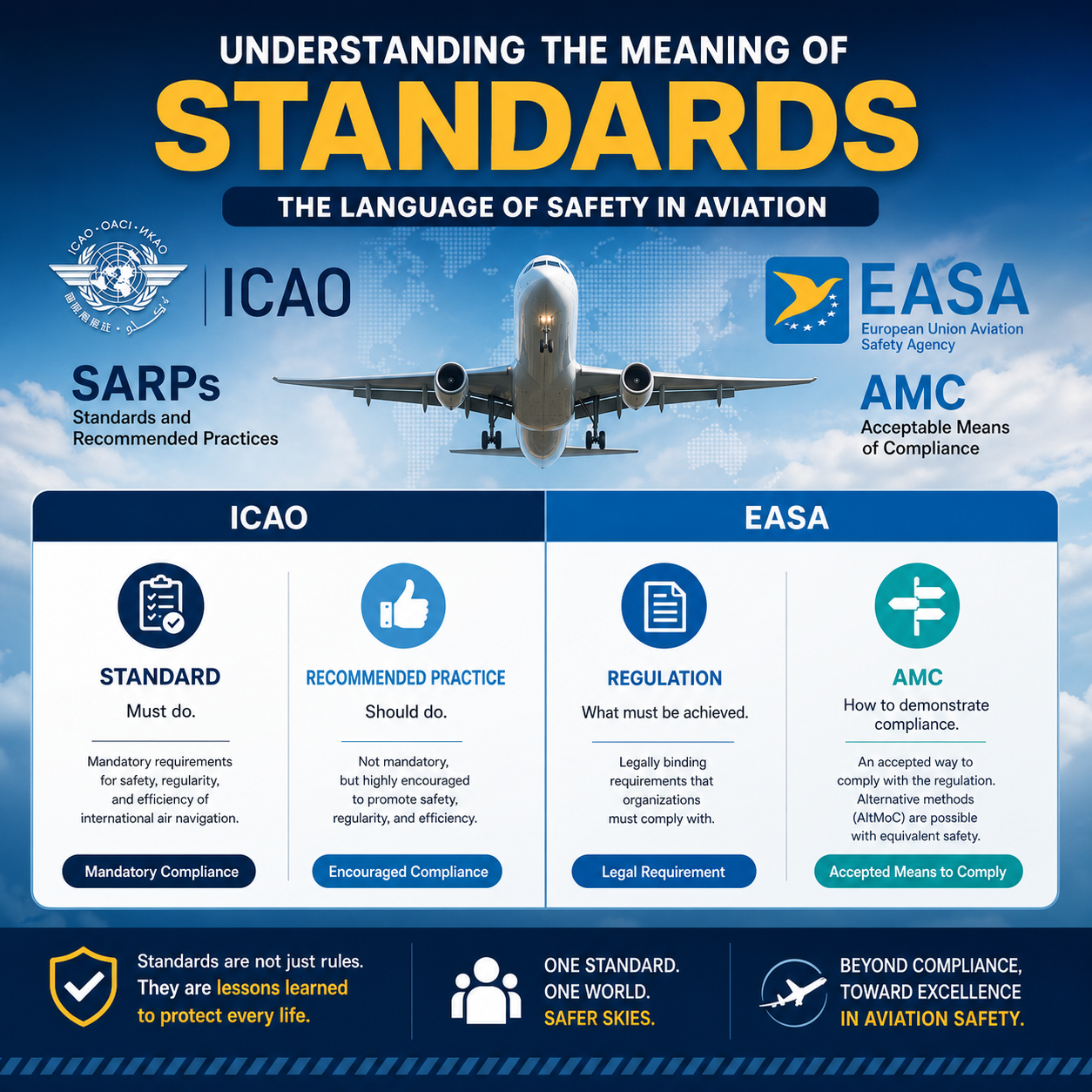
จากมาตรฐานทั่วไป…สู่ ICAO SARPs และแนวคิดของ EASA AMC
ในชีวิตประจำวัน เราใช้คำว่า “มาตรฐาน” หรือ Standards กันอยู่ตลอดเวลา
บางครั้งเราอาจไม่ได้สังเกตด้วยซ้ำ
กาแฟหนึ่งแก้วที่รสชาติเหมือนเดิมทุกวัน
การขึ้นเครื่องบินที่ผู้โดยสารคาดหวังว่าต้องปลอดภัย
การตรวจสอบเครื่องบินก่อนบินที่ต้องทำตามขั้นตอนเดิมอย่างเคร่งครัด
ทั้งหมดนี้เกิดขึ้นได้เพราะ “มาตรฐาน”
มาตรฐาน คือสิ่งที่ทำให้ผลลัพธ์มีความสม่ำเสมอ (Consistency)
ลดความคลาดเคลื่อน (Variation)
และสร้างความเชื่อมั่น (Confidence)
ในโลกของการบิน คำว่า Standards ไม่ได้หมายถึงเพียง “การทำให้ดี”
แต่หมายถึง “การทำให้ถูกต้องตามที่กำหนดไว้”
และในหลายกรณี คำว่า “ถูกต้อง” นั้นมีผลโดยตรงต่อ “ความปลอดภัยของชีวิต”
นั่นคือเหตุผลที่การบินเป็นหนึ่งในอุตสาหกรรมที่ให้ความสำคัญกับ Standards มากที่สุดในโลก
Standards ในโลกการบิน ไม่ใช่แค่ Best Practice
หลายคนเข้าใจว่า Standards คือ “แนวทางที่ดีที่สุด” หรือ Best Practice
ซึ่งก็ไม่ผิดนัก แต่ในความเป็นจริง Standards มีความลึกกว่านั้นมาก
เพราะใน Aviation
Standards คือสิ่งที่ “ต้องปฏิบัติ” (Mandatory Compliance)
ไม่ใช่เพียง “ควรทำ”
ตัวอย่างเช่น
- ความสูงขั้นต่ำในการบิน (Minimum Safe Altitude)
- การแบ่ง Separation ระหว่างอากาศยาน
- การออกใบอนุญาตนักบิน
- การบำรุงรักษาอากาศยาน
- การออกแบบสนามบิน
- การสื่อสารทางวิทยุการบิน
สิ่งเหล่านี้ไม่สามารถใช้ความรู้สึกส่วนตัวตัดสินได้
แต่ต้องอ้างอิงจากมาตรฐานสากลที่ทุกประเทศยอมรับร่วมกัน
และองค์กรที่ทำหน้าที่นี้ในระดับโลก คือ
International Civil Aviation Organization (ICAO)
ICAO และคำว่า SARPs
ICAO เป็นองค์การภายใต้สหประชาชาติ
ที่มีหน้าที่กำหนดกรอบมาตรฐานการบินพลเรือนระหว่างประเทศ
สิ่งที่สำคัญที่สุดอย่างหนึ่งที่ ICAO จัดทำ คือ
SARPs
Standards and Recommended Practices
SARPs ถูกบรรจุอยู่ใน Annex ต่าง ๆ ของ Chicago Convention
เช่น
- Annex 1 Personnel Licensing
- Annex 6 Operation of Aircraft
- Annex 8 Airworthiness
- Annex 11 Air Traffic Services
- Annex 14 Aerodromes
- Annex 19 Safety Management
SARPs คือ “ภาษากลาง” ของการบินโลก
เพื่อให้เครื่องบินจากประเทศหนึ่ง สามารถบินไปอีกประเทศหนึ่งได้อย่างปลอดภัยและเป็นระบบเดียวกัน
Standard คืออะไร
ICAO ให้ความหมายของ Standard ไว้อย่างชัดเจนว่า
ข้อกำหนดที่รัฐสมาชิกต้องปฏิบัติตาม
เพื่อให้เกิดความปลอดภัย ความสม่ำเสมอ และประสิทธิภาพในการเดินอากาศระหว่างประเทศ
พูดง่าย ๆ คือ
Standard = สิ่งที่ “ต้องทำ”
หากรัฐสมาชิกไม่สามารถปฏิบัติตามได้
ต้องมีการแจ้ง Difference ต่อ ICAO อย่างเป็นทางการ
นี่คือจุดสำคัญมาก
เพราะหมายความว่า
Standard ไม่ใช่ “คำแนะนำ”
แต่เป็น “ข้อกำหนดหลัก” ที่ต้องมีเหตุผลชัดเจนหากไม่สามารถทำได้
Recommended Practice คืออะไร
ส่วน Recommended Practice นั้น
มีระดับความเข้มข้นน้อยกว่า
ICAO อธิบายว่าเป็น
ข้อปฏิบัติที่ “ควร” นำไปใช้
เพื่อส่งเสริมความปลอดภัย ความสม่ำเสมอ และประสิทธิภาพ
กล่าวคือ
Recommended Practice = สิ่งที่ “ควรทำ”
ไม่ใช่ข้อบังคับโดยตรง
แต่เป็นแนวทางที่ ICAO เห็นว่าหากนำไปใช้ จะเกิดผลดีต่อระบบโดยรวม
หลายครั้ง Recommended Practice ในวันนี้
อาจกลายเป็น Standard ในอนาคต
เมื่ออุตสาหกรรมมีความพร้อมมากขึ้น
แล้ว EASA ล่ะ ทำไมมีคำว่า AMC
ฝั่งยุโรป โดยเฉพาะภายใต้
European Union Aviation Safety Agency (EASA)
เราจะพบคำที่ใช้บ่อยอีกคำหนึ่ง คือ
AMC
Acceptable Means of Compliance
คำนี้ทำให้หลายคนสับสน
เพราะคิดว่า AMC คือ Standard
แต่จริง ๆ แล้วไม่ใช่
AMC คืออะไร
AMC คือ
วิธีการที่ “ยอมรับได้”
ในการแสดงว่าคุณปฏิบัติตามกฎหลักแล้ว
พูดง่าย ๆ คือ
Regulation = ต้องทำอะไร
AMC = ทำอย่างไรให้ถือว่าทำถูกต้อง
ตัวอย่างเช่น
กฎหมายอาจระบุว่า
“Operator ต้องมีระบบ Fatigue Risk Management”
AMC จะอธิบายว่า
- ควรมีขั้นตอนอย่างไร
- ต้องประเมินอะไรบ้าง
- เอกสารควรมีอะไร
- การติดตามผลควรทำอย่างไร
ดังนั้น AMC ไม่ใช่กฎหมายโดยตรง
แต่เป็น “เส้นทางที่ได้รับการยอมรับ”
หากองค์กรเลือกใช้วิธีอื่นแทน AMC ก็สามารถทำได้
แต่ต้องพิสูจน์ได้ว่าให้ระดับความปลอดภัยเทียบเท่าหรือดีกว่า
นี่คือแนวคิดที่เรียกว่า
Alternative Means of Compliance (AltMoC)
สรุปง่าย ๆ
ICAO
Standard
= ต้องทำ
Recommended Practice
= ควรทำ
EASA
Regulation
= ข้อกำหนดหลัก
AMC
= วิธีที่ยอมรับได้ในการปฏิบัติตามข้อกำหนด
แล้วคนทำงานการบินควรเข้าใจเรื่องนี้อย่างไร
ไม่ว่าจะเป็นนักบิน
Flight Dispatcher
Maintenance
Safety Manager
Instructor
Inspector
หรือผู้บริหารสายการบิน
การเข้าใจคำว่า Standards
ไม่ใช่เรื่องของ “เอกสาร”
แต่คือการเข้าใจว่า
ทำไมเราจึงต้องทำสิ่งนี้
และ
ถ้าไม่ทำ จะเกิดอะไรขึ้น
มาตรฐานไม่ใช่ภาระ
แต่มันคือระบบที่ป้องกันไม่ให้เราต้องเรียนรู้จากความสูญเสีย
ใน Aviation
เรามักพูดกันว่า
Regulations are written in blood.
กฎจำนวนมากไม่ได้เกิดจากแนวคิดในห้องประชุม
แต่มักเกิดขึ้นหลังจากอุบัติเหตุที่ไม่มีใครอยากให้เกิดอีก
นั่นคือเหตุผลที่ Standards มีคุณค่ามากกว่าคำว่า “ข้อบังคับ”
มันคือบทเรียนของทั้งอุตสาหกรรม
บทส่งท้าย
เมื่อเราเข้าใจคำว่า Standard อย่างแท้จริง
เราจะเลิกมองมันเป็นเพียง Checklist
แต่จะมองเห็นว่า
มันคือ “ภาษาของความปลอดภัย”
และในโลกการบิน
ไม่มีภาษาไหนสำคัญไปกว่านี้อีกแล้ว
เพราะสุดท้ายแล้ว
มาตรฐานที่ดี
ไม่ได้มีไว้เพื่อผ่าน Audit
แต่มีไว้เพื่อให้ทุกเที่ยวบิน
พาทุกคนกลับบ้านได้อย่างปลอดภัย
หนังสือ “ด้านมืดของสายการบิน” เรื่องลับ ๆ ในมุมอับที่คนภายนอกไม่ค่อยรู้

|
|

|
|
|
|
Understanding the Meaning of Standards
From Everyday Standards to ICAO SARPs and EASA AMC
In everyday life, we use the word “standards” all the time—often without even realizing it.
A cup of coffee that tastes the same every morning.
A flight passengers expect to be consistently safe.
A pre-flight inspection that must be performed the same way every time.
All of these are possible because of standards.
Standards create consistency.
They reduce variation.
They build confidence.
In aviation, however, the word Standards means far more than simply “doing things well.”
It means doing things correctly, in accordance with defined requirements.
And in many cases, that correctness is directly connected to the safety of human lives.
That is why aviation is one of the industries where standards matter the most.
Standards in Aviation Are More Than Best Practice
Many people assume standards simply mean “best practices.”
That is partly true—but in aviation, standards go much deeper.
Because in aviation, standards often mean:
Mandatory Compliance
Not merely something you should do,
but something you must do.
Examples include:
- Minimum safe altitude
- Aircraft separation standards
- Pilot licensing requirements
- Aircraft maintenance procedures
- Aerodrome design standards
- Aeronautical radio communication procedures
These cannot be based on personal judgment alone.
They must follow internationally recognized standards accepted by all States.
And the organization responsible for this at the global level is
International Civil Aviation Organization (ICAO)
ICAO and the Meaning of SARPs
ICAO is a specialized agency of the United Nations responsible for establishing the global framework for international civil aviation.
One of the most important things ICAO produces is:
SARPs
Standards and Recommended Practices
SARPs are contained in the various Annexes to the Chicago Convention, such as:
- Annex 1 — Personnel Licensing
- Annex 6 — Operation of Aircraft
- Annex 8 — Airworthiness
- Annex 11 — Air Traffic Services
- Annex 14 — Aerodromes
- Annex 19 — Safety Management
SARPs serve as the common language of global aviation.
They ensure that an aircraft departing from one country can safely operate in another under a harmonized system.
What Is a Standard?
ICAO defines a Standard as:
Any specification for physical characteristics, configuration, material, performance, personnel or procedure, the uniform application of which is recognized as necessary for the safety or regularity of international air navigation.
In simpler terms:
Standard = Something that must be followed
If a Member State cannot comply with a Standard,
it must formally notify ICAO of the difference.
This is a very important point.
It means a Standard is not merely advice.
It is a formal requirement, and any deviation must be justified.
What Is a Recommended Practice?
A Recommended Practice carries a lower level of obligation.
ICAO defines it as:
Any specification the uniform application of which is recognized as desirable in the interest of safety, regularity or efficiency of international air navigation.
In simpler terms:
Recommended Practice = Something that should be followed
It is not mandatory in the same way as a Standard,
but ICAO strongly encourages States to implement it.
Many Recommended Practices today may become Standards in the future
as the industry matures and global capability improves.
What About EASA? Why Is There AMC?
In Europe, particularly under
European Union Aviation Safety Agency (EASA)
another term frequently appears:
AMC
Acceptable Means of Compliance
This often causes confusion because many assume AMC is the same as a Standard.
It is not.
What Is AMC?
AMC means:
A method that is considered acceptable
for demonstrating compliance with the main regulation
Simply put:
Regulation = What must be achieved
AMC = One accepted way of achieving it
For example:
A regulation may require:
“An operator shall establish a Fatigue Risk Management system.”
AMC would then explain:
- What processes should exist
- What assessments should be performed
- What documentation should be maintained
- How monitoring and follow-up should be conducted
So AMC is not the law itself.
It is the accepted pathway to compliance.
An organization may choose another method instead of following AMC,
but it must demonstrate that the alternative provides an equivalent or better level of safety.
This is known as:
Alternative Means of Compliance (AltMoC)
A Simple Summary
ICAO
Standard
= Must do
Recommended Practice
= Should do
EASA
Regulation
= Core legal requirement
AMC
= Accepted way to comply with that requirement
|
|
|
|
|
|
How Should Aviation Professionals Understand This?
Whether you are a pilot,
flight dispatcher,
maintenance engineer,
safety manager,
instructor,
inspector,
or airline executive—
understanding standards is not just about reading documents.
It is about understanding:
Why must we do this?
and
What happens if we do not?
Standards are not administrative burdens.
They are systems designed to prevent us from learning through loss.
In aviation, we often say:
Regulations are written in blood.
Many rules were not born from conference rooms.
They were created after accidents that no one wanted to happen again.
That is why standards are far more valuable than mere compliance requirements.
They represent lessons learned by the entire industry.
Final Thoughts
Once we truly understand the meaning of Standards,
we stop seeing them as just checklists.
We begin to see them as the language of safety.
And in aviation,
there is no language more important than that.
Because in the end,
Good standards are not there to help us pass audits.
They exist to ensure that every flight
brings everyone home safely.
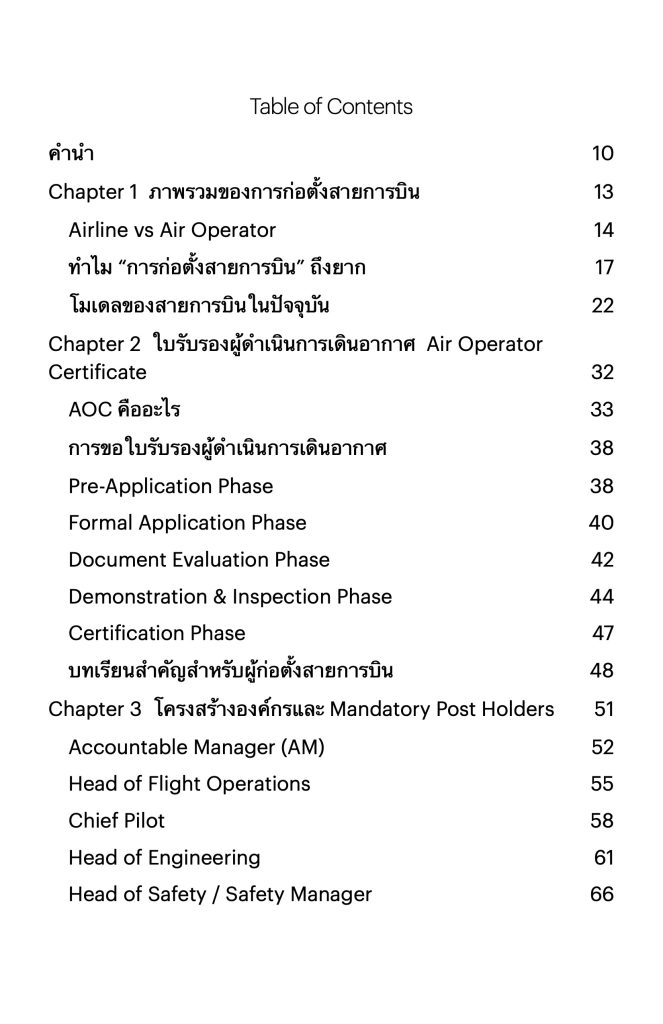
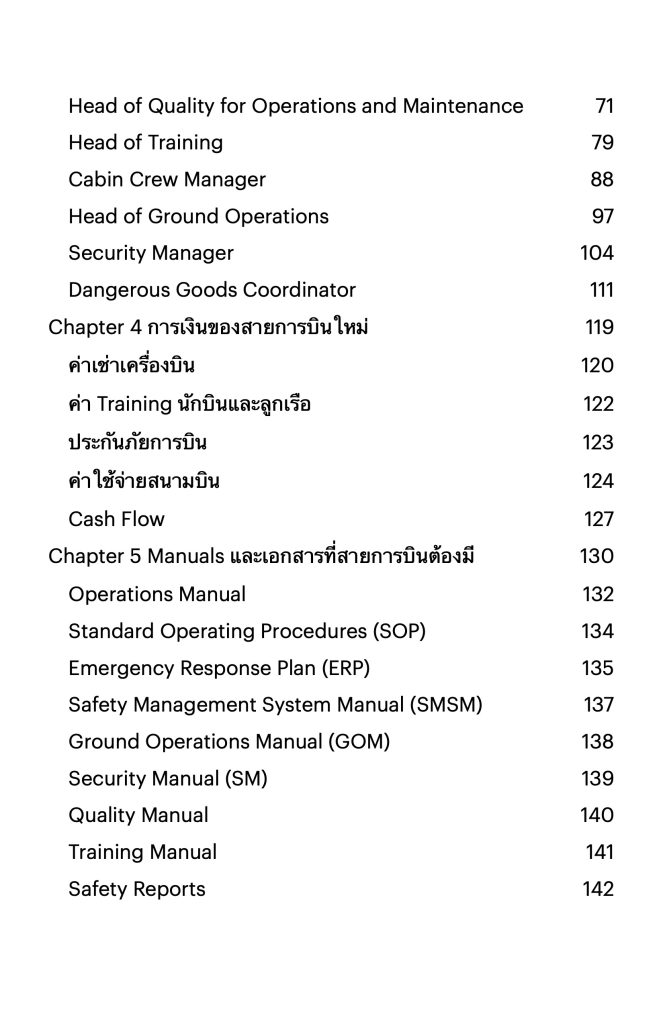
ซื้ออีบุ๊ค “Becoming an Airline” “กว่าจะเป็นสายการบิน” คลิ๊กที่นี่

accident Airbus aircraft air crash airline airmanship attitude aviation Aviation SMS become a captain become a pilot Boeing cloud type Crisis Crisis Management emergency engine fatigue flight safety FRMS go-around Indigo interview investigation judgement management pilot qualified pilot runway incursion safety safety management Safety Management System safety report SMS student pilot technology turbulence weather การจัดการความปลอดภัย การบิน การสอบสัมภาษณ์ ความปลอดภัย นักบิน สอบนักบิน สอบสัมภาษณ์