
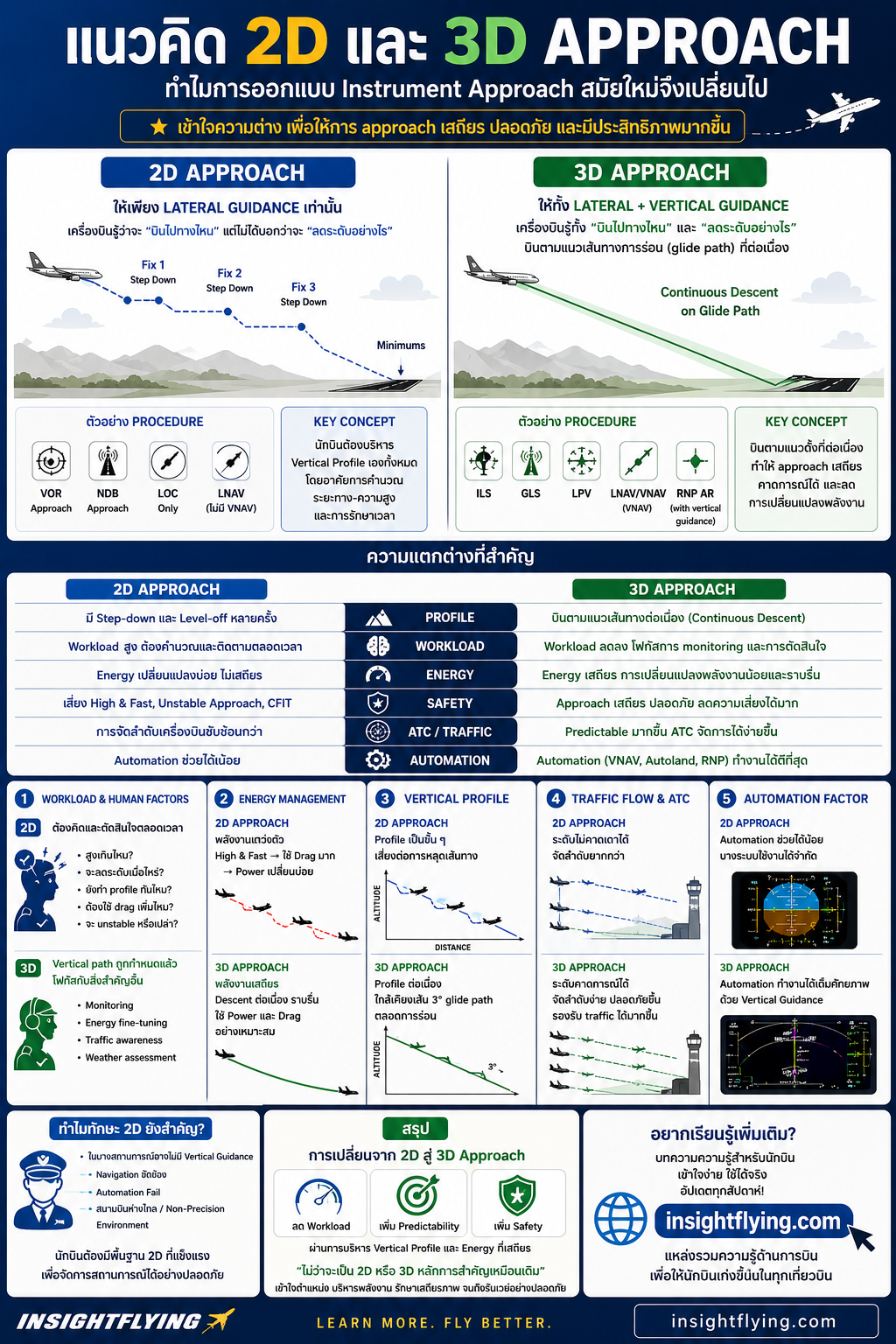
หนึ่งในวิวัฒนาการสำคัญของการบินสมัยใหม่ คือการเปลี่ยนจากแนวคิดแบบ “2D Approach” ไปสู่ “3D Approach”
ฟังดูเหมือนเป็นเพียงศัพท์เทคนิค แต่ในความเป็นจริง แนวคิดนี้ส่งผลโดยตรงต่อ
- Workload ของนักบิน
- ความสามารถในการรักษา Stabilized Approach
- Terrain Awareness
- Energy Management
- การใช้งาน Automation
- และท้ายที่สุดคือ Flight Safety
การเข้าใจความแตกต่างของ 2D และ 3D Approach จะช่วยให้เข้าใจว่าทำไมโลกการบินยุคใหม่จึงพยายามผลักดัน Vertical Guidance ให้มีบทบาทมากขึ้นเรื่อย ๆ
2D Approach คืออะไร
2D Approach คือ Instrument Approach ที่ให้เพียง
- Lateral Guidance
แต่ไม่มี Vertical Guidance ที่ชัดเจน
กล่าวง่าย ๆ คือ
เครื่องบินรู้ว่าจะ “บินไปทางไหน”
แต่ไม่ได้บอกว่าจะ “ลดระดับอย่างไร”
ตัวอย่างที่พบได้บ่อย:
- VOR Approach
- NDB Approach
- LOC only
- LNAV without VNAV
Approach ลักษณะนี้จึงมีเพียง “สองมิติ”
- ซ้าย / ขวา
- แนวเส้นทางบิน
แต่นักบินต้องบริหาร Vertical Profile เองทั้งหมด
สภาพแวดล้อมแบบ 2D ดั้งเดิม
ในอดีต การบิน Non-Precision Approach มักเต็มไปด้วย:
- Step-down fixes
- Minimum crossing altitudes
- การคำนวณระยะและความสูง
- การจับเวลา
- การปรับ descent rate อยู่ตลอดเวลา
Workload ของนักบินจึงสูงมาก
เทคนิคที่เคยนิยมคือ
“Dive and Drive”
คือ:
- ลดระดับเร็ว
- ไป level off
- แล้วค่อย descend ใหม่ที่ fix ถัดไป
แม้วิธีนี้จะทำให้ถึง minimum ได้เร็ว แต่ก็เพิ่มความเสี่ยงอย่างมาก เช่น
- Unstable Approach
- Excessive descent rate
- Loss of situational awareness
- CFIT risk
- Energy mismanagement
เพราะ aircraft energy state เปลี่ยนตลอดเวลาแบบไม่ต่อเนื่อง
3D Approach คืออะไร
3D Approach คือ approach ที่มีทั้ง
- Lateral Guidance
- Vertical Guidance
พร้อมกัน
เครื่องบินจะบินตามแนว descent path ที่ต่อเนื่องไปจนถึง runway
ตัวอย่างเช่น:
- ILS
- GLS
- LPV
- LNAV/VNAV
- RNP AR with vertical guidance
แนวคิดสำคัญเปลี่ยนไปทันทีคือ
แทนที่จะ descend เป็นขั้น ๆ
เครื่องบินจะไหลลงตาม geometric path ที่เสถียร
ทำให้การบิน predictable มากขึ้นอย่างชัดเจน
ทำไม 3D Approach จึงปลอดภัยกว่า
ข้อดีสำคัญของ 3D Approach คือ “ความเสถียร”
เครื่องบินจะอยู่บน:
- Vertical profile ที่ชัดเจน
- Energy path ที่คาดการณ์ได้
- Descent angle ที่คงที่
จึงลด:
- Level-off
- การเปลี่ยน thrust บ่อย
- การใช้ drag เกินจำเป็น
- Last-minute correction
- High-and-fast scenario
ผลลัพธ์คือ:
- Pilot workload ลดลง
- Situational awareness ดีขึ้น
- Automation ทำงานได้มีประสิทธิภาพกว่า
- Approach stable มากขึ้น
นี่คือเหตุผลที่ ICAO และสายการบินยุคใหม่สนับสนุนแนวคิด
Continuous Descent Final Approach (CDFA)
แม้ใน Non-Precision Approach
เพราะ CDFA คือการพยายามเปลี่ยน 2D mindset ให้กลายเป็น “pseudo-3D approach”
ความแตกต่างด้าน Human Factors
สิ่งที่เปลี่ยนจริง ๆ ไม่ใช่แค่ procedure
แต่คือ “วิธีคิดของนักบิน”
ใน 2D Approach นักบินจะคิดตลอดว่า:
- “ตอนนี้สูงเกินไหม”
- “ควร descend ตรงไหน”
- “ยังแก้ profile ทันหรือไม่”
- “ต้องใช้ drag เพิ่มไหม”
- “จะ unstable หรือเปล่า”
Workload จะเป็นลักษณะ tactical และ reactive
แต่ใน 3D Approach
Vertical path ถูกกำหนดไว้แล้ว
นักบินจึง focus กับ:
- Monitoring
- Fine-tuning energy
- Cross-check automation
- Traffic awareness
- Weather assessment
การทำงานจึงเป็น predictive มากกว่า reactive
Energy Management ใน 2D vs 3D
นักบินที่บิน line operation จริงจะสัมผัสความต่างตรงนี้ชัดที่สุด
ใน 2D Approach:
- มี level-off บ่อย
- ต้องเปลี่ยน thrust บ่อย
- Speed fluctuation สูง
- ใช้ drag ไม่สม่ำเสมอ
จึงมักเกิด:
- High and fast
- Excessive drag
- Unstable approach
- Large power changes
- Go-around
ใน 3D Approach:
- Energy transition smooth กว่า
- Descent ต่อเนื่อง
- Thrust stable กว่า
- Configuration predictable กว่า
Aerodynamic behavior ของ aircraft จะ “ธรรมชาติ” มากกว่า
Traffic Flow และประสิทธิภาพของ ATC
3D Approach ไม่ได้ช่วยแค่นักบิน
แต่ช่วย ATC ด้วย
เมื่อ aircraft ทุกลำ descend ตาม vertical path ที่ predictable:
- Sequencing ง่ายขึ้น
- Speed control มีประสิทธิภาพขึ้น
- Separation predictable มากขึ้น
- Runway throughput ดีขึ้น
โดยเฉพาะในสนามบินที่ traffic หนาแน่น
Modern PBN operations จึงพยายามพัฒนาไปในทิศทางนี้มากขึ้นเรื่อย ๆ
บทบาทของ Automation
Modern avionics ถูกออกแบบมาเพื่อรองรับ 3D operation เป็นหลัก
เช่น:
- VNAV
- Managed descent
- Autoland
- RNP procedures
ทั้งหมดทำงานได้ดีที่สุดเมื่อ aircraft อยู่บน continuous vertical path
แต่ automation ก็สร้างความเสี่ยงใหม่เช่นกัน
นักบินยังต้องเข้าใจ:
- Raw data interpretation
- Energy awareness
- Vertical path logic
- Mode awareness
เพราะ automation สามารถบินตาม path ได้
แต่ไม่สามารถ “ตัดสินใจแทนนักบิน” ได้
ทำไมทักษะ 2D ยังสำคัญ
แม้โลกจะมุ่งไปทาง 3D operation มากขึ้น
แต่ทักษะ 2D ยังจำเป็นอย่างยิ่ง
เพราะในบางสถานการณ์:
- Navigation degradation
- Automation failure
- Remote airport operation
- Non-precision environment
นักบินยังต้องใช้:
- Raw-data flying
- Manual profile management
- Mental geometry
และนี่คือจุดที่ “พื้นฐาน instrument flying ที่แท้จริง” ปรากฏออกมา
นักบินที่เข้าใจ:
- Distance
- Altitude
- Descent geometry
- Aircraft energy state
จะสามารถ manage approach ได้แทบทุก environment
บทสรุป
การเปลี่ยนผ่านจาก 2D สู่ 3D Approach ไม่ใช่เพียงการพัฒนาด้านเทคโนโลยี
แต่มันสะท้อนเป้าหมายสำคัญของโลกการบินคือ
ลด workload
เพิ่ม predictability
และเพิ่ม safety ผ่าน stabilized flight path management
แต่ไม่ว่าจะเป็น 2D หรือ 3D
หลักสำคัญที่สุดยังเหมือนเดิม:
นักบินต้องเข้าใจว่า
เครื่องบินอยู่ที่ไหน
กำลังไปที่ไหน
และพลังงานของเครื่องบินอยู่ในสภาพใดตลอดเวลาในการ approach

|
|
The 2D vs 3D Approach Concept — Why Modern Approach Design is Changing
One of the most important evolutions in modern instrument flying is the transition from traditional “2D approaches” toward “3D approaches.”
At first glance, the terminology sounds technical and abstract.
But operationally, this concept directly affects:
- Pilot workload
- Stabilized approach capability
- Terrain awareness
- Energy management
- Automation integration
- And ultimately, flight safety
Understanding the difference between 2D and 3D approaches helps pilots better understand why modern aviation increasingly favors vertically guided procedures.
What is a 2D Approach?
A “2D Approach” refers to an approach procedure that provides only:
- Lateral guidance
without a defined vertical descent path.
In other words:
The aircraft knows where to go horizontally,
but the pilot must determine how to descend vertically.
Classic examples include:
- VOR Approach
- NDB Approach
- LOC only
- LNAV without VNAV
The procedure essentially exists in two dimensions:
- Left / Right
- Track guidance
But vertical profile management remains entirely dependent on pilot calculation and monitoring.
The Traditional 2D Environment
In a classic non-precision environment, pilots constantly manage:
- Step-down fixes
- Minimum crossing altitudes
- Distance-to-altitude relationships
- Timing calculations
- Descent rate adjustments
This creates a high workload environment.
Historically, many pilots used the “Dive and Drive” technique:
- Descend rapidly to each altitude restriction
- Level off
- Then descend again at the next fix
Operationally, this introduces several risks:
- Unstable approaches
- Excessive descent rates
- Loss of situational awareness
- CFIT risk
- Energy mismanagement
The aircraft’s energy state often becomes unpredictable because the descent profile itself is discontinuous.
What is a 3D Approach?
A “3D Approach” provides:
- Lateral guidance
- Vertical guidance
simultaneously.
The aircraft follows a continuous descent path all the way toward the runway.
Examples include:
- ILS
- GLS
- LPV
- LNAV/VNAV
- RNP AR with vertical guidance
The philosophy changes completely:
Instead of managing altitude in steps,
the aircraft follows a stable geometric descent path.
This dramatically improves predictability.
Why 3D Approaches Are Safer
The major advantage of a 3D approach is stability.
The aircraft continuously remains on:
- A known vertical profile
- A predictable energy path
- A stabilized descent angle
This significantly reduces:
- Level-offs
- Power fluctuations
- Drag changes
- Last-minute corrections
- High-and-fast scenarios
As a result:
- Pilot workload decreases
- Situational awareness improves
- Automation performs more effectively
- Approach stability improves
This is one reason why modern aviation strongly promotes:
Continuous Descent Final Approach (CDFA)
even during non-precision operations.
CDFA essentially attempts to “convert” a 2D approach into a pseudo-3D stabilized profile.
The Human Factors Difference
The difference between 2D and 3D flying is not merely procedural.
It fundamentally changes how pilots think.
In a 2D approach, pilots continuously ask:
- “Am I too high?”
- “When should I descend?”
- “Can I still make the profile?”
- “Do I need more drag?”
- “Will I destabilize the approach?”
The workload becomes tactical and reactive.
In a 3D approach, much of that uncertainty disappears because the descent path is already defined.
Pilots can focus more on:
- Monitoring
- Energy fine-tuning
- Cross-checking automation
- Traffic awareness
- Weather assessment
The operation becomes more strategic and predictive.
Energy Management in 2D vs 3D
This is where experienced pilots immediately notice the difference.
In a 2D approach:
- Frequent level-offs increase thrust changes
- Speed tends to fluctuate
- Drag usage becomes inconsistent
- Energy often becomes excessive late in the approach
This commonly leads to:
- High and fast situations
- Unstable profiles
- Excessive sink rates
- Go-arounds
In a 3D approach:
- Energy transitions become smoother
- Descent remains continuous
- Thrust settings stabilize
- Configuration changes become more predictable
The aircraft behaves more naturally aerodynamically.
Traffic Flow and ATC Efficiency
3D approaches also improve air traffic management.
When aircraft follow predictable vertical paths:
- ATC sequencing becomes easier
- Speed control becomes more efficient
- Separation predictability improves
- Runway throughput increases
This is especially important in busy terminal environments.
Modern Performance-Based Navigation (PBN) systems increasingly rely on this predictability.
The Automation Factor
Modern avionics are optimized for 3D operations.
Systems such as:
- VNAV
- Managed descent
- Autoland
- RNP procedures
all function best when the aircraft follows a continuous vertical path.
However, automation dependency also introduces risks.
Pilots must still understand:
- Raw data interpretation
- Energy awareness
- Vertical path logic
- Mode awareness
Because automation can manage the path —
but it cannot replace pilot judgment.
Why 2D Skills Still Matter
Despite the industry’s movement toward 3D operations, 2D flying skills remain critically important.
Navigation failures, degraded operations, or remote airports may still require:
- Raw-data flying
- Non-precision procedures
- Manual profile management
And this is often where fundamental instrument flying skills become visible.
A pilot who truly understands:
- Distance
- Altitude
- Descent geometry
- Energy state
can safely manage almost any approach environment.
Final Thought
The transition from 2D to 3D approaches represents more than technological progress.
It reflects aviation’s broader goal:
Reducing workload, improving predictability, and increasing safety through stabilized flight path management.
But regardless of technology level, one principle never changes:
A safe approach is ultimately about maintaining control of the aircraft’s energy, profile, and situational awareness all the way to the runway.

|
|
ท้อปเปอร์รองนอน นุ่มสบาย ถูกชัวร์ โดย Shopee