
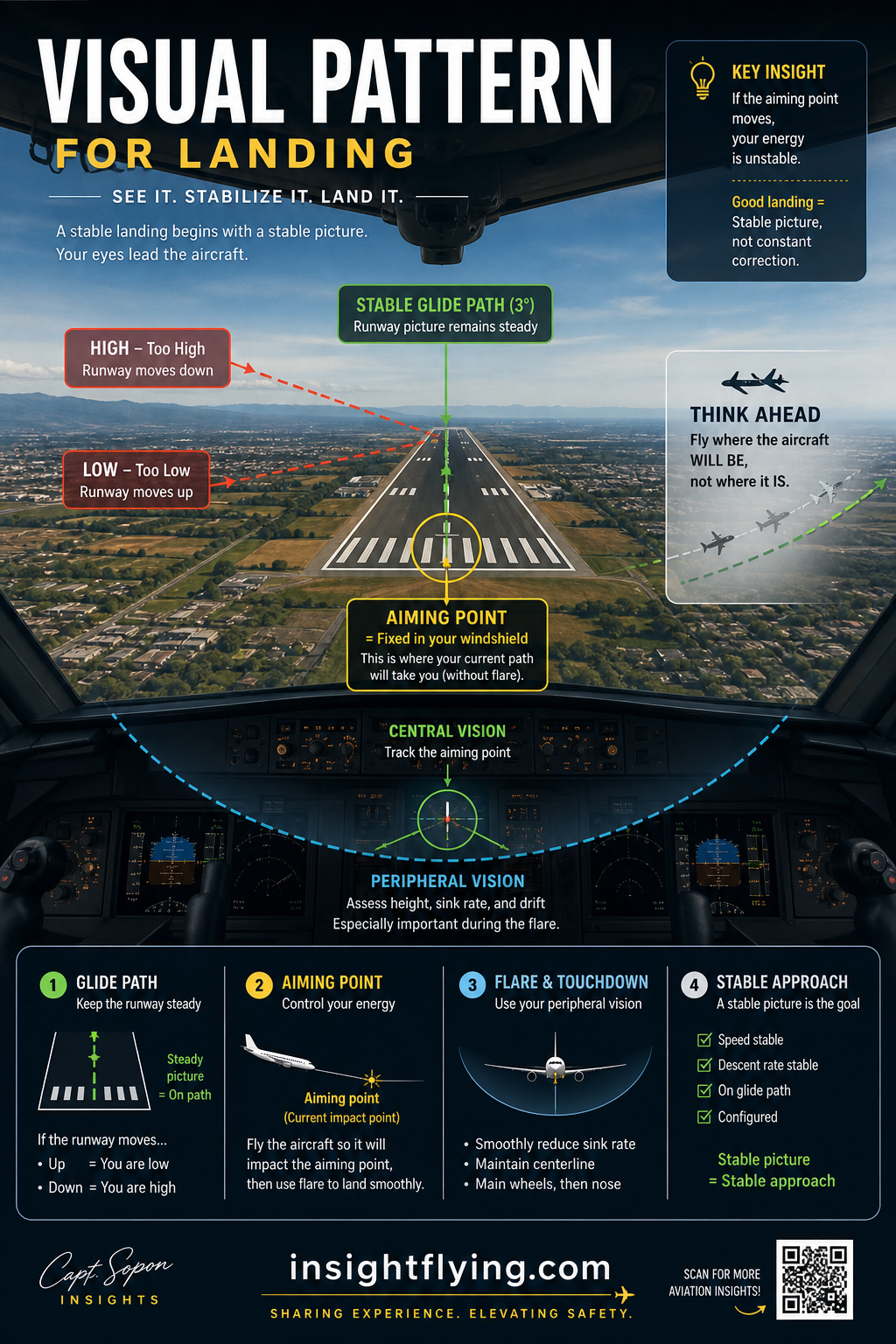
ในการบิน โดยเฉพาะกับเครื่องบินขนาดใหญ่ สิ่งที่แยก “นักบินที่บินได้” ออกจาก “นักบินที่ลงได้ดี” ไม่ใช่แค่การควบคุมเครื่อง แต่คือ Visual Pattern — รูปแบบการมองและตีความภาพตรงหน้าอย่างมีระบบ
การลงจอดไม่ใช่แค่การ “เล็งรันเวย์”
แต่มันคือการ “อ่าน geometry ของการเคลื่อนที่ในสามมิติ” ผ่านสายตา
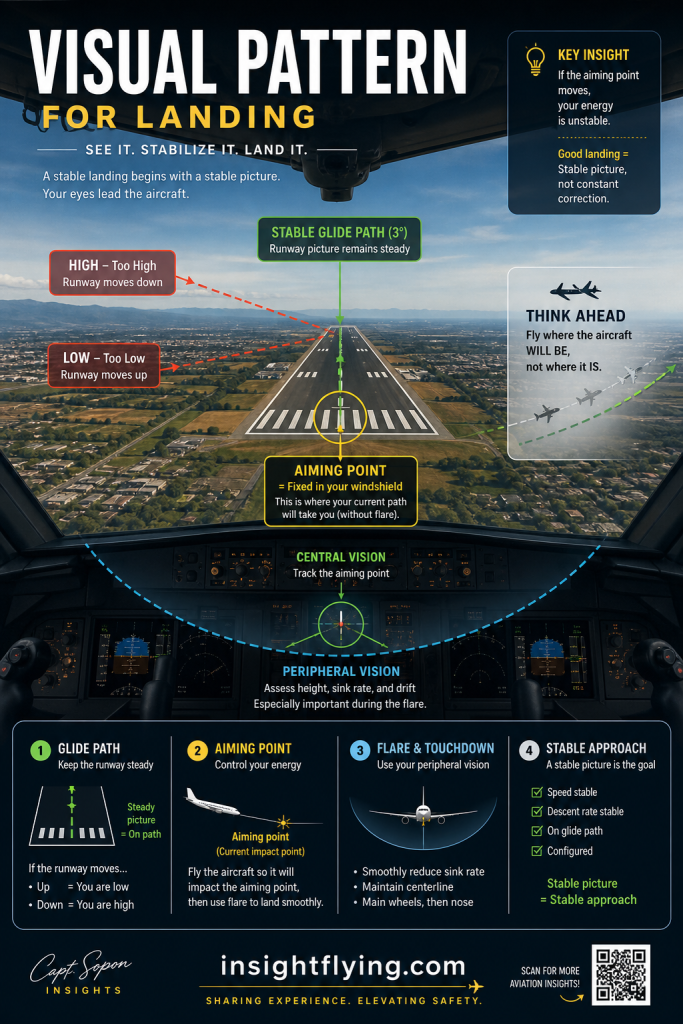
1. มุมร่อน (Glide Path) ไม่ใช่แค่ตัวเลข แต่คือภาพที่ต้อง “คงที่”
นักบินทุกคนรู้จัก 3° glide slope
แต่สิ่งที่สำคัญกว่าคือ:
ภาพของ runway ที่คุณเห็น ต้อง “นิ่ง” อยู่ในตำแหน่งเดิมใน windshield
- ถ้า runway “ลอยขึ้น” → คุณต่ำเกินไป
- ถ้า runway “จมลง” → คุณสูงเกินไป
นี่คือหลัก relative motion cue ที่สมองใช้โดยอัตโนมัติ
นักบินที่ดีจะไม่ “ไล่ตัวเลข” แต่จะ “ล็อกภาพ” นี้ไว้ให้ได้
2. Aiming Point — จุดที่คุณ “จะไปถึง” ไม่ใช่จุดที่คุณ “จะลง”
หลายคนเข้าใจผิดว่า aiming point = touchdown point
แต่ในความเป็นจริง:
- Aiming Point = จุดที่ trajectory ปัจจุบันจะพาเครื่องไปชน (ถ้าไม่ flare)
- Touchdown Point = จุดที่เครื่องลงจริงหลัง flare
ดังนั้น Visual Pattern ที่ถูกต้องคือ:
“เล็งให้เครื่อง ‘จะชน’ aiming point แล้วใช้ flare เปลี่ยน outcome ในวินาทีสุดท้าย”
ถ้า aiming point เคลื่อน → แปลว่า energy state ของคุณไม่ stable
3. Peripheral Vision สำคัญกว่า Focus Vision ตอน flare
ในช่วง final approach:
- ใช้ central vision มอง aiming point เพื่อควบคุม glide path
- แต่ในช่วง flare และ touchdown:
นักบินจะ “shift” ไปใช้ peripheral vision โดยไม่รู้ตัว
เพราะสมองต้องประเมิน:
- ความสูงเหนือพื้น (height perception)
- sink rate
- การเคลื่อนที่ด้านข้าง (drift)
นี่คือเหตุผลว่าทำไมการ “จ้องจุดเดียว” ตอน flare ถึงทำให้ลงกระแทก

|
|
|
|
|
4. เครื่องบินใหญ่ = เวลา lag มากขึ้น = ต้องคิดล่วงหน้า
ในเครื่องบินขนาดใหญ่ เช่น wide-body:
- inertia สูง
- control response ช้ากว่า
- engine spool-up ใช้เวลา
ดังนั้น Visual Pattern ต้อง “นำหน้า” เครื่องเสมอ
คุณไม่ได้บิน “ตำแหน่งปัจจุบัน”
แต่กำลังบิน “ตำแหน่งในอีก 5–10 วินาทีข้างหน้า”
นี่คือ mental shift ที่สำคัญมากจาก light aircraft ไปสู่ heavy jet
5. Stable Approach ไม่ใช่ checklist แต่คือ “ภาพที่ไม่เปลี่ยน”
แนวคิดของ stable approach มักถูกสอนเป็นตัวเลข:
- speed stable
- descent rate stable
- on glide path
แต่ในมุมของ Visual Pattern:
Stable = “ภาพทุกอย่างนิ่ง และไม่มี trend ที่ต้องแก้”
ถ้าคุณยังต้อง “แก้”
แปลว่า unstable—even if parameters ยังอยู่ใน limit
สรุป: นักบินที่ลงจอดดี ไม่ได้มองมากกว่า—but มอง “เป็นระบบ”
Visual Pattern ไม่ใช่พรสวรรค์
แต่มันคือ skill ที่ train ได้ ผ่าน:
- repetition
- awareness
- debrief ที่ถูกจุด
สุดท้ายแล้ว การลงจอดที่ดีไม่ใช่เรื่องของ “smooth” อย่างเดียว
แต่คือการที่เครื่องบิน มาถูกที่ ถูกเวลา และถูก energy state
และทั้งหมดนั้น…เริ่มต้นจากสิ่งที่คุณ “เห็น”
หนังสือ “ด้านมืดของสายการบิน” เรื่องลับ ๆ ในมุมอับที่คนภายนอกไม่ค่อยรู้
Visual Pattern — The Skill That Defines Landing Quality
In aviation—especially when operating large aircraft—the difference between a pilot who can fly and a pilot who can land well lies not only in control inputs, but in something more fundamental:
Visual Pattern — the structured way a pilot interprets and manages what they see.
Landing is not simply about “aiming at the runway.”
It is about reading three-dimensional motion through visual cues.
1. Glide Path Is Not a Number — It’s a Visual Constant
Every pilot knows the standard 3° glide slope.
But what truly matters is this:
The runway picture must remain visually stable in your windshield.
- If the runway appears to move up → you are getting low
- If the runway appears to move down → you are getting high
This is a classic relative motion cue that the human brain processes intuitively.
Skilled pilots don’t “chase parameters”—they stabilize the visual picture.
2. Aiming Point — Where You Are Going, Not Where You Will Land
A common misconception is that the aiming point equals the touchdown point.
In reality:
- Aiming Point = where your current flight path would take you (without flare)
- Touchdown Point = where the aircraft actually lands after flare
A correct visual strategy is therefore:
“Fly the aircraft as if it will impact the aiming point—then use the flare to change the outcome.”
If the aiming point is moving, your energy state is not stable.
3. Peripheral Vision Dominates During the Flare
On final approach:
- Central vision is used to track the aiming point and maintain glide path
- But during the flare and touchdown phase:
The pilot naturally shifts to peripheral vision
This allows the brain to assess:
- Height above ground
- Sink rate
- Lateral movement (drift)
Fixating on a single point during flare often results in poor height judgment and hard landings.
4. Large Aircraft Require Predictive Flying
In large aircraft:
- Higher inertia
- Slower control response
- Engine spool-up delay
This demands a forward-looking mindset:
You are not flying the aircraft where it is—
you are flying where it will be in the next few seconds.
This predictive element is a critical transition from light aircraft operations to heavy jet flying.
5. Stable Approach — A Visual Concept, Not Just Parameters
Stable approach criteria are often defined numerically:
- Speed stable
- Descent rate stable
- On glide path
But from a visual perspective:
Stability means the picture is steady—with no developing trend requiring correction.
If you are still making continuous corrections,
the approach is already trending toward unstable—even if parameters are technically within limits.
Conclusion: Great Landings Start With Seeing Correctly
Landing performance is not purely about control skill.
It is about how effectively a pilot perceives and interprets visual information.
Visual Pattern is not talent—it is a trainable discipline, developed through:
- Repetition
- Situational awareness
- Targeted debriefing
A good landing is not just smooth.
It is the result of the aircraft arriving:
- At the correct point
- At the correct time
- With the correct energy state
And all of that begins with what the pilot sees—and how they understand it.

|
|
หนังสือการบิน ทางลัดสู่ความเข้าใจที่นำไปใช้งานจริง

|
|
|
|
|


|
|
|
|
|
|
accident Airbus aircraft airline airmanship attitude aviation Aviation SMS become a captain become a pilot Boeing captain Crisis Crisis Management emergency engine fatigue flight safety FRMS go-around ground operation Indigo interview judgement management motivation pilot pilot interview qualified pilot runway incursion safety Safety Management System self-knowledge SMS student pilot technology turbulence weather การจัดการความปลอดภัย การบิน การสอบสัมภาษณ์ การอพยพ ความปลอดภัย นักบิน สอบนักบิน
ขายดีที่สุด
|
|
|