
ในสายตาคนทั่วไป การลงจอดอาจดูเป็นเพียง “การเอาเครื่องบินแตะพื้นให้ได้”
แต่สำหรับนักบินสายการบิน การลงจอดที่ดีไม่ได้วัดแค่ “ลงได้” — มันวัดจากการลงอย่าง “stabilized, predictable, and within performance limits”
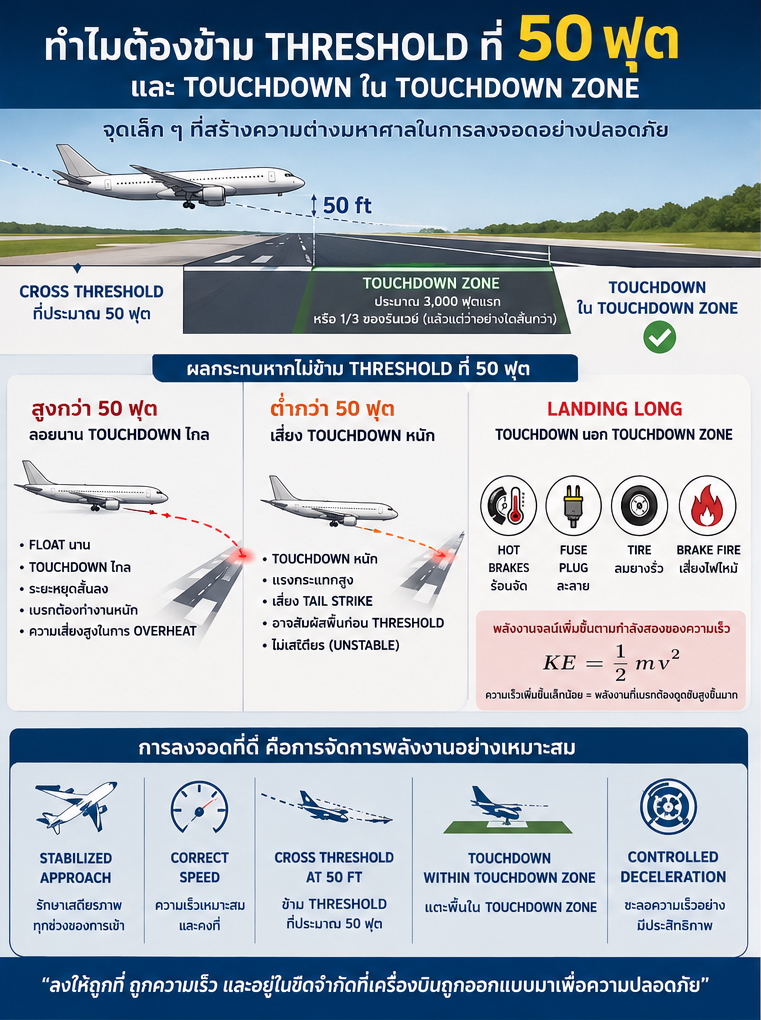
หนึ่งในตัวเลขที่สำคัญที่สุดของการลงจอด คือการนำเครื่องบิน cross runway threshold ที่ประมาณ 50 feet และทำ touchdown ภายใน touchdown zone
ตัวเลขนี้ไม่ได้เกิดขึ้นโดยบังเอิญ
แต่มาจากการออกแบบ performance ของเครื่องบิน รันเวย์ ระบบเบรก ระบบ reverse thrust รวมถึง certification standards ของทั้ง ICAO, FAA และ aircraft manufacturers
หากเครื่องบินสูงเกินไปเมื่อตัดผ่าน threshold
นักบินมักจะ flare นาน เครื่องบินลอย (float) และ touchdown ไกลกว่าปกติ
แต่ถ้าต่ำเกินไป
ความเสี่ยงคือ hard landing, tail strike, runway contact ก่อนเวลา หรือ unstable touchdown
และเมื่อ touchdown ไม่ได้เกิดขึ้นใน touchdown zone
ผลกระทบไม่ได้จบแค่ “landing ไม่สวย”
มันอาจนำไปสู่:
- Brake overheating
- Brake fuse plug melting
- Hot brakes
- Rejected takeoff limitation ในเที่ยวบินถัดไป
- Tire deflation
- Runway excursion
- หรือในกรณีรุนแรงอาจเกิด brake fire ได้
การ landing long จึงไม่ใช่แค่เรื่อง technique
แต่มันเกี่ยวข้องกับ safety margin ทั้งระบบ
The Importance of Crossing the Threshold at 50 Feet
ในการออกแบบ approach profile ของเครื่องบินพาณิชย์
มาตรฐานทั่วไปคือเครื่องบินควร cross runway threshold ที่ประมาณ:
- 50 feet above threshold elevation
- ด้วย stabilized approach criteria ครบถ้วน
- Airspeed stable
- Sink rate stable
- Landing configuration complete
เหตุผลสำคัญคือ:
50 feet คือ geometric point ที่สัมพันธ์กับ:
- Glide path ประมาณ 3 degrees
- Flare initiation point
- Aircraft landing performance calculations
- Landing distance certification
นักบินไม่ได้ aim เพื่อ touchdown ที่ threshold
แต่ aim เพื่อให้เครื่องบิน flare และ touchdown ภายใน touchdown zone อย่างเหมาะสม
What Happens If You Cross Higher Than 50 Feet?
หากเครื่องบินสูงกว่า profile เช่น 70–100 feet over threshold:
1. Floating During Flare
นักบินต้องใช้เวลานานขึ้นในการลด altitude ระหว่าง flare
ผลคือเครื่องบิน “ลอย”
โดยเฉพาะหาก:
- Airspeed เร็วเกิน
- Headwind ลดลงใกล้พื้น
- Runway ยาวจนเกิด visual illusion
เครื่องบินอาจ touchdown ไกลออกไปหลายร้อยถึงพันฟุต
2. Landing Long
เมื่อ touchdown เลย touchdown zone:
- Available stopping distance ลดลง
- Autobrake ต้องทำงานหนักขึ้น
- Brake temperature สูงขึ้นอย่างรวดเร็ว
Landing long บน runway เปียกหรือ contaminated ยิ่งอันตรายมาก
3. Increased Brake Energy
เมื่อ touchdown ช้า:
- Reverse thrust มีเวลาทำงานน้อยลง
- Energy ทั้งหมดถูกส่งไปที่ wheel brakes มากขึ้น
พลังงานจลน์ (kinetic energy) ที่เบรกต้องดูดซับสัมพันธ์กับความเร็วกำลังสอง:
genui{“math_block_widget_always_prefetch_v2”:{“content”:”KE = \frac{1}{2}mv^2″}}
นั่นหมายความว่า landing เร็วขึ้นเพียงเล็กน้อย
สามารถเพิ่ม brake energy อย่างมหาศาล
Consequences of Excessive Brake Energy
Hot Brakes
Brake temperature สูงผิดปกติหลัง landing
อาจส่งผลให้:
- ต้อง delay takeoff
- ต้องรอ cooling time
- Maintenance inspection required
Fuse Plug Melt
ล้อเครื่องบินถูกออกแบบให้มี fuse plug
หากอุณหภูมิสูงเกินกำหนด
fuse plug จะละลายเพื่อปล่อยลมยางออก ป้องกัน tire explosion
แม้จะช่วยป้องกันอันตรายรุนแรงกว่า
แต่ aircraft จะ AOG ทันที
Brake Fire
ในกรณีรุนแรง:
- Brake assembly overheat
- Hydraulic fluid ignition
- Wheel well fire
โดยเฉพาะเมื่อ combined กับ:
- Heavy landing weight
- High-speed touchdown
- Long landing
- Excessive braking
What Happens If You Cross Lower Than 50 Feet?
การต่ำกว่า glide path ใกล้ threshold มีความเสี่ยงสูงเช่นกัน
1. Hard Landing
นักบินมีเวลาน้อยลงในการ flare
ผลคือ:
- Vertical acceleration สูง
- Structural stress เพิ่ม
- Passenger discomfort
2. Tail Strike Risk
หากพยายาม arrest sink rate aggressively
นักบินอาจดึง nose มากเกินไป
นำไปสู่ tail strike
3. Runway Contact Before Intended Point
ในบางกรณี:
- Main gear อาจสัมผัสพื้นก่อน threshold
- หรือ strike approach lighting structure
โดยเฉพาะในสนามที่มี displaced threshold หรือ terrain illusion
Touchdown Zone Matters
Touchdown zone ไม่ใช่ “คำแนะนำคร่าว ๆ”
แต่มันคือพื้นที่ที่ aircraft landing performance ถูกคำนวณไว้
โดยทั่วไป touchdown zone คือประมาณ:
- First 3,000 feet ของ runway
หรือ - First one-third ของ runway
(แล้วแต่ว่าอย่างใดสั้นกว่า)
หาก touchdown beyond touchdown zone:
- Landing distance assumptions อาจไม่ valid อีกต่อไป
- Safety margin ลดลงทันที
Good Landing Is Not the Smoothest Landing
นักบินใหม่จำนวนมากเข้าใจผิดว่า:
“Smooth landing คือ good landing”
ในความจริง:
“Safe landing” สำคัญกว่า “soft landing”
บางครั้ง landing ที่นุ่มเกินไป
เกิดจาก excessive flare และ floating
ซึ่งอาจนำไปสู่ landing long
นักบินสายการบินจึงให้ความสำคัญกับ:
- Stabilized approach
- Correct threshold crossing height
- Touchdown within touchdown zone
- Controlled deceleration
มากกว่าเพียงแค่ความนุ่มของ touchdown
Final Thought
50 feet อาจดูเป็นตัวเลขเล็กน้อย
แต่ในการบินพาณิชย์ มันคือจุดที่เชื่อมต่อระหว่าง:
- Aerodynamics
- Aircraft performance
- Runway safety
- Brake energy limits
- Human factors
- และ operational discipline
การลงจอดที่ดี
ไม่ใช่การ “เอาเครื่องลงให้ได้”
แต่คือการลงในตำแหน่ง
ความเร็ว
และพลังงาน
ที่เครื่องบินถูกออกแบบมาให้รองรับอย่างปลอดภัยที่สุด
Why Crossing the Threshold at 50 Feet Matters
To most passengers, landing may seem simple:
just bring the airplane onto the runway safely.
But in airline operations, a good landing is not measured merely by “touching down.”
It is measured by how accurately the aircraft is flown within a carefully designed performance envelope.
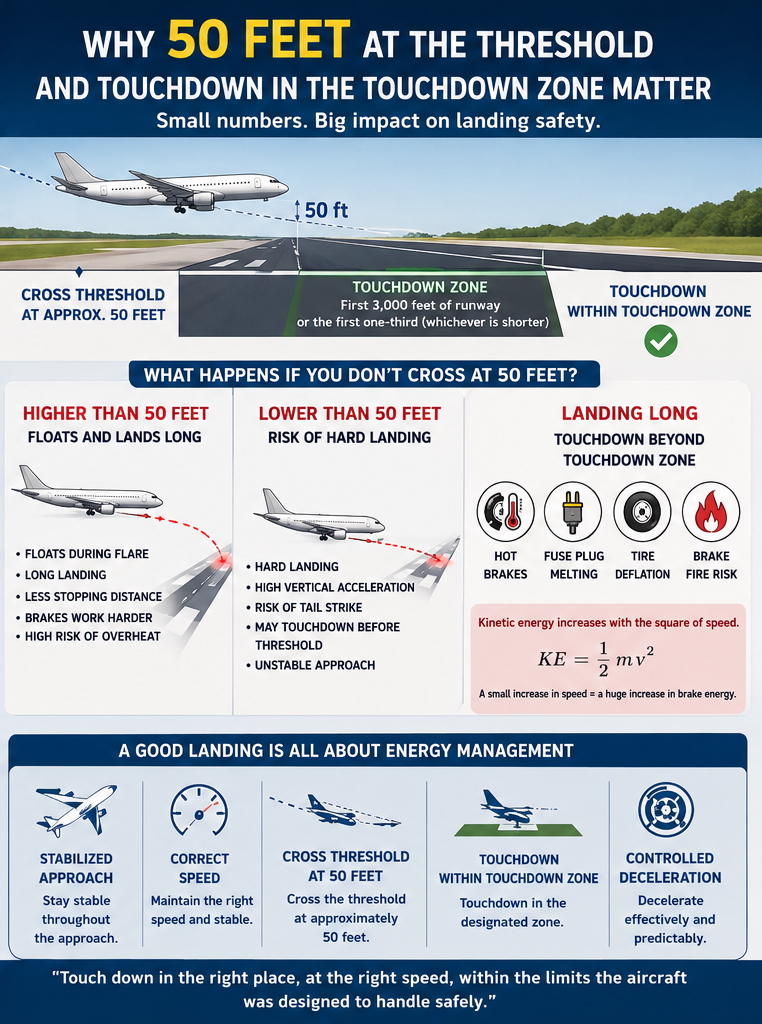
One of the most critical parameters during landing is crossing the runway threshold at approximately 50 feet and touching down within the designated touchdown zone.
This number was not chosen arbitrarily.
It is deeply connected to:
- Aircraft certification standards
- Landing performance calculations
- Brake energy limitations
- Runway safety margins
- Aerodynamic flare characteristics
- And operational predictability
If the aircraft crosses the threshold too high,
the airplane may float during flare and land long.
If it crosses too low,
the risks include hard landing, tail strike, premature runway contact, or unstable touchdown.
And once touchdown occurs beyond the touchdown zone,
the consequences are not limited to an “ugly landing.”
It may lead to:
- Excessive brake temperatures
- Hot brakes
- Fuse plug melting
- Tire deflation
- Brake fire
- Reduced stopping margins
- Or even runway excursion
A long landing is therefore not simply a technique issue.
It directly affects the aircraft’s safety margins and operational integrity.
The Importance of Crossing the Threshold at 50 Feet
During a standard stabilized approach, the aircraft is expected to cross the runway threshold at approximately:
- 50 feet above threshold elevation
- On a stable glide path
- At stabilized approach speed
- In full landing configuration
This height corresponds closely with:
- A typical 3-degree glide slope
- The normal flare initiation point
- Certified landing performance data
- Predictable touchdown geometry
Pilots are not aiming to touch down at the threshold itself.
The objective is to flare properly and touchdown within the touchdown zone while maintaining energy control.
What Happens If the Aircraft Crosses Higher Than 50 Feet?
1. Floating During Flare
If the aircraft crosses the threshold too high — for example 70 to 100 feet — the pilot will require more time and distance to reduce altitude during flare.
The aircraft begins to float.
This becomes even more pronounced when combined with:
- Excessive approach speed
- Decreasing headwind near the surface
- Long runway visual illusion
- Ground effect
The result may be touchdown several hundred or even thousands of feet farther down the runway.
2. Long Landing
Once the aircraft lands beyond the touchdown zone:
- Available stopping distance decreases
- Braking demand increases significantly
- Autobrake systems must absorb more energy
Long landings on wet or contaminated runways become especially hazardous.
3. Increased Brake Energy
A delayed touchdown reduces the effectiveness and duration of aerodynamic braking and reverse thrust.
As a result, wheel brakes must absorb a much greater portion of the aircraft’s kinetic energy.
Kinetic energy is proportional to the square of velocity:
genui{“math_block_widget_always_prefetch_v2”:{“content”:”KE = \frac{1}{2}mv^2″}}
This means even a relatively small increase in touchdown speed can dramatically increase brake energy requirements.
Consequences of Excessive Brake Energy
Hot Brakes
Excessive brake temperatures after landing may result in:
- Departure delays
- Mandatory brake cooling time
- Maintenance inspections
- Operational restrictions
Fuse Plug Melting
Aircraft wheels are equipped with fuse plugs designed to melt at high temperatures.
This allows tire pressure to release safely before a tire explosion occurs.
While it prevents a more dangerous event,
the aircraft may immediately become unserviceable until maintenance action is completed.
Brake Fire
In more severe cases:
- Brake assemblies may overheat
- Hydraulic fluid may ignite
- Wheel well fires can develop
The risk becomes greater when combined with:
- Heavy landing weight
- High-speed touchdown
- Long landing
- Aggressive braking
What Happens If the Aircraft Crosses Lower Than 50 Feet?
Flying below the proper glide path near the threshold also carries significant risk.
1. Hard Landing
The pilot has less time available to perform a controlled flare.
This can result in:
- High vertical acceleration
- Increased structural stress
- Passenger discomfort
- Potential maintenance inspection requirements
2. Tail Strike Risk
If the pilot attempts to arrest the sink rate aggressively by excessive pitch input,
a tail strike may occur.
3. Premature Runway Contact
In some situations:
- Main landing gear may contact the runway before the intended touchdown area
- Or the aircraft may strike approach lighting structures
Especially at airports with:
- Displaced thresholds
- Terrain-induced visual illusions
- Sloping runways
Why the Touchdown Zone Matters
The touchdown zone is not merely a recommendation.
It is the area upon which certified landing performance calculations are based.
Typically, the touchdown zone is defined as:
- The first 3,000 feet of runway
or - The first one-third of runway length
(whichever is shorter)
Once touchdown occurs beyond that area:
- Certified landing distance assumptions may no longer remain valid
- Safety margins decrease rapidly
A Good Landing Is Not Necessarily the Smoothest Landing
Many pilots initially associate a “good landing” with a soft touchdown.
However, in airline operations:
A safe landing is more important than a soft landing.
An excessively smooth touchdown can sometimes indicate:
- Excessive flare
- Floating
- Long landing tendencies
Professional pilots prioritize:
- Stabilized approach criteria
- Proper threshold crossing height
- Touchdown within the touchdown zone
- Predictable deceleration
- Energy management
rather than simply achieving the softest possible touchdown.
Final Thought
Fifty feet may seem insignificant.
But in commercial aviation, it represents the precise intersection of:
- Aerodynamics
- Aircraft performance
- Runway safety
- Brake energy management
- Human factors
- And operational discipline
A good landing is not merely about getting the airplane onto the ground.
It is about touching down at the correct place,
with the correct energy,
within the limits the aircraft was designed to handle safely.
หนังสือ A Pilot Books ในรูปแบบ eBook ที่ MebMarket
สร้างแรงบันดาลใจ…..เริ่มเมื่อไหร่


|
|
|
|
|
|
|
|

|
|