
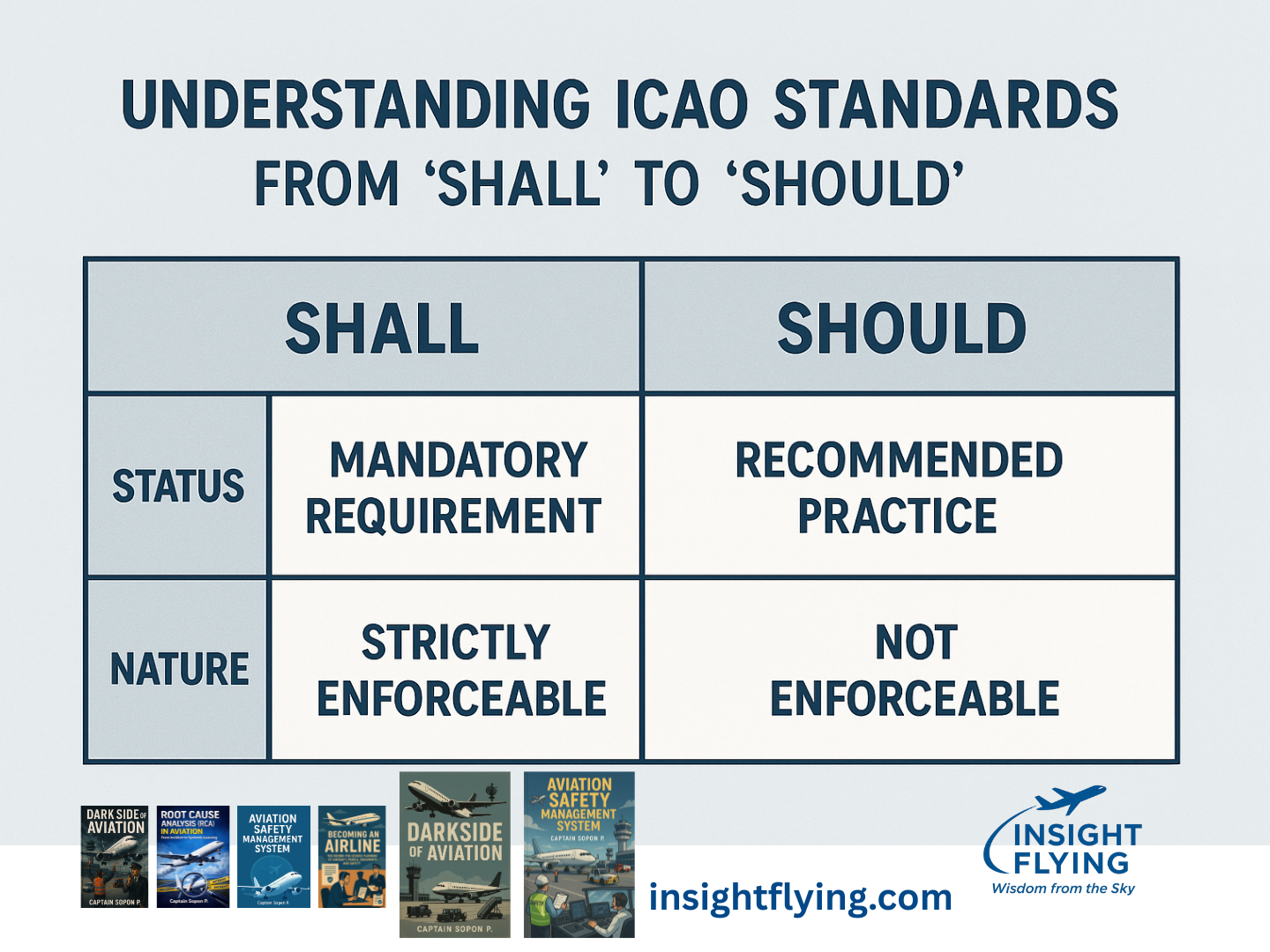
ในระบบเอกสารของ ICAO เรามักพบคำสำคัญอยู่สี่คำที่ทำให้หลายคนสับสน คือ Standards, Recommended Practices, Appendices และ Attachments ซึ่งแม้จะดูคล้ายกัน แต่จริง ๆ แล้วมีน้ำหนักและสถานะที่ต่างกันอย่างชัดเจน หากเข้าใจความหมายอย่างถูกต้อง จะช่วยให้อ่าน Annex หรือ Doc ต่าง ๆ ได้กระจ่างขึ้นมาก
คำว่า Standards เปรียบได้กับข้อกำหนดขั้นต่ำที่ทุกประเทศสมาชิกต้องปฏิบัติตามอย่างเคร่งครัด เป็นระดับ “ต้องทำ” เพื่อให้มั่นใจว่าความปลอดภัยและความเป็นปกติของการเดินอากาศระหว่างประเทศได้รับการคุ้มครอง Standards จึงเป็นเหมือนเส้นฐานที่ ICAO วางไว้ว่า ต้องมีอย่างน้อยเท่านี้ ถ้าจะทำให้ดีกว่า ปลอดภัยกว่า หรือมีประสิทธิภาพสูงกว่า ก็ย่อมทำได้ แต่เด็ดขาดทำต่ำกว่ามาตรฐานนี้ไม่ได้ เพราะเท่ากับไม่ผ่านเกณฑ์ขั้นต่ำ เป็นเหมือนการสอบที่ต้องได้อย่างน้อยห้าคะแนนจากสิบจึงถือว่าผ่าน แต่การได้ห้าไม่ได้แปลว่าเก่งที่สุดหรือดีเลิศที่สุด เพียงแค่ “ได้ตามเกณฑ์” เท่านั้น
ส่วน Recommended Practices หรือที่คุ้นกันในชื่อ “คำแนะนำ” นั้น เป็นระดับที่ ICAO เห็นว่า “ควรทำ” เพื่อให้เกิดความปลอดภัย ความสม่ำเสมอ และประสิทธิภาพที่สูงขึ้น แม้จะไม่ใช่ข้อบังคับ แต่ก็ถือเป็นแนวทางปฏิบัติที่ประเทศสมาชิกควรพยายามทำให้ได้ เพราะเป็นส่วนที่ทำให้ระบบการบินทั่วโลกมีความกลมกลืนและราบรื่นมากขึ้น จุดสังเกตง่าย ๆ คือ หากเจอคำว่า should ในเอกสาร ICAO ก็แปลได้ว่าเป็น Recommended Practice ในขณะที่คำว่า shall คือ Standards แบบต้องทำตามโดยไม่มีเงื่อนไข
เมื่อเข้าใจ Standards และ Recommended Practices แล้ว เราจะเห็นว่ามีองค์ประกอบอีกสองอย่างที่เกี่ยวข้องกันอย่างใกล้ชิด คือ Appendices และ Attachments สำหรับ Appendices นั้น แม้ชื่อภาษาไทยจะมักแปลว่า “ภาคผนวก” แต่ความหมายในบริบท ICAO ลึกซึ้งกว่านั้นมาก เพราะ Appendices คือส่วนที่เป็น “บทขยายของ Standards” หรือพูดง่าย ๆ คือเนื้อหาที่ประกอบอยู่ในชุดข้อบังคับโดยตรง จึงมีสถานะเทียบเท่า Standards และต้องปฏิบัติตามเหมือนกัน เรียกว่า Standards จะมากับ Appendix เสมอ เพราะ Appendix ช่วยระบุรายละเอียดที่ทำให้ข้อบังคับใช้งานได้จริง เช่น ฟอร์ม รูปแบบข้อมูล หรือรายละเอียดทางเทคนิคที่จำเป็นต่อการปฏิบัติ
ตรงกันข้ามกับ Attachments ซึ่งเป็นเนื้อหาประกอบที่มักใช้เพื่อช่วยให้ผู้อ่านเข้าใจ Recommended Practices มากขึ้น บางครั้งเป็นคำอธิบาย ตัวอย่าง ขั้นตอน หรือแนวทางที่ช่วยให้รัฐนำคำแนะนำไปปรับใช้ได้ง่ายขึ้น Attachment จึงไม่ใช่ข้อบังคับ ไม่ทำก็ได้ แต่ถ้าทำตามก็จะเป็นประโยชน์อย่างมาก เพราะช่วยให้ Performance ของระบบการบินดีขึ้นและลดความเสี่ยงต่าง ๆ ได้มากกว่าการทำตามขั้นต่ำเพียงอย่างเดียว
ดังนั้นภาพรวมง่าย ๆ คือ Standards คือข้อบังคับขั้นต่ำ Recommended Practices คือสิ่งที่ควรทำเพื่อยกระดับความปลอดภัย Appendices คือส่วนที่เป็นข้อบังคับแนบมาพร้อม Standards และ Attachments คือเนื้อหาประกอบเชิงแนวทางที่มาพร้อมคำแนะนำ การเข้าใจความหมายของทั้งสี่คำนี้ไม่เพียงช่วยให้อ่าน Annex ต่าง ๆ ได้เข้าใจขึ้น แต่ยังทำให้เราเห็นหลักคิดสำคัญของ ICAO ว่าการกำหนดมาตรฐานไม่ได้มีเป้าหมายให้ทุกคนทำได้แค่ “พอดีผ่าน” แต่เป็นการเปิดพื้นที่ให้รัฐหรือหน่วยงานต่าง ๆ พัฒนาขึ้นไปให้เหนือกว่ามาตรฐานขั้นต่ำเสมอ เพราะความปลอดภัยของการบินไม่มีคำว่าพอแล้ว มีแต่ “ดีขึ้นได้อีก” เท่านั้น
เมื่อเรามองไปที่ Annex ต่าง ๆ ของ ICAO จะเห็นชัดว่าความแตกต่างของคำทั้งสี่นี้ไม่ได้เป็นเพียงนิยามในเชิงทฤษฎีเท่านั้น แต่ยังสะท้อนอยู่ในรูปแบบการนำไปใช้จริงของแต่ละรัฐ เพราะ Annex แต่ละฉบับจะระบุอย่างชัดเจนว่าอะไรเป็น Standards ที่ต้องปฏิบัติตาม อะไรเป็น Recommended Practices ที่ควรปฏิบัติ อะไรอยู่ใน Appendices ซึ่งเป็นส่วนขยายที่มีผลบังคับ และอะไรอยู่ใน Attachments ซึ่งเป็นเพียงคู่มือหรือคำอธิบายประกอบ ตัวอย่างที่เห็นได้ชัดที่สุดคือ Annex 14 ว่าด้วย Aerodromes ซึ่งมี Standard ระบุว่าระยะห่างของ Runway Strip หรือความกว้างของ Taxiway ต้องเป็นเท่าไร ใช้คำว่า shall โดยตรง เช่น ขนาด Runway Strip ของรันเวย์ที่รองรับเครื่องบินขนาดใหญ่ต้องมีความกว้างขั้นต่ำตามที่กำหนด นี่คือสิ่งที่รัฐจะละเลยไม่ได้ เพราะเป็นเรื่องที่กระทบต่อความปลอดภัยโดยตรง ใน Annex เดียวกันนี้ยังมี Recommended Practices ใช้คำว่า should เช่น คำแนะนำเกี่ยวกับการติดตั้งระบบแสงเพิ่มเติมหรือป้ายบอกทางที่ช่วยเพิ่ม situational awareness ของนักบิน แม้ไม่บังคับ แต่รัฐที่ต้องการยกระดับสนามบินมักเลือกทำตาม เพราะช่วยลดความเสี่ยงได้อย่างมีนัยสำคัญ
ตัวอย่างความสำคัญของ Appendices สามารถเห็นได้ชัดใน Annex 9 (Facilitation) ซึ่งมี Appendix กำหนดรูปแบบของ General Declaration (GenDec) และเอกสารอื่น ๆ ที่ใช้ในกระบวนการตรวจคนเข้าเมืองและศุลกากร แม้จะอยู่ในส่วนที่เรียกว่า “ภาคผนวก” แต่มีผลบังคับเต็มรูปแบบ เพราะเป็นส่วนหนึ่งของ Standard ที่ทำให้รัฐต่าง ๆ ต้องใช้ฟอร์มที่สอดคล้องกันเพื่อให้การประสานงานระหว่างประเทศเป็นไปอย่างราบรื่น นี่คือเหตุผลที่สายการบินทั่วโลกใช้เอกสารหน้าตาคล้ายกัน เมื่อยื่น GenDec ให้เจ้าหน้าที่ในแต่ละประเทศ เพราะ Appendix กำหนดไว้ให้ต้องทำเหมือนกันทุกแห่ง
ในมุมของ Attachment ความหมายจะผ่อนคลายลง เช่น ใน Annex 13 ว่าด้วย Aircraft Accident and Incident Investigation จะมี Attachment ที่ให้คำแนะนำเกี่ยวกับวิธีเก็บข้อมูล วิธีจัดทำรายงาน หรือแนวทางการตีความข้อมูลบางประเภท สิ่งเหล่านี้ช่วยให้ผู้สอบสวนในแต่ละประเทศทำงานได้อย่างมีมาตรฐานคล้ายคลึงกัน แต่ไม่ได้เป็นข้อบังคับ หากรัฐมีวิธีการสืบสวนที่เทียบเท่าหรือดีกว่า ก็สามารถใช้วิธีของตนเองได้ ตราบใดที่ยังตอบโจทย์ด้านความปลอดภัยและความโปร่งใสเหมือนเดิม Attachment จึงเป็นเหมือน “คู่มือที่ดีมาก” ที่ช่วยให้ Recommended Practices นำไปปฏิบัติจริงได้ง่ายขึ้น
อีกตัวอย่างหนึ่งที่ช่วยให้เห็นภาพชัดคือ Annex 6 (Operation of Aircraft) ซึ่งกำหนด Standard เช่น การบันทึก Flight Time และ Duty Time ของนักบินว่า “shall” ต้องทำอย่างไร เพื่อป้องกันความล้าและปัญหา human factors ซึ่งเป็นข้อบังคับที่ทุกสายการบินต้องมีระบบควบคุมอย่างเคร่งครัด แต่ใน Annex 6 เดียวกันนี้จะมี Recommended Practices แนะนำว่า “ควร” มีระบบ Fatigue Risk Management System (FRMS) ควบคู่ไปด้วย โดยใช้คำว่า should เนื่องจาก FRMS เป็นระบบที่ยกระดับความปลอดภัย แต่บางรัฐอาจยังไม่พร้อมหรือไม่มีข้อมูลรองรับเพียงพอ จึงอยู่ในรูปแบบคำแนะนำ ไม่ใช่ข้อบังคับ นอกจากนี้ Annex 6 ยังมี Attachments ให้ตัวอย่างฟอร์ม การอธิบายแนวคิด และวิธีประเมินความเสี่ยงเรื่องความล้าเพื่อช่วยให้รัฐและสายการบินนำ Recommended Practices ไปใช้งานได้จริง
เมื่อสังเกตจากเอกสารเหล่านี้จะเห็นความตั้งใจของ ICAO ว่า Standards และ Appendices คือส่วนที่เป็น “โครงสร้างพื้นฐานของความปลอดภัย” เพราะเป็นข้อกำหนดขั้นต่ำที่ทุกประเทศต้องทำเหมือนกัน ในขณะที่ Recommended Practices และ Attachments เป็น “พื้นที่ของการพัฒนา” ที่เปิดโอกาสให้รัฐต่าง ๆ ยกระดับระบบของตนเองตามความพร้อม ความสามารถ และบริบทของประเทศ แนวคิดนี้ยังช่วยให้การบินทั่วโลกมีทั้งความสม่ำเสมอและความยืดหยุ่นในเวลาเดียวกัน
ด้วยตัวอย่างจาก Annex หลายฉบับนี้ ผู้อ่านจะเห็นภาพชัดขึ้นว่าเหตุใด ICAO จึงแยกคำทั้งสี่ออกจากกัน และเหตุใดการอ่าน Annex หรือ Doc ใด ๆ ก็ตามควรใส่ใจกับคำว่า shall, should รวมถึงตำแหน่งของเนื้อหาว่าอยู่ใน Standard, Appendix, Recommended Practice หรือ Attachment เพราะทั้งหมดนี้กำหนดเลยว่าเรื่องนั้น “ต้องทำ” “ควรทำ” หรือ “ทำแล้วจะดีมากแต่ไม่บังคับ” ซึ่งเป็นแก่นสำคัญของการทำงานด้านการบินในระดับมาตรฐานสากลอย่างแท้จริง

|
|
หนังสือการบิน ทางลัดสู่ความเข้าใจที่นำไปใช้งานจริง
|
|

|
|

|
|
|
|
|
|
accident Airbus aircraft airline airmanship aviation Aviation SMS become a captain become a pilot Boeing captain Crisis Crisis Management diversion emergency engine fatigue flight safety flood go-around hydroplane Indigo interview judgement management motivation pilot pilot interview qualified pilot safety Safety Management System safety report self-knowledge SMS student pilot technology turbulence weather weather radar การจัดการภาวะวิกฤติ การบิน การสอบสัมภาษณ์ นักบิน ระบบบริหารความปลอดภัย สอบนักบิน
ขายดีที่สุด
|
|
|

Reading ICAO Annexes with Confidence: A Practical Guide to the Four Core Concepts
In ICAO documentation, the distinctions among Standards, Recommended Practices, Appendices, and Attachments are far more than technical definitions. They shape how States regulate aviation, how authorities certify aerodromes and operators, and how airlines design their procedures. Anyone who reads an ICAO Annex carefully will immediately notice the different levels of obligation through the use of words like shall and should, as well as the placement of information within the Annex. These choices are deliberate, designed to balance global uniformity with the flexibility needed to accommodate diverse environments.
A clear example appears in Annex 14 on Aerodromes. The specifications for the width of a Runway Strip or the minimum separation between taxiways are written using the term shall, indicating that these are Standards—requirements that every State must follow because they directly affect safety and the regularity of international air navigation. A State cannot simply choose a narrower strip or reduced separation because doing so may compromise safety margins. In the same Annex, however, there are recommendations on enhanced aerodrome lighting or additional guidance signs, described with the term should. These are Recommended Practices, meaning they are considered desirable and beneficial to safety but may be adapted based on a State’s capacity or operational environment. Many States choose to adopt these recommendations because they improve situational awareness and reduce risks, even though they are not strictly mandatory.
The importance of Appendices becomes evident in Annex 9 on Facilitation. The Appendix in this Annex includes standardized formats such as the General Declaration (GenDec) and other travel-related documents. Although labeled as “appendices,” these components are not optional; they form part of the adopted Standards and therefore carry the same binding force. This is why airlines around the world use nearly identical GenDec forms when interacting with immigration, customs, and quarantine officials. The Appendix ensures uniformity so that every State receives information in a familiar and internationally agreed-upon format, supporting smooth facilitation processes at borders.
Attachments, in contrast, play a supporting role. They do not introduce new obligations but provide supplementary material or practical guidance. Annex 13 on Aircraft Accident and Incident Investigation illustrates this function well. While the Annex sets out mandatory Standards for how investigations must be conducted and what information must be protected or shared, its Attachments offer methods for organizing investigation teams, approaches for analysing evidence, and examples of how final reports may be structured. States may choose to follow these methods or rely on their own procedures as long as they meet the Standards. Attachments therefore act as a bridge between the formal requirement and effective real-world implementation, particularly for States still developing their investigative capability.
Annex 6 on the Operation of Aircraft offers another instructive example. It requires operators to maintain flight and duty time records using the term shall, making it a Standard that every airline must comply with. Fatigue has long been recognized as a risk factor that can undermine flight crew performance, so ICAO mandates a minimum level of record-keeping and control. In the same Annex, however, ICAO recommends that operators adopt a Fatigue Risk Management System (FRMS). Because FRMS requires data modelling, monitoring tools, and a higher level of organizational maturity, ICAO uses should to indicate that it is a Recommended Practice rather than a requirement. The Annex then provides an Attachment explaining the concepts behind FRMS, offering detailed guidance on risk assessment and operational implementation so that States and operators can gradually move toward a more advanced fatigue-management system.
Examples can be found throughout other Annexes as well. Annex 3 on Meteorology includes Standards requiring States to ensure the provision of METAR, TAF, and SIGMET information, while recommending advanced products such as volcanic ash advisories or space weather information. Annex 11 on Air Traffic Services sets binding requirements for the organization of airspace and ATS units, while its Attachments offer optional methodologies for airspace classification or traffic-flow planning.
Across all these Annexes, the overall structure becomes clear. Standards and Appendices form the “minimum level of global aviation safety,” establishing what every State must achieve. Recommended Practices and Attachments represent the “pathway to improvement,” offering tools and guidance for States that wish to exceed the basic threshold and move toward higher performance. ICAO therefore effectively sets a floor, not a ceiling. Meeting the Standards means meeting the minimum acceptable level—passing the exam with just enough marks. States and operators who aim for excellence must look beyond the Standards toward the Recommended Practices and the richer guidance materials found in Attachments.
Understanding how these four components interact allows readers to navigate ICAO Annexes more confidently and interpret their obligations more accurately. It also highlights an essential truth in aviation: uniformity builds safety, but continuous improvement builds resilience. The structure of ICAO documentation reflects both.