
1. ความหมาย
ENG version click here
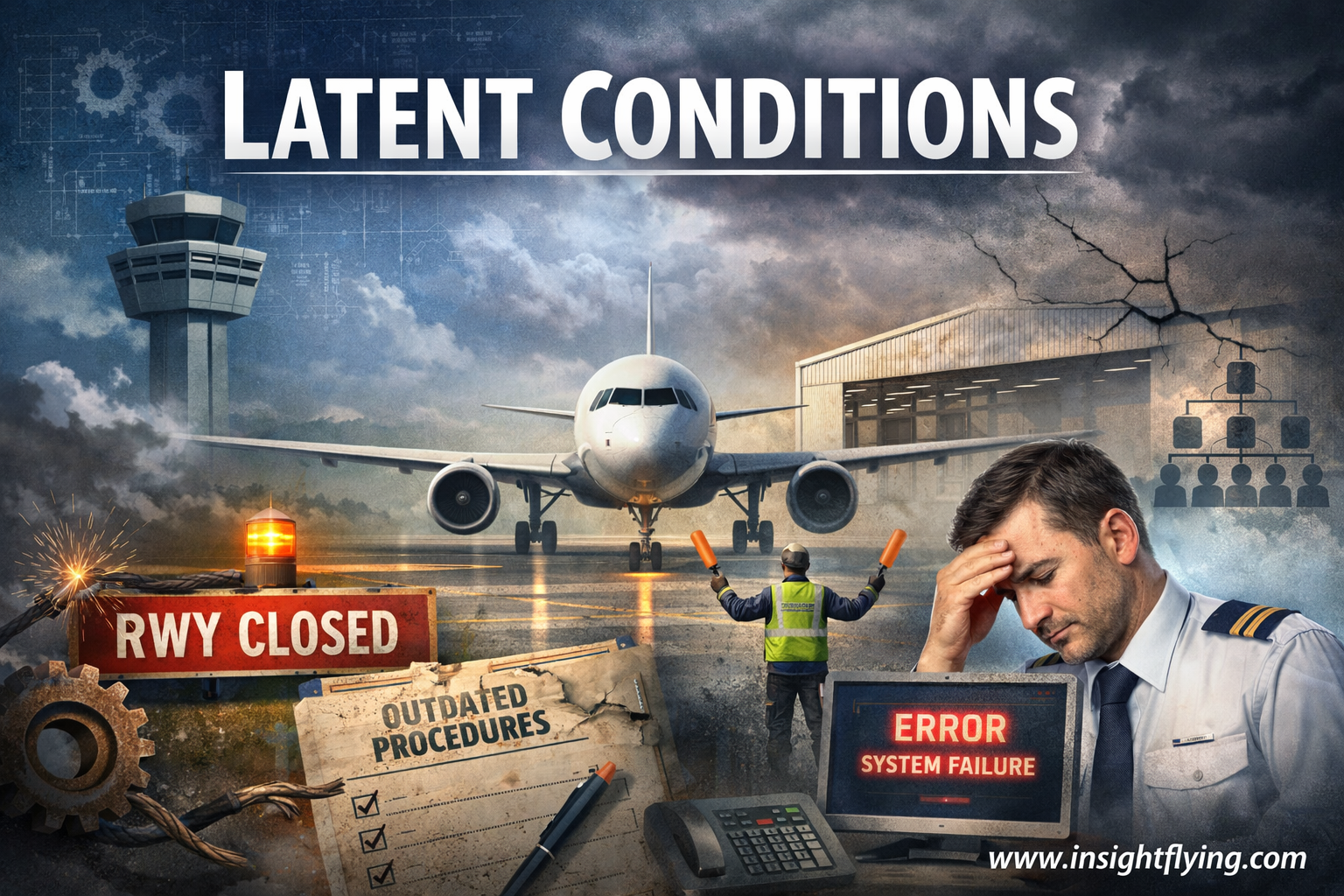
Latent Conditions หรือ “เงื่อนไขแฝง” หมายถึง จุดอ่อนหรือความบกพร่องที่ซ่อนอยู่ภายในระบบ ซึ่งอาจดำรงอยู่เป็นระยะเวลานานโดยไม่แสดงผลชัดเจน จนกระทั่งมีปัจจัยอื่นเข้ามาประกอบกันและนำไปสู่อุบัติการณ์หรืออุบัติเหตุ
แนวคิดนี้อธิบายไว้อย่างชัดเจนใน Swiss Cheese Model ของ James Reason ซึ่งชี้ว่า อุบัติเหตุไม่ได้เกิดจากความผิดพลาดเพียงครั้งเดียว แต่เกิดจาก “ช่องโหว่หลายชั้น” ที่เรียงตัวตรงกัน
Latent Conditions จึงเป็นความบกพร่องระดับระบบ (System-level weaknesses) ไม่ใช่ความผิดพลาดเฉพาะหน้าของผู้ปฏิบัติงาน
2. ความแตกต่างระหว่าง Latent Conditions และ Active Failures
| Active Failures | Latent Conditions |
|---|---|
| เกิดที่ระดับผู้ปฏิบัติงาน | ฝังอยู่ในระบบหรือโครงสร้างองค์กร |
| ส่งผลทันที | ส่งผลสะสมและแสดงออกภายหลัง |
| มองเห็นได้ชัด | มักซ่อนเร้นและถูกมองข้าม |
| เป็น “ข้อผิดพลาดปลายทาง” | เป็น “ต้นตอเชิงระบบ” |
Active Failure คือการกระทำที่เห็นได้ชัด เช่น กดสวิตช์ผิด ละเลย checklist หรือประเมินสถานการณ์คลาดเคลื่อน
แต่ Latent Condition คือสิ่งที่ทำให้ความผิดพลาดนั้น “กลายเป็นอุบัติเหตุ”
3. แหล่งที่มาของ Latent Conditions ในอุตสาหกรรมการบิน
3.1 การตัดสินใจเชิงบริหาร (Organizational Decisions)
- ลดงบประมาณด้านฝึกอบรมหรือซ่อมบำรุง
- การวางแผนอัตรากำลังไม่เหมาะสม
- การให้ความสำคัญกับ On-time Performance มากกว่าขอบเขตความปลอดภัย
- การกำกับดูแลภายในที่ไม่เข้มแข็ง
3.2 ช่องว่างด้านระเบียบหรือกระบวนการ
- ขั้นตอนปฏิบัติไม่ชัดเจน
- เอกสารไม่สมบูรณ์
- การบริหารการเปลี่ยนแปลง (Management of Change) อ่อนแอ
- การประเมินความเสี่ยงไม่ครอบคลุม
3.3 ปัจจัยด้านวัฒนธรรมองค์กรและ Human Factors
- Normalization of Deviance (การยอมรับความผิดปกติเป็นเรื่องปกติ)
- วัฒนธรรมการรายงานอ่อนแอ
- ความกลัวการลงโทษ
- การสื่อสารข้ามแผนกไม่มีประสิทธิภาพ
3.4 การออกแบบทางเทคนิคและปฏิบัติการ
- การออกแบบ cockpit หรือ interface ที่สับสน
- Checklist ที่จัดลำดับไม่เหมาะสม
- ระบบสำรอง (Redundancy) ไม่เพียงพอ
- การออกแบบซอฟต์แวร์ที่ก่อให้เกิดความเข้าใจผิด
4. กลไกที่ทำให้ Latent Conditions นำไปสู่อุบัติเหตุ
Latent Conditions เพียงอย่างเดียวไม่ทำให้เกิดอุบัติเหตุ
แต่จะสร้าง “ความเปราะบางของระบบ” (System Vulnerability)
เมื่อประกอบกับ:
- ความกดดันด้านเวลา
- ความซับซ้อนของภารกิจ
- สภาพแวดล้อมที่ท้าทาย
- ความผิดพลาดของมนุษย์
ช่องโหว่เหล่านั้นอาจเรียงตัวตรงกัน และทะลุผ่านแนวป้องกันหลายชั้น จนเกิดอุบัติเหตุ
ดังนั้น อุบัติเหตุจึงแทบไม่เคยเกิดจาก “ความผิดพลาดครั้งเดียว” แต่เกิดจากการสะสมของความอ่อนแอเชิงระบบ
5. ตัวอย่างในบริบทการบิน
- หลักสูตรฝึกอบรมไม่ได้เน้นเกณฑ์ Unstable Approach อย่างชัดเจน → ลูกเรือประเมินสถานการณ์ผิด → Runway Excursion
- การต่ออายุ MEL ซ้ำ ๆ โดยไม่มีการวิเคราะห์แนวโน้ม → ความเชื่อถือได้ของระบบลดลง → ขัดข้องระหว่างบิน
- การบริหารความเหนื่อยล้า (Fatigue Risk) ไม่จริงจัง → สมรรถนะลดลง → เบี่ยงเบนจากขั้นตอนปฏิบัติ
สิ่งที่มองเห็นในรายงานอุบัติเหตุอาจเป็นเพียง “ข้อผิดพลาดสุดท้าย” แต่รากเหง้าที่แท้จริงมักเป็น Latent Conditions
6. บทบาทของ SMS ในการจัดการ Latent Conditions
Safety Management System (SMS) มีหน้าที่สำคัญในการค้นหาและจัดการ Latent Conditions ก่อนที่จะเกิดเหตุการณ์ร้ายแรง
เครื่องมือสำคัญ ได้แก่:
- ระบบรายงานโดยสมัครใจ (Voluntary Reporting System)
- หลักการ Just Culture
- Trend Monitoring และ Data Analysis
- Safety Performance Indicators (SPIs)
- Internal Audit และ LOSA
- Safety Risk Management (SRM)
SMS ที่มีประสิทธิภาพจะทำงานเชิงรุก (Proactive) ไม่ใช่รอให้เกิดอุบัติเหตุแล้วจึงสอบสวน
7. นัยสำคัญต่อผู้บริหารระดับสูง
สำหรับ Accountable Manager และผู้บริหารด้านปฏิบัติการ ประเด็นสำคัญคือ:
ความเสี่ยงที่อันตรายที่สุด ไม่ใช่ความผิดพลาดที่มองเห็นได้ แต่คือจุดอ่อนของระบบที่มองไม่เห็น
ภาวะผู้นำด้านความปลอดภัยจึงต้อง:
- ตรวจสอบระบบอย่างต่อเนื่อง
- สนับสนุนวัฒนธรรมการรายงาน
- รักษา Safety Margin
- หลีกเลี่ยงการตัดสินใจระยะสั้นที่บั่นทอนความปลอดภัยระยะยาว
Latent Conditions in Aviation
1. Definition
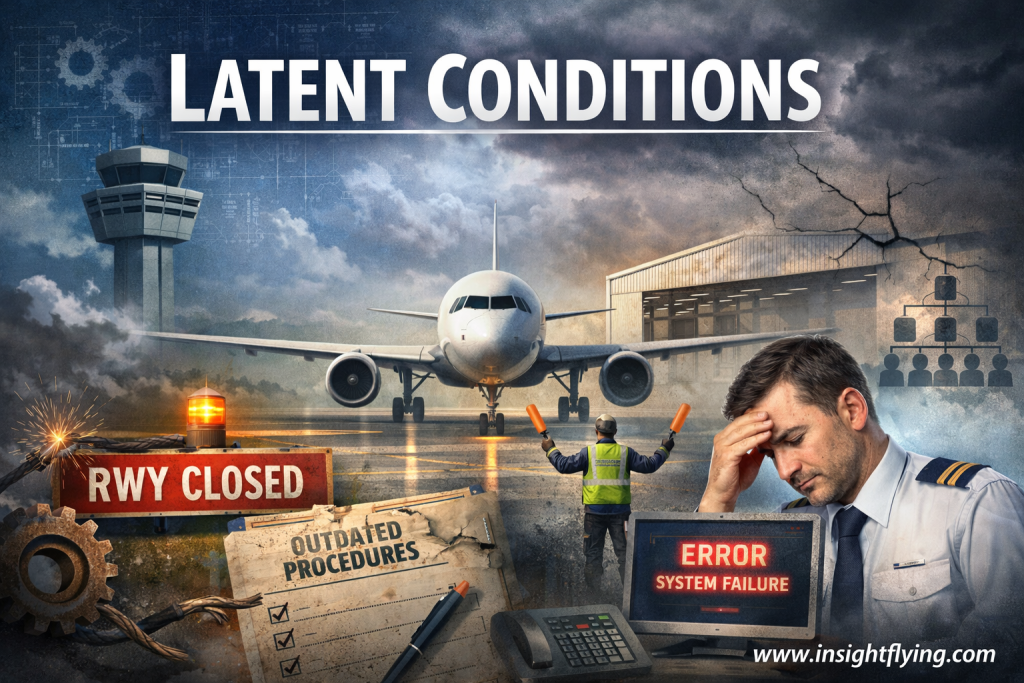
In aviation safety theory, latent conditions refer to hidden weaknesses within a system that may remain dormant for a long period before contributing to an incident or accident.
They are embedded in the organization’s structures, processes, decisions, or culture — and unlike active failures, they are not immediately visible at the operational frontline.
The concept is most commonly associated with James Reason’s Swiss Cheese Model, where accidents occur when latent conditions align with active failures and breach multiple defensive layers.
2. Latent Conditions vs Active Failures
| Active Failures | Latent Conditions |
|---|---|
| Occur at the frontline | Embedded within the system |
| Immediate effect | Delayed or hidden effect |
| Usually committed by operators | Usually created by management decisions, system design, or organizational factors |
| Visible and traceable | Often unnoticed until after an accident |
Active failures are the last link in the chain.
Latent conditions create the environment in which those failures become consequential.
3. Typical Sources of Latent Conditions in Aviation
Latent conditions usually originate from:
3.1 Organizational Decisions
- Budget cuts affecting maintenance or training
- Inadequate manpower planning
- Pressure for on-time performance over safety margin
- Poor safety oversight
3.2 Regulatory or Structural Gaps
- Ambiguous procedures
- Incomplete documentation
- Weak change management processes
- Ineffective safety risk assessments
3.3 Human Factors and Culture
- Normalization of deviance
- Weak reporting culture
- Fear of disciplinary action
- Ineffective communication channels
3.4 Technical and Operational Design
- Poor cockpit ergonomics
- Confusing checklist layout
- Inadequate system redundancy
- Software interface design flaws
4. How Latent Conditions Lead to Accidents
Latent conditions do not cause accidents independently.
They create vulnerabilities in the system. When combined with:
- Environmental stressors
- Operational complexity
- Time pressure
- Human error
they can align with an active failure and penetrate multiple safety defenses.
Accidents are rarely caused by a single mistake — they are typically the result of accumulated latent weaknesses interacting with frontline actions.
5. Examples in Aviation Context
- A training syllabus that does not adequately cover unstable approach criteria → crew misjudges approach → runway excursion.
- Repeated MEL extensions accepted without trend monitoring → technical reliability degrades → in-flight system failure.
- Chronic fatigue risk ignored due to scheduling constraints → impaired performance → procedural deviation.
In each case, the visible error is only the final manifestation of deeper systemic issues.
6. Role of SMS in Managing Latent Conditions
A mature Safety Management System (SMS) is designed to identify and mitigate latent conditions before they combine into an accident.
Key mechanisms include:
- Voluntary reporting systems
- Just Culture principles
- Trend analysis
- Safety performance indicators (SPIs)
- Internal audits and LOSA
- Safety risk management (SRM) processes
The objective is proactive identification — not reactive investigation.
7. Strategic Implication for Management
For senior leadership and Accountable Managers, the key insight is:
The greatest safety risk is often not the error you can see — but the systemic weakness you cannot.
Effective aviation safety leadership requires:
- Continual system evaluation
- Encouragement of transparent reporting
- Protection of safety margins
- Avoidance of short-term operational compromises
A350 accident Airbus aircraft airline airmanship attitude aviation Aviation SMS become a captain become a pilot Boeing captain Crisis Crisis Management emergency engine ERP fatigue flight safety flood FRMS go-around Indigo interview judgement life jacket management pilot pilot interview qualified pilot safety Safety Management System self-knowledge SMS student pilot technology turbulence weather การจัดการความปลอดภัย การบิน การสอบสัมภาษณ์ นักบิน ระบบบริหารความปลอดภัย สอบนักบิน

หนังสือ A Pilot Books ในรูปแบบ eBook ที่ MebMarket
สร้างแรงบันดาลใจ…..เริ่มเมื่อไหร่


|
|
|
|

|
|

|
|


|
|

|
|
หนังสือการบิน ทางลัดสู่ความเข้าใจที่นำไปใช้งานจริง
|
|
|
|
|
|

|
|
|
|
|
|
|
|
|
A350 accident Airbus aircraft airline airmanship attitude aviation Aviation SMS become a captain become a pilot Boeing captain Crisis Crisis Management emergency engine ERP fatigue flight safety flood FRMS go-around Indigo interview judgement life jacket management pilot pilot interview qualified pilot safety Safety Management System self-knowledge SMS student pilot technology turbulence weather การจัดการความปลอดภัย การบิน การสอบสัมภาษณ์ นักบิน ระบบบริหารความปลอดภัย สอบนักบิน
ขายดีที่สุด
|
|
|