
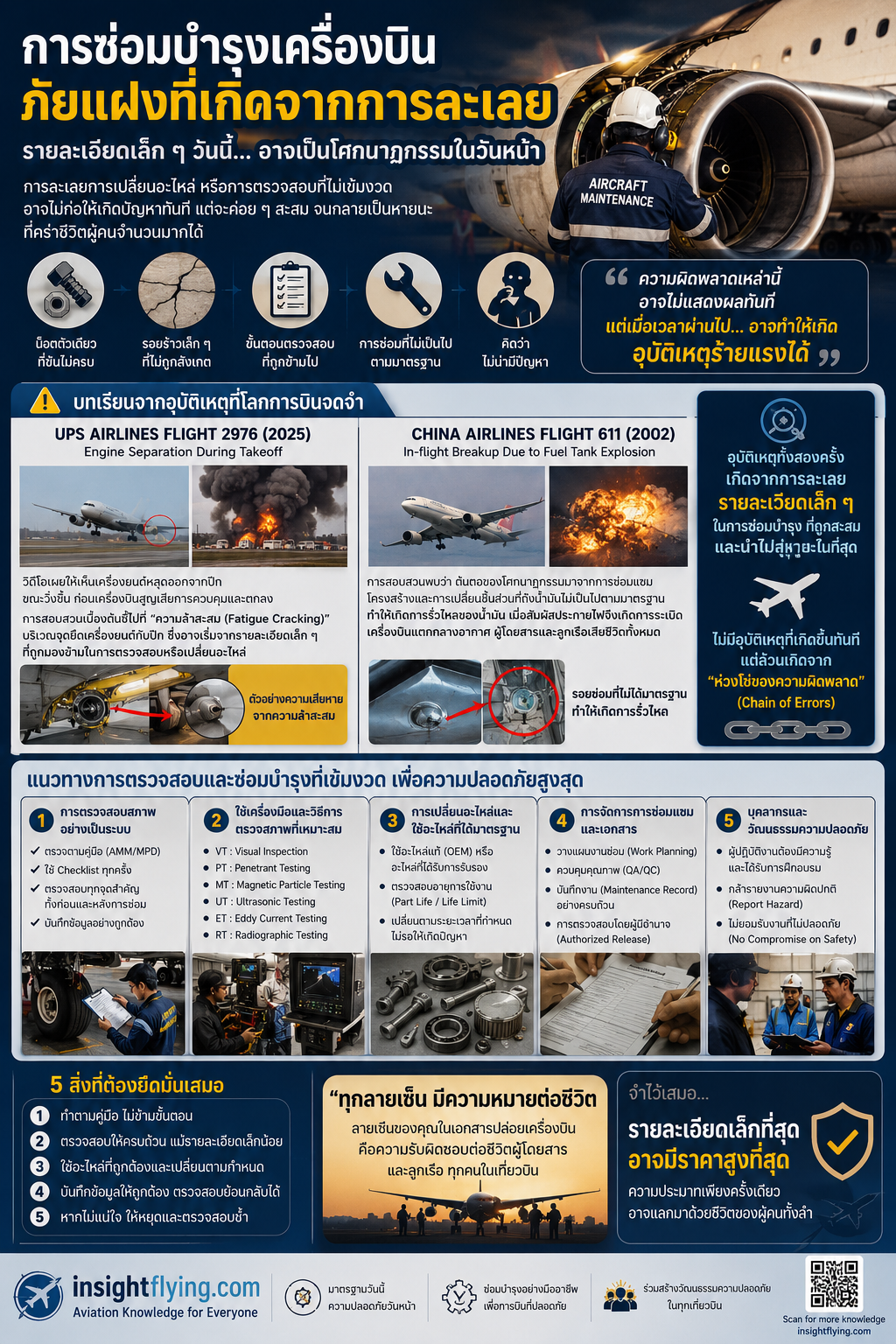
ภัยเงียบที่อาจกลายเป็นโศกนาฏกรรม
ในโลกของการบิน
ผู้คนมักมองเห็นนักบินอยู่หน้าห้องนักบิน
เห็นเครื่องบินที่ทันสมัย
เห็นเทคโนโลยีที่ซับซ้อนและน่าทึ่ง
แต่เบื้องหลังความปลอดภัยของทุกเที่ยวบิน
ยังมีอีกกลุ่มคนที่สำคัญไม่แพ้กัน
คือ “ช่างซ่อมบำรุงอากาศยาน”
วิศวกร
ผู้ตรวจสอบ
และบุคลากรด้าน Maintenance ทุกคน
เพราะในความจริงแล้ว
เครื่องบินไม่ได้ปลอดภัยเพียงเพราะมันถูกออกแบบมาดี
แต่มันปลอดภัย
เพราะมีคนคอยตรวจสอบรายละเอียดเล็กที่สุดอย่างเคร่งครัดในทุกวัน
อุบัติเหตุใหญ่ มักเริ่มจากความผิดพลาดเล็ก ๆ
ในอุตสาหกรรมการบิน
โศกนาฏกรรมจำนวนมากไม่ได้เริ่มจากความล้มเหลวครั้งใหญ่ในทันที
แต่มันเริ่มจากสิ่งเล็ก ๆ เช่น
- น็อตที่ขันไม่ครบ
- รอยร้าวเล็ก ๆ ที่ไม่มีใครสังเกต
- ขั้นตอนตรวจสอบที่ถูกข้ามไป
- การซ่อมที่ไม่เป็นไปตามมาตรฐาน
- หรือการ “คิดว่าไม่น่ามีปัญหา”
ความน่ากลัวคือ
ความผิดพลาดเหล่านี้มักไม่แสดงผลทันที
เครื่องบินอาจยังบินได้อีกหลายเดือน หรือหลายปี
จนวันหนึ่ง เมื่อปัจจัยหลายอย่างมารวมกัน
สิ่งเล็ก ๆ ที่ถูกมองข้าม ก็อาจกลายเป็นหายนะ
บทเรียนที่โลกการบินไม่มีวันลืม
หนึ่งในเหตุการณ์ที่สะเทือนวงการการบิน คือ
✈️ China Airlines Flight 611
การสอบสวนพบว่า
ต้นตอของอุบัติเหตุย้อนกลับไปถึงการซ่อมแซมโครงสร้างเครื่องบินเมื่อหลายปีก่อน
การซ่อมที่ไม่ได้เป็นไปตามมาตรฐานที่กำหนด
ทำให้เกิดความล้าสะสมของโครงสร้าง (Metal Fatigue)
สุดท้าย เครื่องบินแตกกลางอากาศ
และมีผู้เสียชีวิตทั้งหมด
โศกนาฏกรรมครั้งนั้น กลายเป็นบทเรียนสำคัญว่า
ความผิดพลาดจาก Maintenance อาจซ่อนตัวอยู่ได้นานหลายปี
ก่อนจะระเบิดออกมาในวันที่ไม่มีใครคาดคิด
และล่าสุด
โลกเพิ่งได้เห็นภาพจากเหตุการณ์
✈️ UPS Airlines Flight 2976 crash
จากวิดีโอที่ถูกเผยแพร่ออกมา
ภาพเครื่องยนต์ที่หลุดออกจากปีกระหว่างวิ่งขึ้น
ก่อนเครื่องบินสูญเสียการควบคุม
เป็นภาพที่สร้างความสะเทือนใจให้กับคนในวงการการบินทั่วโลก
ข้อมูลเบื้องต้นจากการสอบสวน ชี้ไปถึงปัญหาความล้าสะสมบริเวณจุดยึดเครื่องยนต์
ซึ่งเป็นอีกครั้งที่เตือนว่า
“รายละเอียดเล็ก ๆ”
ที่ถูกมองข้ามในงานซ่อมบำรุง
อาจสะสมตัวเงียบ ๆ จนกลายเป็นโศกนาฏกรรมครั้งใหญ่ในอนาคต
อันตรายที่สุด คือ “ความเคยชิน”
งานซ่อมบำรุงอากาศยาน เป็นงานที่ต้องทำซ้ำทุกวัน
และเมื่อมนุษย์ทำสิ่งเดิมซ้ำ ๆ
สิ่งที่อันตรายที่สุดอาจไม่ใช่ความไม่รู้
แต่คือ “ความเคยชิน”
- “คงไม่เป็นไร”
- “ทำแบบนี้มาตลอด”
- “เดี๋ยวค่อยกลับมาตรวจ”
- “รีบหน่อย เดี๋ยวไฟลต์ดีเลย์”
หลายครั้ง
อุบัติเหตุร้ายแรง เริ่มต้นจากประโยคเหล่านี้
ในอุตสาหกรรมการบิน
Checklist ไม่ใช่พิธีกรรม
Inspection ไม่ใช่ขั้นตอนที่ทำให้เสียเวลา
และการตรวจซ้ำ ไม่ใช่ความจุกจิก
แต่มันคือ “แนวป้องกันสุดท้าย”
ก่อนที่ความผิดพลาดเล็ก ๆ จะกลายเป็นหายนะ
ทุกลายเซ็น มีความหมายต่อชีวิตผู้คน
ผู้โดยสารจำนวนมากอาจไม่เคยเห็นหน้าช่างซ่อมบำรุง
แต่ทุกครั้งที่เครื่องบินขึ้นบิน
- มีคนตรวจสอบระบบ
- มีคนตรวจรอยรั่ว
- มีคนเช็กแรงขันของอุปกรณ์
- มีคนตรวจสภาพชิ้นส่วน
- และมีคนเซ็นรับรองว่าเครื่องบิน “พร้อมบิน”
ลายเซ็นเหล่านั้น
ไม่ใช่เพียงเอกสาร
แต่มันคือความรับผิดชอบต่อชีวิตของผู้คนทั้งลำ
Safety Culture คือหัวใจของการบิน
ความปลอดภัยในการบิน
ไม่ได้เกิดจากคนเก่งเพียงคนเดียว
แต่มันเกิดจาก “วัฒนธรรมความปลอดภัย”
ที่ทุกคนให้ความสำคัญกับมาตรฐาน แม้ในรายละเอียดเล็กที่สุด
ช่างที่ยอมเสียเวลาเพิ่มอีก 10 นาทีเพื่อตรวจซ้ำ
วิศวกรที่กล้ารายงานสิ่งผิดปกติ
ผู้ตรวจสอบที่ไม่ยอมปล่อยผ่านเพียงเพราะแรงกดดันด้านเวลา
คนเหล่านี้
อาจไม่มีใครรู้จักชื่อ
แต่พวกเขาคือเหตุผลที่ผู้โดยสารนับล้านคนเดินทางถึงบ้านอย่างปลอดภัยในทุกวัน
เพราะในการบิน
“รายละเอียดเล็กที่สุด อาจมีราคาสูงที่สุด”
การซ่อมบำรุงที่ดี
อาจเป็นงานที่ไม่มีใครพูดถึง
แต่การซ่อมบำรุงที่ผิดพลาด
อาจถูกจารึกไว้ในประวัติศาสตร์การบินตลอดไป
ในโลกของ Aviation Safety
ไม่มีคำว่า “เล็กเกินไปที่จะตรวจสอบ”
เพราะบางครั้ง
ความประมาทเพียงครั้งเดียว
อาจแลกมาด้วยชีวิตของผู้คนทั้งลำเครื่องบิน
และนี่คือเหตุผลว่า
ทำไมงานซ่อมบำรุงอากาศยาน
จึงไม่ใช่แค่เรื่องของเครื่องบิน
แต่มันคือ “ความรับผิดชอบต่อชีวิตมนุษย์”
Aircraft Maintenance
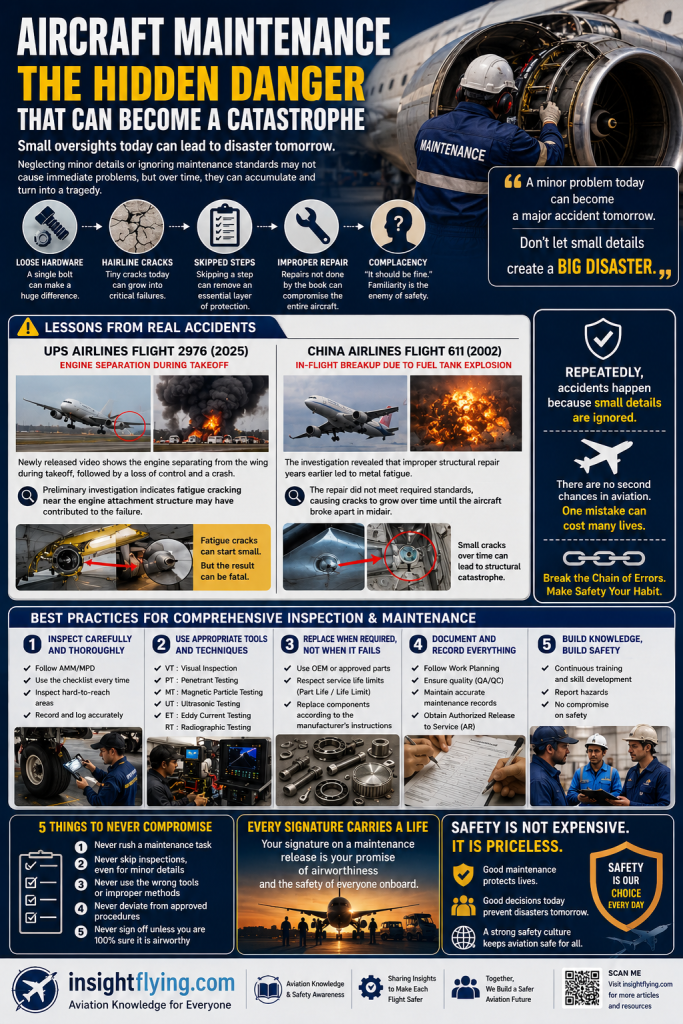
The Hidden Danger That Can Become a Catastrophe
In aviation, people often see the pilots in the cockpit,
the advanced aircraft,
and the impressive technology behind modern flight.
But behind every safe flight,
there is another group of professionals whose responsibility is just as critical:
Aircraft maintenance technicians, engineers, inspectors, and maintenance personnel.
Because the truth is:
Aircraft are not safe simply because they are well designed.
They are safe because someone carefully inspects the smallest details every single day.
Major Accidents Often Begin With Small Mistakes
In aviation, catastrophic accidents rarely begin with a massive failure.
More often, they begin with something small:
- A bolt not properly secured
- A tiny crack unnoticed during inspection
- A maintenance procedure skipped
- A repair not performed according to standards
- Or someone thinking, “It should be fine.”
The most dangerous part is that these mistakes usually do not cause immediate problems.
The aircraft may continue flying for months or even years.
Until one day, when multiple factors align,
that small overlooked issue turns into a disaster.
Lessons the Aviation Industry Will Never Forget
One of the most tragic examples is
✈️ China Airlines Flight 611
Investigators discovered that the root cause dated back years earlier to an improper structural repair.
The repair did not meet required maintenance standards, leading to metal fatigue over time.
Eventually, the aircraft broke apart in midair, killing everyone onboard.
That accident became a powerful reminder that:
Maintenance errors can remain hidden for years
before becoming catastrophic.
More recently, the aviation world was shaken again by the release of footage related to
✈️ UPS Airlines Flight 2976 crash
The video showing an engine separating from the wing during takeoff before the aircraft lost control shocked many across the aviation industry.
Preliminary investigation findings pointed toward fatigue cracking around the engine attachment structure.
Once again, it reminded the world that:
Small maintenance-related issues,
when ignored or overlooked,
can silently grow into major disasters.
The Most Dangerous Thing Is “Complacency”
Aircraft maintenance involves repetitive tasks performed every day.
And when humans repeat the same work over and over,
the greatest danger is often not lack of knowledge—
but complacency.
- “It’s probably okay.”
- “We’ve always done it this way.”
- “We’re running late.”
- “I’ll check it later.”
Many aviation accidents begin with these exact thoughts.
In aviation:
Checklists are not paperwork.
Inspections are not formalities.
And double-checking is not a waste of time.
They are the final barriers between safety and catastrophe.
Every Signature Represents Human Lives
Most passengers will never meet the maintenance personnel responsible for their flight.
But before every departure:
- Someone checks the aircraft systems
- Someone inspects for leaks or damage
- Someone verifies torque values
- Someone examines critical structures
- And someone signs the release confirming the aircraft is airworthy
Those signatures are not just ink on paper.
They represent responsibility for every life onboard.
Safety Culture Is the Heart of Aviation
Aviation safety does not depend on one brilliant pilot or engineer alone.
It depends on a strong safety culture
where every individual respects standards, procedures, and attention to detail.
The technician who spends ten extra minutes checking something again.
The engineer who reports an abnormality without hesitation.
The inspector who refuses to overlook a minor discrepancy despite operational pressure.
Most passengers will never know their names.
But they are the reason millions of people arrive home safely every day.
In Aviation,
The Smallest Detail May Carry the Highest Price
Good maintenance work often goes unnoticed.
But poor maintenance can become part of aviation history forever.
In aviation safety, there is no such thing as
“too small to inspect.”
Because sometimes,
a single moment of negligence
can cost hundreds of lives.
And that is why aircraft maintenance is not just about machines.
It is about responsibility for human life.