
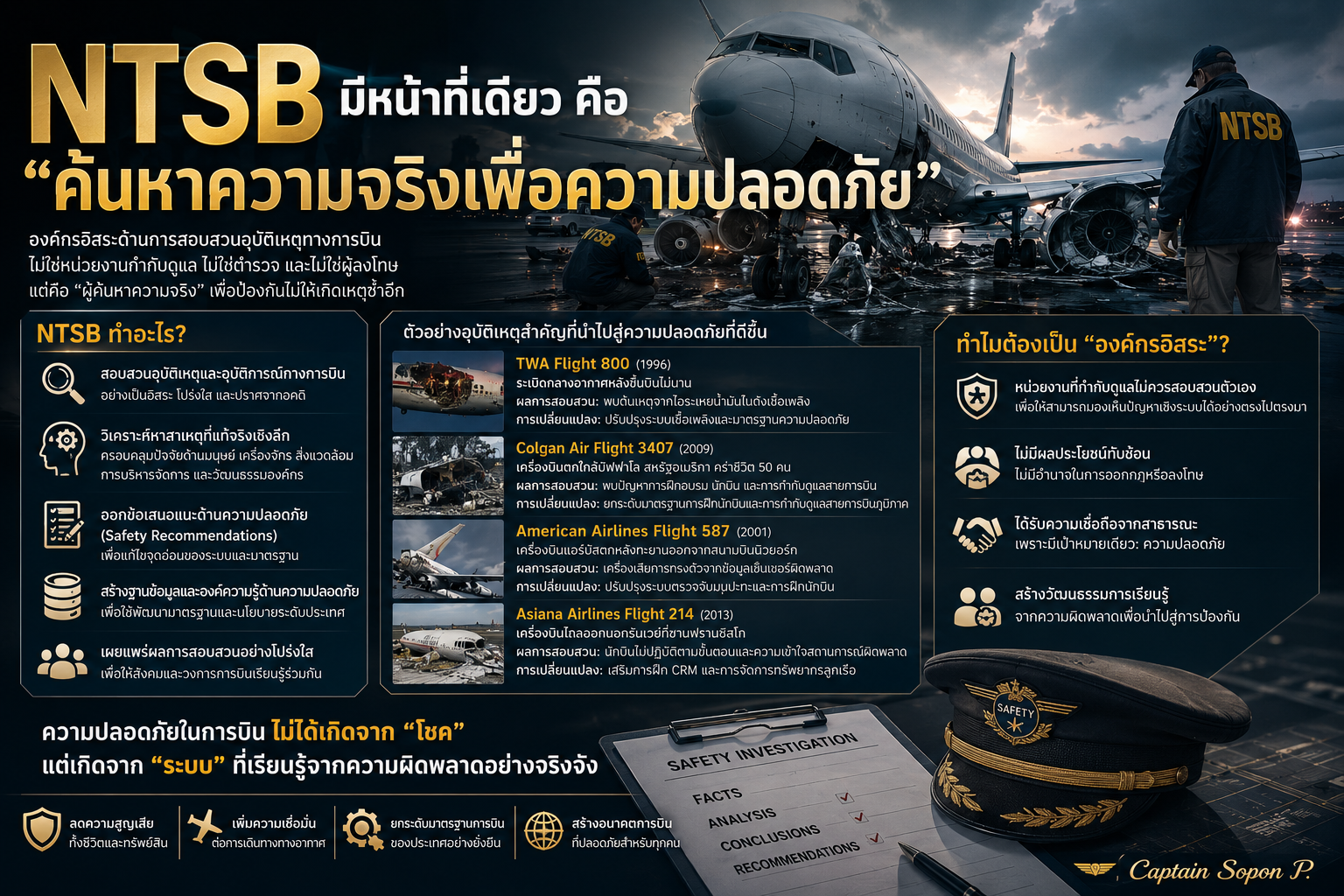
NTSB คืออะไร?
องค์กรที่มีหน้าที่เดียว คือ “ค้นหาความจริงเพื่อความปลอดภัย”
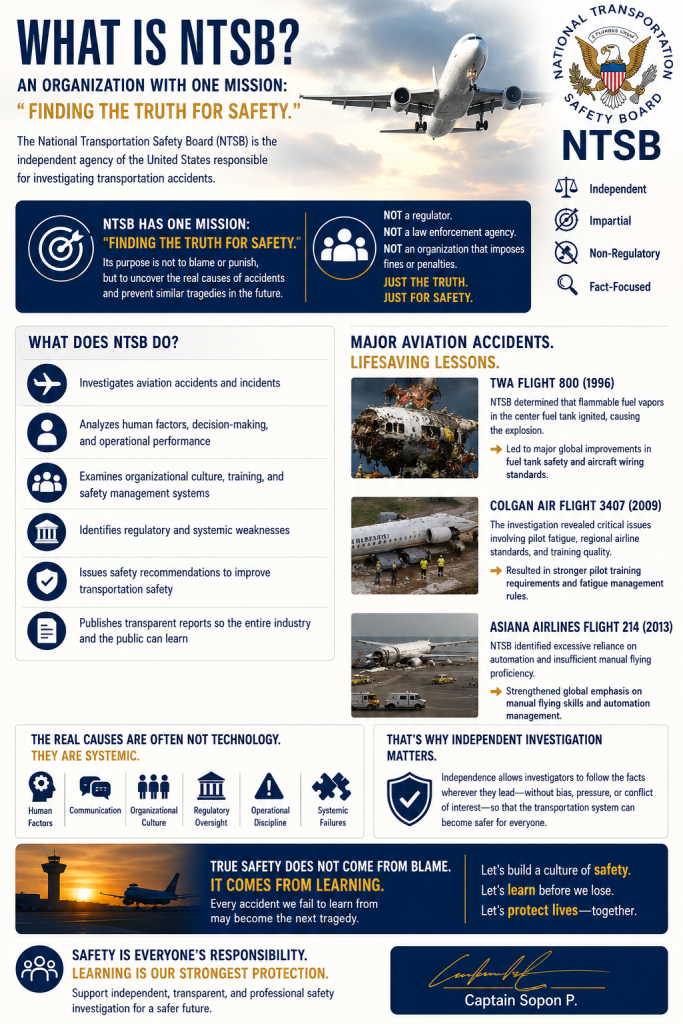
What is the NTSB?
An organization with one mission: “Finding the truth for safety.”
เมื่อเกิดอุบัติเหตุทางการบิน คนส่วนใหญ่มักตั้งคำถามว่า
ใครผิด?
นักบินพลาดหรือไม่?
เครื่องบินมีปัญหาหรือเปล่า?
แต่ในประเทศที่มีระบบความปลอดภัยเข้มแข็ง
เขาจะถามลึกกว่านั้นว่า
“What in the system allowed this accident to happen?”
“What warning signs were overlooked?”
“How can we prevent it from happening again?”
This is the role of the National Transportation Safety Board or NTSB — one of the world’s most respected independent transportation accident investigation agencies.
NTSB ไม่ใช่หน่วยงานกำกับดูแล
ไม่ใช่ตำรวจ
และไม่ใช่หน่วยงานลงโทษ
NTSB has no role in punishment or enforcement.
NTSB มีหน้าที่เดียว คือ
“ค้นหาความจริงเพื่อความปลอดภัย”
Its purpose is not to blame people, but to uncover the real causes of accidents and prevent similar tragedies in the future.
สิ่งที่ทำให้ NTSB แตกต่างอย่างมาก คือ “ความเป็นอิสระ”
One of the key strengths of the NTSB is its independence.
เพราะถ้าหน่วยงานที่กำกับดูแล
ต้องมาสอบสวนตัวเอง
ก็ยากที่จะมองเห็นปัญหาเชิงระบบได้อย่างตรงไปตรงมา
If regulators investigate themselves, it becomes difficult to objectively identify systemic failures, regulatory gaps, organizational weaknesses, or human-factor issues.
NTSB จึงไม่มีอำนาจออกกฎ
ไม่มีหน้าที่ส่งเสริมอุตสาหกรรม
และไม่มีผลประโยชน์ทับซ้อน
Its independence allows investigators to focus solely on facts, evidence, analysis, and safety recommendations.
บทบาทสำคัญของ NTSB ได้แก่
• สอบสวนอุบัติเหตุและอุบัติการณ์ทางการบิน
• วิเคราะห์ Human Factors หรือปัจจัยด้านมนุษย์
• วิเคราะห์การตัดสินใจ การฝึกอบรม และวัฒนธรรมองค์กร
• วิเคราะห์ช่องโหว่ของระบบกำกับดูแล
• ออก Safety Recommendations เพื่อป้องกันอุบัติเหตุในอนาคต
• เปิดเผยผลสอบสวนอย่างโปร่งใส เพื่อให้ทั้งอุตสาหกรรมเรียนรู้ร่วมกัน
Key functions of the NTSB include:
• Investigating aviation accidents and incidents
• Analyzing human factors and decision-making
• Examining organizational culture and training systems
• Identifying regulatory and systemic weaknesses
• Issuing independent safety recommendations
• Publishing transparent investigation reports for industry-wide learning
หลายอุบัติเหตุสำคัญของโลก
นำไปสู่การเปลี่ยนแปลงมาตรฐานการบินระดับสากล
จากผลสอบสวนของ NTSB
Many of today’s aviation safety standards were shaped directly by NTSB investigations.
ตัวอย่างเช่น
TWA Flight 800 (1996)
เครื่องบิน Boeing 747 ระเบิดกลางอากาศหลังบินขึ้นจากนิวยอร์กไม่นาน
NTSB concluded that flammable fuel vapors inside the center fuel tank ignited, leading to the explosion.
ผลจากเหตุการณ์นี้
ทำให้อุตสาหกรรมการบินทั่วโลก
ปรับปรุงมาตรฐานด้านถังเชื้อเพลิง ระบบสายไฟ และระบบป้องกันการระเบิด
This investigation led to major worldwide improvements in fuel tank safety and aircraft wiring standards.
Colgan Air Flight 3407 (2009)
อุบัติเหตุครั้งนี้เผยให้เห็นปัญหาเรื่อง
ความเหนื่อยล้าของนักบิน
มาตรฐานสายการบินภูมิภาค
และคุณภาพการฝึกอบรม
The investigation exposed critical issues involving pilot fatigue, regional airline standards, and training quality.
ผลคือมีการยกระดับมาตรฐานการฝึกนักบินและกฎด้าน fatigue management อย่างจริงจัง
Asiana Airlines Flight 214 (2013)
NTSB identified excessive reliance on cockpit automation and insufficient manual flying proficiency.
ผลสอบสวนทำให้อุตสาหกรรมการบินทั่วโลก
กลับมาให้ความสำคัญกับ Manual Flying Skills และ Automation Management มากขึ้น
สิ่งสำคัญคือ
หลายอุบัติเหตุไม่ได้เกิดจาก “เทคโนโลยีล้มเหลว” เพียงอย่างเดียว
แต่เกิดจาก
Human Factors
Communication
Organizational Culture
Regulatory Oversight
Operational Discipline
และ Systemic Failures
นี่คือเหตุผลที่องค์กรแบบ NTSB มีความสำคัญมาก
เพราะความปลอดภัยที่แท้จริง
ไม่ได้เกิดจากการ “หาคนผิด”
แต่เกิดจาก
การเรียนรู้จากความผิดพลาดอย่างจริงจัง
Real safety does not come from blame.
It comes from learning.
ประเทศไทยกำลังพัฒนาโครงสร้างพื้นฐานด้านคมนาคมอย่างรวดเร็ว
ทั้งสนามบิน ระบบราง ท่าเรือ และระบบขนส่งสาธารณะ
แต่สิ่งที่เรายังขาด คือ
“องค์กรอิสระด้านการเรียนรู้จากอุบัติเหตุ”
Thailand is rapidly modernizing its transportation infrastructure, yet we still lack a truly independent safety investigation organization focused on learning, transparency, and systemic improvement.
เรายังติดอยู่กับวัฒนธรรม
“แก้ปัญหาหลังเกิดเหตุ”
มากกว่า
“ป้องกันก่อนเกิดความสูญเสีย”
Too often, we react after tragedy instead of preventing it beforehand.
และหลายครั้ง
ปัญหาไม่ได้อยู่ที่เทคโนโลยี
แต่อยู่ที่
“วินัยด้านความปลอดภัย”
Crossing railway barriers
Ignoring procedures
Normalization of risk
Poor operational discipline
ทั้งหมดนี้สะท้อนว่า
ประเทศไทยจำเป็นต้องยกระดับ Safety Culture อย่างจริงจัง
Thailand needs a stronger safety culture — one built on transparency, accountability, professionalism, and continuous learning.
เพราะทุกอุบัติเหตุที่เรา “ไม่เรียนรู้”
อาจกลายเป็นโศกนาฏกรรมครั้งต่อไป
Every accident we fail to learn from may become the next tragedy.
Captain Sopon P.