
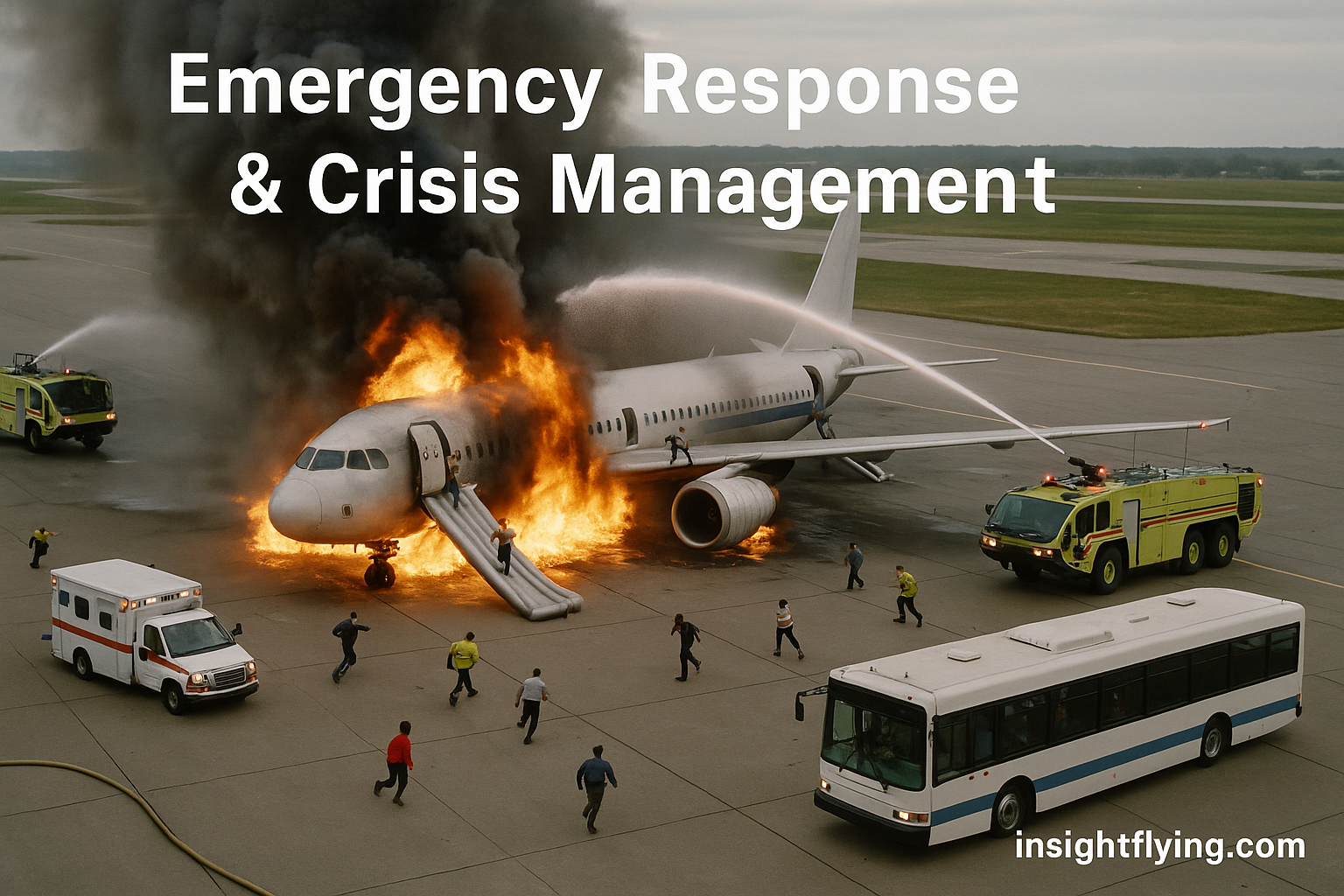
by Captain Sopon Phikanesuan
Business email: admin@insightflying.com
Support this website

แผนตอบสนองเหตุฉุกเฉิน และการจัดการภาวะวิกฤติในองค์กรการบิน
ในอุตสาหกรรมการบิน ทุกเหตุการณ์ที่ผิดปกติ—even a small deviation—สามารถขยายตัวเป็นเหตุร้ายแรงได้ หากไม่มีการรับมืออย่างเป็นระบบ ความพร้อมด้าน ERP (Emergency Response Plan) และ Crisis Management จึงไม่ใช่ “เอกสารที่ทำไว้ตามกฎ” แต่เป็น “ขีดความสามารถขององค์กร” ที่ต้องมีจริง ใช้ได้จริง และทดสอบได้จริง
ERP คือหัวใจของการบริหารความปลอดภัย (Safety Management System: SMS) และเป็นตัวชี้วัดว่าองค์กรให้ความสำคัญกับ ชีวิต, ความปลอดภัยของผู้โดยสารและลูกเรือ, ความต่อเนื่องของปฏิบัติการ, และความเชื่อมั่นของสาธารณะมากแค่ไหน
What is ERP?
ERP (Emergency Response Plan) คือ “ชุดกระบวนการและโครงสร้างการปฏิบัติงาน” ที่กำหนดไว้ล่วงหน้า เพื่อให้ทุกฝ่ายรู้ว่าต้องทำอะไร เมื่อเกิดเหตุที่เกินขีดความสามารถของการปฏิบัติการปกติ เช่น:
- เครื่องบินประสบเหตุ / อุบัติเหตุ / อุบัติการณ์รุนแรง
- การลงจอดฉุกเฉิน
- เหตุการณ์ด้านความปลอดภัย (Security Threats)
- ระบบ ATC/Communication ล่ม
- AWOS/Runway ปิดเพราะเหตุฉุกเฉิน
- ไฟฟ้าดับหรือระบบ IT สำคัญในองค์กรล่ม
- การสูญเสียบุคลากรสำคัญ
- ภัยพิบัติธรรมชาติที่กระทบการบิน
ERP จึงเป็น “Blueprint” ของการตอบสนองต่อเหตุฉุกเฉินขององค์กร ตั้งแต่ การแจ้งเตือน, การสั่งการ, การประสานงาน, การสื่อสาร, การกู้ภัย, การสนับสนุนด้านข้อมูล, จนถึง การฟื้นฟู (Recovery)
Crisis Management คืออะไร?
ในขณะที่ ERP คือ “ขั้นตอนปฏิบัติแบบ tactical”
Crisis Management คือ “การบริหารเชิงกลยุทธ์ในระดับองค์กร” เช่น:
- การกำหนด Crisis Level
- การตั้ง Crisis Command Center
- การตัดสินใจเชิงนโยบาย
- การจัดการข่าวสารและข้อมูลกับสื่อ
- การบริหารชื่อเสียง (Reputation Management)
- การดูแลผู้โดยสาร ครอบครัว และลูกเรือ
- การประสานงานกับรัฐ/หน่วยงานสากล
- การตัดสินใจปิด/เปิดสนามบินหรือเที่ยวบิน
- การบริหารความต่อเนื่อง (Business Continuity)
ง่ายๆ คือ:
ERP = ทำอย่างไร
Crisis Management = ตัดสินใจอย่างไร
ทั้งสองส่วนจำเป็นต้องเดินคู่กัน
Core Components of an Effective ERP
องค์ประกอบสำคัญของแผนตอบสนองเหตุฉุกเฉิน
1. Clear Structure & Roles
ต้องกำหนดชัดเจนว่าใครทำอะไร เช่น:
- Emergency Director
- On-Scene Commander
- Duty Manager / Dispatcher (พนักงานอำนวยการบิน)
- Safety Manager
- Communication/PR
- Family Assistance Team
- Medical/First Aid
- Technical & Maintenance Support
“ความไม่ชัดเจนในบทบาท” เป็นหนึ่งในสาเหตุหลักที่ทำให้ ERP ใช้งานไม่ได้จริง
2. Activation Criteria
กำหนดเงื่อนไขชัดเจนว่าต้อง “Activate ERP เมื่อใด” เช่น:
- Aircraft Accident/Serious Incident
- Uncontained Engine Failure
- Loss of Communication > 30 mins
- Fuel Emergency + Deviation
- Runway Excursion
- Passenger Disturbance with Threat
- Aircraft on Ground (AOG) affecting operation
- Bomb Threat / Security Breach
เกณฑ์ต้อง simple, practical, measurable
3. Communication Protocols
การสื่อสารคือจุดล้มเหลวที่พบบ่อยที่สุดในเหตุฉุกเฉิน
ERP ต้องกำหนด:
- ช่องทางสื่อสาร (Primary / Backup)
- รายชื่อผู้ติดต่อสำคัญ
- Alerting System และ Notification Flow
- การสื่อสารภายนอก: สื่อมวลชน / หน่วยงานรัฐ
- Template ข้อความสำหรับ Public Statement
ทุกวินาทีมีค่า และข้อความที่ผิดเพียงประโยคเดียวสามารถทำลายความเชื่อมั่นได้ทั้งองค์กร
4. Coordination & Command Centers
องค์กรต้องเตรียมพื้นที่และโครงสร้าง:
- Emergency Operations Center (EOC)
- Crisis Command Center (CCC)
- Family Assistance Center
- Media Center
แต่ละศูนย์มีหน้าที่ต่างกัน เช่น:
- EOC = tactical operations
- CCC = strategic decision
- Family Center = support compassionate care
- Media Center = public communication
5. Family Assistance Program
ส่วนที่สำคัญที่สุด และอ่อนไหวที่สุด:
- การแจ้งข่าวอย่างถูกต้อง
- การดูแลครอบครัวผู้โดยสาร
- การจัดที่พัก การเดินทาง
- การประสานงานทางการแพทย์
- การสนับสนุนด้านจิตใจ
นี่คือสิ่งที่สังคมจะจำ ไม่ใช่เพียงเหตุการณ์ แต่คือ “วิธีที่องค์กรดูแลผู้คน”
6. Training & Drills
ERP ไม่มีค่าอะไรเลยถ้า:
- ไม่เคยฝึก
- ไม่เคยทดสอบ
- เจ้าหน้าที่ไม่เคยเห็นแผนจริง
- ไม่เคยจำลองเหตุการณ์ (Exercise)
ต้องมีทั้ง:
- Tabletop Exercise
- Full-Scale Drill
- Communication Test
- Surprise Scenario
“A plan is nothing. Planning is everything.” — Eisenhower
ERP ต้องถูกทดสอบเสมอ
7. Post-Crisis Recovery & Lessons Learned
เมื่อเหตุการณ์จบลง งานยังไม่จบ:
- การสอบสวน (Investigation)
- การฟื้นฟูระบบปฏิบัติการ
- การดูแลพนักงานที่เกี่ยวข้อง
- การทบทวนบทเรียน
- การแก้ไขแผนเพื่อป้องกันเหตุซ้ำ
บริษัทการบินที่ดีวัดได้จาก “ความโปร่งใส และการเรียนรู้จากเหตุการณ์”
Crisis Management Framework
โครงสร้างการบริหารภาวะวิกฤติ
- Detect – ระบุเหตุการณ์ที่ผิดปกติ
- Decide – ประเมินระดับวิกฤติ
- Declare – ประกาศ Crisis Level
- Direct – สั่งการและจัดลำดับความสำคัญ
- Deliver – จัดการสื่อสารและการปฏิบัติ
- Debrief – ทบทวน ปรับปรุง พัฒนา
Common Failures in ERP & Crisis Management
ความผิดพลาดที่เกิดขึ้นบ่อยที่สุด
- ไม่มีการฝึกจริง → พนักงานไม่รู้หน้าที่
- ผู้บริหารสั่งการช้าเพราะ “รอข้อมูลครบ”
- สื่อมวลชนรู้ก่อนองค์กร → สูญเสียความน่าเชื่อถือ
- หน่วยงานต่างๆ ทำงานซ้ำซ้อนหรือขัดแย้ง
- ไม่มี Centralized Communication
- ระบบ IT ล่ม → ไม่มีแผนสำรอง
- การดูแลครอบครัวผู้โดยสารไม่ดี → เสียชื่อเสียงรุนแรง
- ไม่บันทึก timeline ของเหตุการณ์ → ทำให้สอบสวนยาก
Conclusion
ERP และ Crisis Management คือระบบที่สะท้อนวัฒนธรรมความปลอดภัยขององค์กร
การมีแผน “หนาเป็นเล่ม” ไม่สำคัญเท่ากับการมีแผนที่:
- เข้าใจง่าย
- ใช้ได้จริง
- ฝึกด้วยจริง
- สื่อสารดี
- รองรับความไม่แน่นอนได้
- ดูแลผู้คนเป็นศูนย์กลาง
นี่คือรากฐานสำคัญของ องค์กรการบินที่เป็นมืออาชีพและยั่งยืน

|
|

|
|
ERP: Emergency Response Plan & Crisis Management
Emergency Response and Crisis Management in Aviation Organizations
In the aviation industry, every irregular occurrence — even a small deviation — can escalate into a serious event if not managed systematically. The readiness of an organization in ERP (Emergency Response Plan) and Crisis Management is not merely a “regulatory document,” but a true operational capability that must be real, functional, and regularly tested.
ERP is a core element of the Safety Management System (SMS). It reflects how much an organization prioritizes life, passenger and crew safety, operational continuity, and public confidence.
What is ERP?
ERP (Emergency Response Plan) is a pre-defined set of procedures and organizational structures that guides personnel on what to do when an event exceeds normal operational capacity. Examples include:
- Aircraft accident / serious incident
- Emergency landing
- Security threats
- ATC or communication system failure
- AWOS/Runway closure due to emergencies
- Power outage or major IT system failure
- Loss of key personnel
- Natural disasters affecting aviation operations
ERP serves as the organization’s blueprint for emergency response, covering:
Alerting → Command & Control → Coordination → Communication → Rescue → Information Support → Recovery
What is Crisis Management?
While ERP focuses on tactical procedures,
Crisis Management focuses on strategic, organizational-level decisions, such as:
- Defining Crisis Levels
- Activating the Crisis Command Center
- Policy-level decisions
- Public and media communication
- Reputation management
- Passenger, crew, and family assistance
- Coordination with state authorities and international bodies
- Decisions on airport/flight operations
- Business continuity management
In simple terms:
ERP = How to act
Crisis Management = How to decide
Both must operate together.
Core Components of an Effective ERP
Key Elements of an Emergency Response Plan
1. Clear Structure & Roles
Roles must be clearly defined, including:
- Emergency Director
- On-Scene Commander
- Duty Manager / Dispatcher (พนักงานอำนวยการบิน)
- Safety Manager
- Communications / Public Relations
- Family Assistance Team
- Medical & First Aid
- Technical & Engineering Support
Role ambiguity is one of the major reasons ERP fails during actual events.
2. Activation Criteria
A good ERP defines when to activate the plan, for example:
- Aircraft Accident / Serious Incident
- Uncontained Engine Failure
- Loss of Communication > 30 minutes
- Fuel Emergency with deviation
- Runway excursion
- Passenger disturbance with threats
- AOG (Aircraft on Ground) impacting operations
- Bomb threat or security breach
Criteria must be simple, practical, and measurable.
3. Communication Protocols
Communication failures are the most common weaknesses during emergencies.
ERP must specify:
- Communication channels (Primary / Backup)
- Emergency contact list
- Alerting system & notification flow
- External communications: media, government agencies
- Public statement templates
Every second matters, and a single incorrect statement can damage the organization’s credibility.
4. Coordination & Command Centers
The organization must establish:
- Emergency Operations Center (EOC)
- Crisis Command Center (CCC)
- Family Assistance Center
- Media Center
Each serves a different function:
- EOC = Tactical operations
- CCC = Strategic decisions
- Family Center = Compassionate support
- Media Center = Public communication
5. Family Assistance Program
One of the most important and sensitive components:
- Correct and timely notifications
- Support for families of passengers and crew
- Accommodation and transportation
- Medical coordination
- Psychological support
People will remember not only the incident, but how the organization treated them.
6. Training & Drills
An ERP is useless if:
- Staff never practice it
- No drills are conducted
- Personnel have never seen or used the procedures
- No scenario-based exercises are performed
Training must include:
- Tabletop exercises
- Full-scale drills
- Communication tests
- Surprise scenarios
“A plan is nothing. Planning is everything.” — Eisenhower
ERP must be continuously tested.
7. Post-Crisis Recovery & Lessons Learned
When the emergency ends, the work is not finished:
- Investigation
- Operational recovery
- Care for involved personnel
- Lessons learned
- Plan improvements
A professional aviation organization is measured by its transparency and commitment to learning.
ร่วมสนับสนุนเว็บไซต์
We need your support
Crisis Management Framework
Detect – Identify anomalies
Decide – Assess crisis level
Declare – Announce Crisis Level
Direct – Command and prioritize actions
Deliver – Execute communication and operations
Debrief – Review, adjust, and improve
Common Failures in ERP & Crisis Management
- Lack of training → staff do not know their roles
- Leaders delay action because they “wait for complete information”
- Media receives information before the organization
- Overlapping or conflicting actions among departments
- No centralized communication
- IT systems fail without backup plans
- Poor family assistance → severe reputational damage
- Incomplete event timeline → investigation becomes difficult
Conclusion
ERP and Crisis Management reflect the organization’s safety culture.
A thick binder of documents means nothing unless the plan is:
- Clear
- Practical
- Frequently exercised
- Well communicated
- Adaptable to uncertainty
- Centered around people
These are the foundations of a professional, resilient, and trustworthy aviation organization.


|
|
หนังสือการบิน ทางลัดสู่ความเข้าใจที่นำไปใช้งานจริง
|
|
|
|
|
|


|
|

|
|

|
|
A350 accident Airbus aircraft airline airmanship airworthiness aviation Aviation SMS become a captain become a pilot Boeing captain CAT Crisis Crisis Management emergency engine ERP fatigue flight safety go-around Indigo interview management pilot qualified pilot safety safety management Safety Management System SMS student pilot technology training travel tips turbulence weather weather radar wet runway การจัดการความปลอดภัย การบิน การสอบสัมภาษณ์ ความปลอดภัย นักบิน สอบนักบิน
ขายดีที่สุด
|
|
|