
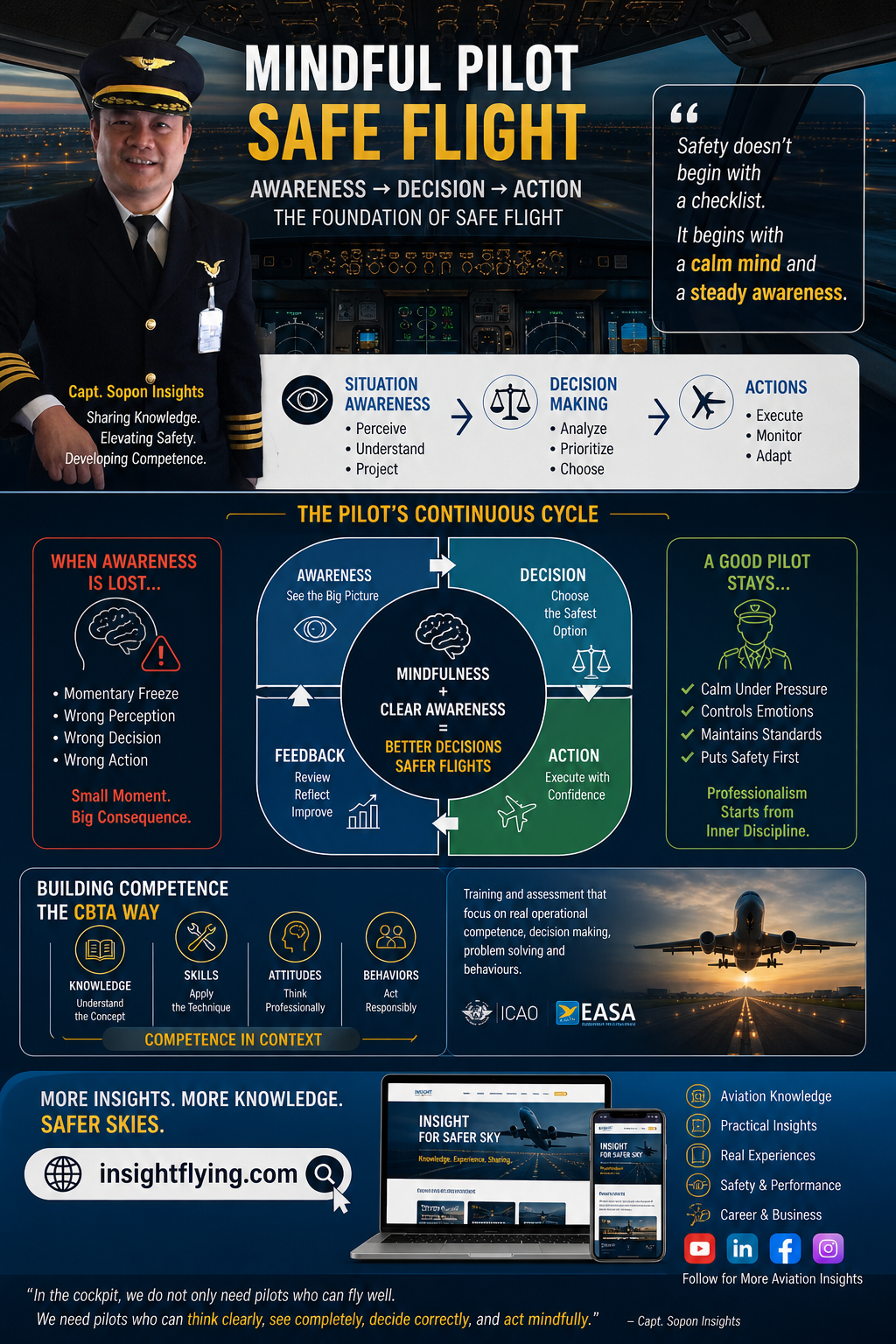
ในการบิน เรามักพูดถึงคำว่า Situation Awareness, Decision Making และ Actions อยู่เสมอ เพราะทั้งสามสิ่งนี้คือหัวใจของการปฏิบัติการบินที่ปลอดภัย
แต่หากมองลึกลงไปกว่านั้น จะพบว่ารากฐานที่สำคัญที่สุด อาจไม่ใช่เพียงแค่ความรู้ทางเทคนิค หรือความชำนาญในการบังคับเครื่องบินเท่านั้น หากคือสิ่งที่เรียบง่ายแต่ทรงพลังมาก นั่นคือ
“สติ และ สัมปชัญญะ”
สติ คือ การรู้ตัว
สติ คือ ความสามารถในการ “รู้ตัวอยู่เสมอ”
รู้ว่าเรากำลังทำอะไร
รู้ว่าอะไรเกิดขึ้นรอบตัว
รู้ว่าขณะนี้สถานการณ์เปลี่ยนไปอย่างไร
นักบินที่มีสติ จะไม่ทำงานแบบอัตโนมัติจนขาดการรับรู้
จะไม่ปล่อยให้ความเคยชินกลายเป็นความประมาท
เพราะในการบิน หลายครั้งอุบัติเหตุไม่ได้เกิดจากเรื่องใหญ่โต
แต่เกิดจาก “ช่วงเวลาสั้นๆ” ที่เราหลุดจากการรับรู้
เพียงไม่กี่วินาที
เพียงการตัดสินใจผิดเพียงครั้งเดียว
ผลลัพธ์อาจรุนแรงเกินกว่าจะย้อนกลับได้
สัมปชัญญะ คือ การรู้พร้อมด้วยความเข้าใจ
หากสติคือการรู้ตัว
สัมปชัญญะ คือ การรู้ว่า “ควรทำอะไร”
ไม่ใช่แค่เห็นปัญหา
แต่ต้องเข้าใจปัญหาอย่างถูกต้อง
ไม่ใช่แค่รับรู้สถานการณ์
แต่ต้องประเมินผลกระทบและแนวทางแก้ไขได้อย่างเหมาะสม
นี่คือแก่นแท้ของ Situation Awareness
Perceive
เห็นว่าอะไรเกิดขึ้น
Understand
เข้าใจว่ามันหมายถึงอะไร
Project
คาดการณ์ว่าต่อไปจะเกิดอะไร
เมื่อครบทั้งสามขั้นตอน
Decision Making จึงจะมีคุณภาพ
และเมื่อการตัดสินใจถูกต้อง
Actions ก็จะตามมาอย่างมั่นคงและปลอดภัย
ปัญหาไม่ได้เกิดเพราะ “ไม่รู้”
แต่เกิดเพราะ “สติหลุด”
นักบินส่วนใหญ่มีความรู้เพียงพอ
ผ่านการฝึกฝนมามาก
รู้ SOP
รู้ Checklist
รู้วิธีแก้ปัญหา
แต่ในสถานการณ์จริง โดยเฉพาะเมื่อเกิดสิ่งไม่คาดคิด
ความกดดัน
ความเร่งรีบ
เสียงเตือน
แรงกดดันจากเวลา
ความคาดหวังจากผู้โดยสาร
หรือแม้แต่ความมั่นใจเกินไป
สิ่งเหล่านี้สามารถทำให้เกิดภาวะที่เรียกว่า
Momentary Freeze
คือช่วงเวลาที่สมอง “ค้าง”
ไม่แน่ใจว่าจะทำอะไร
ลังเล
หรือแก้ปัญหาไปผิดทาง
นี่ไม่ใช่เรื่องของความไม่เก่ง
แต่เป็นเรื่องของการขาดสติชั่วขณะ
และในการบิน
ชั่วขณะนั้นอาจมีราคาแพงมาก
นักบินที่ดี ไม่ใช่คนที่ไม่เคยผิดพลาด
แต่คือคนที่
“รู้ทันตัวเองก่อนที่ความผิดพลาดจะขยายใหญ่”
หยุด
หายใจ
ตั้งสติ
กลับมามองภาพรวม
Ask:
- What is happening?
- What is changing?
- What is the safest action now?
ไม่รีบตอบสนองด้วยอารมณ์
ไม่แก้ปัญหาด้วยความตกใจ
ไม่ปล่อยให้ Ego เข้ามาควบคุมการตัดสินใจ
Professionalism เริ่มต้นจาก Inner Discipline
ความเป็นมืออาชีพ ไม่ได้วัดจากจำนวนชั่วโมงบินเพียงอย่างเดียว
แต่วัดจาก
- ความนิ่งเมื่อเกิดปัญหา
- ความสามารถในการควบคุมตนเอง
- การรักษามาตรฐานภายใต้แรงกดดัน
- การตัดสินใจที่ยึดความปลอดภัยเป็นหลัก
สิ่งเหล่านี้ล้วนเริ่มต้นจาก
สติ + สัมปชัญญะ
บทสรุป
ในห้องนักบิน
เราไม่ได้ต้องการเพียงคนที่ “บินเก่ง”
แต่ต้องการคนที่
คิดชัด
เห็นครบ
ตัดสินใจถูก
และลงมืออย่างมีสติ
เพราะสุดท้ายแล้ว
Safety
ไม่ได้เริ่มจาก Checklist
แต่มักเริ่มจาก
“ใจที่นิ่ง และสติที่มั่นคง”
นั่นคือพื้นฐานของนักบินมืออาชีพอย่างแท้จริง
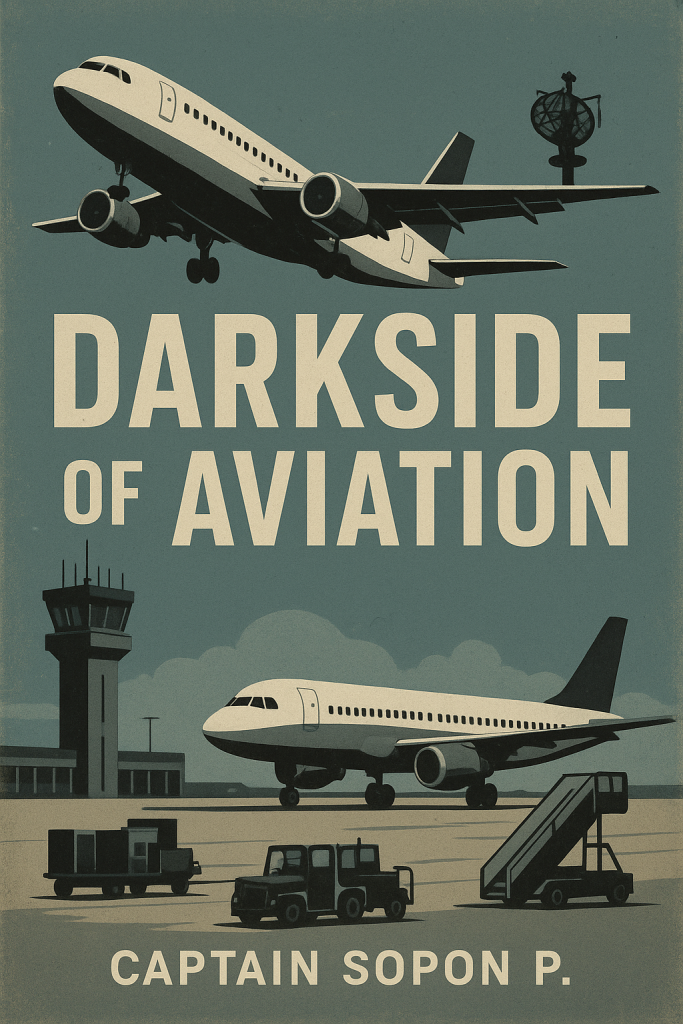
หนังสือ “ด้านมืดของสายการบิน” เรื่องลับ ๆ ในมุมอับที่คนภายนอกไม่ค่อยรู้
Mindfulness, Awareness, and Situation Awareness in Aviation
In aviation, we frequently talk about Situation Awareness, Decision Making, and Actions, because these three elements are at the core of safe flight operations.
However, if we look deeper, we may realize that the true foundation is not only technical knowledge or flying skills.
It is something much simpler, yet far more powerful:
Mindfulness and Clear Awareness
Mindfulness: Being Fully Aware
Mindfulness is the ability to remain fully aware of oneself in every moment.
Being aware of what we are doing.
Being aware of what is happening around us.
Being aware of how the situation is changing.
A pilot with mindfulness does not operate on autopilot mentally.
They do not allow routine to become complacency.
Because in aviation, accidents often do not begin with major failures.
They begin in very small moments—
when awareness is lost.
Just a few seconds.
Just one wrong decision.
The consequences may be far greater than we can reverse.
Clear Awareness: Understanding with Proper Judgment
If mindfulness is awareness,
clear awareness is knowing what should be done.
It is not enough to simply notice a problem.
We must understand it correctly.
It is not enough to recognize a situation.
We must assess its meaning, its consequences, and the proper response.
This is the true essence of Situation Awareness.
Perceive
Recognize what is happening.
Understand
Interpret what it means.
Project
Anticipate what may happen next.
Only when these three steps are complete
can Decision Making be effective.
And when decisions are correct,
Actions become confident and safe.
Problems Often Do Not Come from Lack of Knowledge
They come from loss of awareness.
Most pilots have sufficient knowledge.
They are well trained.
They know the SOPs.
They know the checklists.
They know the procedures.
But in real situations—especially during unexpected events—
pressure,
urgency,
warning sounds,
time constraints,
passenger expectations,
or even overconfidence
can create what we call:
Momentary Freeze
A brief moment when the mind pauses.
Uncertainty appears.
Hesitation takes over.
Or worse—actions are taken in the wrong direction.
This is not always about lack of skill.
Often, it is simply a temporary loss of mindfulness.
And in aviation,
that brief moment can be extremely costly.
A Good Pilot Is Not Someone Who Never Makes Mistakes
A good pilot is someone who recognizes themselves
before the mistake grows bigger.
Pause.
Breathe.
Reset.
Return to the bigger picture.
Ask:
- What is happening?
- What is changing?
- What is the safest action right now?
Do not react emotionally.
Do not solve problems with panic.
Do not allow ego to control decision making.
Professionalism Begins with Inner Discipline
Professionalism is not measured only by flight hours.
It is measured by:
- Calmness under pressure
- Self-control during abnormal situations
- Maintaining standards when things go wrong
- Making decisions based on safety, not emotion
All of these begin with:
Mindfulness + Clear Awareness
Final Thought
In the cockpit,
we do not only need pilots who can fly well.
We need pilots who can
think clearly,
see completely,
decide correctly,
and act mindfully.
Because in the end,
Safety
does not begin with a checklist.
It often begins with
a calm mind and a steady awareness.
That is the true foundation
of a professional pilot.

|
|
หนังสือการบิน ทางลัดสู่ความเข้าใจที่นำไปใช้งานจริง
|
|

|
|


|
|
|
|
|
|
A350 accident Airbus aircraft airline airmanship airworthiness aviation Aviation SMS become a captain become a pilot Boeing captain CAT cloud cloud type Crisis Crisis Management emergency engine fatigue flight safety go-around Indigo interview management OM pilot qualified pilot safety Safety Management System SMS student pilot technology training travel tips turbulence weather การจัดการความปลอดภัย การบิน การสอบสัมภาษณ์ ความปลอดภัย นักบิน สอบนักบิน เมฆ
ขายดีที่สุด
|
|
|