
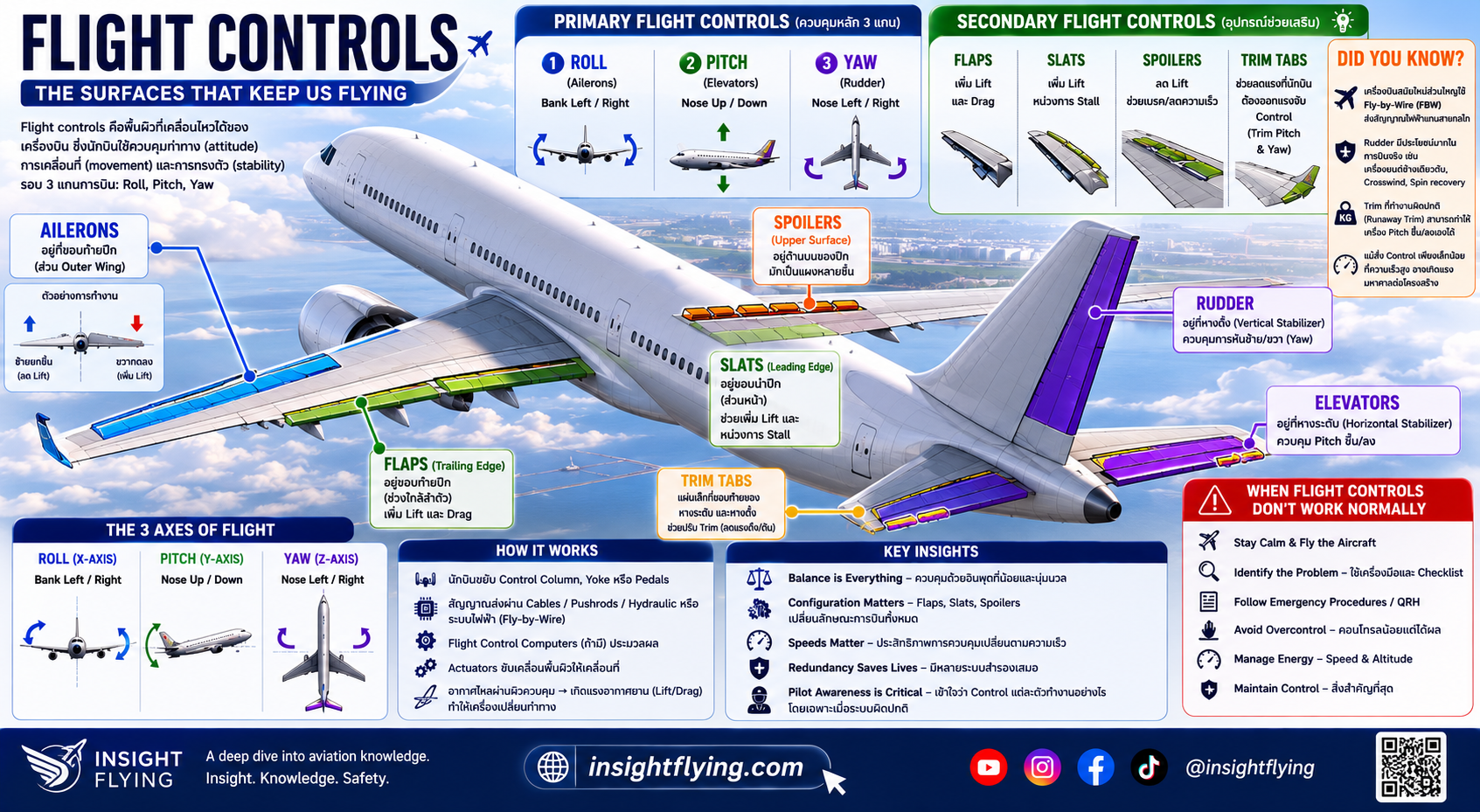
เครื่องบินสมัยใหม่อาจเต็มไปด้วยเทคโนโลยี ระบบอัตโนมัติ และคอมพิวเตอร์ช่วยบินที่ซับซ้อน แต่สุดท้ายแล้ว สิ่งที่ทำให้เครื่องบิน “บินได้ตามที่นักบินต้องการ” ก็คือระบบ Flight Controls
ไม่ว่าจะเป็นการหมุนเลี้ยว การไต่ระดับ การลดระดับ การรักษาท่าทางของเครื่องบิน หรือแม้แต่การควบคุมเครื่องบินในสภาพอากาศรุนแรง ทุกอย่างล้วนเกิดจากการทำงานร่วมกันของ flight control surfaces และระบบควบคุมที่อยู่เบื้องหลัง
นักบินอาจมอง flight controls เป็น “มือและเท้า” ของเครื่องบิน
วิศวกรอาจมองว่าเป็น “ระบบ mechanical / hydraulic / fly-by-wire architecture”
แต่ในมุมของความปลอดภัย Flight Controls คือ “ชีวิต” ของ aircraft controllability
หากเครื่องยนต์ดับ นักบินยังอาจร่อนลงได้
หากระบบไฟฟ้าบางส่วนล้มเหลว ยังมีระบบสำรอง
แต่หากสูญเสียความสามารถในการควบคุมเครื่องบิน (Loss of Control) ผลลัพธ์มักรุนแรงและมีเวลาตอบสนองน้อยมาก
หนึ่งใน accident category ที่ ICAO และ FAA ให้ความสำคัญสูงที่สุดก็คือ LOC-I — Loss of Control In-flight
ซึ่งจำนวนไม่น้อยมีจุดเริ่มต้นจากความผิดปกติของ flight controls หรือการรับรู้ท่าทางเครื่องบินที่ผิดพลาด
Flight Controls ไม่ได้มีหน้าที่แค่ “บังคับเลี้ยว”
หลายคนเข้าใจว่า flight controls มีหน้าที่เพียงควบคุมทิศทาง แต่ในความเป็นจริง ระบบเหล่านี้มีผลต่อ:
- Aircraft stability
- Aircraft performance
- Stall characteristics
- Structural loads
- Fuel efficiency
- Passenger comfort
- Aircraft controllability during abnormal situations
แม้แต่ flap หรือ slat ที่หลายคนคิดว่าเป็นเพียงอุปกรณ์ช่วยขึ้นลง ก็มีผลมหาศาลต่อ aerodynamic characteristics ของเครื่องบิน
การเปลี่ยน configuration เพียงเล็กน้อย อาจทำให้:
- stall speed เปลี่ยน
- drag เพิ่มขึ้น
- pitch attitude เปลี่ยน
- climb performance ลดลง
- controllability เปลี่ยนไปทันที
Primary Flight Controls
Primary Flight Controls คือระบบควบคุมหลักที่ใช้ควบคุม aircraft attitude รอบ 3 axes ของการบิน
1. Ailerons — Roll Control
ติดตั้งบริเวณ trailing edge ของปีก ใช้ควบคุมการ roll ของเครื่องบิน
เมื่อ pilot หมุน control wheel:
- aileron ข้างหนึ่งยกขึ้น
- อีกข้างลดลง
- lift ของปีกสองข้างไม่เท่ากัน
- เครื่องบินจึง roll
หากระบบนี้มีปัญหา:
- เครื่องบินอาจ bank โดยควบคุมได้ยาก
- ต้องใช้ rudder ช่วยประคอง
- roll response อาจช้าหรือผิดปกติ
2. Elevator — Pitch Control
ติดตั้งที่ horizontal stabilizer ใช้ควบคุม pitch attitude
elevator มีผลโดยตรงต่อ:
- climb
- descent
- airspeed control
- angle of attack
ความผิดปกติของ elevator ถือว่า critical มาก เพราะเกี่ยวข้องโดยตรงกับการรักษา attitude และ preventing stall
หลาย accident ในอดีตเกี่ยวข้องกับ:
- jammed elevator
- runaway stabilizer
- improper trim
- overcontrol during upset recovery
3. Rudder — Yaw Control
ติดตั้งบน vertical stabilizer ใช้ควบคุม yaw
แม้ในการบินปกติ rudder อาจดูเหมือนใช้น้อยกว่า aileron หรือ elevator แต่ในบางสถานการณ์มันสำคัญอย่างยิ่ง เช่น:
- engine failure after takeoff
- crosswind landing
- asymmetric thrust
- spin recovery
การใช้ rudder ผิดวิธี โดยเฉพาะที่ความเร็วสูง อาจสร้าง structural load รุนแรงต่อ vertical stabilizer ได้
Secondary Flight Controls
Secondary Flight Controls ถูกออกแบบมาเพื่อ “support” การบินให้มีประสิทธิภาพและปลอดภัยมากขึ้น
Flaps
เพิ่มทั้ง lift และ drag
ช่วยให้:
- takeoff distance สั้นลง
- landing speed ต่ำลง
- approach stable มากขึ้น
แต่ flap extension ก็ทำให้:
- drag เพิ่ม
- fuel burn เพิ่ม
- climb performance ลด
ดังนั้น flap configuration จึงเป็น balance ระหว่าง performance กับ controllability
Slats / Leading Edge Devices
ช่วย delay stall โดยปรับ airflow บริเวณ leading edge
มีความสำคัญมากใน:
- low speed flight
- approach
- takeoff
- high angle of attack situations
Spoilers / Speed Brakes
ใช้ลด lift และเพิ่ม drag
หน้าที่หลัก:
- ช่วยลดความเร็ว
- assist descent
- dump lift หลัง touchdown
- assist roll control ในบาง aircraft
หาก spoiler deploy ผิดปกติระหว่างบิน อาจทำให้ aircraft controllability เปลี่ยนทันที
Trim Systems
หนึ่งในระบบที่ “นักบินใหม่มักประเมินความสำคัญต่ำเกินไป”
trim ไม่ได้มีหน้าที่บังคับเครื่องบิน แต่ช่วย “ลดแรงที่ pilot ต้องถือ control”
หาก trim malfunction:
- aircraft อาจ pitch aggressively
- control forces สูงมาก
- pilot fatigue เพิ่มอย่างรวดเร็ว
กรณี runaway trim เป็น emergency memory item ของหลาย aircraft type เพราะหากไม่หยุดทันเวลา อาจควบคุมเครื่องบินไม่ได้
เมื่อ Flight Controls ทำงานผิดปกติ
สิ่งที่อันตรายที่สุด ไม่ใช่แค่ “ระบบเสีย”
แต่คือ “pilot ไม่เข้าใจว่าเครื่องบินกำลังตอบสนองอย่างไร”
ใน abnormal flight control situations นักบินต้อง:
- recognize abnormality quickly
- identify affected control axis
- avoid overcontrol
- maintain aircraft controllability
- follow memory items / QRH
- manage aerodynamic energy carefully
เพราะเมื่อ controllability ลดลง:
- workload จะเพิ่มขึ้นมหาศาล
- situational awareness จะลดลง
- automation อาจ disconnect
- upset risk จะสูงขึ้นทันที
Fly-By-Wire เปลี่ยนโลกของ Flight Controls
เครื่องบินสมัยใหม่จำนวนมากใช้ Fly-By-Wire (FBW)
แทนที่ pilot จะส่งแรงผ่าน cable หรือ hydraulic linkage โดยตรง
pilot จะส่ง “electrical signals” ไปยัง flight control computers
ข้อดีคือ:
- ลดน้ำหนัก
- เพิ่ม precision
- เพิ่ม flight envelope protection
- ลด pilot-induced overstress
แต่ในอีกมุมหนึ่ง:
นักบินต้องเข้าใจว่า “computer กำลังตีความ input อย่างไร”
เพราะใน FBW aircraft:
- sidestick movement ไม่ได้แปลว่า surface movement ตรง ๆ เสมอไป
- computer อาจ limit control input
- protection laws อาจเปลี่ยนตาม system degradation
นี่คือเหตุผลว่าทำไม modern aircraft training จึงเน้น:
- automation philosophy
- flight control law
- degraded mode handling
- upset prevention and recovery
สุดท้ายแล้ว Flight Controls คือ “การสื่อสาร” ระหว่างมนุษย์กับเครื่องบิน
ทุกครั้งที่นักบินขยับ control wheel, sidestick หรือ rudder pedal
นั่นคือการสื่อสารกับ aerodynamic forces ขนาดมหาศาล
flight controls ที่ทำงานปกติ ทำให้เครื่องบินดู “เชื่อง” และ predictable
แต่เมื่อระบบเริ่มผิดปกติ นักบินจะเริ่มเห็นธรรมชาติที่แท้จริงของ aerodynamics และ aircraft stability
และนั่นคือเหตุผลที่ว่า
การเข้าใจ Flight Controls ไม่ใช่แค่เรื่องของนักบินหรือวิศวกร
แต่มันคือรากฐานของ “การควบคุมความปลอดภัยของการบินทั้งหมด”
Flight Controls — The Core of Aircraft Control
Modern aircraft are filled with advanced technology, sophisticated automation, and powerful flight computers. Yet at the heart of every flight lies one fundamental concept: Flight Controls.
Whether an aircraft is climbing, descending, turning, stabilizing in turbulence, or recovering from an upset condition, all of it depends on how effectively the aircraft’s flight control systems function.
Pilots often describe flight controls as the “hands and feet” of the airplane.
Engineers may view them as a combination of mechanical, hydraulic, and fly-by-wire architectures.
But from a safety perspective, flight controls represent something even more important:
They are the foundation of aircraft controllability.
An aircraft may survive an engine failure.
It may continue flying despite electrical or hydraulic degradation.
But once the aircraft loses controllability, the margin for recovery becomes extremely small.
That is why Loss of Control In-flight (LOC-I) remains one of the most critical accident categories identified by aviation authorities worldwide. In many cases, the chain of events begins with abnormal flight control behavior, improper pilot response, or degraded aircraft handling characteristics.
Flight Controls Are More Than Just “Turning the Aircraft”
Many people think flight controls simply make the airplane turn left, right, climb, or descend.
In reality, flight controls directly affect:
- Aircraft stability
- Aerodynamic efficiency
- Stall characteristics
- Structural loading
- Fuel consumption
- Passenger comfort
- Aircraft controllability during abnormal situations
Even systems like flaps and slats — often associated only with takeoff and landing — significantly alter the aerodynamic behavior of the aircraft.
A small configuration change can immediately affect:
- Stall speed
- Drag
- Pitch attitude
- Climb performance
- Handling characteristics
This is why understanding flight controls is essential not only for pilots, but also for engineers, dispatchers, investigators, and safety professionals.
Primary Flight Controls
Primary Flight Controls are the systems used to control the aircraft around its three axes of motion.
1. Ailerons — Roll Control
Ailerons are located on the trailing edge of the wings and control the aircraft’s roll axis.
When the pilot turns the control wheel:
- one aileron moves upward
- the opposite aileron moves downward
- lift becomes unequal between the wings
- the aircraft rolls
If the aileron system malfunctions:
- roll response may become sluggish
- bank control may become difficult
- rudder coordination may be required to maintain control
In some abnormal situations, pilots may need to rely on asymmetric thrust or spoilers to assist directional control.
2. Elevator — Pitch Control
The elevator is mounted on the horizontal stabilizer and controls the aircraft’s pitch attitude.
It directly influences:
- climb and descent
- airspeed control
- angle of attack
- longitudinal stability
Elevator-related malfunctions are considered highly critical because they affect the aircraft’s ability to maintain controlled flight.
Several historical accidents have involved:
- jammed elevators
- runaway stabilizers
- trim malfunctions
- overcontrol during upset recovery
Pitch control problems can rapidly lead to excessive airspeed, aerodynamic stall, or structural overload if not managed correctly.
3. Rudder — Yaw Control
The rudder is installed on the vertical stabilizer and controls yaw movement.
Although rudder inputs are relatively small during normal flight, the rudder becomes extremely important during:
- engine failure after takeoff
- crosswind operations
- asymmetric thrust conditions
- spin recovery
Improper rudder usage — especially at high speed — can create severe structural loads on the vertical stabilizer.
Modern training emphasizes controlled and disciplined rudder use to avoid over-stressing the aircraft structure.
Secondary Flight Controls
Secondary Flight Controls are designed to improve aircraft performance, handling, and operational flexibility.
Flaps
Flaps increase both lift and drag.
They allow the aircraft to:
- reduce takeoff distance
- fly slower during approach
- improve landing controllability
However, flap deployment also:
- increases drag
- reduces climb performance
- increases fuel consumption
Every flap setting represents a balance between aerodynamic efficiency and controllability.
Slats and Leading Edge Devices
Slats improve airflow over the wing at high angles of attack and help delay stall.
They are especially important during:
- takeoff
- approach
- low-speed flight
- maneuvering near stall margins
Without leading-edge devices, many large transport aircraft would require significantly higher operating speeds.
Spoilers and Speed Brakes
Spoilers reduce lift and increase drag.
Their primary functions include:
- assisting descent
- reducing airspeed
- enhancing roll control
- dumping lift after touchdown
An uncommanded spoiler deployment can dramatically affect aircraft controllability and roll stability.
This is why spoiler systems are heavily monitored and protected within aircraft design.
Trim Systems
Trim systems are often underestimated by inexperienced pilots.
Trim does not directly control the aircraft.
Instead, it reduces the control forces required from the pilot.
A trim malfunction may cause:
- aggressive pitch changes
- excessive control pressure
- rapid pilot fatigue
Runaway trim events are treated as serious emergencies because they can quickly overwhelm pilot control authority if not corrected immediately.
When Flight Controls Do Not Behave Normally
The greatest danger is not simply system failure itself.
The real danger begins when the pilot no longer fully understands how the aircraft is responding.
During abnormal flight control situations, pilots must:
- recognize the abnormality quickly
- identify the affected control axis
- avoid overcontrolling
- maintain aircraft controllability
- apply memory items and QRH procedures
- manage aerodynamic energy carefully
As controllability decreases:
- pilot workload rises dramatically
- situational awareness degrades
- automation may disconnect
- upset risk increases rapidly
This is where training, discipline, and aircraft systems knowledge become essential.
Fly-By-Wire Changed Flight Controls Forever
Many modern aircraft now use Fly-By-Wire (FBW) systems.
Instead of direct mechanical linkage, pilot inputs are converted into electrical signals processed by flight control computers.
The advantages include:
- reduced aircraft weight
- improved precision
- flight envelope protection
- reduced risk of pilot-induced overstress
However, FBW also changes the relationship between the pilot and the aircraft.
In a fly-by-wire aircraft:
- control inputs may not directly equal surface movement
- computers may limit pilot commands
- flight control laws may change during system degradation
This is why modern pilot training increasingly focuses on:
- automation philosophy
- flight control laws
- degraded mode operations
- upset prevention and recovery training (UPRT)
Understanding how the aircraft interprets pilot input is now just as important as understanding aerodynamics itself.
Flight Controls Are Ultimately a Conversation Between Humans and Aerodynamics
Every movement of a control wheel, sidestick, or rudder pedal is essentially a negotiation with aerodynamic forces.
When flight controls function normally, the aircraft feels stable, predictable, and cooperative.
But when the system becomes degraded, pilots begin to see the raw reality of aircraft stability and aerodynamics.
That is why flight controls are far more than mechanical surfaces attached to a wing or tail.
They are one of the most critical links between human decision-making, aircraft behavior, and aviation safety itself.