
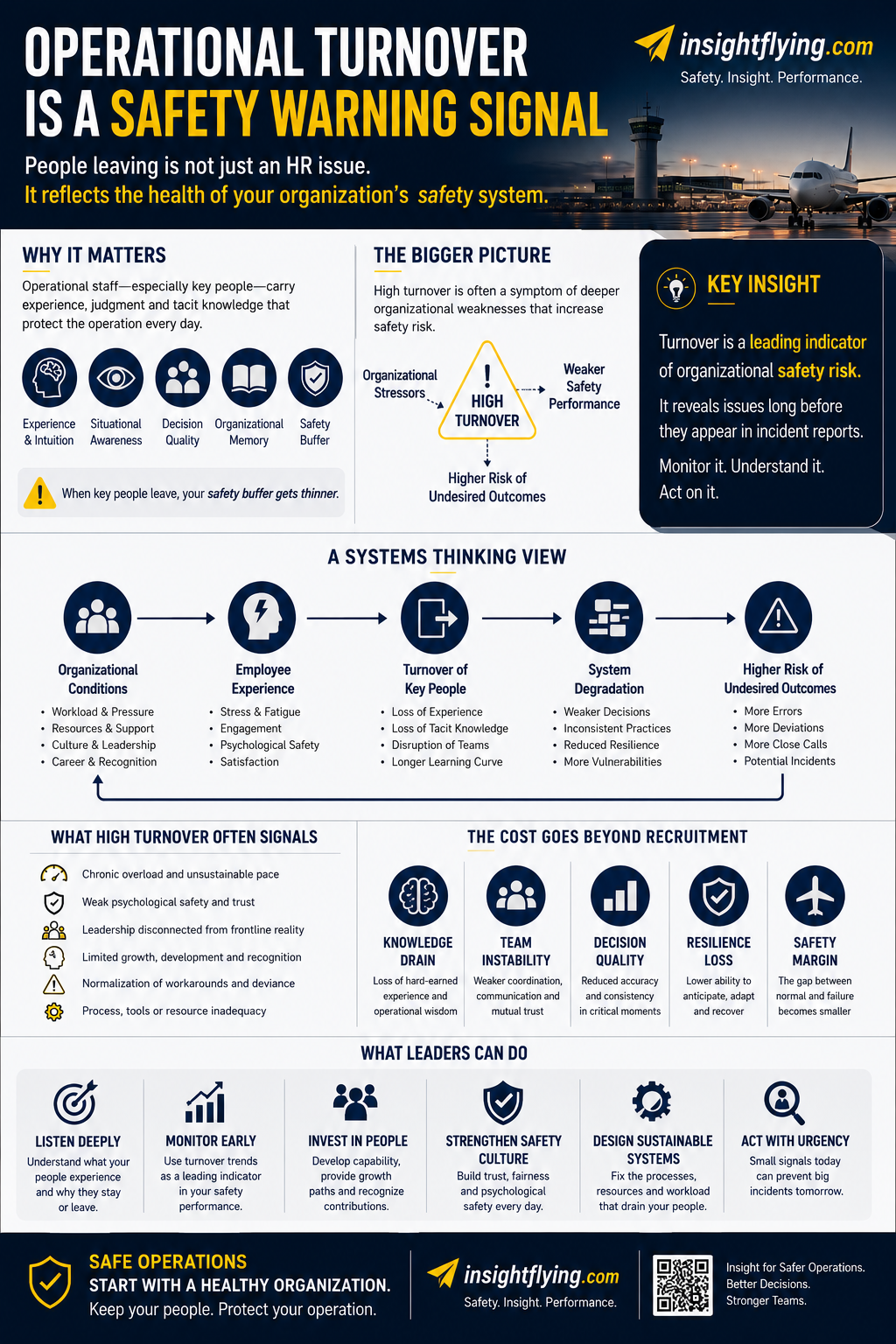
หลายองค์กรยังมอง turnover เป็นแค่ HR metric แต่ในความเป็นจริง โดยเฉพาะใน operational environment เช่น aviation, OCC, dispatch, maintenance control, ATC support, ground operations หรือ safety-critical operations ต่าง ๆ — turnover rate สามารถสะท้อน “organizational safety risk profile” ได้อย่างชัดเจนมาก และบางครั้งมันเป็น leading indicator ก่อนเกิด incident ด้วยซ้ำ
“The high turnover rate of operational staff may be one of the most significant indicators reflecting the organization’s underlying safety risk profile.”
High Turnover = Hidden Safety Signal?
ในองค์กรด้าน operational safety โดยเฉพาะ aviation
คนมักโฟกัสกับ:
- accident rate
- incident rate
- audit findings
- compliance indicators
แต่บางครั้ง “สัญญาณอันตราย” ที่สำคัญที่สุดกลับอยู่ในเรื่องคน
เช่น:
- experienced staff resigning
- key personnel burnout
- dispatchers leaving frequently
- maintenance planners quitting
- OCC staff instability
- instructors transferring out
- safety staff exhausted
สิ่งเหล่านี้อาจสะท้อนว่าองค์กรกำลังมี “latent organizational hazards”
ซึ่งตามแนวคิดของ James Reason
อุบัติเหตุไม่ได้เกิดจาก frontline error เพียงอย่างเดียว แต่เกิดจาก organizational weakness ที่สะสมอยู่เบื้องหลัง
และ turnover คือหนึ่งในสัญญาณนั้น
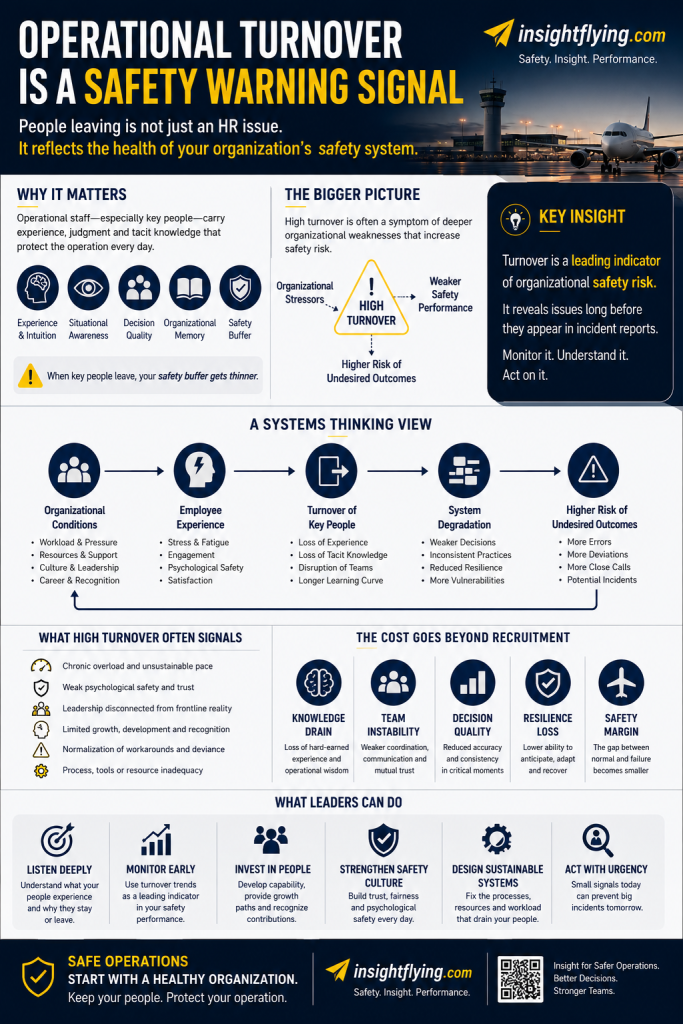
Why Operational Turnover Is Different from General HR Turnover
การลาออกของพนักงานทั่วไป อาจกระทบ productivity
แต่ operational turnover กระทบ:
- safety margin
- decision quality
- situational awareness
- organizational memory
- team coordination
- threat and error management capability
โดยเฉพาะ “key person”
เช่น:
- senior dispatcher
- MCC controller
- maintenance planner
- training captain
- OCC supervisor
- safety investigator
เพราะคนเหล่านี้ถือ “tacit knowledge”
ซึ่งไม่ได้อยู่ใน manual
แต่เกิดจาก:
- experience
- operational intuition
- pattern recognition
- crisis handling
- organizational memory
เมื่อคนเหล่านี้หายไปพร้อมกัน
องค์กรอาจยัง “ดูปกติ” บนกระดาษ
แต่ safety buffer เริ่มบางลงแล้ว
The Dangerous Phase: Experience Drain
สิ่งที่อันตรายที่สุด ไม่ใช่ “คนลาออก”
แต่คือ:
“Loss of operational experience faster than the organization can recover.”
องค์กรบางแห่งยัง maintain compliance ได้ครบ
แต่เริ่มมี:
- unstable operations
- inconsistent decisions
- communication breakdown
- procedural deviation
- normalization of deviance
- fatigue accumulation
เพราะ experienced layer หายไป
สิ่งนี้มักเกิดเงียบ ๆ ก่อน incident
Turnover and Safety Culture
ถ้า operational turnover สูงต่อเนื่อง
องค์กรควรถามตัวเองว่า:
- Staff feel psychologically safe or not?
- Operational pressure exceeds human limits?
- Just Culture exists only on paper?
- People are afraid to report?
- Workload becoming unsustainable?
- Leadership disconnected from frontline reality?
- Competency management failing?
- Middle management creating pressure?
- Chronic fatigue normalized?
บางครั้ง “คนเก่งลาออก” ไม่ใช่ปัญหา HR
แต่คือ “symptom”
The Hidden Risk of Replacing Experience with Headcount
หลายองค์กรคิดว่า:
“ลาออกก็รับใหม่ได้”
แต่ใน operational environment
experience ไม่สามารถ replace ได้ทันที
เพราะ competency ≠ headcount
โดยเฉพาะใน aviation operations:
- decision-making quality
- threat anticipation
- abnormal handling
- operational judgement
ต้องใช้เวลา build
องค์กรอาจมี manpower ครบ
แต่ capability จริงลดลง
นี่คือสิ่งที่ SMS ควร monitor
Turnover as a Safety Performance Indicator
ในอนาคต
องค์กรด้าน aviation safety อาจต้องเริ่มมอง:
Operational Turnover Rate
เป็นหนึ่งใน:
- Leading Safety Indicators
- Organizational Health Indicators
- Safety Culture Indicators
ไม่ใช่แค่ HR KPI
เพราะ turnover ที่สูงผิดปกติ อาจสะท้อน:
- degraded resilience
- hidden fatigue
- leadership failure
- operational overload
- weak safety culture
ก่อนที่ accident หรือ serious incident จะเกิดขึ้น
Final Thought
องค์กรที่ปลอดภัยจริง
ไม่ได้วัดแค่ว่า:
“วันนี้ยังไม่มีอุบัติเหตุ”
แต่ต้องวัดด้วยว่า:
“องค์กรยังสามารถรักษาคนที่มี competency และ operational wisdom เอาไว้ได้หรือไม่”
เพราะในโลกของ safety-critical operations
บางครั้ง
การสูญเสีย “คนที่ใช่”
อาจอันตรายกว่าการสูญเสีย resource อื่นใดทั้งหมด।