
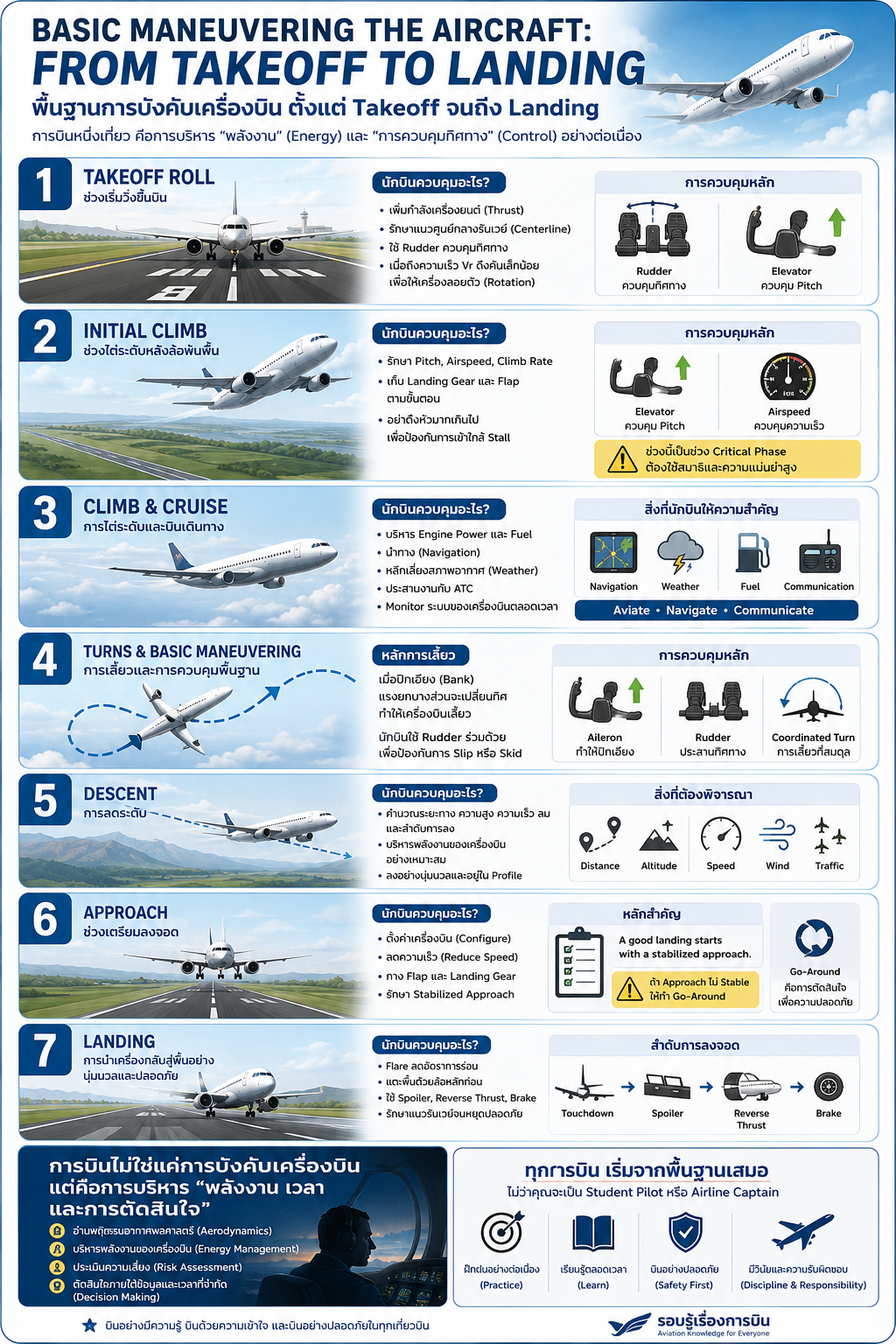
พื้นฐานการบังคับเครื่องบิน ตั้งแต่ Takeoff จนถึง Landing
สำหรับคนที่เริ่มสนใจการบิน หลายคนอาจมองว่า “การบิน” คือการดึงคันเร่งแล้วเครื่องบินก็ลอยขึ้นไปบนฟ้า แต่ในความเป็นจริง ทุกช่วงของการบินล้วนมีหลักการ มีเทคนิค และมี “การควบคุมอากาศยาน” ที่นักบินต้องเรียนรู้และฝึกฝนอย่างต่อเนื่อง
การบินหนึ่งเที่ยว ตั้งแต่เครื่องเริ่มวิ่งบน runway จนจอดที่ gate ปลายทาง คือการบริหาร “พลังงาน” (Energy Management) และ “การควบคุมทิศทาง” ของอากาศยานอย่างต่อเนื่อง
บทความนี้จะพาคนที่กำลังเริ่มต้นเรียนบิน หรือผู้ที่สนใจการบิน มาทำความเข้าใจพื้นฐานของการ maneuver aircraft ตั้งแต่ Takeoff จนถึง Landing แบบเข้าใจง่าย
1. Takeoff Roll — ช่วงเริ่มวิ่งขึ้นบิน
หลังจากได้รับ clearance และนำเครื่องเข้าสู่ runway นักบินจะค่อย ๆ เพิ่ม thrust จนถึงกำลังที่กำหนด
ในช่วงนี้ เครื่องบินยังอยู่บนพื้น แต่ aerodynamic forces เริ่มทำงานแล้ว โดยเฉพาะ:
- Rudder เริ่มมีประสิทธิภาพมากขึ้นเมื่อความเร็วเพิ่ม
- Elevator เริ่มสร้างแรงยกที่ horizontal stabilizer
- Aileron ใช้รักษาสมดุลปีก
นักบินต้องรักษา centerline ของ runway ให้แม่นยำ เพราะแม้ลมด้านข้างเพียงเล็กน้อยก็สามารถทำให้เครื่องเบี่ยงออกจากแนวได้
เมื่อความเร็วถึง “rotation speed” หรือ Vr นักบินจะค่อย ๆ ดึง control column เพื่อเพิ่ม pitch attitude ให้เครื่องบินเริ่มลอยตัวขึ้น
2. Initial Climb — ช่วงไต่ระดับหลังล้อพ้นพื้น
ช่วงนี้ถือเป็นหนึ่งใน phase ที่ critical มากที่สุดของการบิน เพราะ:
- เครื่องยังมีความสูงต่ำ
- ความเร็วอาจยังไม่มาก
- หากเกิด malfunction เวลาตัดสินใจจะมีน้อยมาก
นักบินต้องควบคุม:
- Pitch attitude
- Airspeed
- Climb rate
- Directional control
พร้อมทั้งเก็บ landing gear และ flap ตาม procedure ที่กำหนด
สิ่งสำคัญคือ “อย่าดึงหัวมากเกินไป” เพราะอาจทำให้ airspeed ลดจนเข้าใกล้ stall ได้
3. Climb and Cruise — การไต่ระดับและบินเดินทาง
เมื่อผ่านช่วง critical phase แล้ว เครื่องบินจะเข้าสู่ climb และ cruise
ตรงนี้นักบินจะเริ่มบริหาร:
- Engine power
- Fuel efficiency
- Navigation
- Weather avoidance
- Air traffic coordination
ในเครื่องบินสมัยใหม่ ระบบ autopilot สามารถช่วยควบคุมเครื่องได้จำนวนมาก แต่ไม่ได้หมายความว่านักบิน “ไม่ต้องบิน”
นักบินยังต้อง:
- Monitor aircraft systems
- Verify flight path
- Anticipate weather
- Manage energy state ของ aircraft ตลอดเวลา
Aviate, Navigate, Communicate
ยังคงเป็นหลักสำคัญเสมอ
4. Turns and Basic Maneuvering — การเลี้ยวและการควบคุมพื้นฐาน
เวลาที่เครื่องบินเลี้ยว นักบินจะใช้ aileron ทำให้ปีกเอียง (bank)
แต่สิ่งที่หลายคนไม่รู้คือ:
การเลี้ยวของเครื่องบินจริง ๆ แล้วเกิดจาก “horizontal component of lift”
เมื่อปีกเอียง แรงยกบางส่วนจะเปลี่ยนทิศไปดึงเครื่องบินเข้าสู่การเลี้ยว
ในขณะเดียวกัน นักบินต้องใช้ rudder ร่วมด้วย เพื่อป้องกัน:
- Slip
- Skid
- Uncoordinated turn
นี่คือเหตุผลที่การบินไม่ใช่แค่ “หมุนพวงมาลัย” แบบรถยนต์ แต่เป็นการควบคุม aerodynamic balance อย่างต่อเนื่อง
5. Descent — การลดระดับ
การ descent ไม่ใช่แค่ “ลดคันเร่งแล้วปล่อยลง”
นักบินต้องคำนวณ:
- ระยะทาง
- ความสูง
- ความเร็ว
- Wind
- Traffic flow
หาก descent ช้าเกินไป:
- เครื่องอาจสูงเกิน profile
หาก descent เร็วเกินไป:
- Airspeed อาจสูงเกิน limitation
- ผู้โดยสารอาจไม่สบาย
การ descent ที่ดีจึงเป็นการบริหารพลังงานของเครื่องบินอย่างละเอียดมาก
6. Approach — ช่วงเตรียมลงจอด
Approach คือ phase ที่ workload สูงมาก
นักบินต้อง:
- Configure aircraft
- Reduce speed
- Extend flap
- Extend landing gear
- Maintain stabilized approach
หลักสำคัญคือ:
“A good landing starts with a stabilized approach.”
ถ้า approach ไม่ stable:
- เร็วเกิน
- สูงเกิน
- ต่ำเกิน
- ไม่ aligned กับ runway
นักบินควรทำ go-around มากกว่าฝืนลง
Go-around ไม่ใช่ความผิดพลาด
แต่คือการตัดสินใจด้าน safety
7. Landing — การนำเครื่องกลับสู่พื้นอย่างนุ่มนวลและปลอดภัย
Landing คือการเปลี่ยนเครื่องบินจาก “flying machine” กลับมาเป็น “ground vehicle”
ช่วง flare นักบินจะ:
- ค่อย ๆ ลด descent rate
- Raise nose slightly
- Allow main landing gear touch first
หลัง touchdown:
- Deploy spoiler
- Apply reverse thrust
- Use brakes
- Maintain runway centerline
แม้ landing จะเป็นช่วงท้ายของ flight แต่ก็ยังต้องใช้สมาธิสูงจนเครื่องบินออกจาก runway อย่างปลอดภัย
การบินไม่ใช่แค่การบังคับเครื่องบิน
แต่คือการบริหาร “พลังงาน เวลา และการตัดสินใจ”
นักบินไม่ได้แค่ “ขับเครื่องบิน”
แต่กำลัง:
- อ่าน aerodynamic behavior
- บริหาร energy
- ประเมินความเสี่ยง
- ตัดสินใจภายใต้เวลาและข้อมูลที่จำกัด
นี่คือเหตุผลว่าทำไมการบินจึงเป็นทั้งศาสตร์และศิลป์ในเวลาเดียวกัน
และสำหรับคนที่กำลังเริ่มต้นเรียนบิน…
ทุก flight เริ่มจากพื้นฐานเสมอ
ไม่ว่าจะเป็นนักบิน student pilot หรือ airline captain ก็ตาม
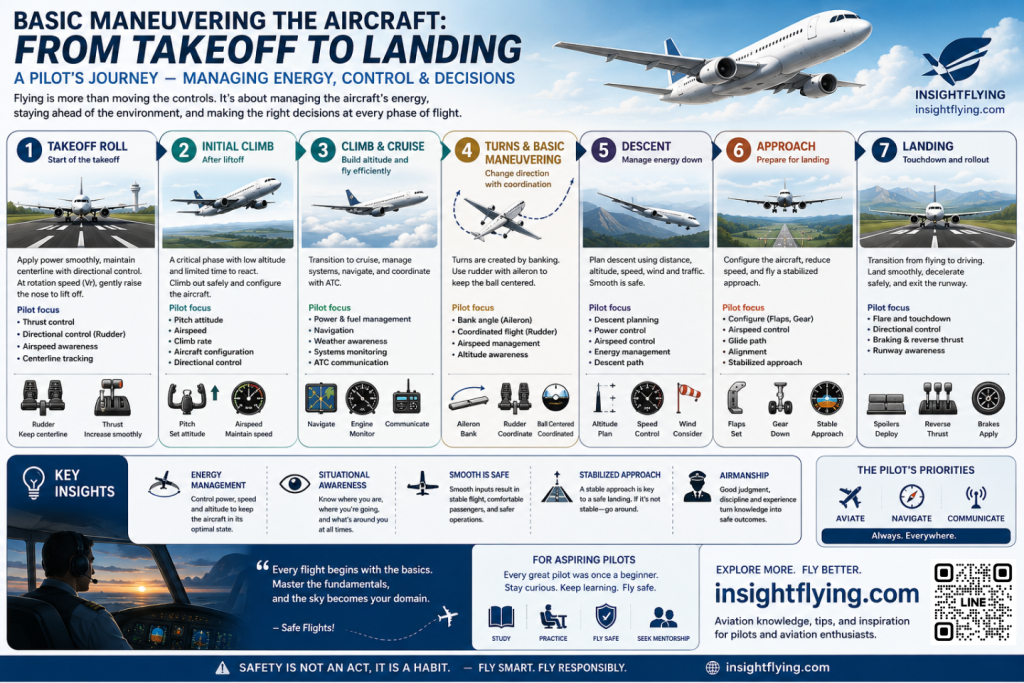
English Version
Basic Maneuvering the Aircraft: From Takeoff to Landing
For many people beginning their aviation journey, flying may seem simple: push the thrust levers forward and the airplane takes off. In reality, every phase of flight involves precise aircraft control, energy management, and continuous decision-making.
A single flight — from takeoff roll to landing — is a carefully managed sequence of aerodynamic maneuvers.
Takeoff Roll
During takeoff, pilots apply thrust while maintaining runway centerline using rudder control. As speed increases, flight controls become more effective due to increased airflow.
At rotation speed (Vr), the pilot gently raises the nose to initiate liftoff.
Initial Climb
This is one of the most critical phases of flight because the aircraft has limited altitude and limited reaction time in case of abnormalities.
Pilots carefully manage:
- Pitch attitude
- Airspeed
- Climb performance
- Aircraft configuration
Proper energy management is essential to avoid approaching stall conditions.
Climb and Cruise
Once safely airborne, the aircraft transitions into climb and cruise.
Pilots manage:
- Navigation
- Weather
- Fuel efficiency
- Aircraft systems
- Air traffic coordination
Even with autopilot engaged, pilots continuously monitor the aircraft and flight environment.
Turns and Basic Maneuvering
Aircraft turns are created by banking the wings using ailerons.
When the aircraft banks, part of the lift vector acts horizontally, causing the airplane to turn.
Pilots also coordinate rudder input to prevent slips and skids and maintain balanced flight.
Descent
Descent requires careful planning based on:
- Distance
- Altitude
- Speed
- Wind
- Traffic conditions
A smooth descent is essentially controlled energy management.
Approach
Approach is a high-workload phase where pilots configure the aircraft for landing while maintaining a stabilized approach path.
A stable approach is essential for a safe landing.
If the approach becomes unstable, pilots may perform a go-around rather than forcing the landing.
Landing
Landing transitions the aircraft from flight back to ground operations.
During flare, pilots gradually reduce descent rate before touchdown.
After landing:
- Spoilers deploy
- Reverse thrust may be used
- Braking is applied
- Directional control remains critical
Flying Is More Than Just Controlling an Airplane
Pilots continuously manage:
- Aerodynamics
- Aircraft energy
- Situational awareness
- Risk assessment
- Decision-making
That is why aviation is both a science and an art.
And for every pilot beginning the journey:
All advanced flying starts with mastering the basics.