
Visual Flying Series by Capt. Sopon
Visual Illusions on Approach — ทำไมตาของคุณถึงหลอกคุณได้
นักบินถูกฝึกให้ “เชื่อในสิ่งที่เห็น”
แต่ในความเป็นจริง โดยเฉพาะในช่วง approach และ landing
สิ่งที่คุณเห็น อาจไม่ใช่ความจริง
ระบบการมองเห็นของมนุษย์มีความสามารถสูง
แต่ก็ “ขึ้นอยู่กับบริบท (context-dependent)” อย่างมาก
ในงานบิน สิ่งนี้ก่อให้เกิด Visual Illusions
ซึ่งสามารถบิดเบือน:
- การรับรู้มุมร่อน (glide path)
- การประเมินความสูง (height)
- การรับรู้ระยะ (distance)
- การประเมิน energy ของเครื่อง
และถ้าไม่รู้ตัว—
มันสามารถพาคุณไปสู่ unstable approach ได้โดยไม่รู้ตัว
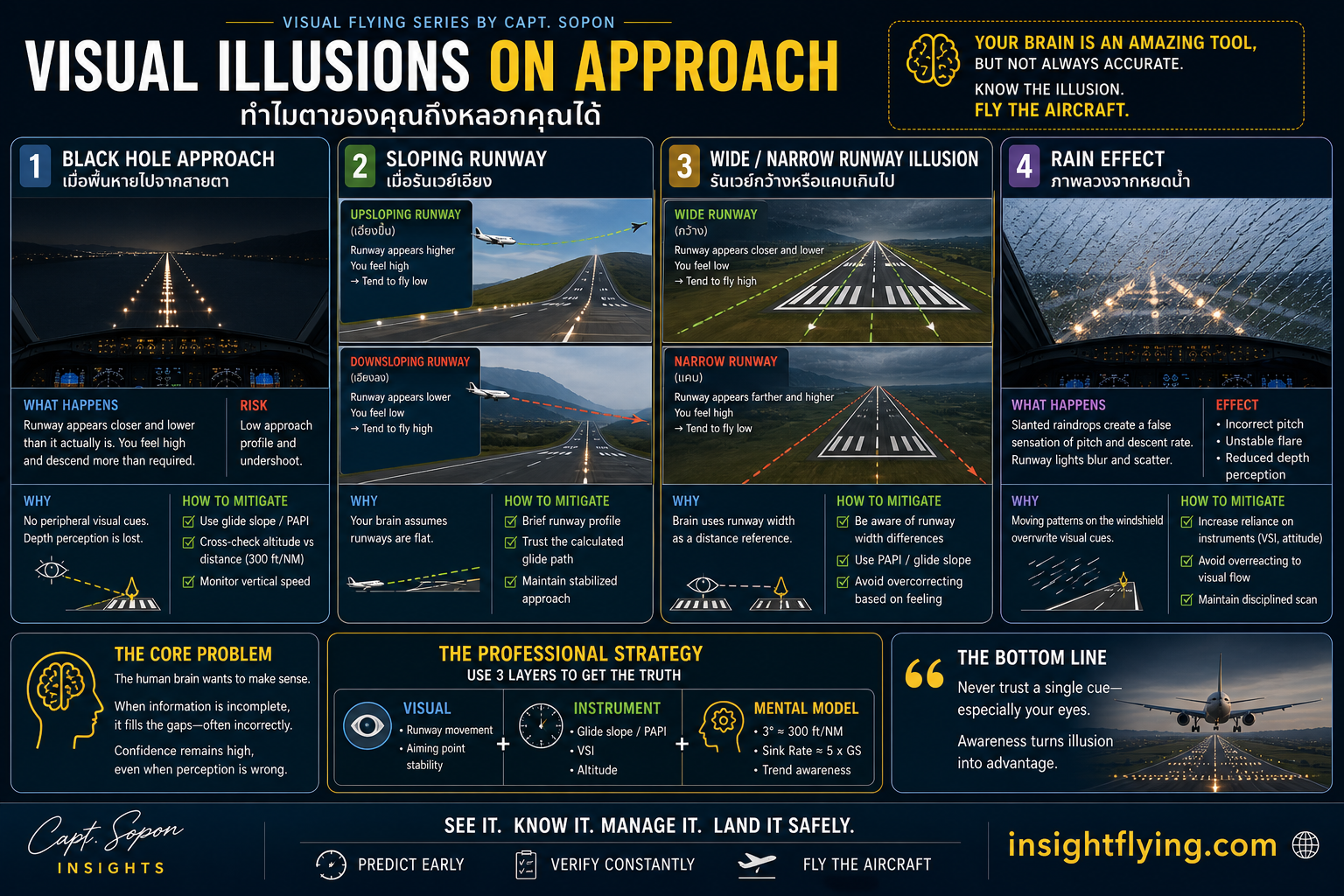
1. Black Hole Approach — เมื่อพื้นหายไปจากสายตา
สถานการณ์:
- การลงตอนกลางคืน
- เหนือน้ำ หรือพื้นที่มืดไม่มีแสง
- เห็นแต่ไฟ runway อยู่ข้างหน้า
- ไม่มี reference ด้านข้าง (peripheral cues)
สิ่งที่เกิดขึ้น:
runway จะ “ดูใกล้และต่ำกว่าความจริง”
นักบินจะรู้สึกว่า:
- ตัวเอง “สูงเกินไป”
จึงตอบสนองโดย:
- ลดระดับมากเกินไป
ผลลัพธ์:
- เข้า approach ต่ำ
- เสี่ยง undershoot runway
Insight สำคัญ:
เมื่อไม่มี reference รอบข้าง สมองจะ “เสีย depth perception”
คุณกำลังบินอยู่ในสภาพที่แทบไม่มีข้อมูลเชิงมิติ
วิธีป้องกัน:
- ใช้ glide slope / PAPI
- cross-check altitude vs distance (300 ft/NM)
- คุม vertical speed อย่างมีวินัย
2. Sloping Runway — เมื่อ geometry หลอกตา
สถานการณ์:
- runway มี slope (ขึ้นหรือ ลง)
Runway แบบ “เอียงขึ้น” (Upsloping)
ดู “สูงกว่าปกติ”
นักบินจะรู้สึกว่า:
- ตัวเอง “สูงเกินไป”
→ มีแนวโน้มบินต่ำกว่าปกติ
Runway แบบ “เอียงลง” (Downsloping)
ดู “ต่ำกว่าปกติ”
นักบินจะรู้สึกว่า:
- ตัวเอง “ต่ำเกินไป”
→ มีแนวโน้มบินสูงกว่าปกติ
Insight สำคัญ:
สมองเราคิดว่า runway “ต้องแบน” เสมอ
เมื่อไม่เป็นแบบนั้น → การรับรู้ผิดทันที
วิธีป้องกัน:
- brief runway profile ล่วงหน้า
- ใช้ glide path มาตรฐานเป็นหลัก
- อย่าแก้ตาม “ความรู้สึก” อย่างเดียว
3. Wide / Narrow Runway Illusion
Runway กว้าง:
ดู “ใกล้และต่ำ”
นักบินจะรู้สึกว่า:
- ตัวเอง “ต่ำ”
→ มีแนวโน้มบินสูง
Runway แคบ:
ดู “ไกลและสูง”
นักบินจะรู้สึกว่า:
- ตัวเอง “สูง”
→ มีแนวโน้มบินต่ำ
สาเหตุ:
สมองใช้ “ความกว้างของ runway” เป็น reference ของระยะ
เมื่อความกว้างเปลี่ยน—
การรับรู้ความสูงจะเพี้ยนทันที
วิธีป้องกัน:
- รับรู้ความแตกต่างของ runway แต่ละสนาม
- ใช้ PAPI / glide slope เป็นตัวอ้างอิง
- อย่า overcorrect จากความรู้สึก
4. Rain Effect — ภาพลวงจากหยดน้ำ
สถานการณ์:
- บินในฝน
- หยดน้ำไหลบน windshield เป็นเส้นเฉียง
สิ่งที่เกิดขึ้น:
การเคลื่อนที่ของหยดน้ำ สร้าง “illusion ของมุมและอัตราการร่อน”
นักบินอาจรู้สึกว่า:
- sink rate สูงกว่าความจริง
- pitch ไม่ถูกต้อง
ผลกระทบ:
- ปรับ pitch ผิด
- flare ไม่แม่น
- approach ไม่ stable
Effect เพิ่มเติม:
- แสง runway กระจาย (scattering)
- ภาพ blur
- depth perception ลดลง
Insight สำคัญ:
Visual cue ถูก “รบกวน” ด้วย pattern ที่เคลื่อนไหวบนกระจก
วิธีป้องกัน:
- ใช้ instrument มากขึ้น (VSI, attitude)
- ไม่ overreact ต่อ visual flow
- รักษา scan ที่มีวินัย
5. ปัญหาหลัก — สมองพยายาม “ตีความ”
Illusion ทุกแบบมีจุดร่วม:
สมองมนุษย์ไม่ได้ถูกออกแบบมาเพื่อ “วัด”
แต่ถูกออกแบบมาเพื่อ “ตีความ”
ดังนั้น:
- ข้อมูลไม่ครบ → สมองเติมเอง
- ภาพเปลี่ยน → การรับรู้เปลี่ยน
- แต่ความมั่นใจยังสูงเหมือนเดิม
6. แนวคิดของนักบินมืออาชีพ — เห็น แต่ต้อง Verify
การแก้ปัญหาไม่ใช่การ “ไม่เชื่อสายตา”
แต่คือการ ควบคุมการใช้สายตา
ใช้ 3 Layer:
1. Visual
- การเคลื่อนของ runway
- aiming point
2. Instrument
- PAPI / Glide slope
- VSI
- Altitude
3. Mental Model
- 3° = 300 ft/NM
- Sink rate ≈ 5 × GS
- มอง trend ล่วงหน้า
หลักสำคัญ:
อย่าเชื่อข้อมูลเพียงแหล่งเดียว โดยเฉพาะ “สิ่งที่เห็น”
สรุป: รู้ทัน = ปลอดภัย
Visual Illusions:
- เกิดขึ้นจริง
- เกิดซ้ำได้
- และอันตราย—ถ้าไม่รู้ตัว
แต่สำหรับนักบินที่เข้าใจ:
ทันทีที่คุณ “รู้ว่าโดนหลอก”
illusion นั้นจะหมดพลังทันที
ประโยคที่อยากฝากไว้:
การลงสนามที่ปลอดภัย
ไม่ใช่แค่การควบคุมเครื่อง
แต่คือการรู้ว่า “เมื่อไหร่ที่คุณไม่ควรเชื่อสายตาตัวเอง”

|
|
หนังสือการบิน ทางลัดสู่ความเข้าใจที่นำไปใช้งานจริง
|
|

|
|

|
|
|
|
|
|
accident Airbus aircraft airline airmanship aviation Aviation SMS become a captain become a pilot Boeing children cloud cloud type Crisis Crisis Management emergency engine fatigue flight safety go-around Indigo interview management oxygen mask pilot qualified pilot safety Safety Management System SARP SMS student pilot technology training turbulence weather weather radar wet runway การจัดการความปลอดภัย การบิน การสอบสัมภาษณ์ ความปลอดภัย ชนิดของเมฆ นักบิน สอบนักบิน เมฆ
ขายดีที่สุด
|
|
|

Visual Flying Series by Capt. Sopon
Visual Illusions on Approach — Why Your Eyes Can Mislead You
Pilots are trained to “trust what they see.”
But in reality—especially during approach and landing—
What you see is not always what is true.
Human vision is highly adaptive, but also highly context-dependent.
In aviation, this creates visual illusions that can distort:
- Glide path perception
- Height judgment
- Distance awareness
- Energy assessment
And if not recognized early—
These illusions can lead directly to unstable approaches and unsafe landings.
1. Black Hole Approach — When the Ground Disappears
Scenario:
- Night approach
- Over water or unlit terrain
- Bright runway lights ahead
- No peripheral visual references
What happens:
The runway appears closer and lower than it actually is.
This creates a powerful illusion:
- Pilot perceives being too high
- Responds by descending more aggressively
Result:
- Low approach profile
- Risk of undershooting the runway
Key Insight:
Without peripheral cues, your brain loses depth perception.
You are essentially flying in a visual vacuum.
Mitigation:
- Cross-check with glide slope (if available)
- Use altitude vs distance mental model (300 ft/NM)
- Monitor vertical speed discipline
2. Sloping Runway Illusion — When Geometry Lies
Scenario:
- Runway with upward slope or downward slope
Upsloping Runway:
Appears higher than normal
- Pilot feels too high
- Tends to fly a lower approach
Downsloping Runway:
Appears lower than normal
- Pilot feels too low
- Tends to fly a higher approach
Key Insight:
Your brain assumes all runways are flat—when they are not.
Mitigation:
- Review runway profile during briefing
- Trust calculated glide path, not visual impression alone
- Maintain stabilized approach criteria strictly
3. Wide vs Narrow Runway Illusion
Wide Runway:
Appears closer and lower
- Pilot feels low
- Tends to fly high approach
Narrow Runway:
Appears farther and higher
- Pilot feels high
- Tends to fly low approach
Why this happens:
Your brain uses runway width as a distance reference.
When that reference changes—
Your perception of altitude becomes unreliable.
Mitigation:
- Be aware of runway width differences
- Cross-check with standard visual picture (PAPI / glide slope)
- Avoid overcorrecting based on “feeling”
4. Rain on Windshield — Slanted Raindrop Illusion
Scenario:
- Flying in rain
- Raindrops streak across windshield at an angle
What happens:
The motion of raindrops creates a false sensation of pitch and descent rate.
- Slanted streaks may suggest:
- Higher sink rate than actual
- Nose attitude different from reality
This can lead to:
- Incorrect pitch adjustments
- Unstable flare
Additional Effect:
Reduced visibility + light scattering:
- Runway lights appear blurred or displaced
- Depth perception decreases
Key Insight:
Your visual cues are being “overwritten” by moving patterns on the windshield.
Mitigation:
- Increase reliance on instruments (VSI, attitude)
- Avoid overreacting to visual flow
- Maintain disciplined scan
5. The Core Problem — Your Brain Wants to “Make Sense”
All these illusions share one root cause:
The human brain is designed to interpret incomplete information—
not to measure reality accurately.
In aviation, this means:
- Your brain fills gaps
- Your perception shifts
- Your confidence remains high—even when wrong
6. Professional Strategy — Fly the Picture, Verify with Data
The solution is not to “ignore vision”
—but to discipline it
Use 3 Layers:
1. Visual
- Runway movement
- Aiming point stability
2. Instrument
- Glide slope / PAPI
- VSI
- Altitude vs distance
3. Mental Model
- 3° = 300 ft/NM
- Sink rate ≈ 5 × GS
- Trend awareness
Final Principle:
Never trust a single cue—especially your eyes.
Conclusion: Awareness Turns Illusion into Advantage
Visual illusions are not rare.
They are predictable, repeatable, and dangerous—if unrecognized.
But for a trained pilot:
The moment you recognize the illusion,
it loses its power.
A safe landing is not just about control.
It is about knowing when your perception cannot be trusted—
and having the discipline to rely on something better.
หนังสือ A Pilot Books ในรูปแบบ eBook ที่ MebMarket
สร้างแรงบันดาลใจ…..เริ่มเมื่อไหร่

|
|
|
|
|
|
|
|
|
|
|
|

|
|
|