
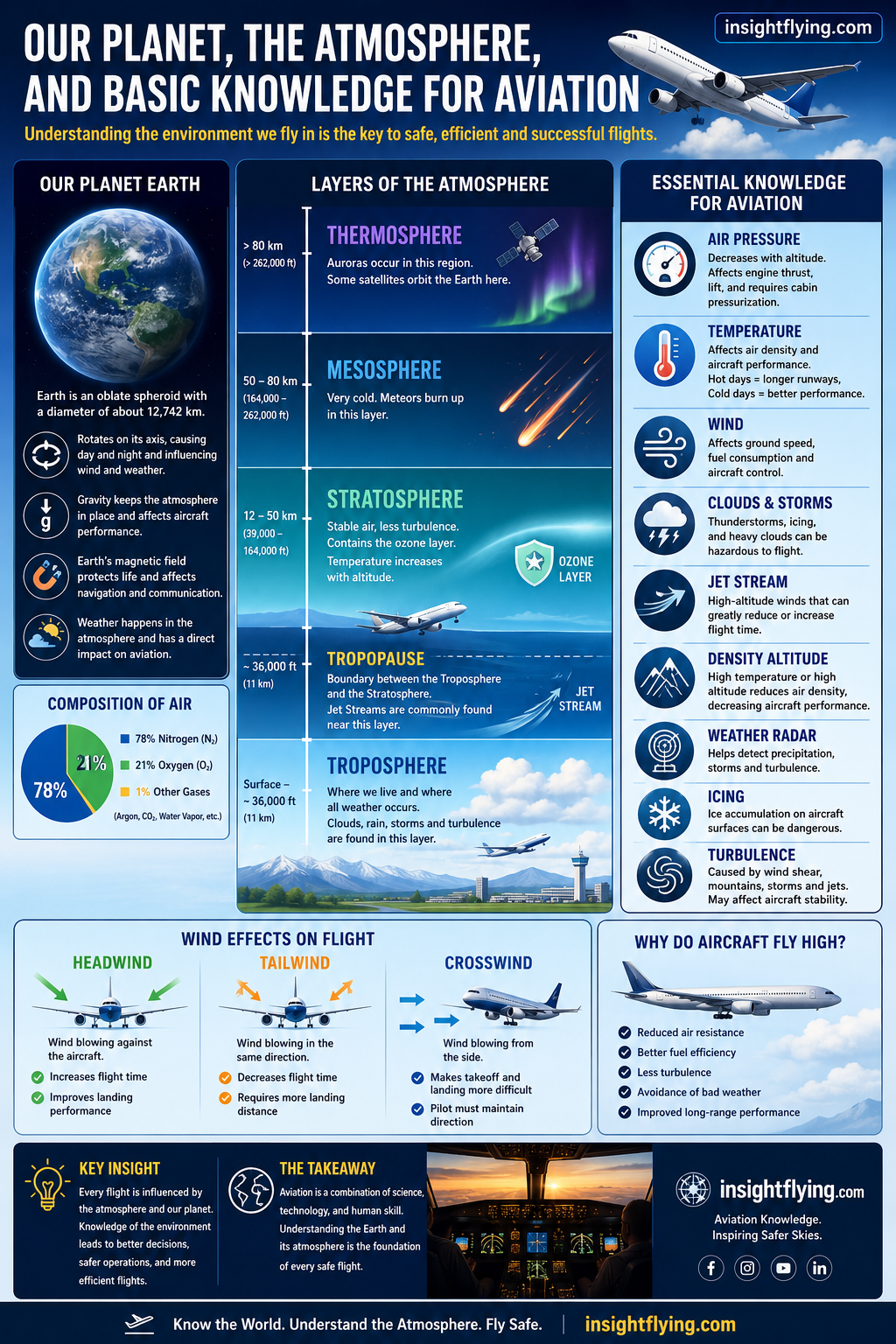
การบินเริ่มต้นจากความเข้าใจ “โลก” ที่เราอาศัยอยู่ เพราะทุกเที่ยวบินล้วนเกิดขึ้นภายในชั้นบรรยากาศของโลก นักบิน วิศวกรการบิน เจ้าหน้าที่อำนวยการบิน รวมถึงผู้ควบคุมจราจรทางอากาศ ต่างต้องอาศัยความรู้ด้านภูมิศาสตร์ อุตุนิยมวิทยา ฟิสิกส์ และบรรยากาศโลก เพื่อให้การบินเป็นไปอย่างปลอดภัยและมีประสิทธิภาพ
โลกของเรา (The Earth)
โลกมีลักษณะเกือบเป็นทรงกลมแป้น (Oblate Spheroid) มีเส้นผ่านศูนย์กลางประมาณ 12,742 กิโลเมตร และหมุนรอบตัวเองตลอดเวลา การหมุนนี้เป็นสาเหตุของกลางวันและกลางคืน รวมทั้งส่งผลต่อการเคลื่อนที่ของลม กระแสอากาศ และระบบอากาศทั่วโลก
สำหรับการบิน โลกไม่ใช่เพียง “พื้นดิน” เท่านั้น แต่ยังรวมถึง
- ชั้นบรรยากาศ
- สนามแม่เหล็กโลก
- แรงโน้มถ่วง
- สภาพอากาศ
- การหมุนของโลก
ทั้งหมดนี้มีผลโดยตรงต่อการบิน
ชั้นบรรยากาศของโลก (Layers of the Atmosphere)
ชั้นบรรยากาศคือมวลอากาศที่ห่อหุ้มโลกไว้ แรงโน้มถ่วงของโลกช่วยยึดก๊าซเหล่านี้ไม่ให้หลุดออกสู่อวกาศ
อากาศประกอบด้วย
- Nitrogen ประมาณ 78%
- Oxygen ประมาณ 21%
- ก๊าซอื่น ๆ เช่น Argon, Carbon Dioxide และไอน้ำ
ชั้นบรรยากาศแบ่งออกเป็นหลายชั้นสำคัญ
1. Troposphere — ชั้นโทรโพสเฟียร์
เป็นชั้นที่อยู่ใกล้พื้นโลกที่สุด และสำคัญที่สุดต่อการบินพาณิชย์
คุณลักษณะสำคัญ
- สูงประมาณ 36,000 ฟุต (โดยเฉลี่ย)
- เป็นบริเวณที่เกิดสภาพอากาศทั้งหมด
- มีเมฆ ฝน พายุ และ turbulence
- อุณหภูมิลดลงเมื่อระดับความสูงเพิ่มขึ้น
ความสำคัญต่อการบิน
- เครื่องบินพาณิชย์ส่วนใหญ่บินบริเวณตอนบนของชั้นนี้
- นักบินต้องระวัง turbulence, icing และ thunderstorms
- การเปลี่ยนแปลงของความดันอากาศมีผลต่อ performance ของเครื่องบิน
2. Tropopause — รอยต่อสำคัญของการบิน
เป็นบริเวณคั่นระหว่าง Troposphere และ Stratosphere
จุดเด่น
- อุณหภูมิหยุดลดลงชั่วคราว
- Jet Stream มักอยู่ใกล้บริเวณนี้
- เครื่องบินระยะไกลนิยมบินใกล้ชั้นนี้เพื่อประหยัดเชื้อเพลิง
Jet Stream สามารถช่วยลดเวลาการบินได้มาก หากบินตามทิศทางลม
3. Stratosphere — ชั้นสตราโตสเฟียร์
ชั้นนี้อยู่เหนือ Troposphere
คุณลักษณะ
- อากาศค่อนข้างนิ่ง
- turbulence น้อยกว่า
- มีชั้น Ozone Layer
- อุณหภูมิเริ่มสูงขึ้นเมื่อสูงขึ้น
ความสำคัญต่อการบิน
- เหมาะสำหรับการบิน cruise
- ลดแรงต้านอากาศ
- ประหยัดเชื้อเพลิง
- ให้การบินที่นุ่มนวลกว่า
เครื่องบินโดยสารสมัยใหม่จำนวนมากบินที่ระดับประมาณ FL300–FL410 ภายในบริเวณนี้หรือใกล้รอยต่อ Tropopause
4. Mesosphere — ชั้นมีโซสเฟียร์
เป็นบริเวณที่อุกกาบาตจำนวนมากเผาไหม้ก่อนถึงพื้นโลก
จุดเด่น
- อุณหภูมิต่ำมาก
- อากาศเบาบางมาก
- ไม่เกี่ยวข้องกับการบินพาณิชย์โดยตรง
5. Thermosphere — ชั้นเทอร์โมสเฟียร์
เป็นบริเวณที่เกิดแสงออโรรา และเป็นวงโคจรของดาวเทียมบางส่วน
ความสำคัญ
- เกี่ยวข้องกับการสื่อสารวิทยุ
- มีผลต่อคลื่น HF Communication
- มีผลต่อระบบดาวเทียมและ GPS
ความดันอากาศกับการบิน (Air Pressure and Aviation)
เมื่อสูงขึ้น อากาศจะเบาบางลง
ผลกระทบคือ
- เครื่องยนต์สร้าง thrust ได้น้อยลง
- ปีกสร้างแรงยกยากขึ้น
- นักบินต้องใช้ออกซิเจนในระดับสูง
- Cabin Pressurization จึงมีความสำคัญมาก
อุณหภูมิและสมรรถนะเครื่องบิน
อุณหภูมิส่งผลโดยตรงต่อ performance
วันที่อากาศร้อน
- อากาศเบาบาง
- เครื่องบินต้องใช้ runway ยาวขึ้น
- climb performance ลดลง
วันที่อากาศเย็น
- อากาศหนาแน่นกว่า
- เครื่องบินมี performance ดีขึ้น
นี่คือเหตุผลที่สนามบินบางแห่งมีข้อจำกัดการบินในช่วงอากาศร้อนจัด
ลมและกระแสอากาศ
ลมเป็นองค์ประกอบสำคัญของการบิน
Headwind
ลมปะทะด้านหน้า
- ใช้เวลาบินนานขึ้น
- ประหยัด runway ตอนลงจอด
Tailwind
ลมตามหลัง
- บินเร็วขึ้น
- ใช้ runway มากขึ้นตอนลงจอด
Crosswind
ลมด้านข้าง
- เพิ่มความยากในการ takeoff และ landing
ทำไมเครื่องบินจึงบินสูง?
เหตุผลหลักคือ
- อากาศบางกว่า → ลดแรงต้าน
- ประหยัดเชื้อเพลิง
- turbulence น้อยกว่า
- หลีกเลี่ยงสภาพอากาศเลวร้าย
- เพิ่มประสิทธิภาพการบินระยะไกล
ความรู้พื้นฐานที่คนการบินควรเข้าใจ
ผู้ที่ต้องการเป็นนักบินหรือทำงานด้านการบิน ควรเข้าใจเรื่องต่อไปนี้
- ชั้นบรรยากาศ
- ความดันอากาศ
- อุณหภูมิ
- ลม
- เมฆและพายุ
- Jet Stream
- Density Altitude
- Weather Radar
- Icing
- Turbulence
ความรู้เหล่านี้คือ “พื้นฐาน” ที่เชื่อมโยงไปสู่การบินระดับมืออาชีพ
สรุป
การบินไม่ได้เป็นเพียงเรื่องของเครื่องบิน แต่เป็นศาสตร์ที่เชื่อมโยงกับธรรมชาติของโลกและชั้นบรรยากาศโดยตรง
นักบินที่เข้าใจโลก เข้าใจอากาศ และเข้าใจพฤติกรรมของบรรยากาศ จะสามารถวางแผนการบิน ตัดสินใจ และรับมือกับสถานการณ์ต่าง ๆ ได้อย่างปลอดภัยมากขึ้น
ทุกเที่ยวบินที่เราเห็นบนท้องฟ้า ล้วนเป็นผลลัพธ์ของความรู้ทางวิทยาศาสตร์ ฟิสิกส์ อุตุนิยมวิทยา และเทคโนโลยีการบินที่ทำงานร่วมกันอย่างซับซ้อนเหนือโลกใบนี้ 🌍✈️
ENGLISH version
Our Planet, the Atmosphere, and Basic Knowledge for Aviation
Flying begins with understanding our planet and its atmosphere. Every flight operates within the Earth’s atmospheric environment, where weather, air pressure, temperature, and wind directly affect aircraft performance and flight safety.
Pilots, flight dispatchers, air traffic controllers, and aviation engineers all rely on knowledge of Earth science, meteorology, and aerodynamics to operate aircraft safely and efficiently.
Our Planet Earth
Earth is an oblate spheroid, slightly flattened at the poles, with a diameter of approximately 12,742 kilometers. The planet rotates continuously, creating day and night while also influencing global wind patterns, weather systems, and atmospheric circulation.
In aviation, Earth is more than just land and oceans. Pilots must also understand:
- The atmosphere
- Gravity
- Magnetic fields
- Weather systems
- Earth’s rotation
All of these factors influence flight operations.
Layers of the Atmosphere
The atmosphere is the layer of gases surrounding Earth, held in place by gravity.
Air is composed mainly of:
- Nitrogen: approximately 78%
- Oxygen: approximately 21%
- Other gases: Argon, Carbon Dioxide, and water vapor
The atmosphere is divided into several important layers.
1. Troposphere
The Troposphere is the lowest atmospheric layer and the most important for aviation.
Key Characteristics
- Extends up to approximately 36,000 feet on average
- Almost all weather phenomena occur here
- Contains clouds, rain, storms, and turbulence
- Temperature decreases with altitude
Importance to Aviation
- Most commercial flights operate in the upper Troposphere
- Pilots must manage turbulence, icing, and thunderstorms
- Pressure and temperature changes affect aircraft performance
2. Tropopause — A Critical Aviation Boundary
The Tropopause is the transition layer between the Troposphere and the Stratosphere.
Key Features
- Temperature stops decreasing temporarily
- Jet Streams are commonly found near this layer
- Long-haul aircraft often cruise near the Tropopause for fuel efficiency
Strong tailwinds from Jet Streams can significantly reduce flight time.
3. Stratosphere
The Stratosphere lies above the Troposphere.
Characteristics
- Relatively stable air
- Less turbulence
- Contains the ozone layer
- Temperature gradually increases with altitude
Importance to Aviation
- Ideal for cruise flight
- Reduced aerodynamic drag
- Better fuel efficiency
- Smoother flying conditions
Modern jetliners commonly cruise between FL300 and FL410 near this region.
4. Mesosphere
The Mesosphere is where many meteors burn up before reaching Earth.
Characteristics
- Extremely cold temperatures
- Very thin air
- Minimal direct impact on commercial aviation
5. Thermosphere
The Thermosphere is the region where auroras occur and where some satellites orbit Earth.
Importance
- Influences radio communication
- Affects HF radio propagation
- Impacts satellite and GPS systems
Air Pressure and Aviation
As altitude increases, air becomes thinner.
This affects aviation because:
- Engines produce less thrust
- Wings generate less lift
- Oxygen levels decrease
- Cabin pressurization becomes essential
Aircraft systems are designed to compensate for these atmospheric changes.
Temperature and Aircraft Performance
Temperature has a major effect on aircraft performance.
During Hot Weather
- Air becomes less dense
- Aircraft require longer runways
- Climb performance decreases
During Cold Weather
- Air density increases
- Aircraft performance generally improves
This is why some airports impose operational restrictions during extremely hot conditions.
Wind and Airflow
Wind is one of the most important factors in aviation.
Headwind
Wind blowing against the aircraft
- Increases flight time
- Improves landing performance
Tailwind
Wind blowing in the same direction
- Reduces flight time
- Requires more landing distance
Crosswind
Wind blowing from the side
- Makes takeoff and landing more challenging
Pilots continuously calculate wind effects during flight planning.
Why Do Aircraft Fly at High Altitudes?
Aircraft cruise at high altitudes for several reasons:
- Reduced air resistance
- Better fuel efficiency
- Less turbulence
- Avoidance of bad weather
- Improved long-range performance
High-altitude flight allows modern aircraft to operate more efficiently and economically.
Basic Aviation Knowledge Everyone Should Understand
Anyone interested in aviation should understand:
- Atmospheric layers
- Air pressure
- Temperature effects
- Wind systems
- Clouds and thunderstorms
- Jet Streams
- Density altitude
- Weather radar
- Icing
- Turbulence
These concepts form the foundation of aviation knowledge and flight safety.
Conclusion
Aviation is not only about airplanes. It is deeply connected to Earth, physics, meteorology, and atmospheric science.
Pilots who understand the atmosphere and how nature affects flight are better prepared to make safe decisions, manage risks, and operate aircraft effectively.
Every aircraft flying across the sky represents the combination of science, engineering, weather knowledge, and human skill working together above our planet Earth. 🌍✈️