
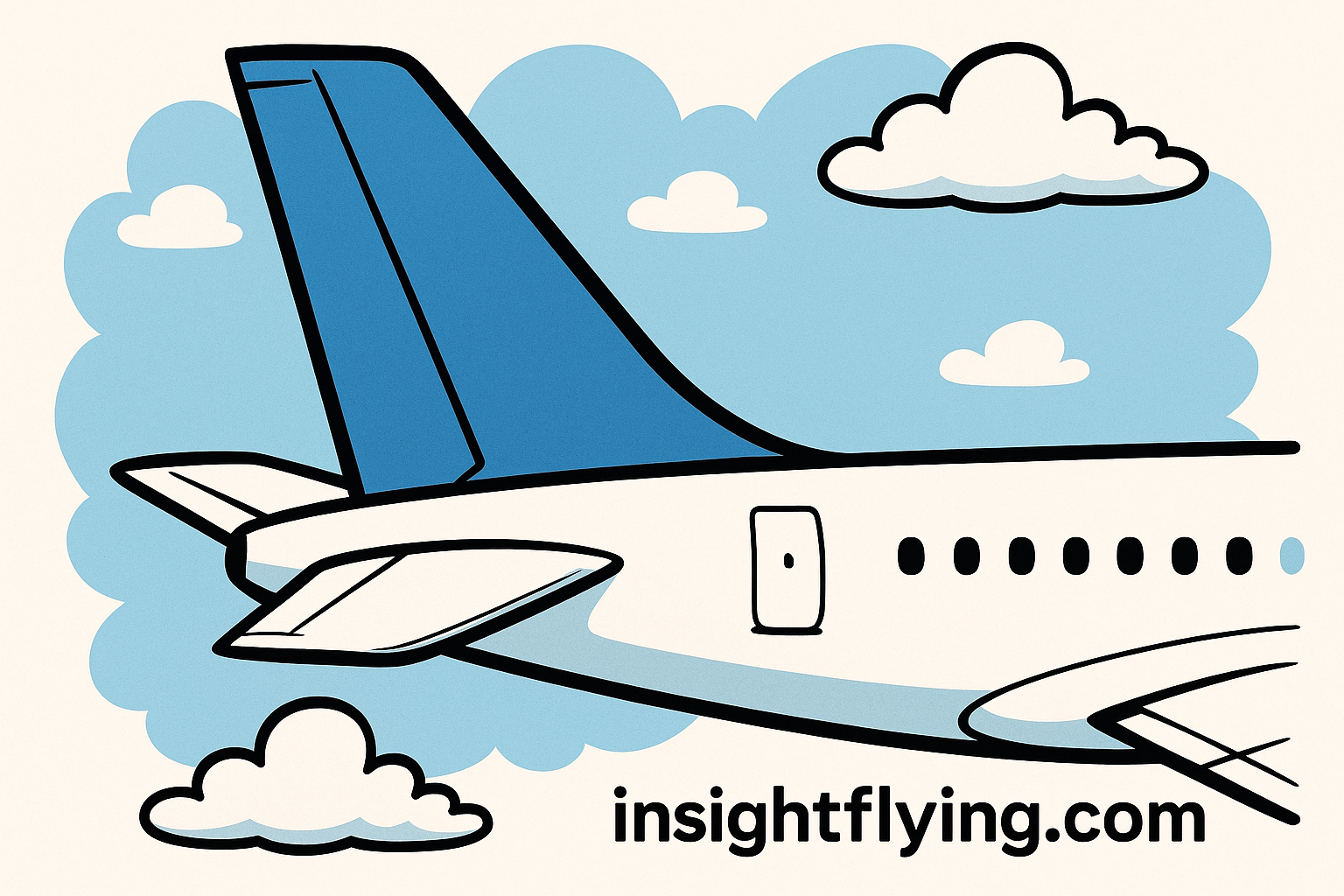
(หางของเครื่องบิน: Horizontal & Vertical Stabilizer)
🇹🇭 ภาษาไทย
หางระนาบ (Horizontal Stabilizer) และ Elevator
- หน้าที่หลัก:
Horizontal Stabilizer ทำให้เครื่องบินมีเสถียรภาพตามแนวยาว (Longitudinal Stability) ควบคุมไม่ให้หัวเชิดหรือก้มเองโดยไม่ควบคุม - หลักการ:
โดยทั่วไป ปีกสร้างแรงยกขึ้นด้านบน แต่ Horizontal Stabilizer มักสร้างแรงกดเล็กน้อยลงด้านล่าง เพื่อถ่วงสมดุลย์ไม่ให้หัวเครื่องบินเชิดเกินไป - Elevator:
เป็นแผ่นควบคุมเล็ก ๆ ที่ติดอยู่กับ Horizontal Stabilizer ใช้สำหรับปรับ Pitch Attitude เช่น เชิดหัวขึ้นตอน Takeoff หรือลดหัวลงตอนลดระดับ - Trimmable Horizontal Stabilizer (THS):
เครื่องบินสมัยใหม่สามารถปรับมุมของ Horizontal Stabilizer ทั้งแผ่นเพื่อทำให้เครื่องบิน “balance” อยู่ในท่าทางที่ต้องการ ลดภาระของนักบินในการบังคับ
หางตั้ง (Vertical Stabilizer) และ Rudder
- หน้าที่หลัก:
Vertical Stabilizer ทำให้เครื่องบินมีเสถียรภาพด้านทิศทาง (Directional Stability) ป้องกันไม่ให้หัวเครื่องบินแกว่งซ้ายขวาเหมือนหางปลา - Rudder:
เป็นแผ่นควบคุมเล็ก ๆ ที่ติดกับ Vertical Stabilizer ใช้ควบคุมการหมุนในแนวยาว (Yaw Motion) เช่น- รักษาแนวตรงขณะ Takeoff/Landing ในลมขวาง (Crosswind)
- รักษาสมดุลย์ในกรณีเครื่องยนต์ข้างหนึ่งขัดข้อง (Engine Failure)
- ความเข้าใจที่ถูกต้อง:
Rudder ไม่ใช่ตัวหลักในการเลี้ยวเครื่องบิน แต่ใช้ “ประคอง” เท่านั้น การเลี้ยวจริง ๆ มาจากการเอียงปีกด้วย Aileron
ภาพรวมของการทำงาน
- Primary Flight Controls: Aileron, Elevator, Rudder
- Secondary Flight Controls: Flaps, Slats, Spoilers, Trim Tabs
Horizontal และ Vertical Stabilizer ถือเป็นโครงสร้างที่สำคัญ ทำงานร่วมกับ Elevator และ Rudder เพื่อสร้างสมดุลย์และควบคุมทิศทางการบินได้อย่างปลอดภัย
ตัวอย่างการใช้งานจริง
- Takeoff: ใช้ Elevator เชิดหัวขึ้น พร้อมตั้งค่า Takeoff Trim ล่วงหน้า
- Cruise: ใช้ Horizontal Stabilizer ปรับให้บินได้ “hands-off” โดยไม่ต้องดึงก้านควบคุมตลอดเวลา
- Engine Failure (เครื่องยนต์เสีย): ใช้ Rudder กดสมดุลย์ไม่ให้เครื่องหมุน
- Crosswind Landing: ใช้ Rudder หันหัวเครื่องให้ตรงรันเวย์ และใช้ Aileron กดปีกเพื่อควบคุมการเอียง
🇬🇧 English
Horizontal Stabilizer & Elevator
- Main Function:
The horizontal stabilizer provides longitudinal stability, preventing the aircraft from pitching up or down uncontrollably. - Principle:
While the wings generate lift upward, the horizontal stabilizer usually produces a small downforce to counterbalance the natural nose-up tendency. - Elevator:
A small control surface attached to the stabilizer, responsible for pitch control (nose up/down). For example, during takeoff, pulling the control column raises the elevators, causing the aircraft to pitch up. - Trimmable Horizontal Stabilizer (THS):
Modern aircraft can adjust the stabilizer angle itself, allowing the aircraft to remain balanced without constant pilot input.
Vertical Stabilizer & Rudder
- Main Function:
The vertical stabilizer provides directional stability, preventing the nose from swinging side to side (yaw). - Rudder:
A movable surface attached to the stabilizer, used for yaw control. Examples:- Maintaining runway alignment during crosswind takeoff/landing
- Counteracting asymmetric thrust after an engine failure
- Clarification:
The rudder does not “turn” the aircraft like a car’s steering wheel. Aircraft turn primarily by banking with ailerons; the rudder only coordinates and smooths the maneuver.
Flight Control Overview
- Primary Controls: Aileron, Elevator, Rudder
- Secondary Controls: Flaps, Slats, Spoilers, Trim Tabs
Both stabilizers are crucial for stability and safe maneuvering in flight.
Real-World Applications
- Takeoff: Elevators pitch the nose up; stabilizer trim is set in advance
- Cruise: The horizontal stabilizer balances the aircraft for hands-free flying
- Engine Failure: Rudder keeps the aircraft steady against asymmetric thrust
- Crosswind Landing: Rudder aligns the nose with the runway, while ailerons control bank
A350 accident Airbus aircraft airline airmanship airworthiness aviation Aviation SMS become a captain become a pilot Boeing captain CAT cloud cloud type Crisis Crisis Management emergency engine fatigue flight safety go-around Indigo interview management OM pilot qualified pilot safety Safety Management System SMS student pilot technology training travel tips turbulence weather การจัดการความปลอดภัย การบิน การสอบสัมภาษณ์ ความปลอดภัย นักบิน สอบนักบิน เมฆ
Read more