
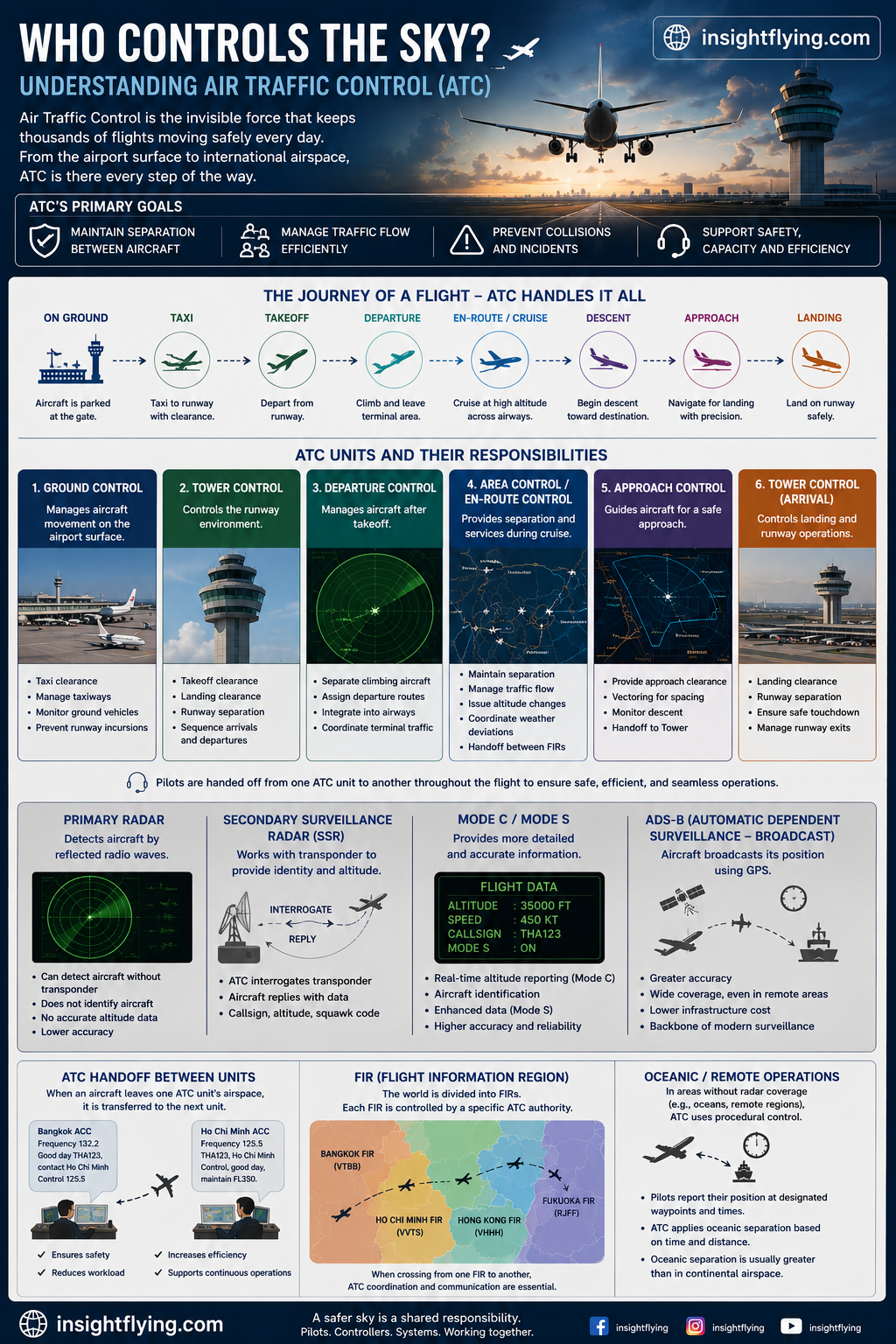
เข้าใจบทบาทของ ATC ตั้งแต่ภาคพื้นจนถึงข้ามประเทศ
เมื่อผู้โดยสารนั่งอยู่บนเครื่องบิน หลายคนอาจคิดว่านักบินคือผู้ “ควบคุมทุกอย่าง” แต่ในความเป็นจริง การบินพาณิชย์สมัยใหม่แทบจะเป็นไปไม่ได้เลยหากไม่มีระบบ Air Traffic Control (ATC) หรือ “การควบคุมการจราจรทางอากาศ”
ATC ไม่ได้มีหน้าที่แค่ “บอกให้บินขึ้นหรือลง” เท่านั้น แต่เป็นระบบที่ทำงานเชื่อมต่อกันตลอดทั้งเที่ยวบิน ตั้งแต่เครื่องยังจอดอยู่ที่หลุมจอด จนกระทั่งลงจอดอีกประเทศหนึ่ง
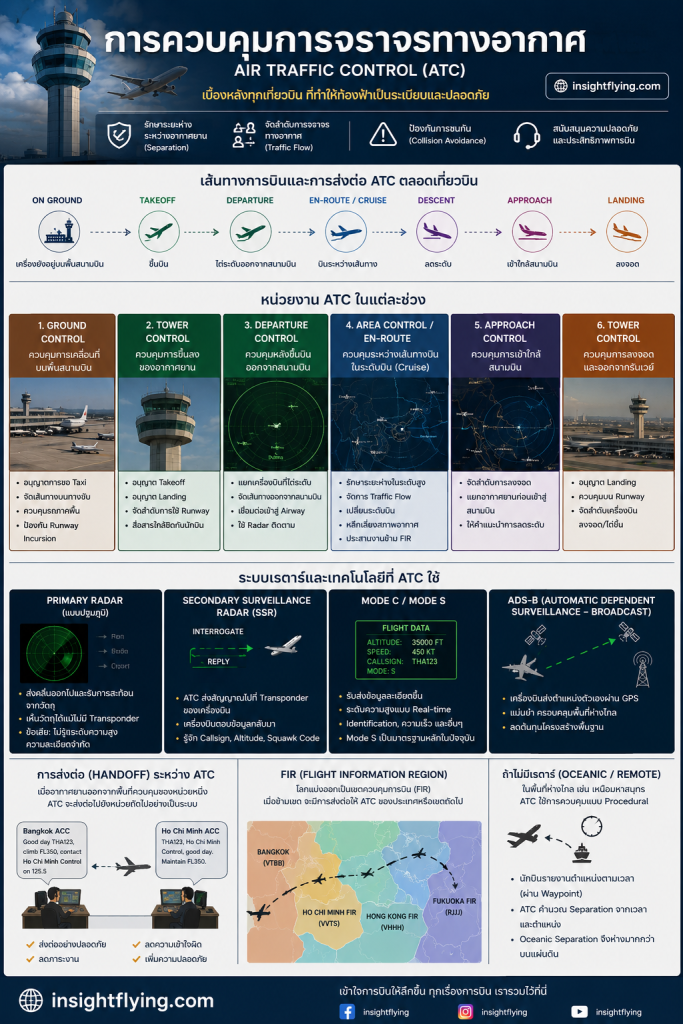
ATC ทำหน้าที่อะไร?
หน้าที่หลักของ ATC คือ
- รักษาระยะห่างระหว่างอากาศยาน (Separation)
- จัดลำดับการจราจรทางอากาศ
- ป้องกันการชนกัน
- ควบคุมการไหลของการจราจรทางอากาศ
- สนับสนุนความปลอดภัยและประสิทธิภาพของเที่ยวบิน
พูดง่ายๆ คือ
ATC คือ “ผู้จัดการจราจรบนท้องฟ้า”
การควบคุมแบ่งเป็นหลายส่วน
ตลอดเที่ยวบิน นักบินจะถูกส่งต่อ (handover) ไปยังหน่วยควบคุมหลายระดับตามช่วงของการบิน
1. Ground Control
ควบคุมการเคลื่อนที่บนพื้นสนามบิน
หลัง Pushback นักบินจะติดต่อ Ground Control เพื่อขอ Taxi ไปยัง Runway
Ground Controller จะดูแล
- Taxiway
- การเคลื่อนที่ของเครื่องบิน
- รถบริการภาคพื้น
- การป้องกัน Runway Incursion
ในสนามบินใหญ่ Ground Controller ต้องจัดการเครื่องบินจำนวนมากพร้อมกัน คล้าย “ตำรวจจราจร” ภายในสนามบิน
2. Tower Control
ควบคุม Runway และการขึ้นลง
เมื่อเครื่องเข้าใกล้ Runway นักบินจะถูกส่งต่อไปยัง Tower
Tower Controller มีอำนาจสำคัญ เช่น
- อนุญาต Takeoff
- อนุญาต Landing
- ควบคุมการใช้ Runway
- จัดลำดับเครื่องบินเข้าออก
Tower เป็นช่วงที่ workload สูงมาก เพราะทุกอย่างเกิดขึ้นรวดเร็ว และเกี่ยวข้องกับ safety โดยตรง
ประโยคที่นักบินรอฟังที่สุดคือ
“Cleared for takeoff”
หรือ
“Cleared to land”
3. Departure Control
ควบคุมหลังบินขึ้น
หลัง Takeoff ไม่นาน Tower จะส่งต่อไปยัง Departure
Departure Controller จะทำหน้าที่
- แยกเครื่องบินที่กำลังไต่ระดับ
- จัดเส้นทางออกจากสนามบิน
- เชื่อมต่อเข้าสู่ Airway
ช่วงนี้ ATC จะเริ่มใช้ Radar ช่วยติดตามตำแหน่งอากาศยานอย่างเต็มรูปแบบ
4. Area Control / En-route Control
ควบคุมระหว่างเส้นทางบิน
เมื่อเครื่องเข้าสู่ระดับบิน (Cruise)
ATC จะเปลี่ยนเป็นหน่วย Area Control Center หรือ ACC
นี่คือการควบคุม “ระหว่างเส้นทาง” (En-route)
หน้าที่สำคัญคือ
- รักษาระยะห่างของเครื่องบินในระดับสูง
- จัดการ traffic flow
- เปลี่ยนระดับบิน
- จัดเส้นทางหลบสภาพอากาศ
- ประสานงานข้าม FIR หรือข้ามประเทศ
ในเที่ยวบินระหว่างประเทศ นักบินอาจถูกส่งต่อ ATC หลายสิบครั้งตลอดเที่ยวบิน
เช่น
Bangkok ACC → Ho Chi Minh ACC → Hong Kong ACC → Taipei ACC → Fukuoka ACC
ทุกครั้งจะมีการ handoff อย่างเป็นระบบ
FIR คืออะไร?
FIR หรือ Flight Information Region คือ “เขตควบคุมการบิน”
โลกถูกแบ่งออกเป็น FIR หลายพื้นที่
แต่ละประเทศ หรือหลายประเทศร่วมกันดูแล
เมื่อเครื่องบินบินออกจาก FIR หนึ่ง
ATC จะส่งต่อไปยัง FIR ถัดไป
นักบินจะได้ยินประโยคประมาณ
“Contact Ho Chi Minh Control on 125.5”
นี่คือการส่งต่อความรับผิดชอบในการควบคุม
ATC เห็นเครื่องบินอย่างไร?
หลายคนคิดว่าเรดาร์ ATC เหมือนในหนังที่เห็นจุดสีเขียวหมุนไปมา
ความจริง ระบบสมัยใหม่ซับซ้อนกว่านั้นมาก
Primary Radar
เห็นจากการสะท้อนคลื่นเรดาร์
ระบบจะส่งคลื่นออกไป
เมื่อชนเครื่องบินแล้วสะท้อนกลับ
ข้อดี
- เห็นวัตถุได้แม้ไม่มี transponder
ข้อเสีย
- ไม่รู้ระดับความสูง
- ความละเอียดจำกัด
Secondary Surveillance Radar (SSR)
ระบบที่ใช้งานหลักในปัจจุบัน
ATC จะ interrogate transponder ของเครื่องบิน
เครื่องบินจะตอบกลับข้อมูล เช่น
- Callsign
- Altitude
- Squawk Code
- ตำแหน่ง
ระบบนี้ทำให้ ATC รู้ว่า “ใครคือใคร”
Mode C / Mode S
ระบบใหม่สามารถส่งข้อมูลได้ละเอียดขึ้น
เช่น
- ระดับความสูงแบบ real-time
- Aircraft Identification
- ความเร็ว
- ข้อมูลการบินเพิ่มเติม
Mode S เป็นพื้นฐานสำคัญของระบบ surveillance ยุคใหม่
ADS-B
ยุคใหม่ของการติดตามอากาศยาน
ADS-B คือระบบที่เครื่องบิน “ส่งตำแหน่งตัวเอง” ผ่าน GPS
ข้อดีคือ
- แม่นยำกว่า Radar บางประเภท
- ครอบคลุมพื้นที่ห่างไกล
- ลดต้นทุนโครงสร้างพื้นฐาน
ปัจจุบันหลายประเทศเริ่มพึ่ง ADS-B มากขึ้น โดยเฉพาะบริเวณมหาสมุทรหรือพื้นที่ห่างไกล
แล้วถ้าไม่มี Radar ล่ะ?
ในบางพื้นที่ เช่น เหนือมหาสมุทร
ATC อาจใช้ Procedural Control
นักบินจะรายงานตำแหน่งเองตามเวลา
เช่น
- ผ่าน waypoint ไหน
- เวลาเท่าไร
- ระดับบินอะไร
ATC จะใช้การคำนวณ separation จากเวลาและตำแหน่งแทน radar separation
นี่คือเหตุผลที่ oceanic separation บางพื้นที่ยังห่างมากกว่าบนแผ่นดิน
การส่งต่อ ATC สำคัญแค่ไหน?
การ handoff ที่ดีทำให้
- การจราจรไหลลื่น
- ลด workload
- ลด misunderstanding
- เพิ่ม safety
แต่หากการส่งต่อผิดพลาด
อาจนำไปสู่
- loss of communication
- altitude deviation
- separation loss
- airspace conflict
ATC และนักบินจึงต้องทำงานร่วมกันอย่างแม่นยำตลอดเวลา
ท้องฟ้าที่ดูว่าง…จริงๆ แล้วเต็มไปด้วยระบบ
ทุกเที่ยวบินที่คุณเห็นบินอยู่เหนือหัว
อาจมีหน่วยควบคุมหลายสิบหน่วยกำลังช่วยกันดูแลอยู่เบื้องหลัง
จาก Ground
ไป Tower
ไป Departure
ไป ACC
และข้าม FIR หลายประเทศ
ทั้งหมดเกิดขึ้นต่อเนื่องแบบ real-time ทุกวัน ตลอด 24 ชั่วโมง
และนั่นคือเหตุผลว่า
ทำไม “การบินพาณิชย์” จึงเป็นหนึ่งในระบบขนส่งที่ซับซ้อนและปลอดภัยที่สุดในโลก
Who Controls the Sky?
Understanding Air Traffic Control from Ground Operations to International Airspace
When passengers sit on an airliner, many assume the pilots are controlling everything.
In reality, modern commercial aviation would be nearly impossible without the support of Air Traffic Control (ATC).
ATC is not simply there to say “cleared for takeoff” or “cleared to land.”
It is a highly coordinated global system that manages aircraft continuously — from the moment an aircraft pushes back from the gate until it arrives safely at its destination, sometimes across multiple countries and airspaces.
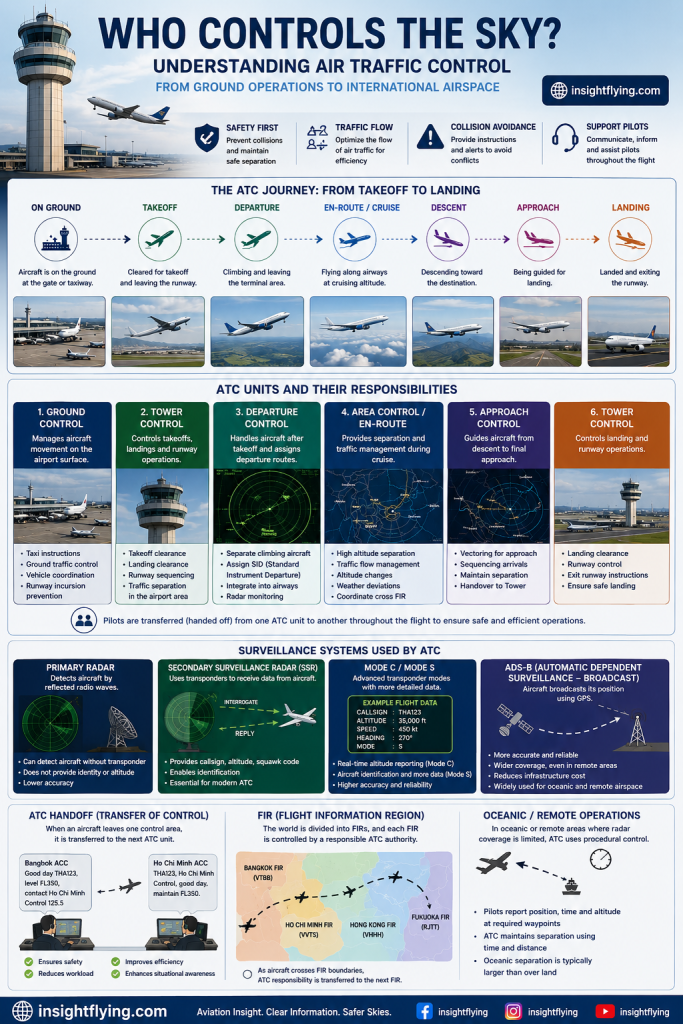
What Does ATC Actually Do?
The primary responsibilities of ATC include:
- Maintaining aircraft separation
- Managing traffic flow
- Preventing collisions
- Organizing departures and arrivals
- Supporting safety and operational efficiency
In simple terms:
ATC is the traffic management system of the sky.
Air Traffic Control Is Divided into Several Sectors
Throughout a flight, pilots communicate with multiple ATC units depending on the phase of flight.
Each controller has a specific responsibility and operational area.
1. Ground Control
Managing Aircraft Movement on the Airport Surface
After pushback, pilots contact Ground Control for taxi clearance.
Ground Controllers manage:
- Taxiways
- Aircraft movement on the ground
- Service vehicles
- Prevention of runway incursions
At major airports, Ground Control can be extremely busy, coordinating dozens of aircraft simultaneously.
They are essentially the “traffic police” of the airport surface.
2. Tower Control
Controlling the Runway Environment
As aircraft approach the runway, communication transfers to Tower Control.
Tower Controllers are responsible for:
- Takeoff clearance
- Landing clearance
- Runway separation
- Sequencing arrivals and departures
This phase involves very high workload because decisions must be made rapidly and accurately.
The most anticipated phrase for any pilot is:
“Cleared for takeoff”
or
“Cleared to land”
3. Departure Control
Managing Aircraft After Takeoff
Shortly after departure, aircraft are handed over to Departure Control.
Departure Controllers:
- Separate climbing aircraft
- Assign departure routes
- Integrate aircraft into the airway system
- Coordinate traffic leaving terminal airspace
At this stage, radar surveillance becomes essential.
4. Area Control / En-route Control
Managing Aircraft Between Airports
Once aircraft reach cruising altitude, control transfers to an Area Control Center (ACC).
This is known as En-route Control.
Responsibilities include:
- Maintaining separation at high altitude
- Managing traffic flow
- Issuing altitude changes
- Coordinating weather deviations
- Managing transitions between FIRs and countries
During international flights, pilots may communicate with many different ATC centers.
For example:
Bangkok ACC → Ho Chi Minh ACC → Hong Kong ACC → Taipei ACC → Fukuoka ACC
Every handoff is carefully coordinated.
What Is an FIR?
FIR stands for Flight Information Region.
The world is divided into FIRs, with each region managed by a specific ATC authority.
When an aircraft exits one FIR, responsibility is transferred to the next ATC unit.
Pilots often hear instructions such as:
“Contact Ho Chi Minh Control on 125.5”
This is known as a handoff or transfer of control.
How Does ATC See Aircraft?
Many people imagine ATC radar as a rotating green screen from old movies.
Modern surveillance systems are far more advanced.
Primary Radar
Detecting Aircraft by Reflected Radar Energy
Primary radar sends radio waves outward.
When those waves hit an aircraft, they reflect back to the radar antenna.
Advantages:
- Can detect aircraft without transponders
Limitations:
- Does not provide aircraft identity
- Limited altitude information
- Lower accuracy compared to modern systems
Secondary Surveillance Radar (SSR)
The Core of Modern ATC Surveillance
SSR works together with aircraft transponders.
ATC interrogates the aircraft, and the aircraft replies with data such as:
- Callsign
- Altitude
- Squawk code
- Identification information
This allows controllers to know exactly which aircraft they are monitoring.
Mode C and Mode S
Modern transponder systems provide even more detailed information.
Examples include:
- Real-time altitude reporting
- Aircraft identification
- Speed and additional flight data
Mode S has become a major component of modern surveillance systems worldwide.
ADS-B
The Future of Aircraft Surveillance
ADS-B stands for:
Automatic Dependent Surveillance – Broadcast
Instead of relying entirely on radar, aircraft broadcast their own GPS-derived position.
Advantages include:
- Higher positional accuracy
- Better coverage in remote regions
- Reduced infrastructure costs
- Improved situational awareness
Many countries now rely heavily on ADS-B, especially over oceans and remote areas.
What Happens Where Radar Coverage Does Not Exist?
In some remote or oceanic areas, radar coverage may be unavailable.
ATC then uses Procedural Control.
Pilots report:
- Position
- Time
- Altitude
- Next waypoint estimate
Controllers maintain separation using time, distance, and procedural calculations instead of radar surveillance.
This is why separation over oceanic airspace is often much larger than over land.
Why Is ATC Handoff So Important?
A proper handoff ensures:
- Smooth traffic flow
- Reduced workload
- Better situational awareness
- Increased safety
However, poor coordination can contribute to:
- Loss of communication
- Altitude deviations
- Loss of separation
- Airspace conflicts
Pilots and controllers therefore work together continuously and precisely throughout every flight.
The Sky May Look Empty — But It Is Highly Organized
Every aircraft you see overhead is likely being monitored by multiple ATC units simultaneously.
From Ground
to Tower
to Departure
to Area Control
and across multiple FIRs and countries
the entire process operates continuously in real time, 24 hours a day.
That is one reason why commercial aviation remains one of the safest and most sophisticated transportation systems ever created.
insightflying.com
accident Airbus aircraft airline airmanship aviation Aviation SMS become a captain become a pilot Boeing captain cloud Crisis Crisis Management emergency engine fatigue flight safety go-around Indigo interview investigation judgement management pilot qualified pilot runway incursion safety safety management Safety Management System SMS student pilot technology training turbulence weather การจัดการความปลอดภัย การบิน การสอบสัมภาษณ์ ความปลอดภัย ชนิดของเมฆ นักบิน สอบนักบิน สอบสัมภาษณ์ เมฆ