
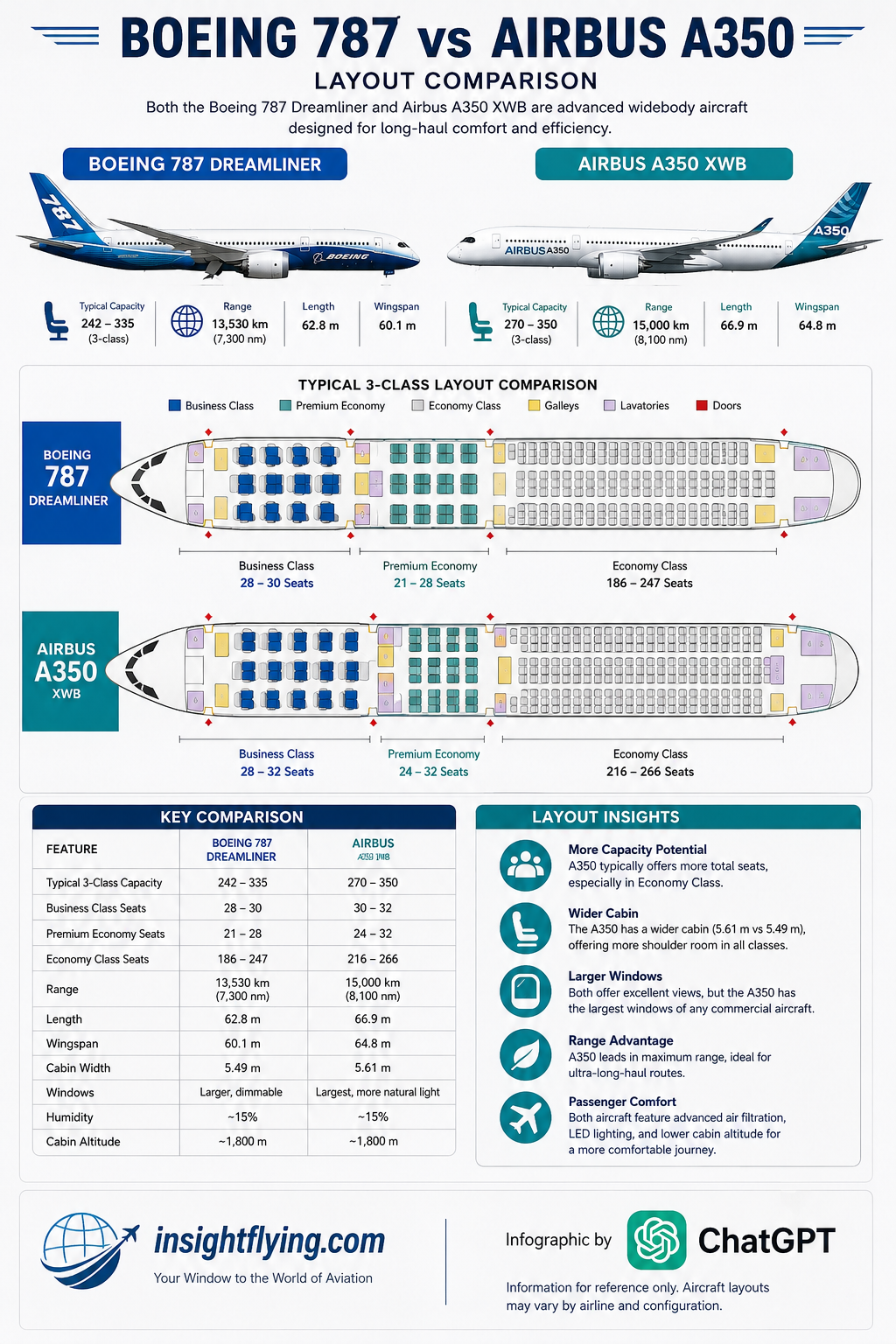
Boeing 787 Dreamliner vs Airbus A350:
เปรียบเทียบการออกแบบห้องโดยสารของเครื่องบินโดยสารลำตัวกว้างแห่งยุคใหม่
ในโลกของการบินพาณิชย์ระยะไกล หากพูดถึงเครื่องบินโดยสารที่ทันสมัยที่สุดในปัจจุบัน ชื่อของ Boeing 787 Dreamliner และ Airbus A350 XWB ย่อมเป็นสองรุ่นที่ถูกกล่าวถึงมากที่สุด ทั้งสองรุ่นได้รับการออกแบบโดยใช้เทคโนโลยีวัสดุคอมโพสิตขั้นสูง ระบบอิเล็กทรอนิกส์สมัยใหม่ และแนวคิดการออกแบบที่มุ่งเน้นทั้งประสิทธิภาพการปฏิบัติการและความสะดวกสบายของผู้โดยสาร
แม้ว่าทั้ง Boeing 787 และ Airbus A350 จะมีวัตถุประสงค์คล้ายคลึงกัน แต่ทั้งสองลำมีแนวคิดในการออกแบบห้องโดยสารที่แตกต่างกันในหลายประเด็น
ขนาดและความจุ
Boeing 787 ถูกออกแบบมาให้เป็นเครื่องบินขนาดกลางถึงใหญ่สำหรับการบินระยะไกล โดยสามารถรองรับผู้โดยสารได้ประมาณ 242–335 คน ในการจัดที่นั่งแบบสามชั้นโดยสาร
ในขณะที่ Airbus A350 มีขนาดใหญ่กว่าเล็กน้อย และรองรับผู้โดยสารได้ประมาณ 270–350 คน ในรูปแบบการจัดที่นั่งเดียวกัน ทำให้สายการบินสามารถเพิ่มรายได้จากจำนวนที่นั่งที่มากขึ้น
ความกว้างของห้องโดยสาร
หนึ่งในจุดเด่นของ Airbus A350 คือ ห้องโดยสารที่กว้างกว่า โดยมีความกว้างประมาณ 5.61 เมตร ขณะที่ Boeing 787 มีความกว้างประมาณ 5.49 เมตร
ความแตกต่างเพียงเล็กน้อยนี้ส่งผลต่อความสะดวกสบายของผู้โดยสารอย่างมีนัยสำคัญ โดยเฉพาะในชั้นประหยัด ซึ่ง A350 สามารถให้พื้นที่บริเวณหัวไหล่และทางเดินที่กว้างกว่าได้
การจัดที่นั่ง (Cabin Layout)
ทั้งสองรุ่นมักถูกจัดที่นั่งในรูปแบบ 3 ชั้นโดยสาร ได้แก่
- Business Class
- Premium Economy
- Economy Class
โดยทั่วไป Boeing 787 มักมีจำนวนที่นั่งชั้นประหยัดประมาณ 186–247 ที่นั่ง ขณะที่ Airbus A350 สามารถรองรับได้ประมาณ 216–266 ที่นั่ง
การออกแบบของ Airbus A350 จึงเหมาะกับสายการบินที่ต้องการความจุสูง ส่วน Boeing 787 มักได้รับความนิยมในเส้นทางที่ต้องการความยืดหยุ่นด้านการปฏิบัติการมากกว่า
ความสะดวกสบายของผู้โดยสาร
ทั้ง Boeing 787 และ Airbus A350 ต่างได้รับการออกแบบให้ช่วยลดความเหนื่อยล้าของผู้โดยสารระหว่างเที่ยวบินระยะไกล โดยมีคุณสมบัติร่วมกัน ได้แก่
- ความดันภายในห้องโดยสารต่ำกว่าเครื่องบินรุ่นเก่า
- ระบบเพิ่มความชื้นในอากาศ
- ระบบกรองอากาศประสิทธิภาพสูง
- ระบบไฟ LED ภายในห้องโดยสาร
- การลดเสียงรบกวนภายในห้องโดยสาร
อย่างไรก็ตาม Boeing 787 มีชื่อเสียงในด้านหน้าต่างขนาดใหญ่พร้อมระบบปรับแสงไฟฟ้า ส่วน Airbus A350 ได้รับการยอมรับว่ามีพื้นที่ห้องโดยสารที่กว้างและโปร่งสบายมากกว่า
ระยะการบิน
Airbus A350 มีข้อได้เปรียบด้านพิสัยการบินสูงสุด โดยสามารถบินได้ไกลกว่า 15,000 กิโลเมตร ในบางรุ่น ขณะที่ Boeing 787 มีพิสัยการบินประมาณ 13,500 กิโลเมตร ทำให้ A350 เหมาะกับเส้นทาง Ultra Long-Haul มากกว่า
แล้วเครื่องบินรุ่นไหนดีกว่ากัน?
คำตอบคือ ไม่มีคำตอบที่ตายตัว
- หากสายการบินต้องการความยืดหยุ่น ประหยัดเชื้อเพลิง และสามารถเปิดเส้นทางบินใหม่ได้ Boeing 787 ถือเป็นตัวเลือกที่ยอดเยี่ยม
- หากสายการบินต้องการรองรับผู้โดยสารจำนวนมาก พร้อมความสะดวกสบายสูงสุดสำหรับเที่ยวบินระยะไกล Airbus A350 อาจเป็นคำตอบที่เหมาะสมกว่า
ท้ายที่สุดแล้ว ทั้ง Boeing 787 Dreamliner และ Airbus A350 ต่างเป็นเครื่องบินโดยสารที่มีความปลอดภัยสูง ประหยัดเชื้อเพลิง และเป็นตัวแทนของเทคโนโลยีการบินสมัยใหม่ที่ช่วยยกระดับประสบการณ์การเดินทางของผู้โดยสารทั่วโลก
บทความโดย Capt. Sopon Insights
Infographic: insightflying.com | เครดิตภาพ: ChatGPT
Boeing 787 Dreamliner vs Airbus A350:
Comparing the Cabin Layouts of Two Modern Widebody Aircraft
When discussing the most advanced long-haul commercial aircraft in service today, two names inevitably stand out: the Boeing 787 Dreamliner and the Airbus A350 XWB. Both aircraft represent the latest generation of aviation technology, featuring advanced composite structures, highly efficient engines, and passenger-focused cabin designs.
Although both aircraft serve similar long-haul markets, they differ in several important aspects of cabin layout and passenger experience.
Size and Passenger Capacity
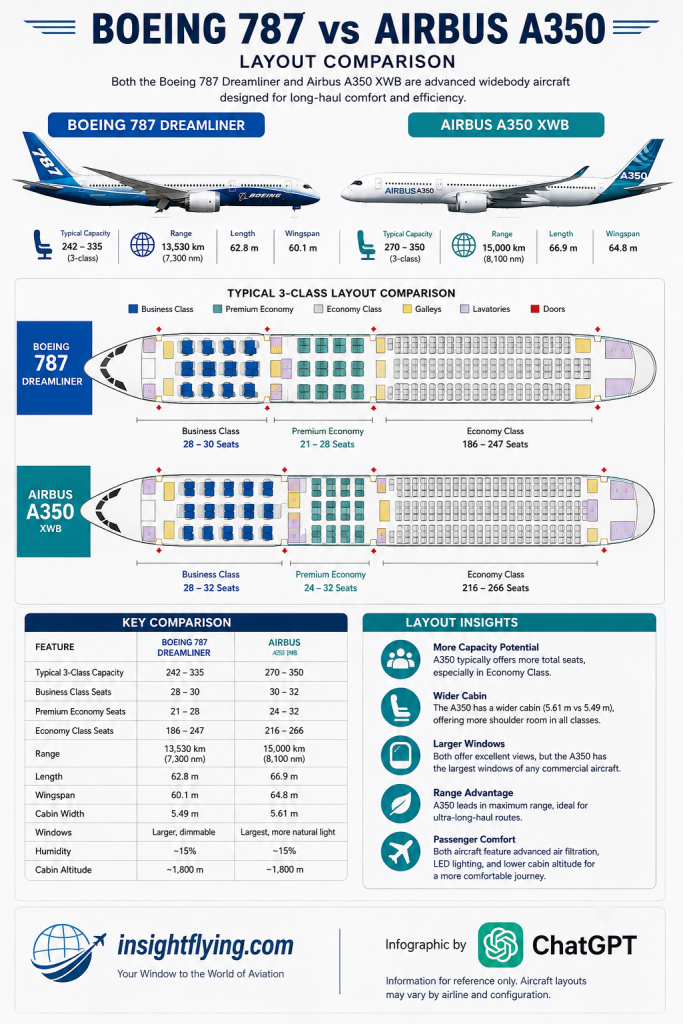
The Boeing 787 was designed as a highly efficient medium-to-large long-haul aircraft, typically accommodating between 242 and 335 passengers in a standard three-class configuration.
The Airbus A350, on the other hand, is slightly larger and generally accommodates 270 to 350 passengers in a comparable layout, offering airlines greater seating capacity and revenue potential.
Cabin Width
One of the Airbus A350’s key advantages is its wider cabin, measuring approximately 5.61 meters, compared with the Boeing 787’s cabin width of approximately 5.49 meters.
While the difference may appear small, it provides noticeable improvements in passenger comfort, particularly in Economy Class, where additional shoulder space and wider aisles can enhance the travel experience.
Cabin Configuration
Both aircraft are commonly configured with three cabin classes:
- Business Class
- Premium Economy
- Economy Class
A typical Boeing 787 configuration may include approximately 186 to 247 Economy seats, while the Airbus A350 often accommodates 216 to 266 Economy seats.
As a result, the A350 is generally favored by airlines seeking higher passenger capacity, whereas the Boeing 787 is often preferred for its operational flexibility.
Passenger Comfort Features
Both aircraft incorporate technologies designed to reduce passenger fatigue during long-haul flights, including:
- Lower cabin altitude
- Increased cabin humidity
- Advanced air filtration systems
- LED mood lighting
- Reduced cabin noise levels
The Boeing 787 is particularly known for its large electronically dimmable windows, while the Airbus A350 is widely recognized for its spacious and open cabin environment.
Flight Range
The Airbus A350 offers a longer maximum range, exceeding 15,000 kilometers in some variants, compared with approximately 13,500 kilometers for the Boeing 787 family.
This gives the A350 an advantage on ultra-long-haul routes where maximum range capability is critical.
Which Aircraft Is Better?
The answer depends on the airline’s operational objectives.
- Airlines seeking flexibility, fuel efficiency, and the ability to open thinner long-haul routes often favor the Boeing 787 Dreamliner.
- Airlines prioritizing higher capacity and maximum passenger comfort on long-haul operations may prefer the Airbus A350.
Ultimately, both the Boeing 787 Dreamliner and the Airbus A350 represent some of the safest, most efficient, and technologically advanced commercial aircraft ever built, each contributing significantly to the evolution of modern air travel.
Article by Capt. Sopon Insights
Infographic: insightflying.com | Image credit: ChatGPT
เปรียบเทียบการออกแบบห้องโดยสารของเครื่องบินโดยสารลำตัวกว้างแห่งยุคใหม่
ติดตามยูทูป Insightflying.com ได้ที่นี่ครับ
A350 accident Airbus aircraft air crash airline airmanship airworthiness aviation Aviation SMS become a captain become a pilot Boeing captain CAT Crisis Crisis Management emergency engine fatigue flight safety FRMS go-around Indigo interview management pilot qualified pilot safety safety management Safety Management System safety report SMS student pilot technology training travel tips turbulence weather การจัดการความปลอดภัย การบิน การสอบสัมภาษณ์ ความปลอดภัย นักบิน สอบนักบิน